Hunt for the Wilderpeople
"Nature just got gangster."
Overview
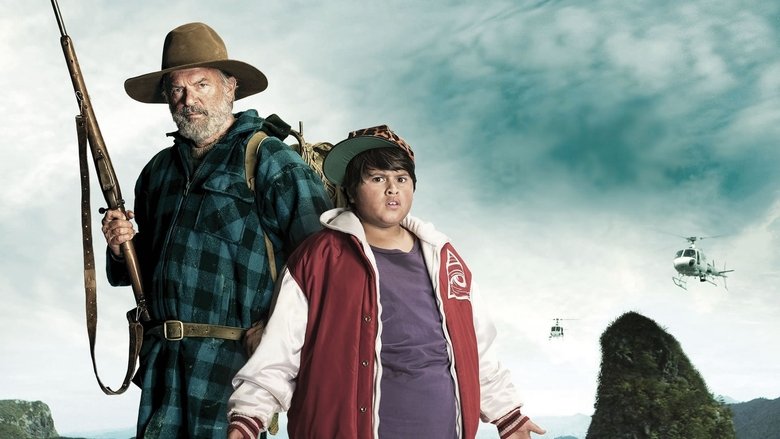
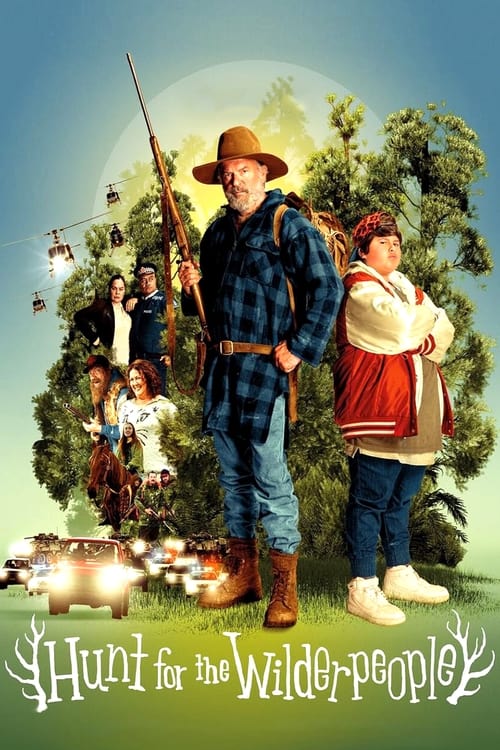
Ricky Baker, a rebellious 13-year-old Māori boy who has spent his life bouncing through the foster care system, is sent to live with the warm-hearted Aunt Bella and the grumpy, distant Uncle Hec on a remote New Zealand farm. Under Bella's loving and quirky guidance, the hip-hop-obsessed teen finally begins to feel a genuine sense of belonging.
However, a sudden tragedy threatens to tear Ricky away from his newfound home and send him to juvenile detention. Desperate to maintain his freedom, Ricky fakes his own death and flees into the dense, unforgiving New Zealand bush. Hec reluctantly pursues him to bring him back, but after an injury leaves them stranded, the two are forced to survive in the wilderness together.
Through a series of hilarious misunderstandings, the authorities, led by a relentless child welfare officer, come to believe Hec has abducted the boy, sparking a massive national manhunt. The unlikely duo must learn to navigate the treacherous terrain and their own emotional barriers, forging an unbreakable bond as they run from the law and their painful pasts.
Core Meaning
Through its signature blend of eccentric humor and deep emotional resonance, Hunt for the Wilderpeople explores the universal human need for belonging and connection. Director Taika Waititi highlights how marginalized individuals—those neglected, abandoned, or deemed bad eggs by institutional systems—can find salvation in each other. The film posits that healing from grief and trauma does not happen in isolation, but through shared struggles and mutual acceptance. Ultimately, the director conveys that true family is not defined by blood or bureaucracy, but by the people who choose to stand by you when the rest of the world is hunting you down.
Thematic DNA
Belonging and Found Family
The core of the narrative is the evolution of Ricky and Hec's relationship. Both are outcasts rejected by society. Through their shared survival in the bush, they transition from hostile strangers to a deeply bonded father-son dynamic, proving that family is built on loyalty and care, not conventional structures.
Grief, Loss, and Healing
The sudden death of Bella acts as the catalyst for the entire story. Hec and Ricky both process their profound heartbreak in different ways—Hec through isolation and anger, Ricky through running away. Their journey through the wilderness becomes a physical manifestation of their emotional journey through grief toward healing.
The Flaws of the Judicial and Welfare Systems
The film serves as a satirical critique of institutional care. Paula Hall represents a cold, bureaucratic machine that prioritizes rules and quotas (No child left behind) over actual human empathy. The system sees Ricky as a list of behavioral problems, whereas Bella and Hec see him as a child needing love.
Harmony with Nature
The New Zealand bush is portrayed as a space of ultimate freedom and rebirth. While society imposes rigid constraints and labels, the wilderness allows Ricky and Hec to strip away their societal baggage, work with the elements, and discover their true, capable selves.
Character Analysis
Ricky Baker
Julian Dennison
Motivation
To avoid being sent to juvenile detention and to find a place where he truly belongs and is loved.
Character Arc
Ricky begins as a guarded, troublemaking foster child who hides behind a tough, hip-hop-inspired persona. Through his time with Bella and his survival journey with Hec, he transforms into a confident, loving, and capable young man who finally knows what it means to be part of a family.
Hector "Hec" Faulkner
Sam Neill
Motivation
Initially, to be left alone in his grief; eventually, to protect Ricky from a system that doesn't understand him.
Character Arc
Introduced as a gruff, illiterate ex-convict who wants nothing to do with Ricky, Hec is shattered by the loss of his wife. In the bush, his frosty exterior melts, and he evolves into a protective, affectionate father figure who learns to communicate his feelings.
Paula Hall
Rachel House
Motivation
To capture Ricky and enforce the rules of Child Welfare, viewing herself as a heroic law enforcer.
Character Arc
Paula is a static character who remains rigidly committed to her bureaucratic worldview from start to finish, serving as the relentless, comical force driving the manhunt.
Aunt Bella
Rima Te Wiata
Motivation
To provide a warm, nurturing home for a child who has never experienced one.
Character Arc
Though her time in the film is brief, Bella's arc is complete in her profound impact on the protagonists. She sets the standard for love and acceptance that guides Ricky and Hec for the rest of their lives.
Symbols & Motifs
The Hot Water Bottle
It symbolizes comfort, security, and familial warmth. It is a physical manifestation of Bella's unconditional love and maternal care.
When Ricky first arrives at the farm, he is defensive and expects rejection. Finding the hot water bottle Bella tucked into his bed is the first moment he realizes he might finally be in a safe, caring environment.
The Huia Bird
The Huia bird represents harmony with nature, hope, and the survival of the marginalized. Since it is believed to be extinct, it parallels Ricky and Hec, who have also been written off by society.
Hec and Ricky encounter the bird deep in the bush at the film's conclusion. Finding it proves that by becoming one with their surroundings, they can discover extraordinary beauty that the rigid, modern world believes is lost.
Haikus
The haikus symbolize vulnerability, emotional processing, and a bridge of communication between closed-off individuals.
Originally given to Ricky by a therapist to express his anger, he continues writing haikus to process his grief and growing affection for Hec. By the end of the film, Hec, who was illiterate, learns to read and writes his own haiku to express his love for Ricky.
The Bush
The wilderness symbolizes an escape from societal expectations, a place of healing, and a chaotic but liberating sanctuary.
It serves as the primary setting for the majority of the film. It is where Ricky sheds his wannabe-gangster persona and Hec confronts his grief, allowing both to metamorphose into the Wilderpeople.
Memorable Quotes
I'll never stop running! ... Yeah, and I'll never stop chasing you. I'm relentless, I'm like the Terminator.
— Ricky Baker and Paula Hall
Context:
Shouted across a valley during a standoff in the bush, establishing the cat-and-mouse dynamic of the film.
Meaning:
This exchange highlights the absurdity of Paula's character, treating a child welfare case like a high-stakes action movie. It also emphasizes Ricky's unbreakable desire for freedom.
Trees. Birds. Rivers. Sky. / Running with my Uncle Hec / Living forever.
— Ricky Baker
Context:
Ricky recites this haiku to Hec while they are staying at Psycho Sam's hideout.
Meaning:
A beautiful summation of Ricky's emotional growth. He has found peace in nature and fully accepted Hec as his family, achieving a sense of immortality through their bond.
Me and this fat kid / We ran we ate and read books / And it was the best.
— Hector Faulkner
Context:
Hec reads this haiku to Ricky when the boy visits him at a rehabilitation center after Hec has served time.
Meaning:
A poignant, full-circle moment proving Hec's personal growth. He has learned to read, embraced Ricky's method of emotional expression, and admitted how much their time together meant to him.
You know, sometimes in life it seems like there's no way out. Like a sheep trapped in a maze designed by wolves.
— The Minister
Context:
Delivered by the eccentric minister (played by director Taika Waititi) during Bella's funeral.
Meaning:
While intended as a darkly comedic, unhelpful eulogy, it inadvertently serves as a metaphor for Ricky and Hec's struggle against the oppressive systems of society.
Philosophical Questions
What constitutes a true family?
The film challenges the traditional, biological definition of family. By pairing a troubled orphan with an illiterate, grieving ex-convict, it argues that family is defined by loyalty, mutual survival, and emotional presence, rather than bloodlines or legal documentation.
Can bureaucratic systems ever truly care for an individual?
Through the antagonist Paula Hall, the film asks whether a system built on rules, quotas, and paperwork can ever properly address complex human trauma. Paula's 'No child left behind' mantra is exposed as hollow, contrasting sharply with the messy but genuine love provided by Bella and Hec.
Is lawlessness sometimes the only path to freedom?
Ricky and Hec are forced to become outlaws to maintain their autonomy. The film raises the philosophical question of whether rebelling against a fundamentally flawed or unjust system is a moral imperative when that system threatens one's spiritual and emotional survival.
Alternative Interpretations
An Allegory for Colonialism and Māori Identity: Many critics interpret the film as a critique of colonial structures. The state (Child Welfare and the police) attempts to institutionalize and control a Māori youth, tearing him away from his chosen family. Ricky's flight into the bush represents a return to Te Ao Māori (the Māori world) and ancestral lands, where he finds healing, sovereignty, and a connection to his heritage away from white, bureaucratic interference.
Ricky's Cinematic Coping Mechanism: Another interpretation suggests that the film's increasingly absurd third act—featuring tanks, helicopters, and a Mad Max-style shootout in a junkyard—is slightly exaggerated by Ricky's hyperactive, pop-culture-obsessed imagination. Confronting the traumatic reality of Bella's death and his impending return to juvenile detention, Ricky frames his life as an epic action movie to maintain a sense of control and heroism in a world where he is otherwise powerless.
Cultural Impact
Hunt for the Wilderpeople achieved massive cultural significance, particularly in New Zealand, where it became an instant cinematic landmark and the highest-grossing local film of its time. It showcased Taika Waititi's unique tonal signature—balancing irreverent, offbeat humor with deep emotional sincerity—which catapulted him to Hollywood blockbusters like Thor: Ragnarok. Culturally, the film is celebrated for its subtle yet biting colonial critique of the New Zealand justice and child welfare systems, shedding light on the systemic marginalization and displacement of Māori youth. By framing a state ward's narrative with dignity, joy, and agency, it resonated deeply with indigenous audiences while its universal themes of found family and grief earned it a 100% rating on Rotten Tomatoes and enduring global popularity.
Audience Reception
Audiences and critics universally praised Hunt for the Wilderpeople, noting it as one of the most heartwarming and original comedies of the 2010s. Reviewers frequently highlighted the crackling, authentic chemistry between Sam Neill and Julian Dennison, noting that their dynamic anchored the film's wilder comedic moments. Lachlan Milne's breathtaking cinematography of the New Zealand landscape was also widely lauded. The primary point of praise was Waititi's masterful tonal balancing act—seamlessly pivoting from absurdist belly laughs to profound, tear-jerking tragedy without feeling jarring. While a few critics felt the explosive, action-heavy third act momentarily lost the quiet intimacy of the film's middle section, the overwhelmingly positive consensus viewed it as a triumphant, majestic crowd-pleaser.
Interesting Facts
- Director Taika Waititi makes a cameo appearance as the eccentric minister who delivers the bizarre 'sheep trapped in a maze' sermon at Aunt Bella's funeral.
- The film was shot in just five weeks in the remote New Zealand bush during the middle of winter, requiring the cast and crew to deal with difficult weather conditions.
- The red Toyota Hilux used in the film is named 'Crumpy' in honor of Barry Crump, the author of the novel 'Wild Pork and Watercress' on which the film is based.
- Sam Neill and Julian Dennison developed a very strong off-screen friendship during filming, which naturally mirrored the evolving dynamic of their characters.
- Upon its release, the movie broke all opening weekend box office records in New Zealand, becoming the highest-grossing locally produced film in the country's history.
- Waititi cast Julian Dennison without an audition after working with him on a commercial years prior, knowing he had the perfect blend of comedic timing and emotional sensitivity.
Easter Eggs
References to the film 'Smash Palace' (1981)
The film pays homage to classic New Zealand cinema. The junkyard scene set at the Horopito car wrecker's yard, as well as the comical shootout, are direct nods to Roger Donaldson's iconic Kiwi film Smash Palace.
The 'Crumpy' Toyota Hilux
The red truck is a reference to a famous series of 1980s New Zealand television commercials for the Toyota Hilux that starred Barry Crump, the author of the film's source material.
The Terminator and Sarah Connor arguments
Paula frequently compares herself to the Terminator. Ricky counters that she is more like Sarah Connor—specifically from the first movie 'before she could do chin-ups.' This highlights the pop-culture-infused lens through which Ricky views the world.
The Lord of the Rings homage
In a tense evasion scene, Ricky and Hec hide from the authorities in a hollow beneath the roots of a large tree. The framing directly mimics the famous scene in The Fellowship of the Ring where the Hobbits hide from the Ringwraith.
⚠️ Spoiler Analysis
Click to reveal detailed analysis with spoilers
Frequently Asked Questions
Explore More About This Movie
Dive deeper into specific aspects of the movie with our detailed analysis pages
Comments (0)
No comments yet. Be the first to share your thoughts!