Skip to content
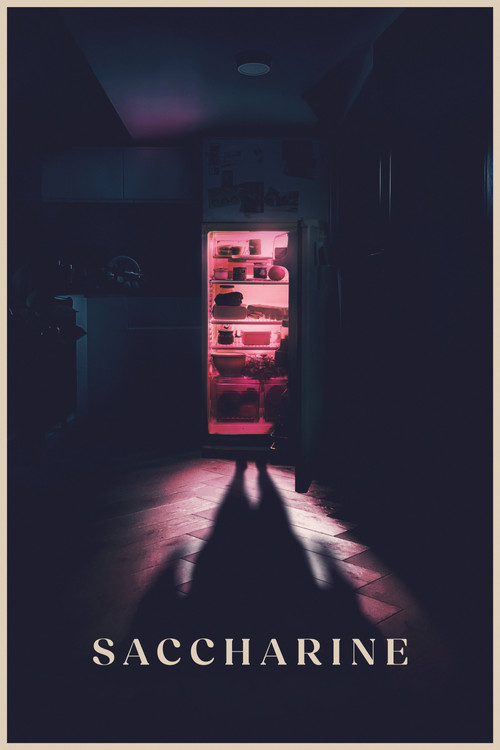
Saccharine
A gothic body-horror elegy of hunger and shame, where a woman's craving for a smaller self turns the flesh into a haunted house, and every swallowed crumb leaves a ghost behind.
Saccharine

Saccharine

"What's eating you?"

22 May 2026 Australia 113 min 7.0 (249)

Director: Natalie Erika James

Cast: Midori Francis, Danielle Macdonald, Madeleine Madden, Robert Taylor, Showko Showfukutei

Horror Eating disorders and body image Consumption and the ethics of the body Haunting, guilt and inheritance Desire and identity Diet culture and the commodification of thinness
Box Office: $456,091

Overview

Saccharine (2026) is an Australian supernatural body-horror film written and directed by Natalie Erika James (Relic). It premiered at Sundance on 22 January 2026. Midori Francis plays Hana, a lovelorn medical student with a history of disordered eating, and Danielle Macdonald, Madeleine Madden and Robert Taylor appear in the cast.

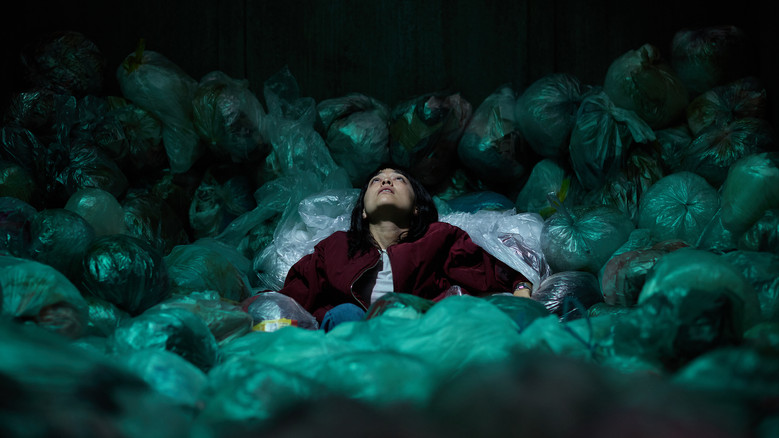
Hana sees a classmate who has lost a dramatic amount of weight and learns about a secret, costly weight-loss "pill" called the Gray. It works with no effort, but strange things follow: reflections that are not her own, and a growing sense that something is living inside her. Her need to keep up the supply pushes her past medical ethics.

The film mixes campus drama, a sapphic longing, dark comedy and ghost-story dread. It treats an eating disorder as an internal battle nobody else can see, and it uses horror to make that battle visible.

Core Meaning

James and Francis have both described the film as a heightened, absurd way of keeping the emotional truth of living with an eating disorder or addiction: an isolating internal struggle that is horrifying and sometimes absurd. The film suggests that consuming a smaller self cannot heal shame. Hana is not just losing weight. She is swallowing someone else's body and story, and she has to reckon with that. Its ending reads as a push toward self-acceptance, but critics disagree on whether it earns that message.

Thematic DNA

Eating disorders and body image 35%
Consumption and the ethics of the body 25%
Haunting, guilt and inheritance 20%
Desire and identity 10%
Diet culture and the commodification of thinness 10%

Eating disorders and body image

Hana knows she can slide back into disordered eating, and the pill gives that tendency a supernatural form. Body perception is rendered through horror set pieces.

Consumption and the ethics of the body

The pill is human ash. Hana later makes her own by cremating parts of the cadaver her med-school group works with, which blurs medicine, cannibalism and exploitation.

Haunting, guilt and inheritance

The ghost, Bertha, gets heavier as Hana burns calories. The dead person's body and history are literally carried inside the living one.

Desire and identity

A sapphic longing at the centre prompts the question of whether Hana wants to be with someone or to be her.

Diet culture and the commodification of thinness

An expensive miracle supplement echoes the real-world push for GLP-1s and weight-loss products.

Character Analysis

Hana

Midori Francis

Archetype: Tragic protagonist Key Trait: Self-conscious and desperate

Motivation

To be thinner, to be desired, and to escape her body's shame.

Character Arc

She moves from insecurity and longing to dependence on the pill, then to a haunting. She finally tries to eject the connection to Bertha and has to confront what she has done to herself.

Bertha

Not confirmed in research

Archetype: Vengeful ghost / mirror Key Trait: Spectral and engorged

Motivation

Unclear from the research; the haunting binds her to the body that consumed her.

Character Arc

She is the dead person whose ashes Hana consumes, and she gets heavier as Hana burns calories.

All 3 characters and cast

Symbols & Motifs

The Gray (ash pill)

Meaning:

Diet culture's promise of effortless transformation, and the cost of it.

Context:

A lab test shows the costly pill is human ash, which sets Hana on making her own.

Bertha, the ghost

Meaning:

Internalised shame and the stigmatised body, which grows as Hana tries to shrink.

Context:

Hana sees an old man's reflection at first. She later realises her pancreatic tumour sits where Bertha's did.

Crumbs and food

Meaning:

Appetite, disgust and shame. Critics noted the camera lingers on crumbs around Hana's mouth.

Context:

It recurs in scenes of eating and bingeing.

The cadaver

Meaning:

The body as raw material, and the ethical line between study and consumption.

Context:

Hana and her friends work with the cadaver of a former obese cancer patient.

Reflections

Meaning:

A divided self and distorted perception.

Context:

Hana sees someone else's reflection in place of her own.

Philosophical Questions

Can you heal your relationship with your body by erasing part of it?

The pill gives instant results, but a haunting follows, which suggests that shrinking the body leaves the underlying shame untouched.

Who owns a body after death?

Hana uses a cadaver's remains for her own ends, which raises questions of consent, dignity and exploitation.

Is desire for someone really a desire to become them?

The film's sapphic longing blurs love and envy.

How It Ends

Alternative Interpretations

One reading sees an empathetic portrait of addiction and self-acceptance. Another, voiced by some viewers and critics, finds that it punishes its protagonist and clashes with its own message by lingering on food and bodies with disgust. The haunting can be read literally, or as Hana's internalised shame made visible. The central sapphic relationship also invites the "want to be her or be with her" reading.

Full ending explanation

Cultural Impact

The film premiered at Sundance as the push for GLP-1 drugs and weight-loss supplements was intensifying, as Roger Ebert's review noted. It follows James's Relic and joins recent body-horror films about female bodies and beauty standards. Viewers compared its ending to The Ugly Stepsister. Its Australian production also sits in the country's growing horror scene.

Audience Reception

Reviews were mixed. Critics praised the stylish, distressing body horror and the performance of Midori Francis, whom James credits with anchoring the absurd situations. Common criticisms were that the film throws too many ideas together, that the camera positioning and tone are muddled, and that its themes arrive late. Some viewers also objected to the ending as punishing Hana, and to the near-absence of men and the focus on a female-coded disorder. The overall verdict is an ambitious but uneven film.

Interesting Facts

  • Saccharine premiered at Sundance on 22 January 2026, opened in the US on 22 May 2026 and in Australia on 9 July 2026.
  • It was produced by Stan, Carver Films and Thrum Films, with music by Hannah Peel and cinematography by Charlie Sarroff.
  • The running time is 113 minutes, and the box office total listed is $559,000.
  • Natalie Erika James wrote and directed it, and also produced it alongside Anna McLeish and Sarah Shaw.

Frequently Asked Questions

Explore More About This Movie

Dive deeper into specific aspects of the movie with our detailed analysis pages

Comments (0)

Leave a comment

No comments yet. Be the first to share your thoughts!

Similar Movies