Skip to content
Saint Seiya Omega
Mythic battle shonen bathed in celestial light, where youthful passion clashes against cosmic fate across a glittering canvas of shattered armor and burning constellations.
Saint Seiya Omega

Saint Seiya Omega

聖闘士星矢Ω

01 April 2012 — 30 March 2014 Japan 1 season 97 episode Ended 7.9 (246)

Cast: Hikaru Midorikawa, Katsuyuki Konishi, Tetsuya Kakihara, Junichi Suwabe, Tatsuhisa Suzuki

Animation Sci-Fi & Fantasy Action & Adventure The Intergenerational Legacy of Hope Defying Predestination and Nature The Cost of Duty and Sacrifice Transcendence Through Fellowship (Omega)

Overview

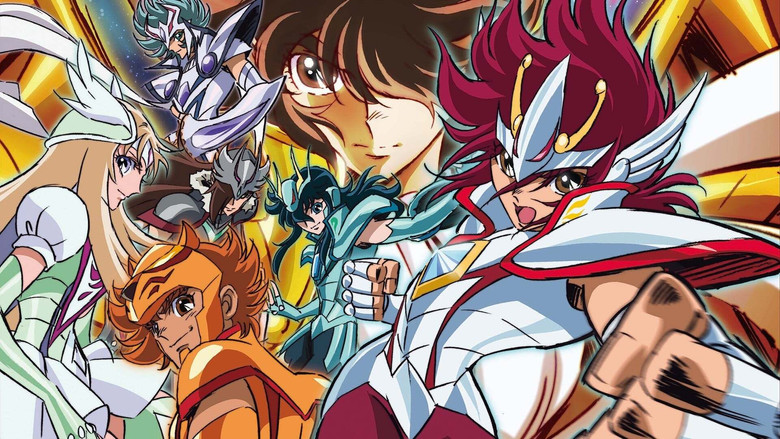
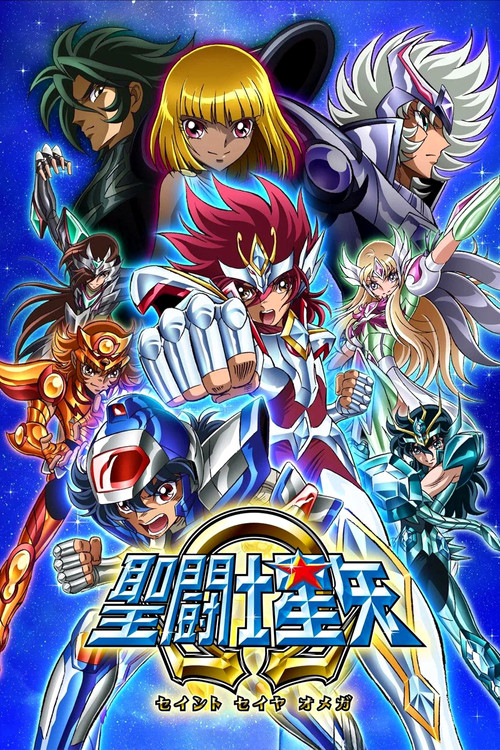
Produced by Toei Animation to celebrate the 25th anniversary of Masami Kurumada's classic franchise, Saint Seiya Omega follows a brand-new generation of sacred warriors sworn to protect the goddess Athena and safeguard Earth. The journey begins with Pegasus Kouga, a headstrong orphan raised under Athena's watchful care who reluctantly trains to harness his inner Cosmo. When the formidable Roman god of war, Mars, abducts Saori Kido, Kouga sets off on a dangerous quest across the globe, gathering trusted allies from the martial academy Palaestra, including Lionet Souma, Aquila Yuna, Dragon Ryuho, Wolf Haruto, and Orion Eden.

As Kouga and his comrades push their limits, they navigate the treacherous Twelve Zodiac Temples, confronting corrupt and misguided Gold Saints to prevent the Earth's Cosmo from being drained into Mars' celestial paradise. Along the way, they discover deep cosmological secrets, including primordial darkness, forgotten deities such as Abzu, and the harsh cost of sacrifice. Through trials that test their Seventh Sense, the young Bronze Saints learn to transcend individual rivalry and master the essence of unity.

In the expansive war against the goddess Pallas and the ultimate deity of time, Saturn, the new Saints stand shoulder-to-shoulder with legendary veterans like Sagittarius Seiya and Phoenix Ikki. Facing armies of formidable Pallasites equipped with Chronotectors, the team confronts cosmic forces capable of freezing the universe's flow of time. By reaching the ultimate pinnacle of Cosmo known as the Omega, the warriors embody the unbreakable continuity of hope, proving that humanity's collective will can overcome eternal destiny.
Core Meaning

At its heart, Saint Seiya Omega argues that human bonds and empathy are capable of defying predestined divine tyranny. By contrasting ancient, rigid deities with mortal warriors who constantly strive for one another, the series asserts that genuine power does not come from celestial birthright or overwhelming strength alone, but from the shared transmission of hope across generations—the legendary 'Omega' Cosmo born from fellowship and mutual love.

Thematic DNA

The Intergenerational Legacy of Hope 30%
Defying Predestination and Nature 25%
The Cost of Duty and Sacrifice 25%
Transcendence Through Fellowship (Omega) 20%

The Intergenerational Legacy of Hope

The story continually examines how ideals are passed down from veteran Saints to the youth. Pegasus Kouga must carve his own identity out from under the monumental shadow of Sagittarius Seiya, transforming traditional veneration into an active, self-forged partnership that redefines what it means to be a protector of Athena.

Defying Predestination and Nature

Kouga is born bearing the dark Cosmo of the primordial god Abzu, seemingly fated to bring about cosmic ruin. His entire narrative arc revolves around rejecting an evil cosmic lineage and choosing righteous loyalty, demonstrating that personal integrity and chosen family supersede divine mandate.

The Cost of Duty and Sacrifice

Characters such as Aria, Genbu, and Sonia highlight the heartbreaking toll exacted by holy wars. The show critiques blind devotion to abstract cosmic order, illustrating how true sanctity emerges from personal compassion and protecting the innocent rather than dutiful slaughter.

Transcendence Through Fellowship (Omega)

While earlier iterations of the franchise prioritized the Seventh Sense achieved through solo grit, Omega frames its ultimate power ceiling as a communal cosmic resonance that awakens only when warriors unite their souls toward a selfless objective.

Character Analysis

Pegasus Kouga

Hikaru Midorikawa

Archetype: The Reluctant Chosen One Key Trait: Defiant tenacity and inner light overriding inner darkness

Motivation

Initially seeks to rescue Saori Kido, evolving into a steadfast desire to protect his friends and prove that humanity can carve its own destiny without subjugation to deities.

Character Arc

Starts as an unruly adolescent resentful of his compulsory training on a secluded island. After witnessing Saori Kido's capture, he ventures into the world, confronts the dark truth that he harbors Abzu's primordial Cosmo, purges the darkness within himself, and emerges as the god-defying savior who unlocks the legendary Omega state.

Sagittarius Seiya

Toru Furuya

Archetype: The Legendary Mentor Key Trait: Unwavering hope and resolute leadership

Motivation

To protect Athena and inspire the young Bronze Saints to surpass his own legendary generation.

Character Arc

Having ascended from Bronze Saint to the revered Sagittarius Gold Saint, Seiya begins trapped in deep dimensional rifts before returning as the Sanctuary's spiritual pillar, guiding the next generation and confronting time deities with selfless maturity.

All 5 characters and cast

Symbols & Motifs

Clothtones and Cloth Gems

Meaning:

In the first season, Cloths manifest from pocket stones (Clothtones) rather than heavy Pandora Boxes, symbolizing the modern reinvention of Saint tradition, adaptability, and the internalization of cosmic energy.

Context:

Introduced in early episodes to represent how the ancient warrior relics adapted to a new era following the descent of a meteorite, before partially returning to classic armor forms in Season 2.

The Pegasus Constellation

Meaning:

A timeless emblem of rebellious courage, miracles, and god-slaying willpower that bridges the original mythological Saint Seiya era with the new era.

Context:

Carried by Kouga as the successor to Seiya, flaring into blinding white light during do-or-die confrontations against Mars, Abzu, and Saturn.

The Mask of Female Saints

Meaning:

Traditional female Saints wore masks to erase their femininity in combat; breaking or casting it aside symbolizes individual agency, personal truth, and rejection of archaic Sanctuary dogma.

Context:

Central to Aquila Yuna's personal story, as she deliberately chooses to fight unmasked in defiance of Sanctuary's antiquated rules.

The Dagger of Time / Chronotectors

Meaning:

Embodiments of divine indifference, eternity, and the inevitable erosion of mortal existence under Saturn's rule.

Context:

Wielded by Pallasites and Saturn's vanguard to freeze mortals in stasis, contrasting the finite yet vibrant warmth of human lifespans.

Memorable Quotes

Young Saints! Carry on my soul and defeat this great evil!
— Libra Genbu

Context

Spoken during Season 2, Episode 62, as Genbu makes his heroic last stand defending Palaestra against the Pallasite vanguard.

Meaning

Underscores the central franchise message that the heroic torch must be passed forward even at the cost of one's own life.

Aria... I understand now. As one of Athena's Saints, watch me protect this planet!
— Orion Eden

Context

Spoken during Eden's emotional awakening in the later stages of the Mars conflict in Season 1.

Meaning

Marks Eden's critical ideological turning point, severing ties with his father's tyranny to honor Aria's compassionate vision.

All 4 quotes

Episode Highlights

The Life That Was Saved by Seiya! Revive, Legend of the Saints!

S1E1

Establishes Kouga's origin, the return of Mars, and Seiya's desperate intervention in the golden Sagittarius Cloth to defend Athena and the infant Kouga.

Significance:

Sets the generational premise and bridges the legacy of the classic series to the newly inaugurated cast.

The Law of the Mask! The Wind Saint Appears!

S1E3

Introduces Aquila Yuna, challenging the centuries-old rule that female Saints must cover their faces under penalty of death or romance.

Significance:

Marks a modern philosophical update to classic franchise lore, highlighting personal agency and gender equity.

Seiya's Message! To You, I Entrust Athena!

S1E13

Kouga connects with Seiya's lingering spiritual Cosmo within the ruins, learning the true weight of protecting Athena directly from his predecessor.

Significance:

Emotionally cements Kouga's dedication to the Saint lineage, paying homage to Aiolos' classic testament.

Shine, Kouga! The Last Battle between Light and Darkness!

S1E51

Kouga battles the primordial deity Abzu in a cosmic void, purging his inner darkness with Seiya's Sagittarius Cloth and Aria's spiritual assistance.

Significance:

Resolves the Season 1 Mars/Abzu arc, establishing Kouga's triumph over cosmic predestination.

The Great Sword of Cataclysm! Genbu's Fight!

S2E62

Libra Genbu sacrifices himself while defending the young Saints and students of Palaestra from the First Class Pallasite weapon.

Significance:

A high-stakes emotional turning point in Season 2 that catalyzes the Bronze Saints' journey toward awakening Omega.

Awaken! The Ultimate Omega!

S2E89

Facing catastrophic odds against Hyperion, the six young Bronze Saints unite their Cosmo into an all-encompassing, ultimate resonance.

Significance:

The definitive realization of the title concept, introducing the evolved Omega Cloths.

The God of Time! The Ascent of Saturn!

S2E92

Subaru sheds his mortal persona, revealing himself as the primordial god Saturn, and freezes time across all mortal realms.

Significance:

Initiates the climactic endgame of the series, testing whether mortal bonds can move the heart of a cosmic entity.

The End of the Battle! Become a Legend, Kouga!

S2E97

In an epic cosmic showdown, Kouga gathers the combined Cosmo of all living Saints to push Saturn back, ending the war and embarking on a free mortal journey.

Significance:

Concludes the 97-episode saga, validating humanity's freedom to forge its own future without divine control.

Philosophical Questions

Can personal bonds surpass immutable divine order?

Throughout both seasons, Olympian and primordial gods view humanity as flawed pests requiring temporal freeze or cataclysmic purging. The series repeatedly counters this by proving that mortal frailty and empathy generate miracles far beyond cold omnipotence.

Does one's origin define their ethical destiny?

Kouga's genesis as a vessel of Abzu poses the classic nature versus nurture dilemma. By consciously turning his back on innate dark Cosmo to champion friendship, he validates existential free will over mythological predestination.

How It Ends

Alternative Interpretations

Some narrative critics interpret Omega not as a literal physical continuity of the classic manga, but as a deliberate meta-commentary on the franchise itself: Kouga represents new generations struggling under the crushing legacy of legendary predecessors (symbolized by Seiya). Alternatively, Subaru/Saturn's transformation has been analyzed as a philosophical inquiry into divinity: true godhood is hollow and sterile without mortal emotion, pain, and temporal finitude.

Full ending explanation

Cultural Impact

Saint Seiya Omega arrived during a crucial transitional era for anime reboots in the early 2010s, attempting to bridge the gap between veteran 1980s fans and an entirely new, younger demographic. In Latin America and southern Europe—longtime strongholds of the franchise—the show sparked immense debate over modernized aesthetic choices, such as sleek Lycra-style armors and magical elemental charts. Despite initial resistance, the series successfully kept the franchise relevant on broadcast television across 97 continuous episodes, paving the way for later spin-offs like Saint Seiya: Soul of Gold and Saintia Sho.

Audience Reception

Audience reception for Saint Seiya Omega was polarized across its run. Season 1 received heavy scrutiny from traditionalists who resented the removal of Pandora Boxes, the inclusion of elemental affinities reminiscent of contemporary shonen trends, and Yoshihiko Umakoshi's slim, stylized character art. However, high-octane battles in the Twelve Temples and the emotional weight of Aria's tragedy earned critical appreciation.

Season 2 was widely recognized as a conscious course-correction that returned to classic tropes: traditional armor designs reappeared, legendary Saints like Shiryu, Hyoga, and Ikki took prominent combat roles, and high-stakes military clashes heightened excitement. Overall, the community views Omega as an ambitious, flawed, yet sincere tribute that successfully upheld the franchise's enduring core themes.

Interesting Facts

  • The series was conceived as an official commemoration project celebrating the 25th anniversary of the Saint Seiya franchise.
  • Prominent animator Yoshihiko Umakoshi, acclaimed for his work on HeartCatch PreCure! and Casshern Sins, served as character designer and chief animation director for Season 1.
  • Season 1 introduced an elemental Cosmo classification system (Light, Darkness, Fire, Wind, Water, Earth, and Lightning) alongside gem-like Clothtones, a drastic departure from the original series' Pandora Boxes.
  • Following mixed reactions from classic fans, Season 2 underwent a major creative revamp, introducing director Tatsuya Nagamine and restoring traditional Pandora Box Cloth containers.
  • Shoko Nakagawa, a passionate lifelong anime fan who voiced the goddess Athena / Saori Kido, also contributed guest vocals to the newly recorded opening theme 'Pegasus Fantasy ver. Omega'.

Easter Eggs

Cameos of Bear Geki and Hydra Ichi as Palaestra staff and students

Classic Bronze Saints from the original 1986 Galaxian Wars tournament return as veteran instructors and comic-relief trainees, grounding the school within long-established lore.

Kiki ascending to the Aries Gold Saint

Mu's former young apprentice in the original series fulfills his destined role as the master Cloth-repairer and guardian of the First Temple.

Seiya donning the Sagittarius Gold Cloth with a scarf

Seiya's redesigned Sagittarius armor features an added flowing red scarf, referencing classic tokusatsu and heroic animation aesthetics favored by Toei directors.

Frequently Asked Questions

Explore More About This Movie

Dive deeper into specific aspects of the movie with our detailed analysis pages

Comments (0)

Leave a comment

No comments yet. Be the first to share your thoughts!

Similar Movies