Skip to content
Sword Art Online
A neon-lit sci-fi fantasy brimming with existential dread and tender romantic devotion, where digital blades slice through pixelated skies like fallen comets seeking a tangible reality.
Sword Art Online

Sword Art Online

ソードアート・オンライン

"Blurring the line between the virtual and the real."

08 July 2012 — 20 September 2020 Japan 4 season 96 episode Ended 8.2 (2,150)

Cast: Yoshitsugu Matsuoka, Haruka Tomatsu, Ayana Taketatsu, Ayahi Takagaki, Rina Hidaka

Animation Sci-Fi & Fantasy Action & Adventure The Blur Between Virtual & Physical Reality Identity, Trauma, and Healing Ethics of Artificial Life & Soul Research Willpower Overcoming System Constraints Legacy, Memory, and Sacrifice

Overview

In a near-future Japan, breakthrough "FullDive" technology through the NerveGear helmet allows players to fully immerse their minds inside virtual reality video games. The launch of the world's first Virtual Reality Massively Multiplayer Online Role-Playing Game (VRMMORPG), Sword Art Online, quickly turns into a nightmare when 10,000 players learn they are trapped inside the game by its creator, Akihiko Kayaba. Dying in the game or attempting to remove the helmet in the real world results in instant death. Lone player Kazuto "Kirito" Kirigaya and skilled swordswoman Asuna Yuuki band together with allies to fight their way through 100 floors of the floating castle Aincrad to win back their freedom.

Following the resolution of the Aincrad tragedy, Kirito’s journey expands across various virtual realities. He dives into the fairy realm of ALfheim Online (ALO) to rescue Asuna from a corrupt corporate takeover, investigates mysterious real-world murders tied to a sniper game in Gun Gale Online (GGO), and helps a dying young girl find peace in Mother's Rosario. Throughout these virtual worlds, Kirito and his companions discover that digital experiences carry real emotional, psychological, and physiological consequences.

The overarching narrative reaches its apex in Project Alicization, where Kirito is drawn into "Underworld"—a bottom-up artificial intelligence simulation created by the Japanese government using human soul copies called "Fluctlights". Across four distinct seasons, the series evolves from a high-stakes death game survival story into a philosophical exploration of human consciousness, artificial intelligence ethics, and the seamless fusion of virtual and physical identity.
Core Meaning

The fundamental message of Sword Art Online is that human emotions, relationships, and moral choices made within virtual spaces are just as real and meaningful as those made in the physical world. Creator Reki Kawahara uses the evolution of FullDive technology to argue that technology is not merely a tool for escapism, but a medium that reflects human nature—both its capacity for cruelty and its boundless capacity for love, courage, and legacy. Across all seasons, the show asserts that reality is defined not by physical atoms, but by the memories we create and the bonds we forge with others.

Thematic DNA

The Blur Between Virtual & Physical Reality 30%
Identity, Trauma, and Healing 25%
Ethics of Artificial Life & Soul Research 20%
Willpower Overcoming System Constraints 15%
Legacy, Memory, and Sacrifice 10%

The Blur Between Virtual & Physical Reality

Begins in Season 1 as a life-or-death trap in Aincrad, transitions in Season 2 into how virtual trauma affects real-life mental health, and culminates in Seasons 3–4 where artificial minds in a simulated universe struggle for real-world legal and human rights.

Identity, Trauma, and Healing

Starts with Kirito's social isolation as a lone wolf, deepens in Season 2 through Sinon’s PTSD and Yuuki’s terminal illness, and reaches fulfillment as characters learn that processing trauma in virtual spaces can restore real-world purpose.

Ethics of Artificial Life & Soul Research

Evolves from Akihiko Kayaba’s god complex in Season 1 to corporate exploitation in Season 2 and finally to state-level military development of artificial souls ("Fluctlights") in Seasons 3–4.

Willpower Overcoming System Constraints

Manifests early when Kirito and Asuna defy programmed game mechanics through pure resolve, later formalized in Seasons 3–4 as the "Incarnation System"—where strong mental focus directly overwrites digital code.

Legacy, Memory, and Sacrifice

Introduced with Sachi’s tragic death in Season 1, immortalized through Yuuki’s legacy in Season 2, and brought full circle in Seasons 3–4 through Eugeo’s sacrifice to save Underworld.

Character Analysis

Kazuto "Kirito" Kirigaya

Yoshitsugu Matsuoka

Archetype: Hero / Lone Wolf turning into Leader Key Trait: Relentless willpower capable of transcending physical and virtual limits

Motivation

Originally surviving SAO; evolves into protecting his friends, Asuna, and the right of artificial souls to exist peacefully.

Character Arc

Begins as a socially reclusive beta tester driven by guilt. Over four seasons, he grows into a selfless protector, mentor, and peacemaker who bridges the gap between humans and artificial intelligences.

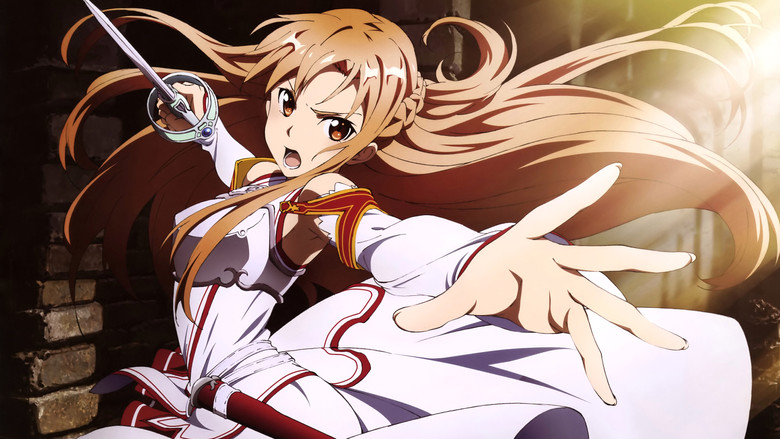
Asuna Yuuki

Haruka Tomatsu

Archetype: Heroine / Deuteragonist / Pillar of Strength Key Trait: Fierce loyalty and unshakeable empathy

Motivation

Finding genuine freedom and living life to the fullest alongside Kirito.

Character Arc

Transforms from a hopeless victim inside SAO into the formidable sub-leader of the Knights of the Blood. Across the series, she overcomes real-world family pressures, fights as an equal alongside Kirito, and descends into Underworld as the goddess Stacia to save human souls.

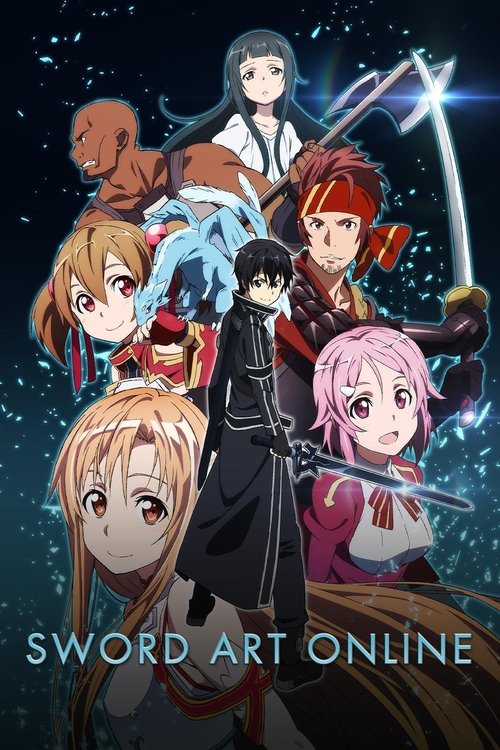
All 5 characters and cast

Symbols & Motifs

Elucidator and Dark Repulser (Twin Swords)

Meaning:

Kirito's signature dual swords symbolize his dual identity—a lone survivor carrying heavy trauma while simultaneously fighting to protect those he loves.

Context:

Wielded by Kirito in Aincrad as part of his unique Dual Blades skill during high-stakes battles.

Aincrad (The Floating Castle)

Meaning:

Serves as a physical representation of Akihiko Kayaba’s dream and a grand crucible for humanity. It symbolizes both a deadly prison and a place where genuine life, love, and community were forged.

Context:

The 100-floor floating castle serving as the main setting for the original death game created by Akihiko Kayaba.

The Blue Rose Sword & Night Sky Sword

Meaning:

Symbolic of Eugeo and Kirito’s deep bond in Alicization. The Blue Rose represents Eugeo’s gentle yet enduring resolve, while the Night Sky Sword represents Kirito’s ability to absorb the pain of others and turn dark skies into hope.

Context:

Wielded by Eugeo and Kirito throughout their journey across Underworld and during their battles in the Central Cathedral.

Yui's Heart Amulet

Meaning:

Created from a deleted AI child's lingering data, this pendant represents family, humanity, and love blooming within synthetic systems.

Context:

Carried by Kirito and Asuna as a tangible link to Yui after her core program was saved as an item in SAO.

Guns vs. Swords Motif

Meaning:

In the Phantom Bullet arc, firearms represent distant, cold trauma and cowardice, while swords represent head-on confrontation and personal responsibility.

Context:

Contrasted through Kirito's choice to use a photon sword in the gun-heavy VRMMO Gun Gale Online.

Memorable Quotes

僕の命は君のものだ、アスナ。だから君のために使う
— Kirito (Kazuto Kirigaya)

Context

Season 1, Episode 10 ("Murder in the Safe Zone" / Aincrad Floor 61) after Kirito barely survives an ambush by Kuradeel.

Meaning

Solidifies the absolute romantic commitment and mutual trust between Kirito and Asuna.

現実世界に戻れたら、絶対キリトくんを見つけ出して、また好きになるから
— Asuna Yuuki

Context

Season 1, Episode 14 ("The End of the World") right before Aincrad collapses.

Meaning

Defines the central emotional core of the series—that love transcends virtual boundaries.

All 6 quotes

Episode Highlights

The World of Swords

S1E1

Traps 10,000 players inside the VRMMORPG Sword Art Online and establishes the death game rules.

Significance:

Establishes the entire premise of the series, turning a virtual game into a deadly struggle for survival.

Red-Nosed Reindeer

S1E3

Details the total wipeout of the Moonlit Black Cats guild and the death of Sachi.

Significance:

Instills deep emotional trauma in Kirito, shaping his solo playstyle and resolve to save others.

Blue-Eyed Demon

S1E9

Kirito reveals his secret "Dual Blades" unique skill during a desperate battle against the Floor 74 boss Gleam Eyes.

Significance:

Establishes Kirito as a pop-culture icon and showcases his extraordinary battle capabilities.

The End of the World

S1E14

Kirito deduces Heathcliff's true identity as Akihiko Kayaba and fights him in a decisive duel.

Significance:

Prematurely completes the SAO death game on Floor 75, saving the remaining trapped players.

One Little Step

S2E14

Kirito and Sinon face off against Death Gun in the climax of the Phantom Bullet tournament.

Significance:

Marks the defeat of Death Gun and enables Kirito and Sinon to overcome their real-world psychological trauma.

Mother's Rosario

S2E24

Focuses on Yuuki Konno’s final moments surrounding her terminal illness and farewell.

Significance:

An emotionally poignant episode praised universally for dealing with mortality, technology, and legacy.

Uniting

S3E24

Eugeo sacrifices himself to shatter the Sword Golem and Administrator, allowing Kirito to deliver the final blow.

Significance:

Kirito defeats Administrator but suffers severe Fluctlight damage from a real-world power surge.

Ray of Light

S4E12

Foreign server players invade Underworld en masse while local inhabitants break their programmed limitations.

Significance:

Underworld inhabitants break their programmed "Taboo Index" constraints to fight for their own destiny.

Awakening

S4E19

Kirito recovers from his catatonic state through the combined memories of his closest companions.

Significance:

Kirito wakes up through the memories of Asuna, Sinon, Leafa, and Eugeo, turning the tide of the war.

New World

S4E23

Kirito and Asuna remain behind in Underworld for 200 years to guide its development before waking up in reality.

Significance:

Serves as the series climax for Alicization, where Kirito and Asuna awaken in the real world as transhuman legends.

Philosophical Questions

What defines human identity and soul?

Through the concept of "Fluctlights" (quantum light particles forming consciousness), the show asks whether an artificial mind built from code and light possesses the same moral rights as a biological human.

Is pain experienced in a virtual world less "real" than physical pain?

The series demonstrates that mental trauma and emotional loss sustained in digital realms leave permanent psychological scars on real-world bodies.

Is escaping into a virtual world a valid way to live?

Highlighted through Yuuki Konno in Mother's Rosario, where FullDive technology allows a bedridden, terminally ill patient to experience a rich, fulfilling social existence.

Alternative Interpretations

The series supports several distinct analytical readings:

Full ending explanation

Cultural Impact

Sword Art Online was a monumental catalyst for the 2010s explosion of the "Isekai / Trapped in Another World" subgenre in Japanese light novels and anime. Released right as consumer Virtual Reality technology (such as the Oculus Rift Kickstarter in 2012) began capturing public imagination, SAO bridged speculative tech fiction with mainstream anime pop culture.

Critically, the show faced polarizing reactions: the first half of Season 1 (Aincrad) was hailed as an instant classic, while the second half (Fairy Dance) drew criticism for damsel-in-distress tropes. Season 2 gained immense critical respect for its sensitive portrayal of illness and trauma in Mother's Rosario, while Seasons 3–4 (Alicization) were widely praised for peak animation quality and sophisticated sci-fi writing.

Audience Reception

Audience reception varied across the show's run:

  • Season 1: Aincrad arc received Very High acclaim, while Fairy Dance arc was Mixed/Controversial.
  • Season 2: Phantom Bullet arc received Moderate reception, while Mother's Rosario arc achieved Very High praise.
  • Seasons 3–4: Alicization and War of Underworld received High acclaim and were widely praised.

Praised Aspects: High-concept premise, breathtaking fight animation by A-1 Pictures, Yuki Kajiura’s soundtrack, and emotional arcs like Sachi, Yuuki, and Eugeo.

Common Criticisms: Extremely fast pacing and timeskips in Season 1, excessive reliance on harem tropes around Kirito, and the controversial handling of villain Sugou in Fairy Dance.

Overall Verdict: Despite divisive moments in its early run, Sword Art Online is recognized as a foundational titan of modern anime history that evolved into a mature, visually stunning sci-fi epic.

Interesting Facts

  • Written in 2001/2002: Author Reki Kawahara originally wrote Sword Art Online in 2001–2002 for the 9th Dengeki Novel Prize under the pen name Fumio Kunori, but self-published it as a web novel on his site WordGear because it exceeded the page limit.
  • Inspired by Hardcore Gaming: Kawahara spent over 12 hours a day playing classic 1990s MMORPGs like Ultima Online and Ragnarok Online, which inspired SAO’s realistic depiction of guild politics and game mechanics.
  • Character Visual Controversy: Character designer Shingo Adachi's work previously on WORKING!! caused early fans to worry the art style was too cute for a serious death game.
  • Eugeo and Kirito’s Design: Kawahara specifically instructed illustrator abec to draw Kirito and Eugeo as visual opposites (dark hair/eyes vs light hair/eyes) despite their similar face structures to emphasize their dynamic.
  • Famous Music Score: Renowned composer Yuki Kajiura composed the orchestral soundtrack, while pop-rock artist LiSA achieved massive international mainstream fame with the opening theme 'Crossing Field'.

Easter Eggs

Real-World Easter Egg IP Address (52.68.96.58)

In the finale of War of Underworld, Kirito receives a real-world IP address (52.68.96.58). Typing this IP into a web browser during the original broadcast navigated to an official secret Aniplex landing page displaying artwork of child Kirito, Eugeo, and Alice with the caption "Our memories are right here".

MyAnimeList Interface Cameo

In Episode 1, during Kayaba's opening speech, one of the virtual screens displayed in the sky features a layout mirroring the website MyAnimeList.

Character Name Puns

Kirito’s name is a portmanteau of Kirigaya Kazuto. Similarly, Suguha's avatar "Leafa" is a play on her real name, as "ha" (葉) means leaf in Japanese.

Aincrad Floor Boss Beta Reference

In the Floor 1 boss fight, Ilfang the Kobold Lord uses a katana instead of the talwar weapon documented in the beta tester manual, subtle foreshadowing that Kayaba altered game mechanics to kill players off guard.

Frequently Asked Questions

Explore More About This Movie

Dive deeper into specific aspects of the movie with our detailed analysis pages

Comments (0)

Leave a comment

No comments yet. Be the first to share your thoughts!

Similar Movies