Scarlet Heart: Ryeo
A historical melodrama where a modern soul adrift in time becomes the tragic center of a kingdom's heart, painted in shades of fateful love and bloody ambition.
Scarlet Heart: Ryeo

Scarlet Heart: Ryeo

달의 연인 - 보보경심 려

"I'll be waiting for you, even if it's for a thousand years."

29 August 2016 — 01 November 2016 South Korea 1 season 20 episode Ended ⭐ 8.5 (549)
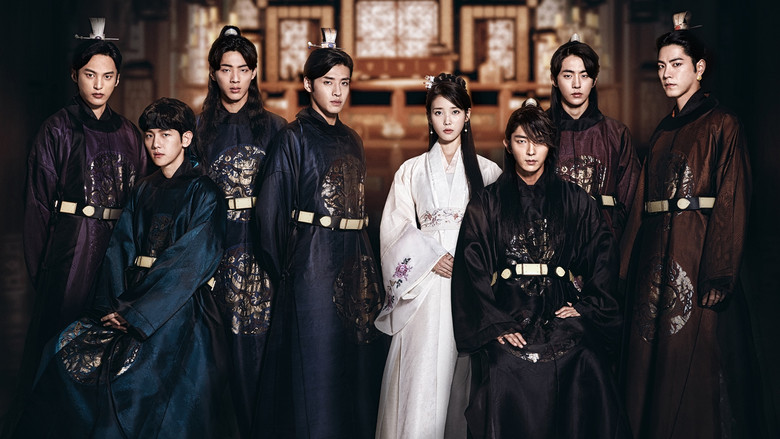
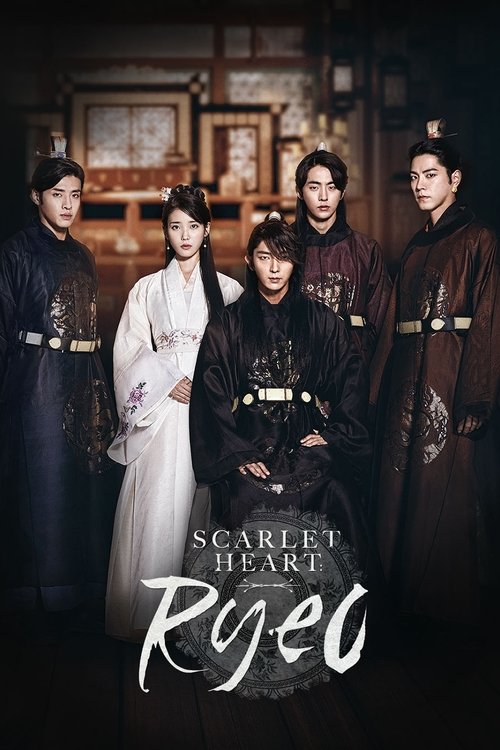
Cast: IU, Lee Joon-gi, Kang Ha-neul, Hong Jong-hyun, Baekhyun
Drama Sci-Fi & Fantasy War & Politics
Fate vs. Free Will The Corrupting Nature of Power Love and Sacrifice Loneliness and Alienation

Overview

"Scarlet Heart: Ryeo" follows Go Ha-jin (IU), a 25-year-old woman from the 21st century who is transported back in time to the Goryeo Dynasty during a total solar eclipse. She awakens in the year 941, in the body of a young woman named Hae Soo. There, she finds herself entangled in the complex lives of the many princes of the ruling Wang family.

Initially, Hae Soo develops a close relationship with the gentle and warm-hearted 8th Prince, Wang Wook (Kang Ha-neul). However, her destiny becomes intertwined with the fearsome 4th Prince, Wang So (Lee Joon-gi), a man feared and ostracized for a scar hidden behind a mask, earning him the label of "wolf-dog". As Hae Soo, with her modern sensibilities, navigates the treacherous palace politics and the escalating power struggle for the throne, she finds herself caught between love and duty. Her knowledge of future history becomes a heavy burden, as she realizes the princes she has come to care for are destined for a tragic and violent conflict.

Core Meaning

The core meaning of "Scarlet Heart: Ryeo" explores the inescapable nature of destiny and the profound tragedy that arises from love clashing with power. It posits that even with knowledge of the future, one's attempts to alter history may inadvertently become the very actions that ensure it. The series is a poignant meditation on loss, regret, and the agonizing realization that love, no matter how deep, cannot always conquer the corrupting influence of ambition and the predetermined course of fate. Ultimately, it suggests that life is a series of choices with irreversible consequences, and the deepest scars are not physical but emotional, carried across time and memory.

Thematic DNA

Fate vs. Free Will 35%
The Corrupting Nature of Power 30%
Love and Sacrifice 25%
Loneliness and Alienation 10%

Fate vs. Free Will

This is the central theme of the series. Hae Soo arrives in Goryeo with knowledge of the tragic future awaiting the princes. Her primary struggle is whether she can change the bloody course of history or if her actions are simply cogs in a predestined machine. The drama consistently questions whether individuals can forge their own paths or if they are merely playing out roles written by fate. Her attempts to prevent tragedy often seem to accelerate it, suggesting a deterministic view where free will is an illusion within the grand tapestry of history.

The Corrupting Nature of Power

The series provides a stark depiction of how the pursuit and acquisition of the throne transforms individuals. Princes who start as loyal brothers and carefree friends are gradually turned into rivals, traitors, and tyrants by their ambition. Wang Wook's descent from a gentle scholar to a calculating schemer and Wang So's transformation into the ruthless King Gwangjong illustrate how power erodes morality, isolates individuals, and forces them to make heartbreaking sacrifices, often losing their very humanity and the love they fought for in the first place.

Love and Sacrifice

Love in "Scarlet Heart: Ryeo" is almost always intertwined with immense sacrifice. Characters are constantly forced to choose between their personal feelings and their duties to family, clan, or country. Hae Soo and Wang So's epic romance is defined by the sacrifices they make for each other, which ultimately lead to their tragic separation. The series explores different facets of love—familial, romantic, and platonic—and shows how, in the brutal world of the palace, these affections are tested and often lead to devastating choices and profound loss.

Loneliness and Alienation

Many of the central characters experience deep-seated loneliness. Wang So is alienated from his family and society due to his scar. Hae Soo is culturally and temporally alienated, a stranger in a strange land, unable to share her true origins. As characters ascend in power, their isolation intensifies. Wang So, as King, becomes the most powerful man but is utterly alone, having pushed away or lost everyone he ever loved. The series suggests that the highest positions of power are often the loneliest.

Character Analysis

Hae Soo / Go Ha-jin

IU (Lee Ji-eun)

Archetype: The Innocent / The Tragic Heroine
Key Trait: Resilient Empathy

Motivation

Initially, her motivation is simple survival and adapting to the Goryeo era. This evolves into a desperate desire to protect the people she loves from the tragic fates she knows are coming. She wants to change history for the better, but her primary motivation becomes trying to find a world where she and Wang So can be together, free from the palace's cruelty.

Character Arc

Hae Soo begins her journey as a spirited, somewhat naive 21st-century woman trapped in a historical setting. Initially, she is cheerful and tries to use her modern knowledge for good. However, as she becomes embroiled in the brutal palace politics, witnessing betrayals and deaths, her optimism erodes. She is forced to mature rapidly, becoming more cautious and somber. Her arc is tragic; she falls deeply in love but is ultimately powerless to stop the bloodshed she foresaw. She leaves the palace, heartbroken and weary, and dies yearning for the man she could not be with, ultimately returning to her own time filled with overwhelming grief and memories of a life she can't forget.

Wang So (4th Prince)

Lee Joon-gi

Archetype: The Outcast / The Byronic Hero
Key Trait: Fierce Loyalty

Motivation

His initial motivation is to gain his family's, particularly his mother's, acceptance and love. This shifts entirely to Hae Soo. She becomes his sole reason for living and his motivation for wanting the throne—he believes that as king, he can protect her and create a world for them. Ironically, this very motivation is what ultimately drives them apart.

Character Arc

Wang So starts as a feared and lonely prince, scarred both physically and emotionally by his mother's cruelty and abandonment. He is violent and defensive, a "wolf-dog" who keeps everyone at a distance. Through Hae Soo's unconditional love and acceptance, he slowly opens up, revealing a loyal and passionate man beneath the hardened exterior. However, to protect Hae Soo and secure their future, he embraces his ruthless side to seize the throne. His arc is a tragic circle: he becomes the powerful king he needed to be to protect her, but in doing so, he becomes a lonely, feared monarch who loses her love and is left with nothing but power and regret.

Wang Wook (8th Prince)

Kang Ha-neul

Archetype: The Fallen Hero
Key Trait: Intellectual Ambition

Motivation

Initially, his motivation is to live a peaceful life and care for his family. This changes to a desire to protect his clan and Hae Soo by gaining power. He is caught between his gentle nature and the immense pressure to lead his family, ultimately succumbing to the latter. His ambition becomes a defensive measure that consumes his morality.

Character Arc

Wang Wook is introduced as a gentle, kind, and scholarly prince, a loving husband, and a source of comfort for Hae Soo. He represents warmth and safety. However, after his wife's death and under pressure from his ambitious family, his character corrodes. His love for Hae Soo becomes possessive, and his desire for the throne, fueled by fear and ambition, leads him to betray her and others. He transforms from a protagonist into a tragic antagonist, a man who chooses power over love and lives the rest of his life in regret, a shadow of the noble person he once was.

Symbols & Motifs

Wang So's Mask

Meaning:

The mask symbolizes Wang So's emotional scars, his rejection by his mother, and his alienation from the world. It is a physical manifestation of the pain and trauma he hides. When Hae Soo helps him see past the scar, it signifies her acceptance of his true self, and when he removes it, it represents his willingness to be vulnerable and open himself to love and a different future.

Context:

Wang So wears the mask for the first part of the series. Hae Soo is the first person to treat him normally despite his scar. A pivotal moment occurs when she creates a concealer to cover his scar, allowing him to participate in a royal ritual without the mask, marking a significant turning point in their relationship and his character's journey toward self-acceptance.

The Hairpin

Meaning:

The hairpin is a symbol of love, connection, and enduring memory across time. Initially a gift from Wang So to Hae Soo, it represents their bond and his promise to her. Its appearance in different contexts, including on their daughter, signifies the lasting legacy of their love, even after separation and death.

Context:

Wang So gives the hairpin to Hae Soo as a token of his affection. After Hae Soo's death, Wang So sees the same hairpin on their daughter, whom Prince Wang Jung has been raising. This confirms the child's identity and serves as a painful, yet beautiful, reminder of the love he lost. In the final scene, Hae Soo sees a portrait of Wang So in a museum, solidifying the hairpin's role as a link between their past and her present.

Rain Ritual

Meaning:

The rain ritual scene symbolizes a major turning point in the public's perception of Wang So and in Hae Soo's feelings for him. It represents salvation, acceptance, and the moment Wang So steps out of the shadows and into the light as a figure of power and destiny. It is the moment Hae Soo realizes the depth of her connection to him and his future as king.

Context:

During a drought, the princes perform rituals to bring rain, but fail. When the ostracized Wang So steps in to perform the ritual as the final prince, the people are initially hostile. Hae Soo, remembering he is the future king, uses her makeup skills to cover his scar. As he walks forward, confident and unmasked, the sky opens and rain begins to fall, solidifying his legitimacy in the eyes of the people and forever changing his and Hae Soo's path.

Solar Eclipse

Meaning:

The solar eclipse is the catalyst for the entire story, serving as a supernatural portal between the modern world and the Goryeo era. It symbolizes a disruption in the natural order of time and reality, allowing for a fateful intervention. It represents the merging of two worlds and two destinies, setting the stage for the tragic events that follow.

Context:

The series begins when Go Ha-jin drowns during a total solar eclipse, only to awaken as Hae Soo in the 10th century. In the final episode, as Hae Soo looks back on her life in Goryeo, she sees another eclipse in the modern world, bringing the narrative full circle and reinforcing the celestial event as the bridge between her two lives.

Memorable Quotes

If we are from different worlds, then I will find you... My Soo.

— Wang So

Context:

This line is from the final scene of Episode 20. After Hae Soo's death, Wang So lives a lonely life as king. He looks at the palace, remembering her, and makes this vow. The scene then cuts to Hae Soo in the present, weeping in front of a portrait of him in a museum, realizing their story was real.

Meaning:

This is Wang So's final, heart-wrenching promise, spoken after Hae Soo has died and returned to her own time. It encapsulates the epic, transcendent nature of their love, suggesting that their connection is so powerful it can defy time and reality itself. It provides a sliver of hope in an otherwise tragic ending.

Trust is the promise of a prince.

— Wang So

Context:

This is said in the early episodes when Wang So is still largely misunderstood. Hae Soo is wary of him, but he makes this declaration to assure her of his intentions, setting the stage for the deep trust that will eventually form between them.

Meaning:

This early quote establishes Wang So's core value of loyalty and the weight he places on his word, even when he is perceived as untrustworthy by others. It's a foundational statement for his character, highlighting his unwavering commitment to those he chooses to protect, especially Hae Soo.

It's not a crime to want to live.

— Hae Soo

Context:

Hae Soo says this in Episode 3 after facing a life-threatening situation. It marks her transition from a scared, disoriented girl to someone determined to fight for her place and her life in this new, harsh reality.

Meaning:

This quote reflects Hae Soo's fundamental motivation after being thrust into the dangerous Goryeo era. It's a raw and desperate affirmation of her will to survive against all odds. It defines her resilience in the face of palace intrigues, physical punishments, and emotional turmoil.

If I had not met him, I would not yearn for him. If I did not know him, I would not think of him so much... If we had not been together, I wouldn't have to disappear.

— Hae Soo

Context:

This is part of Hae Soo's final thoughts as she is dying in the arms of Prince Wang Jung in Episode 20. She is reflecting on her life and her love for Wang So, acknowledging the depth of her feelings and the pain it has caused.

Meaning:

This poetic and sorrowful monologue, adapted from a poem, perfectly captures the paradox of tragic love. It expresses the profound pain and memory that comes from a deep connection, suggesting that the beauty of their love is inseparable from the agony of their separation. It speaks to the regret and enduring attachment she feels.

Episode Highlights

Episode 1

S1E1

Go Ha-jin, a modern woman, drowns during a solar eclipse and awakens in the Goryeo Dynasty in the body of Hae Soo. The episode introduces the large cast of princes in a memorable bathhouse scene and establishes the initial dynamics of the palace, immediately plunging Hae Soo into a world of political intrigue and unfamiliar customs.

Significance:

This episode sets the entire premise of the series. It establishes the fish-out-of-water conflict for the protagonist, introduces all the key players and their initial personalities, and plants the seeds for the central love triangles and political struggles that will drive the narrative.

Episode 11

S1E11

A pivotal episode filled with dramatic turns. The Crown Prince is poisoned, and Hae Soo is framed for the crime and sentenced to death. Wang Wook, torn between love and family, fails to protect her. In a dramatic public display, Wang So defies the King and shields Hae Soo from a barrage of arrows with his cloak, solidifying his unwavering devotion and marking the definitive shift in Hae Soo's heart towards him.

Significance:

This episode marks the point of no return for several characters. It irrevocably fractures the relationship between Hae Soo and Wang Wook, demonstrating his ultimate weakness. It also cements the epic nature of Wang So's love for Hae Soo, proving he would sacrifice everything for her and winning her heart in the process.

Episode 16

S1E16

After the death of the previous king, Wang Yo brutally seizes the throne. Wang So, to save Hae Soo and the other princes, is forced to pledge allegiance to the new tyrant. The episode culminates in the tragic, forced suicide of Court Lady Oh, who sacrifices herself to save Hae Soo. Wang So and Hae Soo share a passionate and desperate kiss, believing their time together is running out.

Significance:

This episode is one of the darkest and most emotional. Lady Oh's death is a profound loss for Hae Soo, hardening her resolve. The political situation becomes infinitely more dangerous, forcing Wang So to make a pivotal choice that sets him on the path to becoming King Gwangjong.

Episode 18

S1E18

The 10th Prince, Wang Eun, and his wife, Soon-deok, are framed as traitors and cornered by King Wang Yo's forces. Despite Wang So's efforts to save them, they are tragically killed. To spare his brother further pain, Wang So is forced to deliver the final blow to Wang Eun himself. The event horrifies Hae Soo and creates a deep rift between her and Wang So, as she sees the bloody future she feared come to life.

Significance:

This episode is the dramatic climax of the princes' fraternal conflict. The innocent Wang Eun's death symbolizes the end of any remaining camaraderie between the brothers and the true beginning of Wang So's reign as a feared monarch. It is a turning point that pushes Hae Soo away from him, unable to reconcile the man she loves with the killer he has become.

Episode 20 (Finale)

S1E20

Heartbroken and weary, Hae Soo leaves the palace by marrying the 14th Prince, Wang Jung. She gives birth to Wang So's daughter but dies from a long-standing illness before Wang So, who ignored Jung's letters out of jealousy, can reach her. Hae Soo awakens back in her modern life, initially believing it was all a dream, until she visits a Goryeo exhibit and sees a portrait of a lonely King Gwangjong. Overcome with grief, she apologizes for leaving him alone.

Significance:

The finale delivers a famously tragic and emotionally devastating conclusion. It confirms that history could not be changed and that Hae Soo and Wang So's love was doomed by circumstance. The ending solidifies the series' core themes of fate, loss, and eternal love, leaving viewers with a profound sense of sorrow and a lingering hope that they might find each other again in another life.

Philosophical Questions

Can one person's actions truly change the course of history?

The series constantly grapples with this question through its protagonist, Hae Soo. Armed with future knowledge, she repeatedly tries to avert the tragedies she knows are coming—the deaths of the princes and Wang So's transformation into a lonely tyrant. However, her interventions often have a 'Cassandra effect'; not only is she not believed, but her actions sometimes seem to precipitate the very events she seeks to prevent. The drama suggests a deterministic view of history, where major events are fixed points. Hae Soo's presence doesn't change the 'what' of history, but it profoundly changes the 'why' and the emotional journeys of the people involved, posing the question of whether changing hearts is as significant as changing events.

Is true love defined by being together, or by the sacrifices made for one another?

"Scarlet Heart: Ryeo" presents a tragic exploration of love and sacrifice. The central romance between Hae Soo and Wang So is ultimately torn apart by the very actions they take to protect each other. Wang So seeks the throne to gain the power to keep Hae Soo safe, but becoming king creates a political environment where their love cannot survive. Hae Soo leaves him to protect him and their unborn child from the dangers of the palace. Their story questions the conventional 'happily ever after' by proposing that the ultimate expression of their love was not in their union, but in their painful, selfless sacrifices, which ensured the other's survival at the cost of their own happiness.

Alternative Interpretations

The ending of "Scarlet Heart: Ryeo" has been the subject of much discussion among fans, leading to several interpretations.

One popular interpretation centers on the final line, "I will find you." Some viewers see this as a literal promise, fueling theories for a potential second season where Wang So is reincarnated in the modern era to reunite with Hae Soo. This view holds onto the hope that their love is powerful enough to transcend time itself.

Another, more metaphorical interpretation, suggests the ending is not about a future reunion but about the eternal nature of memory and love. When Hae Soo weeps at his portrait, she is not just remembering a dream but acknowledging a profound part of her soul's journey. Wang So's promise is not about a physical search but a spiritual one, affirming that their bond exists outside of time. His loneliness as king is the price for their love, and her tears in the present are the echo of that love's enduring impact. This reading emphasizes the tragic beauty of their story: they are fated to love and lose each other, but the love itself is never truly lost, only transformed into memory and sorrow.

Cultural Impact

"Scarlet Heart: Ryeo" holds a unique legacy in the world of K-dramas. Domestically in South Korea, it was met with mixed critical reviews and underwhelming viewership ratings, with criticisms aimed at the directing style and some of the idol actors' performances in the initial episodes. However, the series became a massive cultural phenomenon internationally. Its star-studded cast, epic romance, and tragic storyline resonated deeply with global fans, making it one of the most beloved and discussed K-dramas of its time.

This discrepancy between domestic and international reception highlighted a growing trend in the K-drama industry, where a show's success is not solely measured by local ratings but also by its global streaming performance and online buzz. The series significantly boosted the international profiles of its main cast, particularly Lee Joon-gi and IU. Years after its conclusion, the drama maintains a fiercely loyal fanbase that continues to create content, discuss theories, and passionately campaign for a second season. Its famously heartbreaking ending is a frequent topic of debate and is often cited as one of the most memorable and emotionally impactful finales in K-drama history, cementing the show's legacy as a tragic masterpiece that continues to captivate new audiences worldwide.

Audience Reception

The audience reception for "Scarlet Heart: Ryeo" was sharply divided between domestic and international viewers. In South Korea, the drama struggled with viewership ratings, which fluctuated and were generally considered low for a project with such a high budget and star-studded cast. Korean critics and viewers initially pointed out issues with choppy editing and criticized the acting of some of the cast members.

Conversely, the series was an immense success internationally, where it became a massive cult classic. Global audiences were captivated by the epic romance, the tragic storyline, the charismatic performance of Lee Joon-gi as Wang So, and the chemistry between the leads. The heartbreaking ending, while devastating, was often praised for its emotional depth and audacity, solidifying its iconic status. To this day, the international fan community remains incredibly active, with many still demanding a second season to give the main characters the happy ending they were denied.

Interesting Facts

  • The series is based on the Chinese novel "Bu Bu Jing Xin" by Tong Hua, which was also adapted into a hugely successful Chinese drama in 2011.
  • "Scarlet Heart: Ryeo" was fully pre-produced before its premiere, which is uncommon for most K-dramas. This was done partly to accommodate a simultaneous broadcast in China.
  • The drama was reportedly sold to the Chinese streaming service Youku for over $400,000 per episode, making it the most expensive Korean drama sold at the time, with a total value exceeding $8 million.
  • Despite its massive popularity with international audiences, the series received modest and fluctuating viewership ratings in South Korea, often losing to its competitor "Love in the Moonlight".
  • The historical figure King Gwangjong, portrayed by Lee Joon-gi, was the fourth king of Goryeo and is known for his ruthless purges of powerful clans to centralize royal authority, a fact that Hae Soo is aware of from her history lessons.
  • The drama was the first Korean project for Universal Studios.

⚠️ Spoiler Analysis

Click to reveal detailed analysis with spoilers

Frequently Asked Questions

Explore More About This Movie

Dive deeper into specific aspects of the movie with our detailed analysis pages

Comments (0)

Leave a comment

No comments yet. Be the first to share your thoughts!