Skip to content
Secret Sunshine
A quiet, devastating drama of grief and faith in a provincial Korean town, where a single mother searches for solace beneath an ordinary sky and finds that hope leaves ash behind it.
Secret Sunshine

Secret Sunshine

밀양

23 May 2007 South Korea 143 min 7.2 (250)

Director: Lee Chang-dong

Cast: Jeon Do-yeon, Song Kang-ho, Jo Young-jin, Seon Jeong-yeop, Kim Young-jae

Drama Grief and its aftermath Faith and the limits of religion Forgiveness and who may grant it Isolation and community Ordinary life and dignity
Budget: $2,900,000
Box Office: $11,581,469

Overview

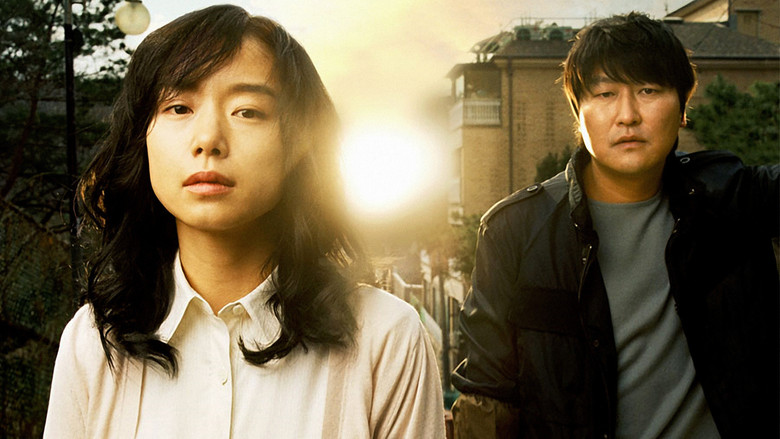
Shin-ae, a young widow, moves with her young son Jun to Miryang, the hometown of her late husband, hoping to start over. She is an outsider in a small town. She is met with curiosity, gossip and the clumsy, persistent kindness of Jong-chan, a local mechanic who becomes her unlikely companion.

When catastrophe strikes her fragile new life, the film becomes less about the tragedy than about its aftermath. It follows how a person survives unbearable loss and what she grasps at to stay upright: community, religion, forgiveness.

Lee Chang-dong directs with a novelist's patience and a hands-off realism, carried by Jeon Do-yeon's Cannes-winning performance. The film moves between small-town comedy and raw anguish across a 142-minute running time.

Core Meaning

Lee Chang-dong, a former novelist, examines whether suffering can be healed by anyone other than the sufferer. The film treats religion with respect, not ridicule, but it questions a faith that offers quick, borrowed consolation. Forgiveness that is announced by someone else, or by God, cannot replace the victim's own reckoning.

The film suggests that grace which bypasses a person's pain is hollow. Real survival is small, stubborn and earthly. It lives in an unglamorous act of self-care and in the presence of another person, not in a miracle. Lee refuses to explain it, and the ending leaves the audience to work out its significance.

Thematic DNA

Grief and its aftermath 30%
Faith and the limits of religion 30%
Forgiveness and who may grant it 20%
Isolation and community 12%
Ordinary life and dignity 8%

Grief and its aftermath

The film is concerned with life after the tragedy, not the tragedy itself. Shin-ae's behavior swings abruptly between numbness, euphoria and rage.

Faith and the limits of religion

Shin-ae's conversion offers her belonging and calm, but the film questions the church's easy emotional comfort. It also shows her crisis of faith when she learns who God has already forgiven.

Forgiveness and who may grant it

Her attempt to forgive is pre-empted by the offender's own peace with God, which strips her of agency and sets off her revolt.

Isolation and community

She is an outsider among gossiping townsfolk. Jong-chan's steady, awkward companionship contrasts with the performative sympathy of the congregation.

Ordinary life and dignity

The film ends in a hairdresser's, with a small act of self-reclamation that ends the grand spiritual drama.

Character Analysis

Lee Shin-ae

Jeon Do-yeon

Archetype: Tragic protagonist Key Trait: Raw emotional volatility

Motivation

To find a way to bear her pain and keep living for her son's memory.

Character Arc

She moves from a hopeful new beginning through devastating loss to fervent conversion. Then she rebels against God and harms herself, and she ends up exhausted but still living.

Kim Jong-chan

Song Kang-ho

Archetype: Loyal companion / everyman Key Trait: Unpretentious, persistent kindness

Motivation

Affection for Shin-ae and a simple wish to help her.

Character Arc

He is a good-natured mechanic who stays beside Shin-ae without understanding her. He is a steady, humane presence as she falls apart.

All 3 characters and cast

Symbols & Motifs

Sunlight / the sky

Meaning:

Indifferent or hidden grace, and the 'secret' presence of meaning in ordinary things.

Context:

The film opens on the sky seen from a car and closes on sunlight on a patch of earth, joining the heavenly and the mundane.

The patch of earth

Meaning:

Grounded, unspectacular survival in place of transcendence.

Context:

The final image looks down at the dirt, where sunlight falls, after all the talk of heaven.

Hair and the hairdresser

Meaning:

Self-care, renewal and reclaiming one's body and identity.

Context:

Shin-ae encounters the offender's daughter at the salon and leaves mid-haircut. She finishes cutting her own hair at home.

Miryang

Meaning:

The Korean title means 'secret sunshine'. It names an ordinary town, suggesting beauty that is hidden and unnoticed.

Context:

The setting of the film, which is the title in both languages.

Jong-chan's presence

Meaning:

Imperfect human companionship set against divine promises.

Context:

He appears at each stage of her ordeal, often as comic relief, and stays with her at the end.

Philosophical Questions

Can anyone forgive on behalf of a victim?

When Shin-ae learns the offender has found peace with God, the film shows how a forgiveness she never gave undermines her.

Is faith a cure for grief or an avoidance of it?

Her conversion brings relief but also repression, and its collapse leads to rage.

Can pain be shared?

The film shows that attempts to share it may be only performative, while quiet presence can still matter.

How It Ends

Alternative Interpretations

Some readers see a critique of institutional religion and its performative emotion. Others see a respectful study of faith's role for people on the edge. The ending is read either as muted hope, with the sun and Jong-chan's presence, or as bleak, with no resolution. Critics have also noted that Lee leaves the film's significance for the viewer to work out.

Full ending explanation

Cultural Impact

The film was the bright spot of a gloomy 2007 for Korean cinema, according to koreanfilm.org. It was Lee's comeback after his time as a government minister. Jeon Do-yeon's Cannes Best Actress win brought it international attention, and critics compared her performance to Gena Rowlands'. Reviewers read it as a study of faith and as a portrait of provincial, patriarchal Korean society and its church culture. Academic writing has also analyzed it as melodrama.

Audience Reception

Praise focuses on Jeon Do-yeon's raw, unflinching performance, which was called one of the strongest in recent memory, and on the film's emotional honesty. Criticism concerns its length, some loss of tautness in the later stretch, and an ambiguous, abrupt ending that leaves some viewers without resolution. Time Out found it solid but never transcendent. Eye for Film called it overlong but praised the central performance. Overall it is regarded as a devastating, acclaimed drama of grief.

Interesting Facts

  • The film won the Best Actress award for Jeon Do-yeon at the 2007 Cannes Film Festival.
  • It was Lee Chang-dong's fourth feature, and he returned to filmmaking with it after serving as Minister of Culture and Tourism under President Roh Moo-hyun.
  • Lee worked as a novelist before becoming a director, and critics note the film's literary sweep.
  • The film runs 142 minutes.

Frequently Asked Questions

Explore More About This Movie

Dive deeper into specific aspects of the movie with our detailed analysis pages

Comments (0)

Leave a comment

No comments yet. Be the first to share your thoughts!

Similar Movies