Into the Wild
A sprawling, transcendental adventure where golden sun-drenched landscapes clash with the cold, indifferent silence of the north. It captures the raw ache of a soul yearning to shed societal skin and find primitive purity.
Into the Wild

Into the Wild

"Into the heart. Into the soul."

21 September 2007 United States of America 148 min ⭐ 7.8 (9,906)
Director: Sean Penn
Cast: Emile Hirsch, Marcia Gay Harden, William Hurt, Jena Malone, Brian H. Dierker
Drama Adventure
Rejection of Materialism Man vs. Nature The Search for Identity The Complexity of Forgiveness Transcendentalism
Budget: $15,000,000
Box Office: $56,255,142

Overview

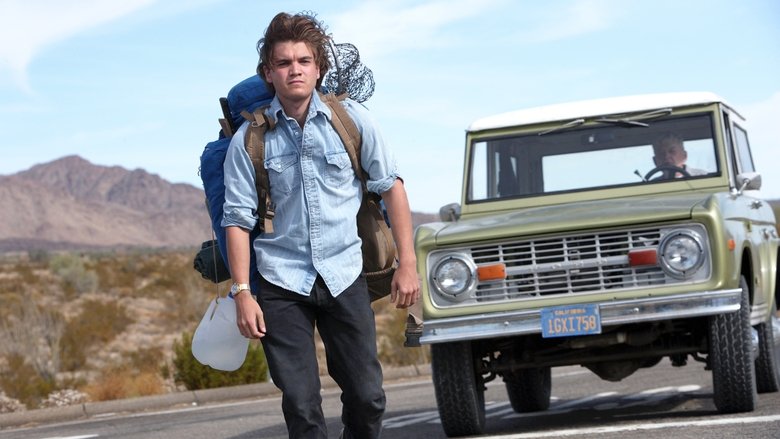
Based on the true story of Christopher McCandless, Into the Wild follows a top-tier student and athlete who, upon graduating from Emory University in 1990, decides to abandon his conventional life. Rather than embarking on a prestigious career, he destroys his credit cards, donates his life savings to charity, and sets out on a cross-country odyssey toward the ultimate destination: the Alaskan wilderness.

Renaming himself "Alexander Supertramp," Chris hitchhikes across North America, encountering a diverse cast of characters who each leave a mark on his soul. From the wheat fields of South Dakota to the Salton Sea, the film oscillates between his vibrant travels and his solitary survival inside an abandoned city bus in the Alaskan backcountry. It is a meditative exploration of what it means to be truly free and the inherent risks of radical idealism.
Core Meaning

The core meaning of Into the Wild lies in the tension between radical individualism and the necessity of human connection. Director Sean Penn explores the transcendentalist urge to escape a "poisoned" civilization and find truth in nature's indifference. However, the film ultimately suggests that while solitude can provide clarity and spiritual rebirth, the human experience is incomplete without others. The climactic realization that "Happiness only real when shared" serves as a heartbreaking testament to the idea that our identity is not found in isolation, but in the reflection of those we love.

Thematic DNA

Rejection of Materialism 25%
Man vs. Nature 25%
The Search for Identity 20%
The Complexity of Forgiveness 20%
Transcendentalism 10%

Rejection of Materialism

Chris views material possessions and career-driven success as chains. This is revealed through his act of burning his cash and abandoning his car, symbolizing a total divorce from a society he perceives as shallow and hypocritical.

Man vs. Nature

The film portrays nature not as a romantic backdrop, but as a "zero-tolerance system." While Chris finds beauty and spiritual solace in the wild, his eventual struggle highlights nature's absolute indifference to human life and survival.

The Search for Identity

Adopting the moniker "Alexander Supertramp," Chris attempts to kill his "false being" and reinvent himself. His journey is a literal and metaphorical quest to find an authentic self-stripped of societal expectations and family trauma.

The Complexity of Forgiveness

Chris’s flight is largely fueled by anger toward his parents' past. His inability to forgive them is contrasted with the wisdom offered by Ron Franz, who emphasizes that forgiveness is the gateway to love and divine light.

Transcendentalism

Following in the footsteps of Thoreau and Tolstoy, the film examines the belief that the divine can be found through simple living and a direct, unmediated relationship with the natural world.

Character Analysis

Christopher McCandless

Emile Hirsch

Archetype: The Seeker
Key Trait: Idealistic and fiercely independent.

Motivation

Driven by a desperate need for "truth" and a desire to escape the perceived phoniness and moral corruption of his family life.

Character Arc

Chris moves from a state of righteous anger and idealistic isolation to a final, tragic state of enlightened humility, realizing too late that he needs human companionship.

Ron Franz

Hal Holbrook

Archetype: The Mentor
Key Trait: Patient, wise, and lonely.

Motivation

Seeking connection and a way to heal from the loss of his own family through a new paternal bond with Chris.

Character Arc

A lonely widower who finds a brief sense of purpose in Chris. He offers Chris a home and a grandfatherly bond, only to be left behind, ultimately choosing to change his own stagnant life because of Chris's influence.

Carine McCandless

Jena Malone

Archetype: The Witness
Key Trait: Empathetic and insightful.

Motivation

Driven by her love for Chris and a desire to understand and explain the deep-seated pain that drove him away.

Character Arc

As the narrator, she provides the emotional context for Chris's departure, evolving from a protective sister to the keeper of his memory and the bridge between his two worlds.

Symbols & Motifs

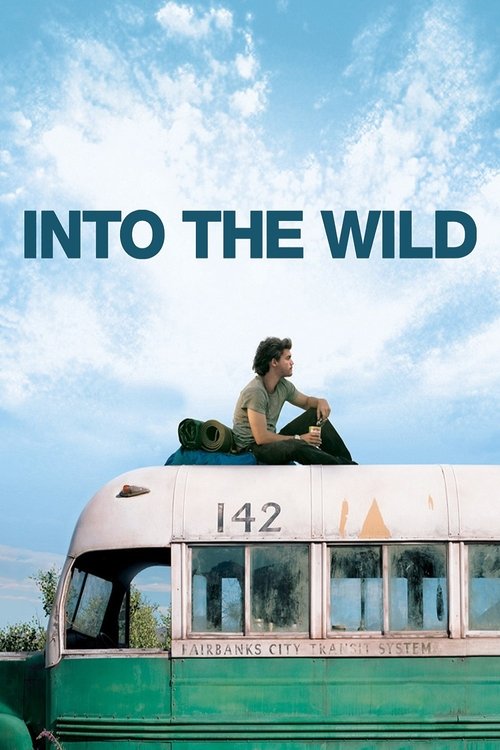
Magic Bus 142

Meaning:

The bus symbolizes both a refuge and a tomb. It represents the irony of Chris's journey: he flees civilization only to find his home in a discarded artifact of the very society he rejected.

Context:

Found in the Alaskan bush, Chris uses it as his primary shelter, eventually becoming the site of his final moments and spiritual epiphany.

Burning Money

Meaning:

Symbolizes the destruction of societal value systems. By turning currency into ash, Chris asserts that his worth is no longer tied to economic status.

Context:

Early in his journey, Chris burns his remaining cash on the side of the road, marking his transition into the life of a "tramp."

The Leather Belt

Meaning:

A symbol of legacy and self-narration. It serves as a physical record of his travels and the wisdom he gained, representing the stories we leave behind.

Context:

Under the mentorship of Ron Franz, Chris carves symbols representing his journey—such as the Datsun and the river—into a leather belt.

The Yellow Datsun

Meaning:

Represents the abandonment of the past and the rejection of his parents' attempts to "buy" his compliance.

Context:

Chris leaves his car after a flash flood, choosing to walk rather than remain tethered to his previous identity.

Memorable Quotes

Happiness only real when shared.

— Christopher McCandless

Context:

Scrawled in the margins of a book as Chris lies dying in the bus, reflecting on the people he met during his travels.

Meaning:

The film's most significant realization; it suggests that total isolation is a form of spiritual starvation, and that joy requires a witness to be meaningful.

Rather than love, than money, than faith, than fame, than fairness... give me truth.

— Christopher McCandless

Context:

Spoken during his travels to emphasize his rejection of the "convenient" lies of civilization.

Meaning:

A paraphrasing of Thoreau that encapsulates Chris's entire worldview: an uncompromising demand for authenticity over all societal comforts.

When you forgive, you love. And when you love, God's light shines on you.

— Ron Franz

Context:

Ron shares this wisdom with Chris while trying to convince him to reconnect with his family or find a home.

Meaning:

A philosophical counter-point to Chris's anger, suggesting that spiritual peace comes from reconciliation rather than escape.

Philosophical Questions

Is true freedom possible within a community?

The film contrasts Chris's 'primitive freedom' (no rules, no ties) with the 'social freedom' offered by characters like Ron and Jan. It asks if freedom is the absence of responsibility or the choice of it.

Does nature have a moral character?

Chris enters the wild expecting a spiritual sanctuary. The film explores the harsh reality that nature is 'blind and deaf,' operating by laws of survival that are indifferent to human idealism.

Alternative Interpretations

Critics and audiences often split into two camps: the Romantic Interpretation, which views Chris as a heroic visionary whose death was a tragic but enlightened accident; and the Cynical Interpretation, which sees him as a selfish, mentally unstable young man whose death was a result of hubris and a lack of respect for nature. Some modern readings also focus on generational trauma, interpreting Chris's journey not as a search for nature, but as a desperate, failed attempt to run away from the psychological damage inflicted by his abusive father.

Cultural Impact

Into the Wild became a cultural touchstone for a generation seeking meaning outside of consumerism, but it also sparked intense debate. In Alaska, many viewed McCandless as an arrogant amateur whose lack of preparation insulted the reality of the wilderness. Conversely, for many young people, he became a secular saint of the counter-culture. The film's popularity led to thousands of pilgrims visiting "Bus 142" on the Stampede Trail, which eventually necessitated the bus's removal by the Alaska National Guard in 2020 due to numerous search-and-rescue missions and several hiker deaths.

Audience Reception

The film was met with critical acclaim, holding an 83% on Rotten Tomatoes. Audiences were deeply moved by Emile Hirsch's visceral performance and Eric Gautier's stunning cinematography. While praised for its emotional depth and the soulful soundtrack by Eddie Vedder, some critics found the film's nearly 150-minute runtime self-indulgent. The most common point of contention remains the character of Chris himself—whether viewers find him inspiring or insufferable often dictates their overall reaction to the film.

Interesting Facts

  • Emile Hirsch lost 40 pounds for the role to accurately depict McCandless's starvation in the final scenes.
  • Sean Penn waited 10 years to get the permission of the McCandless family to make the film.
  • Jim Gallien, the man who gave the real Chris McCandless his final ride and a pair of boots, plays himself in the movie.
  • The soundtrack by Eddie Vedder was the first solo album for the Pearl Jam frontman and won a Golden Globe for the song 'Guaranteed'.
  • Filming took place in over 35 different locations across North America to trace Chris's actual path.

Easter Eggs

The Real Photographs

The final shot of the film features a real self-portrait taken by Christopher McCandless himself before he died, bridging the gap between cinema and reality.

Jim Gallien Cameo

The actor playing the man who drops Chris off at the Stampede Trail is the actual person who did it in 1992, lending a haunting authenticity to the scene.

⚠️ Spoiler Analysis

Click to reveal detailed analysis with spoilers

Frequently Asked Questions

Explore More About This Movie

Dive deeper into specific aspects of the movie with our detailed analysis pages

Comments (0)

Leave a comment

No comments yet. Be the first to share your thoughts!