Skip to content
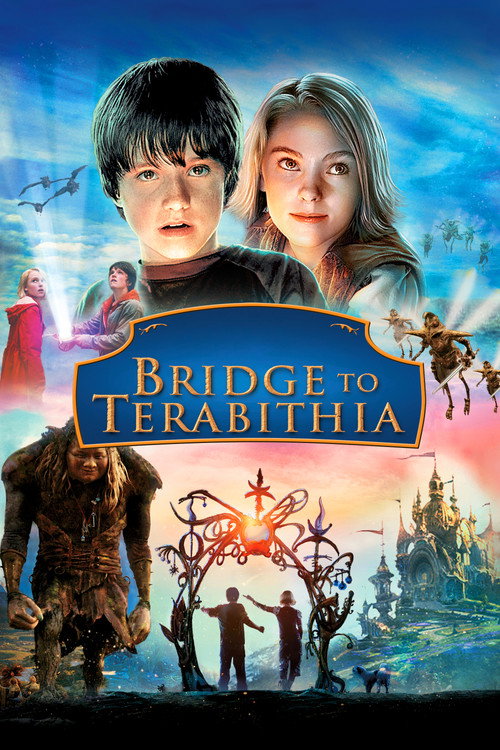
Bridge to Terabithia
A luminous coming-of-age drama steeped in bittersweet nostalgia, where childhood isolation dissolves into a lush, imagined forest kingdom, transforming everyday woodland canopies into sacred sanctuaries against the harsh realities of growing up.
Bridge to Terabithia

Bridge to Terabithia

"Discover a place that will never leave you, and a friendship that will change you forever."

15 February 2007 United States of America 95 min 7.4 (5,497)

Director: Gábor Csupó

Cast: Josh Hutcherson, AnnaSophia Robb, Zooey Deschanel, Robert Patrick, Bailee Madison

Drama Family Adventure The Healing Power of Imagination Friendship and Mutual Transformation Grief, Mortality, and Acceptance Individuality versus Conformity
Budget: $60,000,000
Box Office: $137,587,063

Overview

Ten-year-old Jesse Aarons is an introverted, artistically inclined boy growing up in a financially burdened rural household where his creative gifts go unrecognized and unsupported. Facing relentless bullying at school and emotional distance at home, Jesse trains diligently over the summer to become the fastest runner in the fifth grade, hoping athletic achievement will earn him the respect of his peers and father. His aspirations are abruptly upended on the first day of school when Leslie Burke, an outspoken and imaginative new girl in town, effortlessly outruns all the boys in his class.

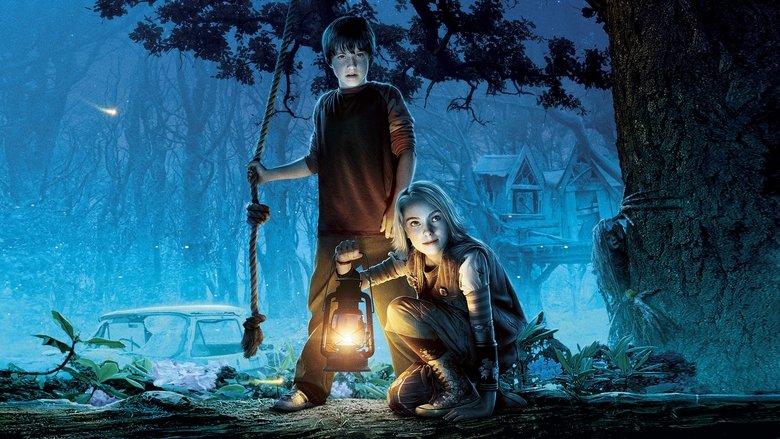
Despite this competitive introduction, Jesse and Leslie soon discover an unspoken kinship as neighboring outcasts. Venturing deep into the woods adjoining their homes, they swing across a dry creek bed on an old rope to create a secret, imaginary realm christened Terabithia. In this enchanted kingdom where they rule as sovereign monarchs, their everyday anxieties, fears, and schoolyard adversaries are transformed into mythical creatures and thrilling quests, giving them the agency they lack in their everyday lives.

Through Leslie's vibrant optimism and unbounded creativity, Jesse learns to view the world through fresh eyes, embrace his innate artistic talents, and shed his defensive anxieties. Their shared sanctuary fosters profound personal growth, establishing an unbreakable bond of trust and courage in the face of mundane hardships.
Core Meaning

At its core, Bridge to Terabithia explores how the transformative power of empathy, human connection, and childhood imagination provides young individuals with the emotional fortitude to confront social alienation, poverty, and sudden mortality. Director Gábor Csupó illustrates that fantasy is not a childish evasion of reality, but an essential psychological conduit through which children process emotional vulnerability, confront inner fears, and cultivate resilience.

Furthermore, the film carries a profound message about the endurance of love beyond loss. Leslie enters Jesse's repressed existence not to provide easy answers, but to open his heart to the world. Through their friendship, Jesse learns that grief must not lead to emotional paralysis, but to generous stewardship—carrying forward the empathy and enchantment Leslie granted him to enrich the lives of others.

Thematic DNA

The Healing Power of Imagination 30%
Friendship and Mutual Transformation 25%
Grief, Mortality, and Acceptance 25%
Individuality versus Conformity 20%

The Healing Power of Imagination

Terabithia operates as an emotional sanctuary where Jesse and Leslie transmute real-life bullies, neglect, and domestic stress into mythical adversaries. Rather than running from reality, their imaginative play provides a constructive narrative framework to master their fears and reclaim personal agency.

Friendship and Mutual Transformation

The relationship between Jesse and Leslie cuts across disparate socioeconomic backgrounds to foster deep mutual growth. Leslie awakens Jesse's artistic spirit and emotional bravery, while Jesse offers Leslie genuine belonging and unconditional companionship, proving that authentic connection thrives when two people meet without societal masks.

Grief, Mortality, and Acceptance

The story confronts the abrupt, senseless nature of death in childhood. Jesse's painful journey through denial, guilt, rage, and eventual acceptance emphasizes that processing grief requires internalizing the love and virtues of the departed rather than shutting down emotionally.

Individuality versus Conformity

Both protagonists confront rigid expectations: Jesse struggles under patriarchal demands and poverty in rural Virginia, while Leslie endures teasing from classmates who reject nonconformist behavior. Together, they create a space where creative eccentricity is revered as strength rather than a weakness.

Character Analysis

Jesse Aarons

Josh Hutcherson

Archetype: Hero Key Trait: Sensitive, introspective, and resilient

Motivation

To earn the approval and affection of his distant father and discover a haven where his creative nature is valued.

Character Arc

Begins as an introverted, anxious boy weighed down by poverty and familial isolation; through Leslie's guidance and the processing of devastating grief, he evolves into a courageous young artist and protective brother.

Leslie Burke

AnnaSophia Robb

Archetype: Mentor / Catalyst Key Trait: Imaginative, fearless, and compassionate

Motivation

To share epic stories and forge an authentic, deeply meaningful bond with a kindred spirit.

Character Arc

A free-spirited, nonconformist newcomer who unreservedly shares her boundless imagination with Jesse, permanently transforming his worldview before her sudden passing.

All 5 characters and cast

Symbols & Motifs

The Rope Swing

Meaning:

Represents the fragile threshold between mundane reality and boundless imagination, as well as the precarious line separating childhood adventure from sudden mortality.

Context:

Suspended over the creek, the rope is the daily crossing mechanism used by Jesse and Leslie to enter Terabithia; its eventual failure during a rainstorm causes Leslie's fatal accident.

The Wooden Bridge

Meaning:

Symbolizes healing, passage, enduring legacy, and the conscious choice to build a permanent, safe pathway of connection rather than succumbing to isolation.

Context:

After Leslie's death, Jesse uses lumber supplied by his father to construct a sturdy footbridge across the creek, allowing him to safely invite his younger sister May Belle into Terabithia.

Jesse's Sketchbook and Paints

Meaning:

Represents Jesse's authentic, vulnerable inner voice and creative potential, which is initially stifled by domestic burdens but validated through friendship.

Context:

Leslie gives Jesse an expensive set of watercolor paints for his birthday, actively encouraging his artistic talent when his father Jack has repeatedly dismissed it as frivolous.

The Treehouse Fortress

Meaning:

Signifies emotional sovereignty, protection, and refuge from external hostility and domestic chaos.

Context:

Jesse and Leslie renovate a rundown, abandoned treehouse in the woods, establishing it as the royal seat of Terabithia from which they look out over their kingdom.

Memorable Quotes

Just close your eyes and keep your mind wide open.
— Leslie Burke

Context

Leslie teaches Jesse how to visualize the enchanted creatures and kingdom hiding within the ordinary trees of the forest.

Meaning

Encapsulates the central thesis of the film: true vision and magic require letting go of mundane preconceptions and trusting the boundless power of imagination.

We rule Terabithia, and nothing crushes us!
— Leslie Burke

Context

Exclaimed triumphantly from their treehouse fortress as Jesse and Leslie declare their royal authority over the imaginary realm.

Meaning

Demonstrates how the children use sovereignty within their imaginary space to establish psychological resilience against the hardships of their real lives.

All 5 quotes

Philosophical Questions

How does shared imagination function as a tool for surviving reality rather than evading it?

The narrative illustrates that Terabithia is not a rejection of reality, but a symbolic crucible. By recasting mundane cruelties as conquerable mythical trials, Jesse and Leslie develop the emotional fortitude required to face actual schoolyard bullies, familial poverty, and personal shortcomings.

What is the survivor's ethical duty in the wake of sudden, senseless tragedy?

Jesse endures agonizing survivor's guilt, questioning why he survived while Leslie died. The film concludes that the only meaningful response to loss is to carry forward the empathy, wonder, and joy gifted by the departed, embodied in Jesse building a bridge to welcome his sister into Terabithia.

Can spiritual grace exist separate from rigid institutional dogma?

Through Leslie's open-minded engagement with the Easter church service, the narrative decouples wonder and grace from guilt and fear of damnation. It proposes that genuine spiritual truth is found in unconditional love, artistic beauty, and mutual compassion rather than sectarian fear.

How It Ends

Alternative Interpretations

One prominent alternative reading views Terabithia not merely as imaginative play, but as Jesse's externalized psychological defense mechanism to navigate trauma and abuse. The fantastical monsters—such as the Vulture and the Dark Master—closely mirror the real-life threats in Jesse's environment: schoolyard bullying, domestic financial panic, and fear of paternal abandonment. Slaying these creatures represents Jesse's gradual reclamation of self-worth and autonomy in an environment where he feels powerless.

Full ending explanation

Cultural Impact

Released in February 2007 by Walt Disney Pictures and Walden Media, Bridge to Terabithia grossed over $137 million worldwide and earned critical acclaim for its mature emotional resonance. However, its immediate release sparked significant public discussion due to Disney's misleading promotional campaign. Studio trailers and television spots deliberately presented the film as an action-packed, CGI-dominated portal fantasy in the vein of The Chronicles of Narnia: The Lion, the Witch and the Wardrobe, almost entirely obscuring the grounded domestic drama and devastating tragedy at the story's core.

While this led to emotional shock for unsuspecting parents and children in theaters, the movie developed an enduring reputation as one of the most truthful cinematic portrayals of childhood bereavement ever released by a major studio. By resisting commercial pressure to alter the book's tragic conclusion, the film remains a cultural milestone for an entire generation, celebrated for refusing to patronize younger viewers when exploring sudden loss, guilt, and emotional recovery.

Audience Reception

Critical reception for Bridge to Terabithia was overwhelmingly positive upon release, with the film maintaining an 85% approval rating on Rotten Tomatoes. Reviewers praised director Gábor Csupó for honoring the depth of Katherine Paterson's prose, singling out the naturalistic performances and palpable emotional chemistry between Josh Hutcherson and AnnaSophia Robb. Robert Patrick's understated, poignant portrayal of Jack Aarons also received particular praise for elevating the film's domestic drama.

Audience reactions, however, experienced notable initial friction due to the studio's deceptive marketing. Many families who anticipated a lighthearted fantasy adventure were caught off guard by the abrupt narrative descent into tragedy and grief. While some film critics found the CGI sequences slightly unnecessary compared to the novel's purely internal imagination, audience consensus has deepened over time into profound admiration, ranking the film as a courageous, timeless coming-of-age classic.

Interesting Facts

  • The screenplay was co-written and produced by David L. Paterson, the son of author Katherine Paterson; the original 1977 novel was inspired by his real-life childhood friendship with an eight-year-old girl named Lisa Hill, who was tragically struck and killed by lightning.
  • Director Gábor Csupó, an acclaimed animator and co-founder of Klasky Csupo (creators of 'Rugrats'), made his live-action feature film directorial debut with this production.
  • Although the story is set in rural Virginia, the film was shot almost entirely in and around Auckland, New Zealand, using local temperate forests and studio facilities.
  • AnnaSophia Robb was a passionate fan of Katherine Paterson's novel prior to auditioning and wrote an impassioned personal letter to director Gábor Csupó explaining her deep connection to the character of Leslie Burke.
  • Legendary two-time Oscar-nominated cinematographer Michael Chapman ('Taxi Driver', 'Raging Bull') served as director of photography on the film; it was the final narrative feature of his celebrated career before retiring.
  • Visual effects for the film were crafted by Weta Digital in New Zealand, designing creatures whose appearances directly echoed Jesse's naive notebook sketches and children's book illustrations.

Easter Eggs

Leslie Burke offers Jesse a stick of chewing gum on the school bus.

This is a playful meta-cinematic nod to AnnaSophia Robb's previous high-profile role as the competitive gum-chewer Violet Beauregarde in Tim Burton's Charlie and the Chocolate Factory (2005).

The origin of the name 'Terabithia'.

Author Katherine Paterson derived the realm's name from 'Terebinthia', an island kingdom featured in C. S. Lewis's The Chronicles of Narnia series, acknowledging her literary debt to Lewis's allegories.

AnnaSophia Robb's creative input into the creature 'The Dark Master'.

The menacing woodland entity was originally named the 'Key Monster' in early drafts; AnnaSophia Robb suggested the more evocative name 'The Dark Master' during pre-production rehearsals.

Frequently Asked Questions

Explore More About This Movie

Dive deeper into specific aspects of the movie with our detailed analysis pages

Comments (0)

Leave a comment

No comments yet. Be the first to share your thoughts!

Similar Movies