
Seton Academy: Join the Pack!
A raucous zoological comedy that explodes with chaotic energy, portraying the vibrant, furry flash-mob of interspecies friendship.
Seton Academy: Join the Pack!

Seton Academy: Join the Pack!

群れなせ!シートン学園

07 January 2020 — 24 March 2020 Japan 1 season 12 episode Ended ⭐ 8.5 (233)
Cast: Hina Kino, Haruki Ishiya, Yume Miyamoto, Misaki Kuno, Konomi Kohara
Animation Comedy
Interspecies Friendship and Prejudice Nature vs. Nurture The Definition of a 'Pack' Identity and Self-Acceptance

Overview

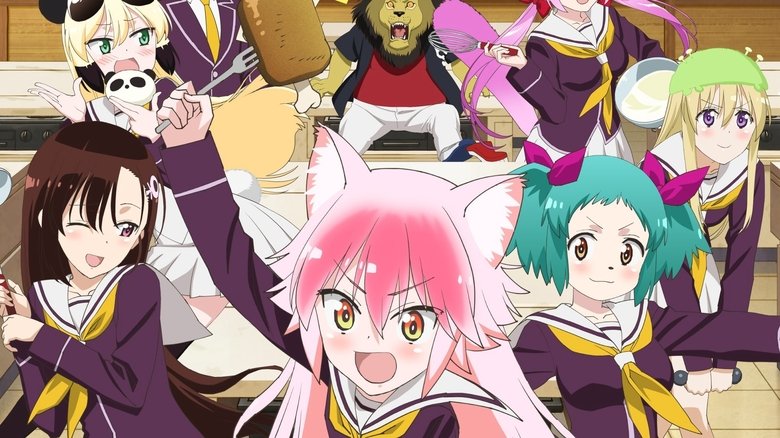
Seton Academy: Join the Pack! is set in a unique high school where the student body is composed almost entirely of anthropomorphic animals. In this world, humans are a minority species due to a population decline. The story centers on Jin Mazama, one of only two humans at the academy, who harbors a deep-seated hatred for animals stemming from a childhood incident. His quiet school life is upended when he meets Ranka Ookami, a lonely and boisterous pink wolf girl who is desperate to form her own pack.

Despite his protests, Jin, along with the only other human student, Hitomi Hino, are roped into Ranka's pack, which they formalize as a Cooking Club. The series follows their chaotic daily lives as their club expands to include a variety of other animal students, each with their own distinct biological traits and quirks that lead to hilarious and often educational situations. Through the cooking club, this unlikely group navigates school life, interspecies conflicts, and the challenges of understanding one another, forging unexpected bonds of friendship along the way.


Core Meaning

The core message of Seton Academy: Join the Pack! is a celebration of diversity and the promotion of interspecies harmony. The series uses the framework of a high school populated by different animal species to explore themes of prejudice, acceptance, and the formation of friendships despite inherent differences. It posits that understanding and communication can bridge the gap between disparate groups, suggesting that a 'pack' or community is not defined by shared species, but by mutual respect and camaraderie. Ultimately, the show argues for inclusiveness and finding common ground, showing that friendship can blossom in the most unlikely of circumstances.

Thematic DNA

Interspecies Friendship and Prejudice 40%
Nature vs. Nurture 30%
The Definition of a 'Pack' 20%
Identity and Self-Acceptance 10%

Interspecies Friendship and Prejudice

The central theme is the challenge and triumph of forming bonds between different species. Jin's initial xenophobia towards all animals serves as the primary obstacle. His journey from an animal-hater to a reluctant pack member who genuinely cares for his friends illustrates the series' message about overcoming prejudice. The Cooking Club itself becomes a microcosm of a utopian society where carnivores, herbivores, humans, and others can coexist and find common ground, challenging the 'survival of the fittest' mentality of the wider school.

Nature vs. Nurture

The series constantly plays with the conflict between the characters' animal instincts and their attempts to live within a structured, civilized school environment. Much of the comedy is derived from characters exhibiting biologically accurate, yet socially awkward, animal behaviors. From Ranka's mouth-licking greetings to the unique dietary needs of a koala, the show explores how their innate natures shape their personalities and interactions, questioning how much can be overcome by friendship and understanding.

The Definition of a 'Pack'

Ranka's initial goal is simply to not be a 'lone wolf'. The series explores what it means to belong to a group. Initially conceived as a pack based on wolf instincts, the Cooking Club evolves into a found family. This theme is explored as members with conflicting natures learn to support each other, redefining the concept of a 'pack' from one based on species to one based on shared experiences and mutual acceptance.

Identity and Self-Acceptance

Several characters struggle with their identity. A notable example is Yena the hyena, who grapples with the biological fact that female spotted hyenas have male-like characteristics, leading to an identity crisis about her gender expression. The show uses these arcs to touch on themes of self-acceptance and being comfortable in one's own skin, with the pack providing a supportive environment for them to figure themselves out.

Character Analysis

Jin Mazama

Haruki Ishiya

Archetype: The Cynic with a Heart of Gold (Tsundere)
Key Trait: Pragmatic and Knowledgeable

Motivation

Initially, Jin's sole motivation is to create a peaceful school life for himself and get closer to Hitomi Hino. He joins the Cooking Club under duress. However, his motivation evolves into a protective instinct for the members of his pack. He is driven by a hidden sense of responsibility and a desire to solve the absurd problems they encounter, even if he complains the entire time.

Character Arc

Jin begins the series as a vehement animal-hater, completely isolated and only interested in the other human student, Hitomi. His arc is one of gradual softening and acceptance. Forced into Ranka's pack, he constantly complains and acts abrasive, yet he consistently uses his knowledge to solve the club's problems. Over the 12 episodes, he moves from outright hostility to reluctant tolerance, and finally to genuine, albeit unadmitted, affection for his pack members, especially Ranka. He never loses his grumpy exterior, but by the end, he's a dependable leader who actively protects his diverse group of friends.

Ranka Ookami

Hina Kino

Archetype: The Energetic Idealist
Key Trait: Fiercely Loyal

Motivation

Her primary motivation is to overcome her loneliness by creating a strong, diverse pack where everyone is welcome. She has an unwavering belief in interspecies friendship and is driven by a deep-seated desire for companionship and belonging. She is also fiercely loyal and protective of those she considers part of her pack.

Character Arc

Ranka starts as a lonely wolf desperate to form a pack of her own, believing that different species can coexist peacefully, a conviction born from a childhood memory involving Jin. Her arc is about turning that ideal into a reality. Initially naive and impulsive, she learns through her experiences with the Cooking Club what it truly means to be a leader and a friend. She develops from seeing Jin simply as a potential mate for her pack to genuinely valuing the friendship of all its unique members, becoming the emotional heart of the group.

Hitomi Hino

Yume Miyamoto

Archetype: The Kind Mediator
Key Trait: Gentle and Accepting

Motivation

Hitomi is motivated by a simple desire to make friends and enjoy her school life. She enjoys cooking and sees the club as a perfect opportunity to connect with others. Her motivation is rooted in kindness and a genuine curiosity and acceptance of the different animal species around her.

Character Arc

Hitomi begins as the 'normal' human girl, serving as a gentle and kind counterpoint to Jin's cynicism. Her development is subtle; she grows from a somewhat passive character who enables Jin's plans into a more assertive and integral member of the group. She becomes the diplomatic core of the Cooking Club, often smoothing over conflicts with her kindness and open-mindedness. She also develops a wide range of friendships with the female animals, showing her own capacity for interspecies connection independent of Jin.

Symbols & Motifs

The Cooking Club

Meaning:

The Cooking Club symbolizes a neutral ground and a space for harmony and unity. In a school where animals are naturally divided by species, diet, and instinct, the act of preparing and sharing food together becomes a powerful metaphor for breaking down barriers and fostering understanding between different groups.

Context:

Established by the two humans, Jin and Hitomi, the club becomes the central hub for the main cast. It's the mechanism through which Ranka forms her interspecies pack. Each new member who joins, from a koala who only eats eucalyptus to a sloth who moves at a glacial pace, adds to this symbol of a diverse, functioning community built on something other than primal instinct.

Ranka's Licking Greeting

Meaning:

Ranka's tendency to lick her friends' faces is a direct representation of her wolf instincts. It symbolizes raw, unfiltered affection and her definition of pack-bonding. For Jin, it's initially a disgusting and invasive act, but his gradual tolerance of it marks his growing acceptance of Ranka and the animal world.

Context:

This gesture is used repeatedly throughout the series, often as a comedic punchline to a heartfelt moment. It first appears in Episode 1 when Ranka officially welcomes Jin and Hitomi to her pack. Her attempts to lick new members or allies become a recurring motif of her earnest, if socially clumsy, attempts at friendship.

Gender-Based Character Design

Meaning:

The distinct visual difference between male and female animals symbolizes the show's focus on specific anime tropes and fan service. It also serves as a source of meta-humor about the conventions of the 'kemonomimi' (animal-eared) genre.

Context:

Throughout the series, female animals are depicted as human-like girls with animal ears and tails, while male animals are fully anthropomorphic creatures. This is a consistent visual rule that is never explained in-universe and is often pointed out as a strange inconsistency by critics and viewers, highlighting the show's stylized, comedy-first approach to its world-building.

Episode Highlights

Ranka the Wolf Boss

S1E1

The first episode establishes the entire premise of the show. It introduces the main characters, Jin Mazama and his hatred for animals, and Ranka Ookami, the lonely wolf. Their fateful, chaotic meeting and the forced formation of Ranka's 'pack' by roping in Jin and the other human, Hitomi, sets the stage for the rest of the series. It also contains a controversial scene where Hitomi is accosted by bears, which drew criticism from some viewers.

Significance:

This episode is the foundation of the series, establishing the core conflict (Jin vs. animals), the central relationship (Jin and Ranka), and the main setting (the Cooking Club). It immediately showcases the show's blend of slapstick comedy, animal facts, and character dynamics.

The Self-Styled Young Man and the Giant Wolf

S1E4

This episode introduces Yena, a spotted hyena who struggles with their identity due to the masculine traits of female hyenas. The episode uses this biologically accurate fact to explore themes of gender identity and social perception in a comedic but surprisingly thoughtful way. Yena's clash with a pride of lions and the club's reaction highlights the show's educational-comedy formula.

Significance:

It's a key episode for demonstrating the show's unique gimmick: using obscure or interesting animal facts as the basis for character arcs and plot points. It expands the world of Seton Academy and deepens the theme of accepting others for who they are.

The Wild Habits of a Troubled Animal

S1E7

Yena's identity crisis continues as they try to act more feminine by imitating Hitomi, leading to disastrous and hilarious results. The episode also features Ranka's older sister, Ferryl, who tries to persuade Ranka to leave her interspecies pack and return to an all-wolf group, creating the first major external conflict for the Cooking Club.

Significance:

This episode develops the ongoing character arc for Yena and introduces a significant conflict that tests the loyalty and bonds of the newly formed pack. It forces the characters to defend their club's existence and their unconventional friendships.

The Beach Bard

S1E8

The Cooking Club takes a trip to the Sea Academy, a branch of Seton for marine life. They meet Kana, a beluga whale who dreams of performing but isn't allowed in the dolphin's synchronized swimming club. The episode is praised for its change of scenery and heartwarming story of helping an underdog achieve their dream, all while sprinkling in facts about marine animals.

Significance:

Ranked as one of the best episodes by viewers, it expands the world-building by introducing a new school and new species. It reinforces the core theme of the club helping others and creating harmony, even outside their immediate circle.

The Animal Students I Know

S1E12

The season finale deals with the threat of Team EX, a group of students from extinct species who resent modern animals and humans. The conflict culminates in a boxing match between Ranka and the Team EX leader, a woolly mammoth. Jin, in his own way, reflects on how the pack has changed him, showing a moment of genuine appreciation for his friends. The episode ends on a cliffhanger, introducing a new threat from an 'Insect Academy'.

Significance:

As the highest-rated episode, it serves as a culmination of the series' themes of unity against prejudice. It brings the main characters together to face a common enemy and showcases how much they've grown as a team. Jin's final monologue demonstrates his significant character development.

Philosophical Questions

Can true community be formed between individuals with fundamentally different natures?

The series explores this question through the Cooking Club. Its members are not just from different social groups, but different biological classifications with conflicting instincts (predator vs. prey, carnivore vs. herbivore). The show constantly tests their bond with situations derived from these differences. Its optimistic answer is that shared experience, empathy, and a common goal (like making food) can create a community, or 'pack,' that transcends biological programming.

To what extent do our instincts define us?

This question is central to many of the character-focused episodes. Characters like Yena the hyena and Miyubi the sloth are often at the mercy of their biological traits, which cause them social and physical problems. The series suggests that while one cannot erase their innate nature, understanding it is the first step to controlling it. Friendship and support from others provide the 'nurture' aspect that helps characters navigate the challenges posed by their 'nature,' suggesting that identity is a combination of both.

Alternative Interpretations

While primarily a straightforward comedy, some viewers have interpreted Seton Academy as a lighthearted allegory for real-world social issues. The school, with its diverse species struggling to coexist, can be seen as a metaphor for multicultural societies. Jin's initial racism towards animals and his gradual integration into a multicultural 'pack' can be read as a commentary on overcoming xenophobia and prejudice. The strict 'no interspecies relations' rule mentioned in the opening theme is often interpreted as a satirical jab at societal taboos and anti-miscegenation sentiments, even though the show itself focuses more on platonic friendship than romance.

Cultural Impact

Seton Academy: Join the Pack! was released in the Winter 2020 anime season. It entered a landscape familiar with 'kemonomimi' (animal-eared character) and monster girl comedies, but distinguished itself with its heavy emphasis on factual animal biology as a core comedic and narrative device. The show is often compared to the old Cartoon Network series My Gym Partner's a Monkey due to its similar premise of a human in an all-animal school, though many viewers found Seton Academy's execution more engaging.

Critically, the reception was mixed. Some critics praised it as a surprise highlight of the season, lauding its unique comedic premise, fast-paced humor, and surprisingly heartwarming messages about friendship and acceptance. Others were critical of its reliance on standard anime tropes, the abrasive nature of the male protagonist Jin, and its use of fan service, particularly the visual disparity between the cute animal-girls and the more bestial male characters. A scene in the first episode involving the sexual harassment of a main character was also a significant point of criticism for some reviewers.

Among audiences, the show found a niche following that appreciated its blend of slapstick, educational tidbits, and charming character interactions. It did not achieve the mainstream success of a show like Beastars, another contemporary anime featuring anthropomorphic animals, but it cultivated a dedicated fanbase. The series' legacy is that of a fun, if flawed, genre show that successfully carved its own identity by grounding its absurdity in real-world zoology, making it a memorable entry in the school-life comedy genre.

Audience Reception

Audience reception for Seton Academy: Join the Pack! was generally positive among fans of comedy and 'cute girls' anime, though it was not without its detractors. Many viewers found the show to be a hilarious and light-hearted watch, praising its unique concept of blending zoological facts with high school antics. The fast-paced, gag-heavy structure was a highlight for those looking for an easy-to-watch comedy. Characters like Ranka and the extremely slow sloth, Miyubi Shishio, were often singled out as fan favorites for their comedic timing and charm.

The main points of criticism from the audience often revolved around the protagonist, Jin Mazama. Many found his constant anger and physical abuse towards Ranka to be off-putting and irritating, labeling him an unlikable 'dick'. The show's reliance on fan service and familiar harem tropes was also a drawback for some, who felt it detracted from the more original aspects of the premise. The controversial scene of attempted sexual assault in the first episode left a bad taste for a portion of the audience, who felt it was an unnecessary and cheap way to create drama in a comedy series. Despite these criticisms, the overall verdict from its target audience was that it was a fun, silly, and surprisingly endearing show that succeeded in its goal of being an entertaining school-life comedy.

Interesting Facts

  • The creator of the original manga is Bungo Yamashita.
  • The anime adaptation was produced by Studio Gokumi.
  • The series director was Hiroshi Ikehata, and the series composition was handled by Shigeru Murakoshi.
  • The opening theme song, "Gakuen Sōkan Zoo," is performed by the main voice actors: Hina Kino (Ranka), Haruki Ishiya (Jin), Yume Miyamoto (Hitomi), Misaki Kuno (Yukari), Konomi Kohara (Miyubi), and Sora Tokui (Kurumi).
  • The ending theme, "Ōkami Blues," is a solo song performed by Hina Kino as her character, Ranka Ōkami, and was praised by some reviewers as one of the best anime songs of its season.
  • Many of the comedic situations and character traits are based on real, often obscure, facts about animal biology and behavior.
  • The anime consists of 12 episodes and an original video animation (OVA).
  • The original manga was serialized on Cygames' Cycomi website from May 2016 to May 2021.

⚠️ Spoiler Analysis

Click to reveal detailed analysis with spoilers

Frequently Asked Questions

Explore More About This Movie

Dive deeper into specific aspects of the movie with our detailed analysis pages

Comments (0)

Leave a comment

No comments yet. Be the first to share your thoughts!