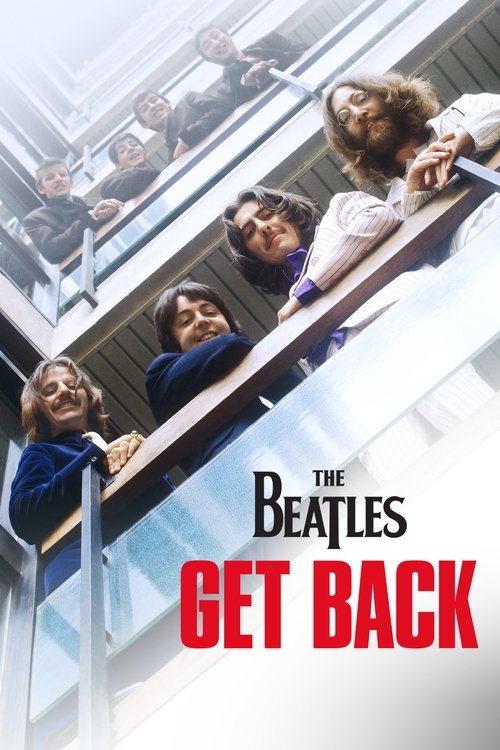
The Beatles: Get Back
A sprawling, intimate musical documentary that breathes vibrant life into 1969 London, capturing the fragile alchemy of brotherhood and genius through a luminous, restored window into the world's most famous room.
The Beatles: Get Back

The Beatles: Get Back

"Experience the 3-part event."

25 November 2021 — 27 November 2021 New Zealand 1 season 3 episode Ended ⭐ 8.4 (388)
Cast: John Lennon, Paul McCartney, George Harrison, Ringo Starr, Denis O'Dell
Documentary
The Alchemy of Creative Process The Fragmentation of Identity Brotherhood and Resilience The Weight of Expectation

Overview

The Beatles: Get Back is a definitive three-part documentary series directed by Peter Jackson, constructed from over 60 hours of unseen footage and 150 hours of unheard audio originally recorded for the 1970 film Let It Be. The series chronicles the band's ambitious attempt to write and rehearse 14 new songs in just three weeks, culminating in their first live performance in over two years. Set in January 1969, the narrative follows the group from the cold, cavernous Twickenham Film Studios to the more intimate basement of their Apple Corps headquarters.

As the deadline for a planned television special looms, the series captures the raw reality of the band's creative process: the boredom, the brilliance, the jokes, and the mounting tensions. Unlike the somber legacy of the original 1970 documentary, Jackson's restoration reveals a much warmer, more collaborative atmosphere, showing four friends who, despite being on the brink of a historic split, still share a profound musical and personal shorthand. The journey serves as an immersive time capsule, documenting the final chapters of the most influential band in history.
Core Meaning

The core of the series is a meditation on the nature of creative collaboration and the endurance of friendship. It seeks to demystify the legendary "acrimony" of The Beatles' final year by showing that their eventual dissolution was not a sudden explosion of hatred, but a gradual outgrowing of their shared identity as they matured into individuals. Through the lens of the "Get Back" sessions, the series illustrates that even in moments of profound professional uncertainty, the joy of making music together remained their strongest tether. It serves as an ultimate testimony to the fact that The Beatles were, at their heart, a group of friends who functioned as a single, intuitive organism when the instruments were in their hands.

Thematic DNA

The Alchemy of Creative Process 30%
The Fragmentation of Identity 25%
Brotherhood and Resilience 25%
The Weight of Expectation 20%

The Alchemy of Creative Process

The series provides a rare, unvarnished look at how masterpieces are "pulled out of the air." It tracks the evolution of songs like "Get Back" and "Let It Be" from nonsensical mumbles and basic riffs into polished classics, highlighting the patience, repetition, and sudden bursts of inspiration required for genius to manifest.

The Fragmentation of Identity

Throughout the episodes, the shift from "The Beatles" as a collective to four individuals with separate lives is palpable. The presence of partners like Yoko Ono and Linda Eastman, George's desire for creative respect, and Ringo's burgeoning acting career all signal a transition from a shared youth to a fragmented adulthood.

Brotherhood and Resilience

Despite the looming breakup, the deep-seated love between the members remains the show's emotional anchor. This is revealed in their private jokes, their synchronized musical instincts, and the way they instinctively "close ranks" against outsiders or the pressure of the media.

The Weight of Expectation

The constant pressure from director Michael Lindsay-Hogg to create a "grand spectacle" (like a show in Tripoli) serves as a metaphor for the external demands that ultimately suffocated the band. Their decision to play on the roof represents a rejection of artifice in favor of returning to their roots.

Character Analysis

John Lennon

Himself (Archival)

Archetype: The Wit / The Iconoclast
Key Trait: Subversive humor

Motivation

Seeking a balance between his intense devotion to Yoko and his lingering loyalty to his "other half," Paul, while trying to regain the simple joy of rock 'n' roll.

Character Arc

Begins the sessions somewhat detached and heavily influenced by his relationship with Yoko Ono. However, as the music takes shape, he becomes the group's essential mediator and comedic engine, culminating in his revitalized, fully engaged presence during the rooftop concert.

Paul McCartney

Himself (Archival)

Archetype: The Driven Leader
Key Trait: Workaholic perfectionism

Motivation

A desperate desire to keep the group cohesive and productive, acting as the primary engine for their songwriting during their most difficult period.

Character Arc

Moves from a position of overbearing control—borne out of a fear of the band falling apart—to a more collaborative and vulnerable state. He ultimately accepts the reality of the band's situation while still pushing for a triumphant musical ending.

George Harrison

Himself (Archival)

Archetype: The Quiet Seeker
Key Trait: Steadfast independence

Motivation

Seeking creative recognition and an equal voice in a partnership long dominated by the Lennon-McCartney shadow.

Character Arc

Experiences the most dramatic arc, starting with deep-seated frustration at being sidelined, leading to his temporary resignation from the band. He returns with a firmer sense of his own worth, already preparing the ground for his solo masterpiece, All Things Must Pass.

Ringo Starr

Himself (Archival)

Archetype: The Everyman / The Glue
Key Trait: Patient stoicism

Motivation

A simple, profound loyalty to his friends and the desire to just "get on with it" and make music.

Character Arc

Maintains a steady, supportive presence throughout. While the others fluctuate emotionally, Ringo remains the emotional and rhythmic bedrock of the group, ready to play whenever the others are.

Billy Preston

Himself (Archival)

Archetype: The Catalyst
Key Trait: Infectious joy

Motivation

Pure musical expression and the joy of collaborating with his idols.

Character Arc

Introduced in Part 2, his arrival shifts the energy of the entire series. He acts as the "Fifth Beatle," whose sheer talent and positive energy force the four members to be on their best behavior and rediscover their musical synergy.

Symbols & Motifs

The Rooftop

Meaning:

Symbolizes rebellion and clarity. By ascending to the roof, the band literally and figuratively rises above the noise of their internal disputes and the constraints of the studio to perform for the city of London.

Context:

Used as the setting for the series' climax in Episode 3, where the band's visible joy contrasts with the police's attempts to shut them down below.

Tea and Toast

Meaning:

Represents the mundane humanity of the group. It grounds the legendary "gods of rock" in the reality of their daily routine and British culture.

Context:

Repeatedly seen throughout the sessions as Mal Evans and Kevin Harrington constantly provide the band with refreshments, highlighting the domesticity within the workspace.

The January Calendar

Meaning:

A symbol of inevitability and pressure. It marks the passage of time and the narrowing window before they must deliver an album or face failure.

Context:

Jackson uses a graphic calendar at the start of each segment to orient the viewer, emphasizing how little time they actually had to create so much music.

The Hidden Microphone (Flowerpot)

Meaning:

Symbolizes intimacy and the erosion of privacy. It captures the honest, vulnerable core of the Lennon-McCartney partnership when they thought no one was listening.

Context:

Used by the original film crew to record a private lunch conversation between John and Paul after George's departure in Episode 1.

Memorable Quotes

I'd like to say thank you on behalf of the group and ourselves, and I hope we passed the audition.

— John Lennon

Context:

Said at the very end of the rooftop concert in Episode 3, as the police finally shut down the power.

Meaning:

A masterclass in ironic humility. After achieving world-altering success, Lennon ends their final performance with a joke that frames them as a struggling pub band.

If this boy dies, you're gonna comp him.

— Paul McCartney

Context:

Said jokingly after George gets a mild electric shock from a faulty microphone during rehearsals.

Meaning:

Showcases the gallows humor and quick wit that defined the band's internal language, even in moments of potential danger.

They broke up because Yoko sat on an amp.

— Paul McCartney

Context:

Said during a discussion about the band's image and the public's perception of their tensions.

Meaning:

A prophetic and self-aware joke. Paul mocks the public narrative that would blame Yoko for the band's demise, realizing even then how the story would be told in the future.

When I'm up against the wall, Paul, you'll find I'm at my best.

— John Lennon

Context:

Said during a conversation about the tight deadline for the "Get Back" project.

Meaning:

Highlights the competitive yet deeply reliant relationship between the two, where pressure acts as the ultimate fuel for their genius.

Episode Highlights

Part 1: Twickenham Studios

S1E1

This episode is significant for its raw depiction of creative stasis and internal collapse. It features the hauntingly brilliant moment where Paul "discovers" the melody for "Get Back" out of thin air while strumming his bass.

Significance:

Sets the stakes by showing the band at their lowest ebb, culminating in George Harrison's abrupt departure, which threatens to end the group right then and there.

Part 2: Apple Studios

S1E2

Focuses on the rebirth of the band as they move to the friendly confines of Apple Studios. The highlight is the "Flowerpot Conversation" and the arrival of Billy Preston, which immediately lifts the heavy atmosphere.

Significance:

Acts as the turning point of the series, transitioning from the misery of Twickenham to a productive, collaborative environment where the songs finally begin to coalesce.

Part 3: The Rooftop

S1E3

The series' grand finale, featuring the legendary rooftop concert in its entirety. It captures the chaos on the streets below and the mounting tension with the local police.

Significance:

Provides the ultimate catharsis for both the band and the audience, showing that despite their differences, The Beatles remained an unparalleled live force until the very end.

Philosophical Questions

Does art require friction to be great?

The series explores how the tension between Paul's leadership and George's dissatisfaction served as the grit that produced the pearls of their music, questioning if they could have been as productive without the internal conflict.

Can a collective identity survive individual maturity?

It delves into the tragedy of the "four-headed monster" as the members realize they can no longer suppress their individual needs for the sake of the band's brand.

Alternative Interpretations

While many see the series as a correction of history, some critics argue it is a form of revisionist hagiography, curated by the surviving members and the Lennon/Harrison estates to present a "sunnier" version of the truth. Another interpretation views the entire 8-hour experience as a meta-documentary about filmmaking itself, where the true antagonist is not Yoko or Paul, but director Michael Lindsay-Hogg, whose insistence on a "story" and a "climax" forced the band into a confrontation with their own mortality as a group.

Cultural Impact

The Beatles: Get Back fundamentally rewrote the historical narrative surrounding the band's final days. For 50 years, the Let It Be sessions were synonymous with misery, fighting, and the "Yoko broke them up" myth. Jackson's series dismantled this by providing an exhaustive, nuanced look at the joy and brotherhood that persisted. Culturally, it sparked a massive "Beatlemania" revival among younger generations on social media and set a new gold standard for music documentaries through its immersive length and revolutionary audio/visual restoration. It proved that even half a century later, The Beatles remain the most analyzed and culturally significant force in popular music history.

Audience Reception

The series was met with near-universal acclaim from critics and fans alike, boasting a 93% on Rotten Tomatoes. Audiences were particularly mesmerized by the restoration quality, which made 1969 feel contemporary. While some viewers found the 8-hour runtime to be a "glorious slog," the consensus was that the length was necessary to create a truly fly-on-the-wall experience. The "Redemption of Yoko Ono" became a major talking point, as the footage showed her as a quiet, supportive presence rather than a disruptive interloper. The emotional payoff of the rooftop concert was widely cited as one of the greatest moments in documentary history.

Interesting Facts

  • Peter Jackson spent four years meticulously editing the series from over 60 hours of footage.
  • The audio restoration used a custom-made AI system called 'MAL' (Machine Assisted Learning), named after the band's road manager, Mal Evans.
  • Paul's adopted daughter, Heather, makes a memorable appearance, screaming into the microphones and charming the band.
  • The rooftop concert was the first time the band had played for a public audience since their final tour in 1966.
  • The series reveals that many songs from the 'Abbey Road' album and the members' solo careers were already being rehearsed in January 1969.
  • Magic Alex (Yanni Alexis Mardas) is shown as a 'bullshit artist' whose promised high-tech studio equipment failed to function.
  • The film crew hid a microphone in a flowerpot to record a private lunch meeting between John and Paul.

Easter Eggs

Glimpses of future songs

Viewers can hear snippets of "Jealous Guy" (then "Child of Nature"), "Gimme Some Truth," and "Something" long before they were officially recorded, showing the deep well of material the band possessed.

Peter Sellers cameo

The actor Peter Sellers wanders into the studio for an awkward, brief interaction with the band, highlighting the surreal, high-profile orbit in which The Beatles lived.

Mal Evans as a songwriter

The band's roadie, Mal Evans, is seen suggesting lyrics and even helping with the anvil on "Maxwell's Silver Hammer," humanizing the support staff who were integral to their world.

⚠️ Spoiler Analysis

Click to reveal detailed analysis with spoilers

Frequently Asked Questions

Explore More About This Movie

Dive deeper into specific aspects of the movie with our detailed analysis pages

Comments (0)

Leave a comment

No comments yet. Be the first to share your thoughts!