Skip to content
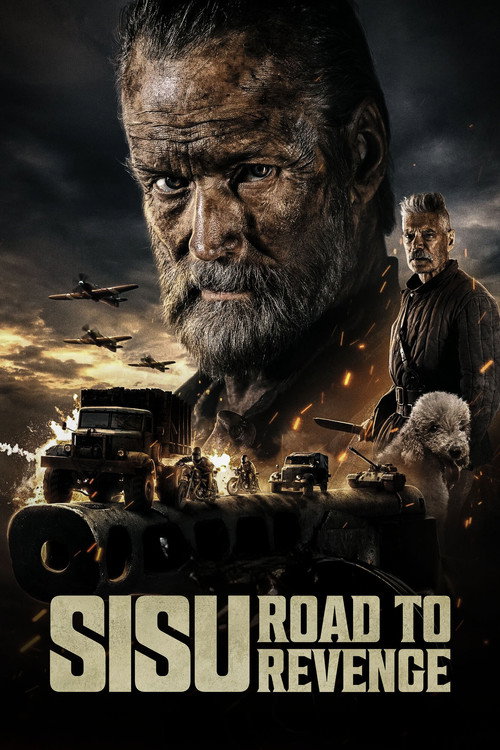
Sisu: Road to Revenge
A relentless, blood-drenched Nordic action-western fueled by quiet grief, where an immortal ghost of war drags the dismantled bones of his past across a hostile wasteland to forge peace from iron and ash.
Sisu: Road to Revenge

Sisu: Road to Revenge

Sisu 2

"When they took his family, he took revenge."

21 October 2025 Finland 89 min 7.3 (883)

Director: Jalmari Helander

Cast: Jorma Tommila, Stephen Lang, Richard Brake, Tommi Korpela, Kaspar Velberg

War Action Thriller Grief, Memory, and Rebuilding The Mythos of Sisu and Unbreakable Will Vengeance vs. Closure Dispossession and Border Trauma
Budget: $12,200,000
Box Office: $9,811,703

Overview

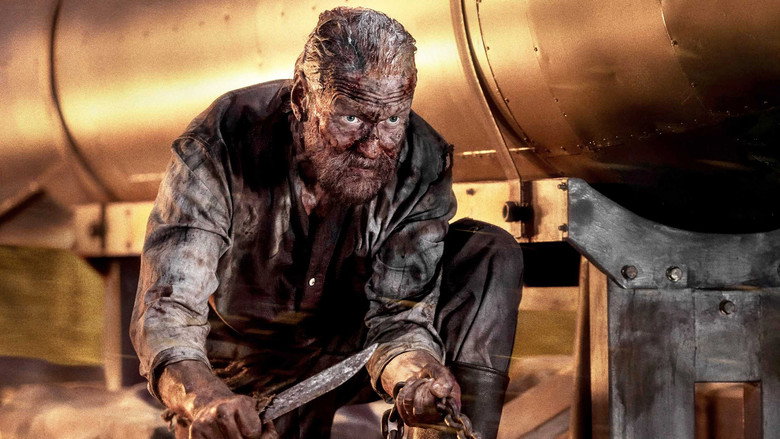
Set in 1946 in the immediate aftermath of World War II, Sisu: Road to Revenge picks up roughly two years after the events of the original film. Following the Moscow Armistice and territorial concessions, Finland is forced to cede approximately ten percent of its land—including Karelia—to the Soviet Union. Aatami Korpi (Jorma Tommila), the legendary ex-commando known as "the man who refuses to die," returns to his former homestead in now-Soviet territory to confront the memory of his murdered family. Refusing to leave his family's legacy behind in occupied land, Aatami systematically dismantles his log cabin piece by piece, loads the logs onto a heavy flatbed truck, and begins a solo pilgrimage back across the border to rebuild it safely on Finnish soil.

However, the Soviet military command has not forgotten the legendary commando nicknamed Koshchei ("The Immortal") who wiped out hundreds of their men during the Winter War. To eliminate Korpi and settle an old score, the Soviet authorities enlist Yeandor Draganov (Stephen Lang), a ruthless Red Army commander directly responsible for the slaughter of Korpi’s wife and children. Supported by a brutal KGB enforcer (Richard Brake) and motorized military units, Draganov initiates a relentless manhunt.

As Korpi attempts his cross-country transit, the trek turns into a savage running battle across contested forests, waterways, and rail tracks. Combining visceral hand-to-hand skirmishes, vehicular warfare, and unyielding physical endurance, the film balances brutal spectacle with a tragic pursuit of closure.
Core Meaning

Director and writer Jalmari Helander uses the hyper-violent genre framework to explore the heavy emotional luggage of wartime trauma, historical dispossession, and the essence of Finnish sisu—an untranslatable stoic determination in the face of insurmountable odds. The central message is that while war can destroy a person’s world and borders may be redrawn by force, human memory and spiritual resilience cannot be seized. Aatami’s mission is not purely destructive; his drive to literally transport his home proves that survival is meaningless without something sacred to protect and rebuild.

Thematic DNA

Grief, Memory, and Rebuilding 35%
The Mythos of Sisu and Unbreakable Will 30%
Vengeance vs. Closure 20%
Dispossession and Border Trauma 15%

Grief, Memory, and Rebuilding

Unlike the first film’s pursuit of material gold, the sequel centers on an emotional burden. Dismantling and hauling his family home log by log symbolizes the literal and figurative weight of grief that Korpi refuses to abandon.

The Mythos of Sisu and Unbreakable Will

The film deconstructs sheer human endurance. Aatami survives torture, crashes, and heavily armed battalions not because he is superhuman, but because giving up is fundamentally impossible for him.

Vengeance vs. Closure

Korpi does not seek out Draganov to instigate a vendetta; Draganov brings the war to him. The confrontation highlights how vengeance traps the aggressor in self-destructive hatred, whereas Korpi fights strictly to achieve closure.

Dispossession and Border Trauma

Grounded in the post-WWII Finnish experience of losing Karelia and evacuating homes, the film reflects national historical trauma and displacement caused by Soviet expansion.

Character Analysis

Aatami Korpi

Jorma Tommila

Archetype: The Reluctant Warrior / Mythic Folk Hero (The Ghost) Key Trait: Unbending willpower (sisu) and near-total silence.

Motivation

Transport and reconstruct his family’s home in safe Finnish territory.

Character Arc

Moves from a hollow, solitary survivor clinging to dead memories toward allowing himself to accept community and shared humanity.

Yeandor / Yeagor Draganov

Stephen Lang

Archetype: The Shadow / Ruthless Antagonist Key Trait: Sadistic military arrogance and vocal brutality.

Motivation

Finish the extermination of Korpi’s bloodline and prove Soviet superiority.

Character Arc

A vengeful, sadistic Soviet commander consumed by his past failures to eradicate Korpi, descending into single-minded madness.

All 3 characters and cast

Symbols & Motifs

The Dismantled Log Cabin

Meaning:

Represents family, dignity, and heritage.

Context:

Korpi refusing to leave a single beam behind in Soviet territory turns the logs into physical relics of his lost life.

The Flatbed Truck

Meaning:

A motorized ark carrying Korpi’s entire past through enemy lines.

Context:

Functions as both a battleground and a vehicle of salvation throughout his cross-country transit.

Tools (Axes and Hammers) vs. Weapons

Meaning:

Instruments of construction alternating with implements of destruction.

Context:

Throughout the film, saws, axes, and hammers alternate as tools of savage warfare and, ultimately, instruments of community healing.

Scars and Electrocution Marks

Meaning:

Physical signifiers of Korpi’s endurance and past trauma.

Context:

Reflects the cumulative scars of the Winter and Continuation Wars etched onto his body.

The Ballistic Rocket / Train

Meaning:

A symbol of industrialized modern warfare.

Context:

Directly clashes with Korpi’s primitive, rugged survivalism during the climax.

Memorable Quotes

Sisu does not mean being invincible. It means refusing to die when there is no hope left.
— Voiceover / Prologue contextual text

Context

Appears as prologue contextual text / voiceover at the opening of the film.

Meaning

Sets the psychological foundation for the film and re-establishes Korpi's mythical resilience.

I killed your wife, Korpi. I killed your children. And today, I tear down whatever ghost you have left.
— Yeandor Draganov (Stephen Lang)

Context

Spoken during Korpi's capture and interrogation aboard the military transport train.

Meaning

Serves as the villain’s verbal catalyst, revealing the depth of their shared history.

All 3 quotes

Philosophical Questions

Can physical reconstruction heal spiritual devastation?

The film asks whether rebuilding material structures can restore the humanity stripped away by war.

What separates legendary resilience from self-destructive obsession?

It probes the thin line between sisu as a survival mechanism and sisu as an agonizing curse of immortality.

Is human connection the only true antidote to war?

By concluding with community solidarity, the narrative suggests that solitary vengeance cannot heal a broken soul.

Alternative Interpretations

The film can be approached through different analytical lenses:

Full ending explanation

Cultural Impact

The film draws heavily on Finland's historical trauma surrounding the 1939–1940 Winter War, the Continuation War, and the 1944 Moscow Armistice, in which over 400,000 Karelians were forced to evacuate their ancestral lands ceded to the USSR. By framing Aatami's personal mission around the retrieval of his Karelia home, the movie turns historical displacement into an action-hero myth. Premiering at Fantastic Fest in September 2025 before its worldwide rollout in October and November 2025, the film cemented Finnish genre cinema's presence on the international stage.

Audience Reception

Critics lauded the creative, visceral action set pieces—particularly the forest fighter plane sequence and the moving train combat. Stephen Lang's villainous performance received acclaim for providing a formidable, personal counterweight to Tommila's silent protagonist, and the film's emotional finale was noted as surprisingly poignant.

Conversely, some reviewers noted that the sequel inherently sacrificed the novelty and tight pacing of the 2022 original, leaning more into 1980s over-the-top action tropes. Overall, it was regarded as an entertaining, inventive, and emotionally grounded sequel that expands the lore while remaining true to its brutal core.

Interesting Facts

  • While the original Sisu was filmed in the open tundras of Nuorgam, Lapland, Road to Revenge was shot primarily on location in Estonia to capture Karelia’s dense post-war forests and industrial rail networks.
  • The sequel’s production budget rose to approximately $12.2 million (more than double the original’s budget), allowing for large-scale vehicular stunts, train sequences, and complex pyrotechnics.
  • Following the first film’s cult box-office run via Lionsgate in the US, Sony Pictures’ Stage 6 Films and Screen Gems took over worldwide theatrical handling for the sequel.
  • Jorma Tommila once again portrays Aatami Korpi with almost zero spoken dialogue, relying entirely on physical storytelling, micro-expressions, and stunt choreography.
  • The forest pursuit featuring a Soviet fighter plane angling its wings vertically between tree trunks was crafted using practical camera rigs and scale miniatures combined with seamless stunt driving.
  • Following the completion of Sisu: Road to Revenge, director Jalmari Helander was tapped to direct a Rambo franchise project, continuing his signature blend of 1980s-inspired commando action.

Easter Eggs

Return of the Jedi Speeder Homage

The high-speed chase where a Soviet fighter weaves through dense trees with vertically tilted wings directly pays homage to the Endor speeder bike chase from Star Wars: Episode VI.

First Blood Parallel

Korpi’s solitary woodland warfare and silent battle trauma parallel Sylvester Stallone’s John Rambo in First Blood, contrasting raw survivalism with institutional military arrogance.

Mad Max: Fury Road Aesthetic

The motorized convoy attacks across rough wilderness take clear structural cues from George Miller's vehicular action style.

Slavic Mythology (Koshchei the Deathless)

The Red Army soldiers refer to Aatami as Koshchei, referencing the mythological Russian immortal who cannot be killed through ordinary mortal means.

Frequently Asked Questions

Explore More About This Movie

Dive deeper into specific aspects of the movie with our detailed analysis pages

Comments (0)

Leave a comment

No comments yet. Be the first to share your thoughts!

Similar Movies