Skip to content
Sniper: The White Raven
A raw Ukrainian war drama where a gentle pacifist's peace sign burns into a sniper's crosshair — grief turned cold and precise, like frost gathering on a rifle scope over the Donbas steppe.
Sniper: The White Raven

Sniper: The White Raven

Снайпер. Білий ворон

"On the battlefield, one bullet can change everything."

03 May 2022 Ukraine 120 min 7.6 (856)

Director: Marian Bushan

Cast: Pavlo Aldoshyn, Maryna Koshkina, Andrii Mostrenko, Roman Semysal, Roman Yasinovskyi

Drama War Action From pacifism to fighting Grief and revenge National resistance and identity The craft and cost of the sniper The cycle of war
Budget: $1,000,000
Box Office: $881

Overview

Sniper: The White Raven (Снайпер. Білий ворон) is the first feature film from Ukrainian director Marian Bushan. It is set at the start of the war in Donbas in 2014. Mykola Voronenko (Pavlo Aldoshyn) is an unusual high school physics teacher and pacifist. He has turned his back on modern comforts and lives off the grid near Horlivka with his pregnant wife, Nastya (Maryna Koshkina), in a dugout home he built himself, which they call "the Nora" (the Burrow).

When Russian forces cross the border and occupy the area, their peaceful life is destroyed. Mykola, a man who wanted nothing to do with violence, joins a volunteer battalion. Unlike most sniper films, this one spends time showing how snipers are selected and trained, as a teacher of physics learns to read wind, distance and trajectory in a new and deadly way.

The film is based on the real experiences of Mykola Voronin, a Ukrainian soldier who co-wrote the script. It follows Mykola's hard change from a man of peace into a skilled marksman on the front line, where he faces a dangerous enemy sniper.

Core Meaning

Bushan said his goal was to tell the world about Ukraine's struggle and to create the image of a peaceful Ukrainian who is forced to become a warrior. The film does not celebrate violence. It shows how an invasion can take a man who refuses to hurt anyone and turn him into a soldier. Mykola's change raises a painful question: what is left of a person's ideals once they have been attacked this directly? Reviewers also noted that the film sees war as an ouroboros, a cycle that keeps feeding itself and that neither side can easily break.

Thematic DNA

From pacifism to fighting 30%
Grief and revenge 25%
National resistance and identity 20%
The craft and cost of the sniper 15%
The cycle of war 10%

From pacifism to fighting

Mykola starts out as a pacifist who refuses the trappings of modern life and ends up as an elite sniper. The film treats this as a forced change, not a conversion he chooses freely.

Grief and revenge

Nastya's murder and the burning of their home push Mykola into the war. Critics described the film as a study of loss, revenge and the pursuit of justice, and it leaves open whether revenge can ever heal anything.

National resistance and identity

Set in the Donbas in 2014 and released in the middle of the full-scale invasion, the film presents Mykola as an ordinary Ukrainian who stands up to occupation, a figure for Ukraine's wider fight.

The craft and cost of the sniper

A large part of the film covers selection and training. Mykola's physics knowledge turns into ballistics, and his skill shows both what he can do and how much of himself he gives up.

The cycle of war

The duel with a Russian counter-sniper who has killed his comrades shows killing answered by more killing. One critic called this the ouroboros nature of war.

Character Analysis

Mykola Voronenko ("White Raven")

Pavlo Aldoshyn

Archetype: Reluctant hero / avenger Key Trait: Principled intellect turned into a marksman's precision

Motivation

Revenge and justice after Nastya's murder, and the defence of his homeland.

Character Arc

Mykola goes from an off-grid pacifist physics teacher to a volunteer-battalion sniper. His training, first combat and final duel with an enemy sniper turn grief into cold skill.

Nastya

Maryna Koshkina

Archetype: The innocent / the lost beloved Key Trait: Gentle, with a belief in forgiveness

Motivation

To protect her home, her family and their peaceful way of life.

Character Arc

Mykola's pregnant wife stands for the peaceful life the war destroys. She is killed when she resists the soldiers who attack their home, and her memory drives the rest of the story.

All 3 characters and cast

Symbols & Motifs

The White Raven

Meaning:

Forgiveness, peace and being different. A white raven is a rare creature, and the phrase is also an idiom for a misfit, which fits Mykola.

Context:

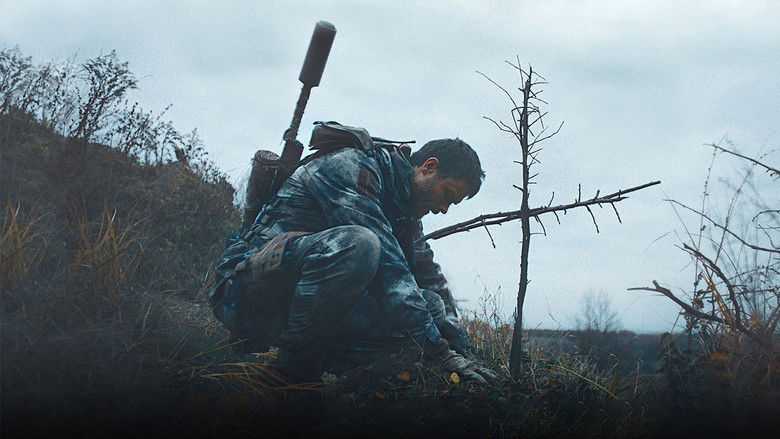
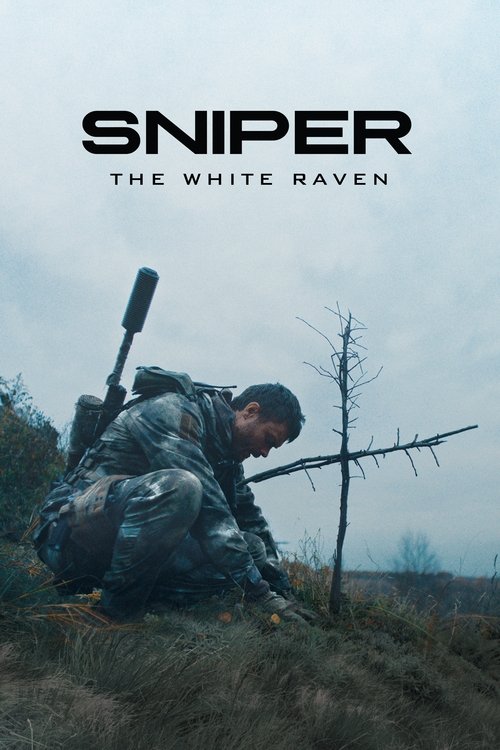
The symbol is laid out in the grass in front of the couple's home and looks like a peace sign. Nastya tells a reporter it comes from a book about a raven with special powers to forgive people. It also becomes Mykola's name as a soldier.

The Nora (the Burrow)

Meaning:

Innocence, self-reliance and a private paradise away from the modern world.

Context:

This is the dugout home Mykola built near Horlivka. The film crew rebuilt it in detail at a larger scale for shooting. When it is burned, his old life ends.

Physics and ballistics

Meaning:

Knowledge that can serve peace or war, depending on how it is used.

Context:

Mykola's job as a physics teacher gives him an understanding that becomes deadly accurate shooting during sniper training.

The enemy sniper

Meaning:

A mirror image of Mykola, and the violence he could become.

Context:

The final duel is against a Russian counter-sniper who has killed several of Mykola's new comrades.

Philosophical Questions

Can a true pacifist stay one when their home and family are destroyed?

Mykola's choices after Nastya's death test his principles against loss. The film suggests that ideals depend on the world around them, and asks whether giving them up is a betrayal or a way of surviving.

Is revenge the same as justice?

Critics describe the film as moving between revenge and the pursuit of justice. Mykola's personal grief and the national cause keep merging, and the film leaves open where one ends and the other begins.

Is forgiveness possible in war?

The White Raven symbol comes from a story about a bird that can forgive. Mykola carries its name into battle, where forgiveness seems impossible.

How It Ends

Alternative Interpretations

A story of justified resistance: Many viewers read Mykola's change as a necessary response to invasion, with a peaceful man defending his home.

Full ending explanation

Cultural Impact

The film was shot about the 2014 war in Donbas and released in 2022, months into Russia's full-scale invasion. That timing made it a statement of national resistance. Its Independence Day premiere and the lead actor joining the army blurred the line between the film and real life.

It reached international audiences and got reviews from US critics such as Roger Moore's Movie Nation, Elements of Madness, The Peach Review and The Film Buffa. It is one of the most visible Ukrainian war dramas of the period. Critics noted that it differs from typical sniper films by showing how snipers are selected and trained.

Audience Reception

The film has an IMDb user rating of about 6.4/10. Viewers and critics praised its emotional core, the real story behind it, the tense sniper-duel climax, and the unusual attention to sniper selection and training. Roger Moore called the climax "solid, tense and exciting." Other critics called it a riveting war drama with emotional depth.

The main criticism concerns its modest budget and familiar revenge-story structure. The patriotic tone, given when it was released, also split some viewers. Overall, it is seen as a sincere, well-made war drama whose context gives it extra weight.

Interesting Facts

  • It is the first feature film directed by Marian Bushan, who wrote it with Mykola Voronin, the real soldier the story is based on.
  • The main character is based on Mykola Voronin from Horlivka, a pacifist who became a professional defender of Ukraine and was still serving when the film came out.
  • Pavlo Aldoshyn completed special military training about six months before filming, including a practical sniping course with consultant Maksym Dashkiiev.
  • Aldoshyn later joined the Armed Forces of Ukraine and went to fight.
  • Many scenes were filmed near Kyiv, where the crew built a village, trenches and positions to recreate the front line.
  • The Voronenkos' dugout home, the 'Nora', was rebuilt in detail and enlarged so the scenes inside it could be filmed.
  • The film premiered in Ukraine on Independence Day, 24 August 2022, and the trailer was released on Statehood Day.
  • The film was produced by UM-Group.

Frequently Asked Questions

Explore More About This Movie

Dive deeper into specific aspects of the movie with our detailed analysis pages

Comments (0)

Leave a comment

No comments yet. Be the first to share your thoughts!

Similar Movies