Skip to content
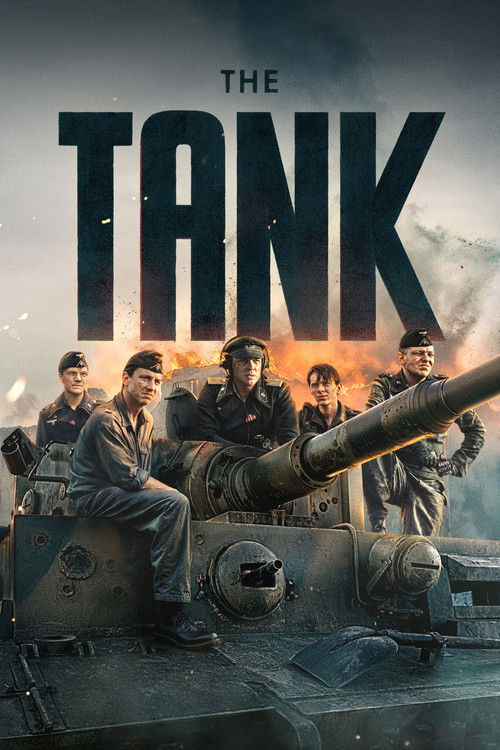
The Tank
A suffocating descent into psychological hell, where industrial iron becomes an airtight coffin of guilt, and methamphetamine-fueled hysteria bleeds across the charred ruins of the Eastern Front.
The Tank

The Tank

Der Tiger

18 September 2025 Germany 117 min 7.1 (480)

Director: Dennis Gansel

Cast: Laurence Rupp, David Schütter, Sebastian Urzendowsky, Leonard Kunz, Yoran Leicher

Drama War Action Moral Guilt, Denial, and Complicity Chemical Madness and Psychological Decay Blind Obedience vs. Moral Conscience Claustrophobia and the Crucible of Iron The Futility of Conflict

Overview

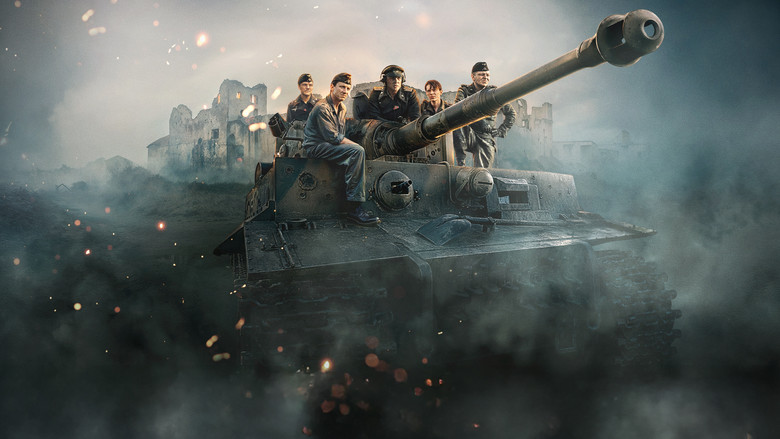
Set in the autumn of 1943 during the desperate German retreat across the Dnieper River following the disaster at Stalingrad, The Tank (Der Tiger) opens with an intense rearguard action. A lone Panzer VI Tiger tank crew—led by the battle-fatigued Lieutenant Philip Gerkens—miraculously survives holding a vital bridge against an onslaught of Soviet armored forces before the crossing is detonated behind them.

Immediately following this harrowing skirmish, the traumatized crew is denied respite and handed a covert, high-priority assignment by high command. They are ordered to penetrate deep into the fog-drenched contested No Man's Land behind enemy lines to locate and extract Lieutenant Colonel Paul von Hardenburg, an enigmatic rogue officer stranded in a fortified bunker who holds critical military intelligence.

As the Tiger ventures across desolate landscapes littered with casualties, ruined villages, and lurking Soviet patrols, the crew relies heavily on the Wehrmacht’s issue of methamphetamine (Pervitin) to stave off exhaustion. What begins as a tense military infiltration gradually turns inward, blurring the boundary between external battlefield horrors and inner psychological collapse.


Core Meaning

Director Dennis Gansel and co-writer Colin Teevan use the claustrophobic confines of a legendary armored vehicle to deconstruct the myth of martial heroism and blind military obedience. Rather than framing the Tiger tank as an invincible machine of war, the film depicts it as a suffocating mobile prison that traps its occupants within their own collective and moral guilt. Gansel's overarching message examines the moral bankruptcy and existential annihilation of fighting for an evil regime: war strips humanity down to raw instinct, and obedience to catastrophic ideology leads inexorably to psychological madness and self-destruction.

Thematic DNA

Moral Guilt, Denial, and Complicity 30%
Chemical Madness and Psychological Decay 25%
Blind Obedience vs. Moral Conscience 20%
Claustrophobia and the Crucible of Iron 15%
The Futility of Conflict 10%

Moral Guilt, Denial, and Complicity

The crew members cannot escape the atrocities committed around them, notably when they encounter a Wehrmacht unit executing punitive anti-partisan reprisals in a peasant village. Gerkens’s escalating internal anguish embodies the inescapable weight of war guilt that no chemical stimulant can numb.

Chemical Madness and Psychological Decay

The Wehrmacht's reliance on Pervitin transforms the mission into an Apocalypse Now-style fever dream. Sleep deprivation, drug intoxication, and battlefield trauma merge into auditory and visual hallucinations, eroding objective reality.

Blind Obedience vs. Moral Conscience

Exemplified by the military mantra "Befehl ist Befehl" (orders are orders). As orders become more irrational and suicidal, friction grows between dogmatic loyalty (Keilig) and moral skepticism (Weller).

Claustrophobia and the Crucible of Iron

The Tiger tank serves as an airtight pressure cooker. The sensory barrage of sweat, engine fumes, deafening concussions, and cramped spaces heightens paranoia and turns crewmates against one another.

The Futility of Conflict

Moving across a scorched no-man's land after Stalingrad, the characters pursue an elusive objective in a war that is already strategically and spiritually lost.

Character Analysis

Lt. Philip Gerkens

David Schütter

Archetype: Haunted Commander / Antihero Key Trait: Traumatized, introspective, conflicted.

Motivation

Completing the mission to redeem his shattered sense of duty.

Character Arc

Unravels from a rigid leader into a guilt-ridden, hallucinating officer consumed by his past actions.

Christian Weller

Laurence Rupp

Archetype: Pragmatist / The Skeptic (Gunner) Key Trait: Blunt, honest, combat-hardened.

Motivation

Survival and keeping the crew grounded in harsh physical reality.

Character Arc

Shifts from cynical compliance to active questioning of the mission's sanity.

All 5 characters and cast

Symbols & Motifs

The Tiger Tank (Panzerkampfwagen VI)

Meaning:

Symbolizes the false promise of armored invulnerability and industrial power, morphing from a weapon of war into a suffocating, mobile metal tomb.

Context:

Used as the primary claustrophobic setting throughout the film where mechanical breakdowns mirror the crew's psychological deterioration.

Pervitin / Methamphetamine Pills

Meaning:

Represents artificial stamina and willful denial. The white tablets physically manifest how the soldiers chemically suppress their humanity and conscience to remain functional killing machines.

Context:

Distributed and consumed continuously by the crew to fight sleep, steadily eroding their perception of reality.

The Destroyed Dnieper Bridge

Meaning:

Represents the point of no return—the severed connection between life and death, order and chaotic purgatory.

Context:

Featured in the opening sequence as the structure detonated behind the crew, severing them from the retreating army.

Heavy Fog and Mist

Meaning:

A pervasive visual motif symbolizing moral ambiguity, confusion, and the veil between reality and illusion.

Context:

Shrouds No Man's Land throughout the journey, obscuring terrain, landmarks, and impending threats.

The Bunker

Meaning:

Functions as a subterranean "Heart of Darkness," reflecting the hidden, repressed psychological rot of the regime's command.

Context:

The underground refuge where Colonel von Hardenburg is located at the climax of the mission.

Memorable Quotes

Befehl ist Befehl.
— Crew Members

Context

Spoken early in the mission when doubts are raised about plunging into enemy territory for an unverified target.

Meaning

Underlines the rigid indoctrination and blind obedience governing the soldiers' actions despite irrational circumstances.

Das hier ist kein Krieg mehr. Das ist die Hölle.
— Christian Weller

Context

Muttered in the claustrophobic cabin as the crew witnesses bizarre battlefield anomalies and devastation in the woods.

Meaning

Articulates the transition of their experience from a conventional military conflict into an existential nightmare.

All 3 quotes

Philosophical Questions

Can a soldier retain individual morality while operating within an inherently criminal war machine?

Explored through the crew's direct encounters with anti-partisan war crimes and Gerkens's internal collapse as he tries to reconcile military duty with inherent evil.

Where does duty end and personal culpability begin when following unjust orders?

Examined via the recurring mantra "Befehl ist Befehl" and the escalating friction between ideological compliance and human conscience.

Does the chemical numbing of consciousness eliminate moral guilt, or merely amplify psychological destruction?

Depicted through the crew's reliance on Pervitin, which fails to suppress their trauma and instead induces hallucinatory madness.

In the final moments of life, does the mind construct illusions to seek redemption or to inflict penance?

Framed through the narrative reveal that the journey across No Man's Land serves as a psychological crucible forcing the dying crew to face their complicity.

Alternative Interpretations

The film invites three primary readings:

Full ending explanation

Cultural Impact

Historically, German cinema has treated World War II combat from the perspective of Wehrmacht protagonists with extreme caution. Der Tiger situates itself within the evolving discourse of modern German anti-war cinema (following Edward Berger's 2022 All Quiet on the Western Front).

Rather than sanitizing the German military or indulging in the "Clean Wehrmacht" myth, the film directly confronts methamphetamine abuse, anti-partisan atrocities, and institutional fanaticism. While conservative military history buffs criticized the film for its bleak, defamatory psychological framing of soldiers, international critics noted its willingness to treat the Eastern Front as an ethical and existential nightmare rather than tactical entertainment.

Audience Reception

The film received praise for Carlo Jelavic’s moody, atmospheric cinematography, the claustrophobic and realistic sound design, strong ensemble performances (particularly David Schütter and Laurence Rupp), and its unflinching anti-war atmosphere.

However, the plot twist and ending divided audiences sharply; some viewers felt that utilizing a Twilight Zone or Owl Creek Bridge narrative conceit undermined the gritty realism established in the first act, while pacing lulls in the middle act were also noted. Overall, it was regarded as a visually striking, dark psychological war thriller that prioritizes atmosphere, existential dread, and psychological decay over conventional battlefield action.

Interesting Facts

  • Der Tiger was Amazon MGM Studios' first German Original feature film to receive a theatrical release in Germany before its worldwide streaming debut.
  • Director Dennis Gansel previously directed acclaimed German films addressing authoritarianism and Nazi-era psychology, including Napola (Before the Fall, 2004) and Die Welle (The Wave, 2008).
  • The film was produced as a German-Czech co-production by Pantaleon Films and shot largely on location and soundstages in the Czech Republic.
  • The production team constructed an exact, mechanically functioning 1:1 interior set of the Panzer VI Tiger tank fighting compartment to capture genuine claustrophobia and operational constraints.
  • Dennis Gansel reteamed with composer Heiko Maile, continuing a collaborative relationship spanning Die Welle, Wir sind die Nacht, and The Fourth State.
  • The screenplay was co-written by Dennis Gansel alongside acclaimed Irish playwright and screenwriter Colin Teevan.

Easter Eggs

An Occurrence at Owl Creek Bridge & Jacob's Ladder Structure

The narrative heavily mirrors Ambrose Bierce’s literary device and Adrian Lyne's film, where an entire extended sequence unfolds inside the mind and dying moments of soldiers at a bridge explosion.

Homage to Das Boot (1981)

Serves as a spiritual armored counterpart to Wolfgang Petersen's submarine masterpiece, transferring the damp, hydraulic, terror-laden enclosure of a U-boat to the interior hull of a tank.

Apocalypse Now / Heart of Darkness Allusion

The mission deep into the wilderness to retrieve a rogue officer (von Hardenburg functioning as a Kurtz figure) deliberately echoes Joseph Conrad’s archetypal journey into human depravity.

Subversion of Fury (2014) and Lebanon (2009) Parallels

Draws upon Samuel Maoz’s single-tank perspective while intentionally subverting Hollywood combat heroism found in David Ayer’s Fury.

Frequently Asked Questions

Explore More About This Movie

Dive deeper into specific aspects of the movie with our detailed analysis pages

Comments (0)

Leave a comment

No comments yet. Be the first to share your thoughts!

Similar Movies