Skip to content
Something in the Rain
A quiet, lingering romance grounded in the gentle patter of raindrops, where tender hands under warm umbrellas yield to the suffocating chill of societal expectations, capturing love as both a luminous sanctuary and a fragile mirror reflecting quiet realities.
Something in the Rain

Something in the Rain

밥 잘 사주는 예쁜 누나

30 March 2018 — 19 May 2018 South Korea 1 season 16 episode Ended 7.7 (138)

Cast: Son Ye-jin, Jung Hae-in, Jang So-yeon, Jung Yoo-jin, Joo Min-kyung

Drama Age-Gap Romance and Societal Taboos Workplace Misogyny and the #MeToo Movement Maternal Control and Familial Obligation Self-Worth and Personal Autonomy

Overview

Something in the Rain (Original Korean Title: 밥 잘 사주는 예쁜 누나 / Bap Jal Sajuneun Yeppeun Nuna, literal translation: Pretty Sister Who Buys Me Meals) is a 16-episode romantic drama directed by renowned director Ahn Pan-seok and written by Kim Eun, originally broadcast on JTBC in 2018. The drama centers on Yoon Jin-ah, a single woman in her mid-30s working as a supervisor at a coffee franchise company. Living a routine and often disheartening existence—faced with workplace sexual harassment and a recent breakup with a snobbish boyfriend—her life changes when Seo Joon-hee, the younger brother of her best friend, returns to Seoul after working abroad at a video game animation company.

What begins as casual meals and playful banter between two people who have known each other since childhood rapidly evolves into a deep, passionate love affair. However, as their secret romance comes to light, the couple must navigate rigid social norms, age-gap taboos, intense opposition from Jin-ah's status-conscious mother, and corporate power struggles within Jin-ah’s workplace.

Across its 16 episodes, the series expands from a warm, intimate romance into an uncompromising exploration of modern Korean womanhood, familial pressure, systemic workplace misogyny, and the personal cost of personal growth.


Core Meaning

The creators aimed to demystify romanticized television portrayals of love by placing a genuine relationship inside the harsh realities of contemporary South Korean society. The series posits that authentic intimacy ("real love") is not merely a feel-good escape, but a transformative force that forces individuals to confront their own passivity, examine their self-worth, and break free from suffocating societal expectations. Through Jin-ah's journey, the show asserts that standing up for love and standing up for one's self-respect are inextricably linked.

Thematic DNA

Age-Gap Romance and Societal Taboos 30%
Workplace Misogyny and the #MeToo Movement 25%
Maternal Control and Familial Obligation 25%
Self-Worth and Personal Autonomy 20%

Age-Gap Romance and Societal Taboos

Initially presented as a sweet, hidden romance, the age difference (Jin-ah in her mid-30s, Joon-hee in his late 20s) triggers intense anxiety and backlash once discovered. In conservative Korean social structures, a woman dating an orphan-raised, younger brother of her friend is seen as a social failure and family embarrassment.

Evolution: Shifts from romantic excitement to a grueling test of emotional endurance against judgment from family and peers.

Workplace Misogyny and the #MeToo Movement

Embedded in Jin-ah’s daily routine at her corporate job, where male superiors routinely subject female employees to unwanted physical contact, verbal degradation, and forced drinking after work.

Evolution: Initially, Jin-ah complies to survive. Prompted by her newfound self-worth through her relationship with Joon-hee, she spearheads an official internal whistleblowing campaign against corporate executives, illustrating the systemic resistance and costs women face when reporting abuse.

Maternal Control and Familial Obligation

Embodied by Jin-ah's mother, Kim Mi-yeon, who measures human value through academic titles, corporate status, and wealth.

Evolution: Develops into the primary destructive force in the series. The mother’s desperate attempts to arrange "higher-class" matches for Jin-ah highlight the oppressive nature of filial piety and classism in modern Korean family dynamics.

Self-Worth and Personal Autonomy

Introduced through Jin-ah’s initial state of quiet helplessness—being called "konjac" (bland/tasteless) by her ex-boyfriend and accepting mistreatment at home and work.

Evolution: Evolves through her relationship with Joon-hee, who sees her inherent value. Her growth culminates not just in fighting for love, but in making independent career and life choices, including moving to Jeju Island to rebuild her life on her own terms.

Character Analysis

Yoon Jin-ah

Son Ye-jin

Archetype: Everyday Heroine / Evolving Protagonist Key Trait: Quiet resilience that transforms into active courage

Motivation

Initially seeks approval and stability; evolves toward living authentically without sacrificing her self-respect.

Character Arc

Begins as a 35-year-old corporate supervisor trapped in passive compliance, accommodating toxic bosses and an overbearing mother. Loving Joon-hee teaches her self-respect, leading her to challenge corporate sexual misconduct, reject her family's social conditioning, and ultimately seek true autonomy.

Seo Joon-hee

Jung Hae-in

Archetype: Catalyst / Devoted Romantic Hero Key Trait: Unwavering emotional warmth and sincerity

Motivation

Protecting and cherishing Jin-ah; evolves toward respecting her autonomy even through temporary separation.

Character Arc

Starts as a carefree 31-year-old video game designer returning from abroad. Upon falling in love with Jin-ah, he becomes a steadfast protector. As external pressures mount, he learns that loving Jin-ah requires accepting her independent journey rather than shielding or making decisions for her.

All 4 characters and cast

Symbols & Motifs

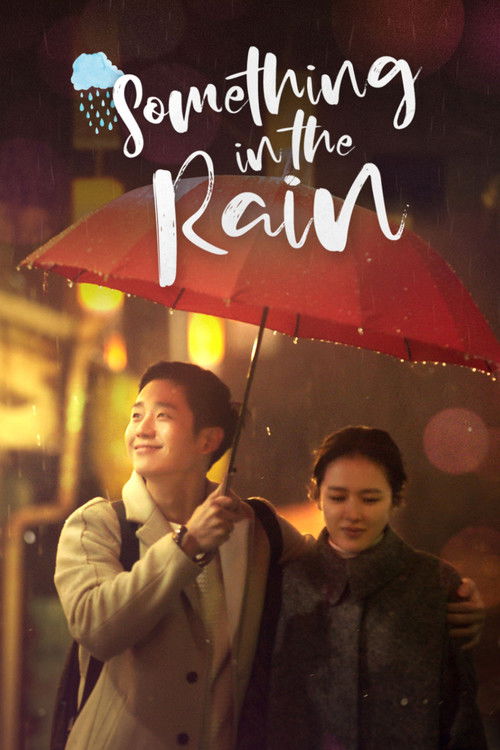
The Red Umbrella

Meaning:

Symbolizes the initial shelter of their love, intimacy, and the warm boundary protecting them from the cold world outside.

Context:

Purchased by Joon-hee on a rainy night early in their romance.

The Green Umbrella

Meaning:

Symbolizes emotional drift, independence, regret, and the cooling of their initial sheltered bliss as real-world issues overwhelm them.

Context:

Introduced when Jin-ah buys an umbrella later in the story.

The Yellow Umbrella

Meaning:

Symbolizes hope, warmth, reconciliation, and a mature restart on equal footing.

Context:

Appears in the finale in Jeju.

Meals / "Buying Food"

Meaning:

Shared meals serve as the primary love language and emotional barometer. Moving from a "noona" paying for a younger boy's food to sharing meals as equals represents shifting power dynamics and mutual nurturing.

Context:

Used throughout the series as a central motif and excuse to meet.

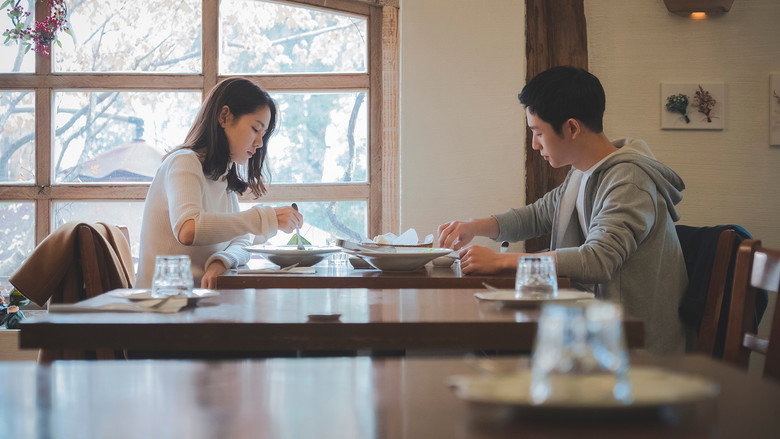
Under-Table Handholding

Meaning:

Symbolizes crossing the threshold from passive hesitation to active, courageous choice.

Context:

In Episode 3, Jin-ah secretly reaches out and grabs Joon-hee's hand under a table while drinking with colleagues.

Repeated Soundtrack Tracks ("Stand By Your Man" / "Save the Last Dance For Me")

Meaning:

Echoes the characters' cyclical struggles, societal pressures, and the persistent desire to remain loyal to one another.

Context:

Used extensively throughout the series.

Memorable Quotes

불행히도 아직까지는 윤진아가 제일 낫네.
— Seo Joon-hee

Context

Season 1, Episode 1. Teasing Jin-ah when asked if he found any attractive women in the US, subtly revealing his long-held feelings.

Meaning

Sets the playful yet genuine tone of their transition from childhood acquaintances to romantic partners.

우리 이제 남녀사이 된 거야?
— Seo Joon-hee

Context

Season 1, Episode 3. Asked after Jin-ah unexpectedly holds his hand under the table.

Meaning

Marks the moment their unspoken mutual attraction is officially confirmed.

All 5 quotes

Episode Highlights

Episode 1

S1E1

Re-introduces Jin-ah and Joon-hee upon his return from North America. Establishes Jin-ah's dreary work life and breakup.

Significance:

Sets up the primary character dynamics, Jin-ah's workplace environment, and the initial spark of their re-connection.

Episode 3

S1E3

Features the famous scene where Jin-ah secretly takes Joon-hee's hand under a table while drinking with colleagues, marking their official romance.

Significance:

Marks the pivotal transition from unspoken feelings to active romantic commitment.

Episode 4

S1E4

The iconic red umbrella rain walk. Joon-hee puts his arm around Jin-ah, establishing their physical closeness.

Significance:

Establishes the central visual symbol of shelter and physical intimacy in their relationship.

Episode 6

S1E6

Joon-hee confesses his love, and the couple spends intimate time together in his apartment.

Significance:

Represents the romantic climax of the series' first half, solidifying their deep emotional bond.

Episode 9

S1E9

The secret is blown open. Jin-ah’s mother discovers the relationship, initiating intense family conflict and emotional volatility.

Significance:

Shifts the series from hidden bliss to intense external opposition and familial conflict.

Episode 12

S1E12

Jin-ah formally submits complaints against corporate executives for workplace sexual harassment, stepping up as an advocate for female colleagues.

Significance:

Marks a crucial turning point in Jin-ah's personal growth and fight for workplace justice.

Episode 14

S1E14

Mounting pressure from her mother and corporate retaliation leads to deep fractures between Jin-ah and Joon-hee as Joon-hee plans to move back to the US.

Significance:

Drives the main romantic conflict to a breaking point, leading toward their temporary separation.

Episode 16

S1E16

Following a time jump, Jin-ah quits her corporate job, ends a hollow rebound relationship, and moves to Jeju Island. Joon-hee follows her to Jeju, leading to their reconciliation under the rain.

Significance:

Resolves the overarching narrative by bringing the protagonists back together on equal, independent terms.

Philosophical Questions

What is the true measure of personal autonomy in a collectivist culture?

Explored through Jin-ah's struggle between filial duty to her mother and her own desires.

Does love require protecting someone, or allowing them to face their own battles?

Explored through Joon-hee’s urge to shield Jin-ah versus her need to fight workplace injustice independently.

Can an individual truly change within an inherently oppressive system without removing themselves entirely?

Explored through the partial victory of the corporate sexual harassment lawsuit and Jin-ah's ultimate decision to move to Jeju.

Alternative Interpretations

Feminist Coming-of-Age Reading: The story is primarily Jin-ah's journey toward self-actualization. Her relationship with Joon-hee acts as the catalyst, but her true victory is breaking free from her mother’s control and quitting her toxic corporate job.

Full ending explanation

Cultural Impact

Something in the Rain aired in early 2018, coinciding with the height of South Korea's #MeToo movement and growing public discourse surrounding workplace sexual harassment (gapjil) and gender inequality. By fearlessly incorporating real corporate dynamics—such as female employees forced to pour drinks for male executives—the show became a major social talking point.

Furthermore, it revolutionized the Korean "Noona Romance" trope. Rather than treating the age gap as a purely comedic or stylized fantasy, it treated the relationship with grounded realism, shedding light on classism, family structures, and modern female empowerment.

Audience Reception

First Half (Episodes 1–8): Highly Praised: Audiences and critics universally praised the exquisite chemistry between Son Ye-jin and Jung Hae-in, the realistic dialogue, intimate tone, and cinematic direction.

Second Half (Episodes 9–16): Controversial & Polarizing: Viewer opinion dipped sharply in the second half. Viewers expressed frustration with the mother's hysterical, repetitive opposition, Jin-ah's passive compromises, and the repetitive playback of the OST songs "Stand By Your Man" and "Save the Last Dance for Me".

Overall Verdict: Regarded as a groundbreaking Korean melodrama with unmatched early-episode romantic chemistry, though burdened by melodramatic tropes in its latter half.

Interesting Facts

  • The title 'Pretty Sister Who Buys Me Food' was inspired by a famous interview quote by top actress Song Hye-kyo, who casually remarked that she was a 'pretty noona who buys food' for actors Song Joong-ki and Yoo Ah-in.
  • The series marked Son Ye-jin's long-awaited return to television drama after a 5-year hiatus following 2013's 'Shark'.
  • This was Jung Hae-in's first male lead role in a major broadcast drama, catapulting him into stardom as the nation's 'younger man'.
  • Jung Hae-in revealed during a broadcast interview that he actually drank real alcohol right before filming their famous romantic kiss scene with Son Ye-jin to calm his nerves and deliver a natural performance.
  • Known for shooting with single-camera setups, long takes, natural lighting, and unscripted natural ambient noise, director Ahn Pan-seok aimed to blur the line between acting and real life.

Easter Eggs

Song Hye-kyo Reference

The show’s premise serves as a direct culture nod to the real-life celebrity dynamic that fascinated the Korean media at the time.

Meta-Reference in Love Next Door (2024)

In Episode 5 of the 2024 drama Love Next Door, actor Jung Hae-in humorously makes a meta-reference defending Son Ye-jin, winking at his breakout role in Something in the Rain.

Bruce Willis Soundtrack Track

The soundtrack features Bruce Willis singing "Save the Last Dance for Me"—a surprising musical detail noted by many viewers unaware of Willis's singing career.

Frequently Asked Questions

Explore More About This Movie

Dive deeper into specific aspects of the movie with our detailed analysis pages

Comments (0)

Leave a comment

No comments yet. Be the first to share your thoughts!

Similar Movies