
Skip to content
Song Sung Blue
A tender heartland romance where two bruised dreamers borrow another man's songs to find their own voice — sequins and stage lights flickering against the long Milwaukee dark.
Song Sung Blue
Song Sung Blue

"Inspired by a legend. Bound by a dream."

15 December 2025 United States of America 133 min 7.4 (313)

Director: Craig Brewer

Cast: Hugh Jackman, Kate Hudson, Michael Imperioli, Fisher Stevens, Jim Belushi

Drama Romance Music Borrowed songs, authentic lives Love as a working partnership Second chances and late-blooming dreams Catastrophe and comeback Blue-collar showbusiness
Budget: $30,000,000
Box Office: $57,889,762

Song Sung Blue — Ending Explained

⚠️ Spoiler Analysis

Full spoilers follow.

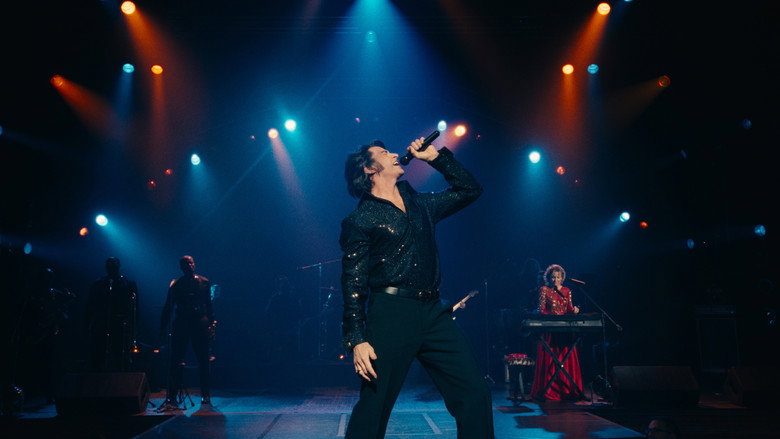
The film's first half charts the improbable rise of Lightning & Thunder: Mike and Claire, both carrying prior marriages and stalled careers, meet, fall in love, marry, and build a Neil Diamond tribute act that becomes a genuine draw across the Milwaukee area. The romance and the business grow as one thing, which is why the first disaster hits both at once.

The accident. Drawing on the real events of May 10, 1999, Claire is gardening in the front yard of their home when a car swerves out of control and strikes her. The injuries are catastrophic and part of her left leg is amputated. This is the film's structural hinge: everything after it is about whether the act — and the marriage — can be rebuilt around permanent, visible loss. Claire's eventual return to the stage is the movie's true comeback narrative, more so than any professional milestone.

The ending. The couple reach a career high with a show at the Ritz, the closest thing to vindication their kind of act can offer. In the aftermath of that peak, Mike suffers a heart attack and a resulting head injury, and dies — mirroring the real Mike Sardina's death in 2006 at the age of 55 from a head injury. The film thus delivers its greatest triumph and its greatest loss within the same movement, which is precisely the rhythm critics either admired as honest or faulted as whiplash.

The final image and its meaning. The film closes on Claire planting flowers in the exact spot where the car hit her at the start of the story. The rhyme reframes the whole movie: the ground that once made her a victim of circumstance becomes ground she chooses to cultivate, and she moves from being a person things happen to into the author of her own narrative. Read backwards, the garden that seemed like ordinary domestic texture in the opening act was always the film's real stage.

What clarifies on reflection: the title's paradox — a cheerful song about sadness — turns out to be the movie's structure, not just its soundtrack. Mike's insistence on performing other people's songs reads, in hindsight, as a man who understood that what he was really giving people was permission to feel; and the duet staging throughout gains retrospective weight once Claire is singing, and living, alone.

Alternative Interpretations

Celebration or sentimentality? The most persistent split among viewers is whether the film's relentless emotional swings are earned. One reading takes them as formally honest — real lives don't modulate, and the Sardinas' actually did lurch from career highs to catastrophes. The opposing reading, voiced by the film's harsher critics, is that the movie pendulum-swings from triumph to tragedy for effect, using true events as permission for manipulation.

Whose story is it? Marketed around Jackman's showstopping performance, the film can be watched as Mike's story: a man who finds transcendence in another artist's songs and dies at his peak. But the structure — beginning and ending with Claire in the same front yard — supports reading it as her story, with Mike as the great love and great subject of a life she ultimately narrates alone.

What the tribute act means. Some see the film as poignant precisely because the Sardinas never escape being a copy — a bittersweet portrait of thwarted originality. Others take Brewer at his word that originality is beside the point, and that the movie is a straightforward celebration of communal joy, closer to a religious service than to a career study.

The ending's tone. The final image can play as devastating (a woman left alone where she was once destroyed) or as quietly triumphant (a survivor cultivating the very ground that broke her). The film does not adjudicate, and audience reaction has divided along exactly that line.

Explore More About This Movie

Dive deeper into specific aspects of the movie with our detailed analysis pages

Similar Movies