Skip to content
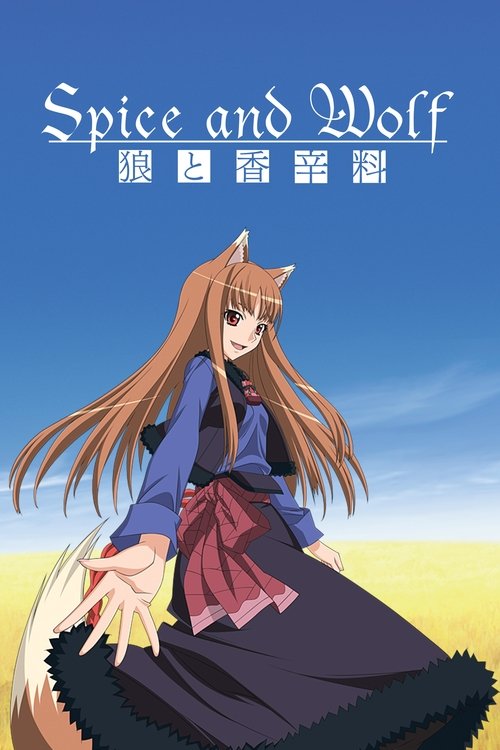
Spice and Wolf
A quiet medieval road trip where ledgers beat like hearts: a lonely merchant and an ancient wolf deity barter jokes, coins and confessions under skies the color of ripening wheat.
Spice and Wolf

Spice and Wolf

狼と香辛料

08 January 2008 — 24 September 2009 Japan 2 season 24 episode Ended 7.5 (159)

Cast: Jun Fukuyama, Ami Koshimizu, Mai Nakahara, Kaori Nazuka, Daisuke Namikawa

Drama Animation Sci-Fi & Fantasy Economics as the engine of drama Loneliness and the arithmetic of time Negotiation as intimacy Faith, obsolescence and the new religion of commerce Home, belonging and the road north

Overview

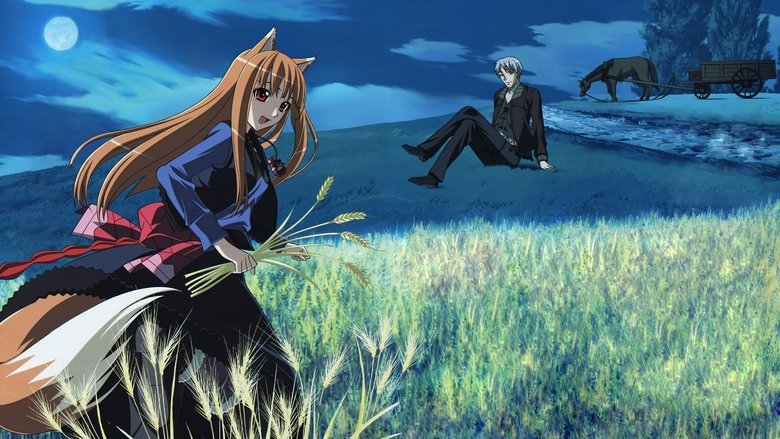
Spice and Wolf (狼と香辛料) adapts Isuna Hasekura's award-winning light novels — illustrated by Juu Ayakura — into a fantasy that trades swords and spells for exchange rates and contracts. Kraft Lawrence, a twenty-five-year-old traveling merchant, finds a naked girl with wolf ears and a great tail asleep in his cart of wheat: Holo, a harvest deity bound for centuries to a village by an old promise, now abandoned by farmers who no longer need her blessing. She asks to be carried north to her homeland, Yoitsu; he agrees, and in return her centuries of insight into people become the sharpest instrument in his trading kit.

The two seasons are built as a chain of self-contained commercial gambles, each staged in a different town and each keyed to a different mechanism of medieval finance: coin purity and currency speculation, smuggling and collateral, loans and insider knowledge, market cornering and the leverage of information. The stakes are almost never magical. What can be lost is money, reputation, a livelihood — and, increasingly, the other person. Every deal is also a negotiation between two people who are learning the price of honesty.

Across twenty-four broadcast episodes plus two OVA installments, the series slowly reverses its own premise. It begins as a merchant's story with a strange companion attached and ends as a story about companionship in which the merchandise is the excuse. The road north is long, the wagon is slow, and both travelers know the arithmetic that waits at the end of it: one of them will outlive the other by centuries.


Core Meaning

The series argues that every relationship is a transaction, and that admitting this makes love more honest rather than less. Lawrence's trade is built on reading what a person wants, what they will concede, and what they are hiding — and the show applies exactly that literacy to intimacy. Holo cannot be won with a grand gesture; she has to be understood, appraised, and met on fair terms, again and again, town after town.

Underneath the ledgers runs a second, sadder proposition: the world moves on without asking permission. Holo is a god made obsolete by better farming; the old faiths are being displaced by an expanding Church and by the newer, more powerful religion of capital. The story's answer to obsolescence is not resistance but companionship — the small warmth of shared bread, shared wine and shared conversation held against enormous spans of time.

Its final statement, delivered when Lawrence sets aside the shop he has dreamed of his whole working life, is that value is a choice, not a number. A merchant who can price anything ends the series deciding what he refuses to sell.

Thematic DNA

Economics as the engine of drama 25%
Loneliness and the arithmetic of time 25%
Negotiation as intimacy 20%
Faith, obsolescence and the new religion of commerce 18%
Home, belonging and the road north 12%

Economics as the engine of drama

Rather than treating trade as background texture, the series makes it the plot's entire machinery — currency exchange, coin purity, black markets, insider trading, loans and bargains of every kind. Critics have repeatedly singled out this as the show's defining innovation: the handling of economics is broad and detailed enough to make the world feel real, yet explained plainly enough that common sense carries the viewer through.

The escalation across the run is deliberate. Season one's schemes are small and local — one merchant, one bad coin, one town's rumor. By the second season the arcs involve whole trade guilds, foreign consortiums and the cornering of markets, where a single decision can annihilate Lawrence's savings and his standing at once. As the sums grow, the emotional exposure grows with them.

Loneliness and the arithmetic of time

Both leads are professionally lonely. Lawrence's trade keeps him permanently in motion, sleeping beside a cart; Holo has spent centuries in a field watching generations of humans be born, thank her, and die. Their first bond is not romance but recognition — two people who have been alone long enough to have stopped expecting company.

The theme darkens as it develops. Early on, loneliness is a joke Holo makes about herself; by the later arcs it has become a real fear that governs her behavior, prompting her to push Lawrence away before he can leave. The series never resolves the fundamental asymmetry — a wolf who lives for centuries, a man who does not — and its most affecting scenes are the ones where both characters silently do that math.

Negotiation as intimacy

The show's celebrated dialogue is structured like haggling: feints, concessions, bluffs, the deliberate withholding of information. Holo tests Lawrence constantly, and he answers in the only language he has — the language of terms and fair dealing.

The arc of the series is the slow collapse of this defense. In the beginning the banter is armor; by the end Lawrence is forced into statements he cannot hedge, cannot price and cannot take back. Reviewers noted that his growth is precisely this: becoming aware of his own feelings and able to convey them, rather than trading around them.

Faith, obsolescence and the new religion of commerce

Holo is a harvest deity whose village stopped believing in her because it learned to farm without her. Around this sits an expanding Church that treats the old pagan spirits as heresy, and a merchant class whose real object of worship is the coin.

Across both seasons the series lets these three orders — old gods, Church, capital — grind against one another in the background of the trade plots, in the treatment of pagans and outsiders, and in how easily faith is weaponized as a market rumor. It refuses easy villainy: the Church is a power structure, not a monster, and commerce is shown as both a liberating and a devouring force.

Home, belonging and the road north

Both characters carry a destination that doubles as a fear. Lawrence wants a shop of his own — a fixed place, the end of the road. Holo wants Yoitsu, a homeland she has not seen in centuries and which may no longer exist.

The journey structure quietly interrogates both dreams. Each town Lawrence passes through is a preview of the settled life he says he wants, and each is somehow insufficient; each rumor Holo gathers about the north brings her closer to a truth she may not want. By the end the wagon itself — moving, temporary, shared — has become the only home either of them actually values.

Character Analysis

Kraft Lawrence

Jun Fukuyama

Archetype: Reluctant hero / everyman professional Key Trait: Pragmatic decency — he negotiates hard but keeps his word

Motivation

Initially: capital, independence, a storefront of his own. By the second season the shop has quietly become a way of imagining a future that includes Holo, and by the end he is prepared to defer it entirely rather than lose her.

Character Arc

Begins as a competent, self-sufficient twenty-five-year-old trader whose life is organized entirely around a single goal: his own shop. Season one tests his skill — he wins one gamble on nerve and information, then loses catastrophically on another and learns that his profession can ruin him as easily as it can enrich him.

Season two shifts the pressure from his purse to his character. He becomes visibly worse at protecting himself and better at understanding what he feels, culminating in the finale, where — after a decision that leads to a violent confrontation and puts his future with Holo on the line — he sets aside the dream of the shop and puts his feelings into words.

Holo the Wise Wolf

Ami Koshimizu

Archetype: Trickster deity / mentor and equal Key Trait: Pride braided with terror of solitude

Motivation

To reach her homeland in the north; increasingly, to postpone the moment when the journey — and therefore the companionship — ends.

Character Arc

Introduced as a wolf deity of the harvest, bound by an ancient promise to a village that has stopped believing in her, she escapes with Lawrence in an act that is half liberation and half abandonment. Her early role is the amused superior — reading marks, dismantling schemes, needling her human companion.

Over both seasons the imperious wise wolf is steadily undercut by fear: of the years she will spend after Lawrence dies, of finding Yoitsu gone, of being left again. Her manipulations turn inward, and the arrogance that opened the series is exposed as the manner of someone who has been alone for centuries and is bad at asking to be kept.

All 3 characters and cast

Symbols & Motifs

Wheat

Meaning:

Holo's body, her contract and her mortality in a single motif. Wheat is what she blesses, what binds her, and what she must physically carry to exist away from her field — a god reduced to portable produce, the sacred converted into a commodity.

Context:

Established in the premiere, where she appears inside a merchant's cargo of wheat during the harvest, and referenced throughout both seasons whenever her freedom or her form is at stake. That the divine arrives hidden in freight is the show's thesis in one image.

The tail and ears

Meaning:

Holo's honesty leak. The proud, teasing wise wolf can control her words but not her grooming — the tail is where pleasure, embarrassment and hurt show before she consents to admit them.

Context:

Used as a running visual gag and as a serious emotional register across all arcs: brushed when she is content, bristling when threatened, hidden under cloaks whenever the pair must pass as ordinary travelers in Church-governed towns.

Coins and their purity

Meaning:

Trust rendered in metal. A coin's silver content is a promise made by an authority, and the series' plots turn on that promise being debased, doubted or exploited — an exact mirror of how its characters test each other's sincerity.

Context:

The engine of the first season's currency-speculation intrigue and a recurring device thereafter, as rumor, purity and exchange rates drive Lawrence's fortunes in town after town.

Food and wine shared in an inn

Meaning:

The pair's real currency. Meals are where negotiation becomes affection: Holo's appetite is both comedy and a demand for attention, and buying her something expensive is Lawrence's way of saying what he will not say.

Context:

Recurs in every arc, most pointedly in the OVA Wolf and Amber Melancholy, where a celebratory feast shared with Lawrence, Holo and the shepherd Norah stands in for everything the trade plot cost them.

The wagon and the road

Meaning:

Impermanence chosen over safety. The cart is a business asset, a bed and a home that is by definition never arrived; it embodies the couple's refusal, or inability, to stop moving.

Context:

The visual constant of the entire series — most conversations happen on the driver's bench — and the thing Lawrence must repeatedly risk or abandon when a deal collapses.

The north / Yoitsu

Meaning:

The past as a destination. Yoitsu represents both Holo's belonging and the possibility that belonging can be extinct; travelling toward it is travelling toward an answer neither of them is eager to receive.

Context:

Named from the first episodes as the goal of the journey and pursued through gathered legends and traders' rumors across both seasons, without the series ever letting the pair simply arrive.

Episode Highlights

Season 1 premiere — the wolf in the wheat cart

S1E1

Establishes the entire series in one move: a traveling merchant discovers Holo, a harvest deity bound to a village by an old promise, asleep among his wheat. She explains that the farmers no longer believe in her, and asks to be taken north.

Significance:

Sets the contract that structures both seasons — passage to Yoitsu in exchange for her insight into people — and announces a fantasy whose stakes will be commercial rather than martial.

Pazzio arc climax — the silver-coin conspiracy

S1E6

The first season's opening arc, set in the trading town of Pazzio, resolves as Lawrence's speculation on currency turns into a genuine physical danger and Holo's power is finally shown rather than described.

Significance:

Proves the show's central formula — an economic problem that doubles as a relationship test — and reveals the enormous, frightening thing travelling in the seat beside Lawrence.

Ruvinheigen arc conclusion — the ruinous venture

S1E13

Lawrence's ambitious deal collapses into crushing debt, forcing him into a desperate scheme alongside the shepherd Norah and into total reliance on Holo.

Significance:

Breaks the competent-merchant image built in the first arc. From here on, Lawrence's expertise is no longer sufficient protection, and the partnership becomes a necessity rather than a convenience.

Wolf and Amber Melancholy (OVA)

S2E0

A standalone episode set immediately after the conclusion of the Ruvinheigen arc, built around a celebratory feast shared by Lawrence, Norah and Holo.

Significance:

The series in miniature: no scheme, no threat, only the food, wine and conversation that the trade plots exist to make possible — and a clear look at the jealousy and attachment now driving Holo.

Wolf and Lonely Smile

S2E10

Late in the second season's final arc, the momentum of the trade plot and the emotional distance between the two leads converge; the title names the expression Holo wears precisely when she is most alone.

Significance:

Sets up the finale by pushing the pair to the point where the usual verbal fencing stops working and something unhedged has to be said.

Wolf and Endless Tears

S2E12

The series finale. After leaving Holo with traders, Lawrence is forced to reconsider his plans; the decision leads to a violent confrontation in which his future with her is on the line.

Significance:

Resolves the show's governing tension by having Lawrence set aside his dream of a shop for now and declare his love — the merchant finally naming the one thing he will not trade away.

Philosophical Questions

Can everything be given a price, and what happens to the things that can't?

Lawrence's entire competence consists of valuing goods, risks and people accurately. The series spends two seasons demonstrating that skill and then constructs a situation where it fails — where the correct answer is to refuse the trade. The finale's choice to defer the shop is the show's verdict: pricing is a tool, not a worldview.

What does a god owe the people who stop believing in it — and what do they owe the god?

Holo's premise is a broken contract: she kept an old promise to guarantee harvests, and the village made her obsolete by learning to farm without her. The series treats this without villains, letting the Church's expansion and the villagers' indifference sit side by side, and asks whether being no longer needed cancels what was owed.

Is it rational to love someone you are guaranteed to lose?

The asymmetry between a centuries-old wolf and a human merchant is stated early and never resolved. Holo's escalating attempts to create distance are the series' argument that grief can be pre-emptive, and its answer — arrived at in the finale — is that the arithmetic is real and irrelevant.

Is honesty possible between two people who are both expert manipulators?

Both leads read others for a living, and their conversations are built from feints and withheld information. The series treats candor as something that has to be earned through repeated small concessions across many towns, and makes its emotional climax a statement that cannot be negotiated around.

Alternative Interpretations

The finale as a happy ending, or as a deferral. The most-discussed ambiguity is what Lawrence's decision actually costs. One reading takes it at face value: he chooses love over ambition, and the confession is the resolution the series has been building toward. The other notes the phrasing carefully — he sets the dream aside for now. Under this reading nothing structural has changed: the journey to Yoitsu is unfinished, the shop is postponed rather than abandoned, and the ending is a pause in an unresolved life, not a conclusion. Viewers coming from the light novels tend to read it the second way, since the anime stops well short of the novels' endpoint.

Full ending explanation

Cultural Impact

Spice and Wolf arrived in 2008, at the height of a light-novel adaptation boom dominated by school settings, harems and battle fantasy, and made its case by removing almost all of it. A pseudo-medieval European economy, two leads in their twenties, and plots resolved by arithmetic and rumor rather than combat — the show's success demonstrated that a mainstream anime audience would follow a slow, dialogue-led romance if the writing was good enough.

Its critical standing has grown rather than faded. In an Anime News Network retrospective, Michael Basile called it an "incredibly fascinating and captivating work", praising the "shockingly wide" and detailed handling of economics for making the world feel real, and singling out Holo and Lawrence for their "perfect chemistry" and "wonderful, often poignant exchanges." Later commentary has gone further: ScreenRant argues the series is not merely a masterpiece but one of the most influential anime of the past two decades, and the show is routinely cited as the origin point of the "economics fantasy" niche later occupied by titles such as Maoyu.

Culturally, the series draws on a real historical substrate — the late-medieval European transition from agrarian folk religion to Church authority and mercantile capital — and on the folkloric figure of the harvest wolf spirit, giving it an unusual double appeal to viewers interested in history and to those there for the romance. Its most durable legacy is Holo herself, one of the enduring icons of 2000s anime, and a fandom persistent enough that a full reboot, Spice and Wolf: Merchant Meets the Wise Wolf, was launched in 2024 with the original leads returning.

Audience Reception

Overall. The original run is widely regarded as a modern classic, holding a 7.7 rating on IMDb and a reputation that has strengthened over time. The near-universal point of praise is the Holo–Lawrence dynamic: reviewers describe the chemistry as organic and full of personality, and the relationship is specifically well regarded among long-time anime viewers. The second consistent point of praise is the economics — coin purity, currency exchange, black markets, insider trading, loans and bargains — which critics found tense and legible rather than dry, and which Anime News Network's retrospective credited with making the world feel genuinely real.

Season one was received as a surprise: a light-novel adaptation with adult leads and no combat, whose first currency-speculation arc convinced viewers that dialogue could carry suspense. Season two, produced by a different studio a year later, is generally seen as the emotionally stronger half — the arcs are larger in scale and the relationship becomes the actual subject rather than the reward — and its finale, with Lawrence putting his dream aside and declaring his love, is the moment most often cited as the payoff for the whole run.

Criticism clusters in predictable places. The pacing is slow and the show is extremely talk-heavy, which some viewers find soporific; the trade plots occasionally require exposition dumps; and the ending, while emotionally satisfying, leaves the journey to Yoitsu unfinished, sending a great many viewers to the light novels and leaving fans waiting more than a decade for a continuation. Opinion evolved over that gap from "underrated gem" to "canonical," a shift confirmed by the 2024 reboot's arrival with both original leads reprising their roles.

Interesting Facts

  • The source light novels are written by Isuna Hasekura and illustrated by Juu Ayakura; Hasekura won the Silver Prize in the twelfth Dengeki Novel Prize in 2005 with the debut Spice and Wolf volume.
  • Hasekura reportedly took the prize money from that first novel into the stock market, and later went on to write a manga about day trading — an unusually literal case of an author living his own subject matter.
  • The first season was animated and produced by Studio Imagin and aired 12 episodes between January and March 2008, with a thirteenth OVA installment — classed as episode 7 — released in May 2008.
  • The second season, Spice and Wolf II, was produced by a different studio, Brain's Base, and ran 12 episodes from July to September 2009; an additional OVA, Wolf and Amber Melancholy, arrived in April 2009 between the two seasons.
  • Episodes of the original run were directed by Takeo Takahashi.
  • Every episode title in the series follows the same 'Wolf and…' construction, framing each arc as a chapter in Holo's story rather than Lawrence's.
  • Jun Fukuyama (Lawrence) and Ami Koshimizu (Holo) both returned to reprise their roles in the 2024 reboot, Spice and Wolf: Merchant Meets the Wise Wolf, sixteen years after the original series premiered.
  • By October 2020 the light novel series had sold over five million copies.

Frequently Asked Questions

Explore More About This Movie

Dive deeper into specific aspects of the movie with our detailed analysis pages

Comments (0)

Leave a comment

No comments yet. Be the first to share your thoughts!

Similar Movies