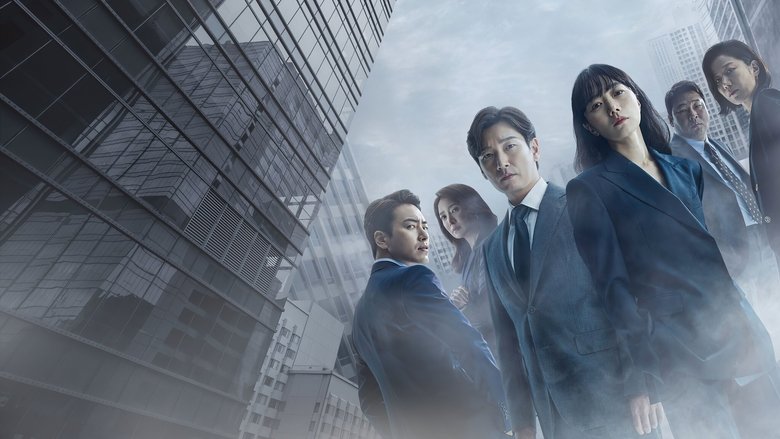
Season 1 Twist & Culprit Reveal: Throughout Season 1, suspicion rotates between Seo Dong-jae, Chief Prosecutor Lee Chang-joon, and corporate elites. The dramatic revelation in Episode 15 reveals that the physical killer executing the murders of Park Moo-sung and Young Eun-su is Yoon Se-won, a trusted member of Si-mok’s own Special Investigation Unit. Se-won was a former UDT soldier whose young son died in a bus crash caused by corrupt safety inspection bribes linked to Park Moo-sung.
However, the true mastermind pulling the strings behind the scenes was Chief Prosecutor Lee Chang-joon. Realizing that legal systems could not touch corporate giants like his father-in-law (Hanjo Chairman Lee Yoon-beom), Chang-joon engineered the initial leaks and targeted killings to create an unstoppable investigation. In the finale, Chang-joon meets Si-mok at a deserted building, hands over a bag containing overwhelming evidence of corporate and state bribery, and jumps to his death, choosing to be remembered as a monster if it successfully purges the system.
Season 2 Twist & Finale Breakdown: Season 2 centers on the disappearance of Prosecutor Seo Dong-jae and the mysterious death of former prosecutor turned lawyer Park Kwang-soo. The investigation reveals two distinct layers of deceit:
- The Kidnapping: Dong-jae was not abducted by corrupt police officers as suspected, but by Kim Hu-jeong, a quiet law student. Hu-jeong had accidentally killed his former high school bullies years prior and panicked when Dong-jae began investigating the old case.
- The High-Level Cover-up: Police Intelligence Chief Choi Bit and Prosecution Chief Woo Tae-ha had secretly conspired to hide the circumstances surrounding Lawyer Park Kwang-soo’s death. Kwang-soo had died of natural heart failure during a shady late-night meeting with Hanjo Group executives. Fearing scandal, Woo Tae-ha and Choi Bit moved the body to a highway to make it look like a heart attack while driving, burying the truth to preserve their institutional positions.
When Si-mok and Yeo-jin expose the cover-up, both the police and prosecution leadership are disgraced, causing the Joint Reform Council to collapse. Si-mok is transferred to a regional office in Wonju, remaining an upright, steadfast prosecutor. In the final scene, Si-mok looks at a photograph of his Season 1 Special Unit and offers a genuine, warm smile—symbolizing that while systemic corruption persists, his personal humanity has been permanently restored.