
Skip to content
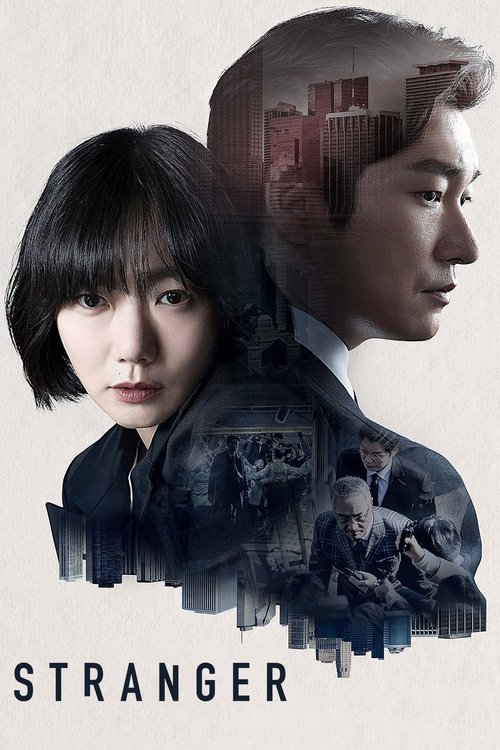
Stranger
A chilly, cerebral noir where unyielding logic cuts through dense thickets of institutional deceit, evoking a quiet, haunting dread that yields to an unexpected flame of quiet human warmth amidst a labyrinth of shadow.
Stranger

Stranger

비밀의 숲

10 June 2017 — 04 October 2020 South Korea 2 season 32 episode Ended 8.3 (212)

Cast: Cho Seung-woo, Bae Doona, Lee Jun-hyuk, Yoon Se-a, Park Seong-geun

Drama Crime Mystery Systemic Corruption vs. Individual Integrity The Fallacy of Noble Vigilantism Institutional Jurisdictional Feuds and Optics The Danger of Passive Silence and Complicity Empathy, Isolation, and Human Connection

Overview

Stranger (Original Title: 비밀의 숲 / Secret Forest) is a South Korean legal and crime thriller series spanning two seasons and 32 episodes. The narrative follows Hwang Si-mok, an extraordinarily sharp prosecutor who underwent brain surgery as a child to curb violent tinnitus, leaving him devoid of empathy and social affect. Ostracized by his peers for his refusal to accept bribes or engage in office politics, Si-mok operates as a solitary island of pure, unadulterated logic within the deeply compromised Seoul Western District Prosecutors’ Office.

His rigid universe collides with that of Han Yeo-jin, a warm, highly intuitive, and fiercely righteous police detective from the Yongsan Police Station. When a routine murder investigation of a former corporate broker uncovers a sprawling web of bribery, corporate conspiracy, and institutional cover-ups, Si-mok and Yeo-jin form an unlikely, incorruptible partnership. Across both seasons, the story expands from a single violent crime into a grand dissection of institutional friction, probing how power structures—from high-ranking prosecutors and police chiefs to omnipotent chaebol conglomerates—manipulate the law for self-preservation.

Rather than relying on fast-paced action or melodramatic tropes, the series develops as a meticulous, slow-burn procedural. As Si-mok and Yeo-jin navigate political traps, internal betrayals, and shifting alliances, the series explores whether individual moral integrity can survive inside a systemic forest of secrets where everyone has something to hide.


Core Meaning

The overarching message of Stranger is that corruption is rarely the work of isolated "monsters," but rather the cumulative result of systemic silence, passive compromise, and institutional self-preservation. Through its intricate narrative across both seasons, creator Lee Soo-yeon argues that when righteous individuals turn a blind eye to small infractions for the sake of decorum or hierarchy, they become accomplices in sinking the entire moral foundation of society.

The show asserts that justice cannot rely on tragic vigilantes or noble tyrants who burn down systems from within. Instead, real systemic change requires unyielding, day-to-day adherence to principle and truth—represented by the relentless, emotionless logic of Hwang Si-mok tempered by the empathetic vigilance of Han Yeo-jin.

Thematic DNA

Systemic Corruption vs. Individual Integrity 30%
The Fallacy of Noble Vigilantism 20%
Institutional Jurisdictional Feuds and Optics 20%
The Danger of Passive Silence and Complicity 15%
Empathy, Isolation, and Human Connection 15%

Systemic Corruption vs. Individual Integrity

Throughout both seasons, the series illustrates how legal institutions (prosecutors and police) gradually decay when personal ambition and organizational prestige are prioritized over public duty. Si-mok serves as a control variable—an unbribable observer whose lack of self-interest exposes the compromise around him. The theme evolves from Season 1's focus on bribery and corporate collusion to Season 2's focus on institutional power struggles over investigative rights.

The Fallacy of Noble Vigilantism

The show deeply explores the moral paradox of trying to clean a corrupt system using criminal methods. Key antagonists and antiheroes view themselves as martyrs making necessary sacrifices. However, the series consistently rejects this rationale, showing that grand vigilante schemes cause collateral damage to innocent lives and ultimately reinforce the chaos they sought to eradicate.

Institutional Jurisdictional Feuds and Optics

Season 2 shifts heavily into the bureaucratic friction between the Prosecution and the Police Council. The narrative reveals how both sides weaponize reform and public relations not to serve justice, but to gain institutional dominance. Truth becomes a casualty of public relations, as leaders suppress uncomfortable facts to avoid losing authority.

The Danger of Passive Silence and Complicity

Citing its famous motto, "All who seek silence are accomplices," the series demonstrates how ordinary, non-malicious people contribute to tragedy by choosing not to speak up. From junior prosecutors staying quiet about senior bribery to police officers covering up minor procedural breaches, passive compliance is depicted as the true fertile ground for grand crime.

Empathy, Isolation, and Human Connection

On a character level, the show traces Si-mok's gradual awakening through his partnership with Yeo-jin. While Si-mok starts as a social outcast incapable of feeling, Yeo-jin introduces empathy as a vital tool of justice. The narrative emphasizes that pure logic without human warmth can diagnose corruption, but only empathetic connection can heal its wounds.

Character Analysis

Hwang Si-mok

Cho Seung-woo

Archetype: The Stoic Truth-Seeker / Emotionless Investigator Key Trait: Complete lack of emotional bias, paired with hyper-analytical deduction.

Motivation

To uphold functional duty, unyielding logic, and objective truth to solve cases without personal investment or emotional bias.

Character Arc

Initially driven purely by functional duty and unyielding logic to solve cases without personal investment. Over two seasons, through his bond with Yeo-jin, he slowly develops subtle emotional awareness, learning to trust others, express warm gestures, and navigate human relationships while remaining incorruptible.

Han Yeo-jin

Bae Doona

Archetype: The Moral Compass / Righteous Crusader Key Trait: High emotional intelligence, sharp instincts, and unwavering ethical clarity.

Motivation

To protect the innocent, value human life, and uphold ethical clarity above bureaucracy and institutional self-preservation.

Character Arc

Starts as an idealistic street detective at Yongsan Police Station who values human life above bureaucracy. In Season 2, after being promoted to the Main Police Agency's Intelligence Bureau, she experiences the agonizing tension between institutional loyalty and her core morals, ultimately choosing truth over career advancement.

All 5 characters and cast

Symbols & Motifs

The Forest (비밀의 숲 / Secret Forest)

Meaning:

Represents the dense, dark, and tangled web of institutional corruption where truth is obscured, pathfinding is treacherous, and every tree conceals a secret.

Context:

Serves as the primary metaphor of the series and the thematic foundation behind its original Korean title.

Unfinished Meals and Cold Noodles / Ramen

Meaning:

Symbolizes how the relentless grind of corruption and duty deprives individuals of basic human warmth, nourishment, and peace.

Context:

A recurring visual motif across both seasons where Si-mok is interrupted right before taking a bite of hot food (ramen, soup, or office lunch boxes) due to urgent work calls.

Yeo-jin’s Character Sketches

Meaning:

Represents warmth, human connection, and her ability to see the humanity hidden beneath Si-mok's cold exterior.

Context:

Yeo-jin frequently draws whimsical, doodle-like sketches of Si-mok and her police colleagues during downtime and personal interactions.

Dense Fog / Mist (Tongyeong Coastal Fog)

Meaning:

Symbolizes moral ambiguity, misdirection, and the inability of institutions to see clearly when driven by political motives.

Context:

Introduced prominently in Season 2's opening episodes during the drowning incident investigation on the coast.

Tinnitus and Brain Surgery Scars

Meaning:

Symbolizes his body's physical rejection of a corrupt world's noise, serving as a visceral reminder of his altered humanity.

Context:

Reflects Si-mok’s physical condition involving painful ringing in the ears triggered by intense emotional stress following childhood brain surgery.

Memorable Quotes

사고라는 게 원래 1분 1초마다 매번 계속 발생하지 않습니다. 문제 없다고 괜찮다고 원칙 무시하다가 어느 날 배가 가라앉고 건물이 무너지는 겁니다.
— Hwang Si-mok

Context

Spoken by Hwang Si-mok during Season 1, Episode 1.

Meaning

Sets up Si-mok's core philosophy regarding strict adherence to rules and principles to prevent systemic disaster.

저 사람들이 죄다 처음부터 잔인하고 악마여서 저러겠어요. 하다 보니까, 되니까 그러는 거에요. 눈감아주고 침묵하니까. 누구 하나만 제대로 부릅뜨고 짖어주면, 바꿀 수 있어요.
— Hwang Si-mok

Context

Spoken by Hwang Si-mok in Season 1, Episode 9.

Meaning

Explains why Si-mok refuses to stay silent, serving as the ideological heart of the entire series.

All 5 quotes

Episode Highlights

Season 1, Episode 1

S1E1

Pivotal opening episode where Prosecutor Hwang Si-mok finds corporate broker Park Moo-sung murdered and meets Detective Han Yeo-jin.

Significance:

Establishes Si-mok's emotional condition and sets off the grand conspiracy narrative.

Season 1, Episode 3

S1E3

Turning point episode where a framed suspect commits suicide in prison accusing prosecutors of corruption.

Significance:

Si-mok goes on live national television and boldly promises to catch the real killer within two months.

Season 1, Episode 9

S1E9

Shift in narrative featuring the official formation of the Special Investigation Unit led by Hwang Si-mok.

Significance:

Brings together key allies, including Yeo-jin and Yoon Se-won, marking the beginning of an aggressive internal probe.

Season 1, Episode 14

S1E14

Climactic tragedy where young prosecutor Young Eun-su is brutally murdered in Park Moo-sung’s house.

Significance:

The emotional shock causes Si-mok to suffer a severe physical collapse and acute sensory overload, demonstrating his suppressed capacity for grief.

Season 1, Episode 16

S1E16

Season 1 Finale where Si-mok confronts Chief Lee Chang-joon at an abandoned construction site.

Significance:

Chang-joon reveals his master scheme to expose Hanjo Group's corruption before committing suicide, leading to Si-mok delivering his testimony on TV.

Season 2, Episode 1

S2E1

Season 2 Opening set against heavy coastal fog in Tongyeong where two college students drown.

Significance:

What seems like a tragic accident is quickly linked to institutional cover-ups, re-establishing Si-mok and Yeo-jin’s dynamic.

Season 2, Episode 5

S2E5

High-stakes turning point where Prosecutor Seo Dong-jae goes missing after investigating a suspicious police cover-up.

Significance:

Shifts the entire season from administrative debate to a desperate rescue operation.

Season 2, Episode 15

S2E15

Resolution of mystery where the identity of Dong-jae's kidnapper (Kim Hu-jeong) is uncovered.

Significance:

Exposes how Police Chief Choi Bit and Prosecutor Woo Tae-ha conspired to conceal the natural death of lawyer Park Kwang-soo.

Season 2, Episode 16

S2E16

Series Finale where the Joint Police-Prosecution Council collapses due to mutual scandals.

Significance:

Si-mok is transferred to Wonju, Yeo-jin secures her place in the Intelligence Bureau, and the series ends on a poignant note as Si-mok smiles while looking at a photo of his old team.

Philosophical Questions

Does the end ever justify the means in the pursuit of justice?

Explored through Lee Chang-joon’s vigilante orchestration of murder to bring down systemic corruption versus Si-mok’s strict adherence to legal procedure.

Can true justice exist without empathy?

Investigated through Si-mok's hyper-logical approach, which accurately detects facts but requires Yeo-jin's human compassion to understand human suffering.

Is an individual responsible for systemic corruption if they remain silent?

Examined through minor characters who comply with unethical orders out of fear or self-preservation, demonstrating how passive silence enables macro-level evil.

Is legal reform driven by institutions ever genuine, or is it merely political theatre?

Explored in Season 2 through the Police-Prosecution Council, where both agencies use the rhetoric of "reform" to gain institutional dominance.

Alternative Interpretations

  • The Tragic Hero vs. Monster Reading of Lee Chang-joon: Critics and viewers remain divided over Lee Chang-joon. One perspective views him as a noble martyr who sacrificed his reputation and life to clean up the prosecution. The opposing view, emphasized by Si-mok in the finale, argues that Chang-joon was simply a murderer who used grand anti-corruption ideals to justify vigilante crimes.
  • Si-mok’s Emotional Condition—Medical Deficit vs. Moral Purity: Some viewers interpret Si-mok’s lack of emotion as a tragic disability. Others view it as a philosophical metaphor: an uncorrupted mind unburdened by greed, fear, or social pressure, serving as the only true state in which objective justice can exist.
  • The Cynical View of Institutional Reform: While the show ends with individual bad actors brought to light, the broader institutions (Hanjo Group, Supreme Prosecutors' Office) remain intact and structurally unchanged. Many analysts view the ending as a realist message: systemic corruption can never be permanently eradicated, only continuously checked by vigilant individuals.

Full ending explanation

Cultural Impact

Historical & Political Context: Stranger premiered in mid-2017, coming right after the massive real-world political upheavals in South Korea surrounding the 2016–2017 impeachment of President Park Geun-hye and widespread public protests against political corruption and chaebol collusion. The show’s realistic depiction of corrupt prosecutors, police cover-ups, and corporate puppet-masters struck a powerful chord with a public demanding institutional reform. Season 2 (2020) directly reflected ongoing national political debates regarding legal reform and shifting investigative authority between the police and prosecution.

Critical Acclaim & Global Legacy: Stranger was hailed as a benchmark for Korean crime thrillers. It won the Grand Prize (Daesang) for Television at the 54th Baeksang Arts Awards and was selected by The New York Times as one of the Best International Shows of 2017. It established a new standard for cerebral, character-driven procedurals free of unnecessary romance tropes.

Audience Reception

Praise:

  • Writing & Plot Tightness: Reviewers universally praised Lee Soo-yeon’s meticulous, airtight screenplays, noting that every clue and minor character detail pays off without plot holes.
  • Lead Performances & Dynamic: The quiet, restrained chemistry between Cho Seung-woo and Bae Doona received overwhelming praise. Viewers lauded the refusal to force a romantic plotline, preserving a deep professional partnership.
  • Realism & Tone: Praised for avoiding melodramatic tropes, excessive action scenes, or unrealistic genius tropes, opting instead for realistic procedural intelligence.

Criticism & Controversy:

  • Season 2 Pacing & Bureaucracy: While Season 1 was universally adored, Season 2 received mixed reactions regarding its early episodes. Some viewers found the heavy focus on bureaucratic discussions regarding police-prosecution investigative rights slow and overly dry compared to Season 1's serial murder mystery.
  • Complexity of Politics: A minor point of criticism was that the intricate corporate and legal terminology made the plot difficult to follow for viewers unfamiliar with South Korean administrative structures.

Interesting Facts

  • Stranger was one of the early South Korean dramas to be fully pre-produced before airing, allowing writer Lee Soo-yeon and director Ahn Gil-ho to craft a tightly woven mystery without altering scripts based on live ratings.
  • The intricate, multi-layered screenplay of Season 1 was the television writing debut of screenwriter Lee Soo-yeon, earning her the Grand Prize (Daesang) in Television at the 54th Baeksang Arts Awards.
  • Cho Seung-woo took the role specifically because playing a character devoid of emotional expression was a fascinating acting challenge, later noting that suppressing natural reactions was extremely difficult.
  • Bae Doona returned to Korean television after a long hiatus specifically due to the quality of Lee Soo-yeon's script and the opportunity to co-star with Cho Seung-woo.
  • The popularity of Lee Jun-hyuk's character Seo Dong-jae led to the creation of a standalone spin-off series, Dongjae, the Good or the Bastard (2024).

Easter Eggs

Original Title Concept (Stranger: Stranger)

Writer Lee Soo-yeon originally intended to title the show Stranger: Stranger (이방인), reflecting how both Prosecutor Hwang Si-mok and the ultimate perpetrator were extreme outsiders alien to normal human emotional patterns.

Bae Doona’s Actual Artwork

The goofy, affectionate sketches of Hwang Si-mok and police colleagues shown in the series were physically drawn by actress Bae Doona herself during downtime on set.

The "0.7" Tattoo Misdirection

In Season 1, Episode 13, a witness identifies a tattoo on the killer's back that looks like the numbers "0.7". It is later revealed to be the upside-down military insignia "UDT" (Underwater Demolition Team), pointing directly to Special Investigation member Yoon Se-won.

The Desk Photo Detail

In the final scene of Season 1, Si-mok places a framed photograph of the Special Investigation Unit on his desk alongside Yeo-jin’s drawing, visually proving his internal emotional growth and acceptance of human bonds.

Frequently Asked Questions

Explore More About This Movie

Dive deeper into specific aspects of the movie with our detailed analysis pages

Comments (0)

Leave a comment

No comments yet. Be the first to share your thoughts!

Similar Movies