Skip to content
Street Fighter
A neon-bright, brawling pulp fantasy of friendship and pride, where old rivals trade blows beneath chandeliers and fireballs, and a dark power coils inside a ramen-maker's hands like a storm held in a bowl.
Street Fighter

Street Fighter

"Ready. Set. Fight."

13 October 2026 Japan 120 min 6.3 (210)

Director: Kitao Sakurai

Cast: Andrew Koji, Noah Centineo, Callina Liang, David Dastmalchian, Andrew Schulz

Fantasy Action Envy and Jealousy Friendship and reconciliation Inner darkness and self-control Power and tyranny Redemption and identity
Budget: $82,000,000
Box Office: $83,562,121

Overview

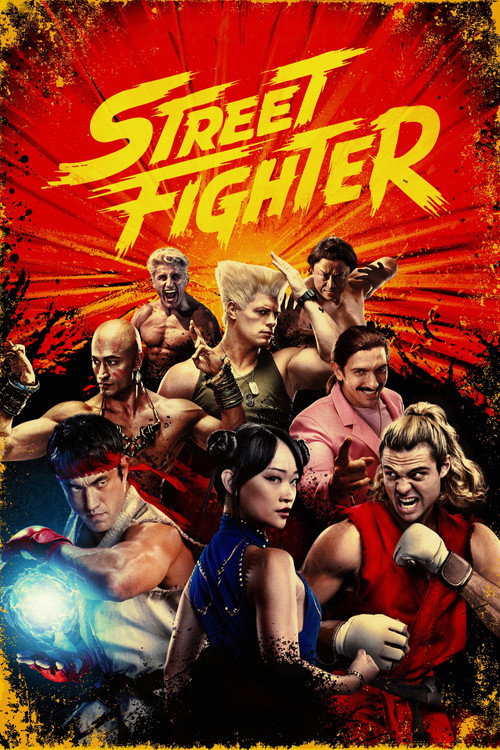
Set in an alternate 1993, Street Fighter unfolds around the second World Warrior Tournament, a martial arts contest arranged by the self-styled dictator M. Bison. Chun-Li, working undercover, is tasked with recruiting the world's best fighters. Her list includes game favorites such as Ryu, Ken, Vega and Guile.

Ryu won the first tournament in 1987, then vanished from the circuit after the death of his master, Gouken. He now earns a living selling ramen. Ken Masters is a washed-up brawler living in his old friend's shadow. Chun-Li pulls both men back toward the ring, and the old rivalry and wounds between them resurface.

Bison's tournament is a ruse built for his own ends. He wants to harvest fighting spirit as "Psycho Power", and Ryu carries a dangerous inner darkness that the tournament may draw out. Directed by Kitao Sakurai and co-produced by Legendary and Capcom, the film mixes broad comedy, bright costumes and video-game fan service with a story of two friends repairing their bond.
Core Meaning

Beneath the spectacle, the film is about envy and the strength of friendship. Gouken's warning that envy is the seed from which evil grows ties together Akuma's fall, Ryu's secret guilt and Ken's resentment. The film suggests that real power comes from facing your own shortcomings and from the people who stand with you, not from dominating others as Bison tries to. Ken's own Hadouken, which brings Ryu back, shows the bond between the two men defeating the darkness.

Thematic DNA

Envy and jealousy 30%
Friendship and reconciliation 30%
Inner darkness and self-control 20%
Power and tyranny 10%
Redemption and identity 10%

Envy and jealousy

Gouken's lesson about envy is mirrored by Akuma, who fell to darkness out of rivalry with his brother. Ryu also confesses that he destroyed Ken's invitation to the first tournament out of jealousy.

Friendship and reconciliation

Ken and Ryu's estrangement drives the film. They rediscover each other through their shared creed 'to live is to fight, to fight is to live', and Ken saves Ryu at the climax.

Inner darkness and self-control

Ryu struggles with the evil power within him, the Dark Hado. He refuses to use it at first, then unleashes it against Akuma. The film leaves the threat of it open.

Power and tyranny

Bison wants to drain the strength of the world's best fighters and treats his victims as trivia. His tournament shows how power-hunger turns sport into a trap.

Redemption and identity

Ken is told he is no longer a warrior but a sideshow, and he fights to prove himself. Ryu has traded his destructive hands for a quiet life.

Character Analysis

Ryu

Andrew Koji

Archetype: Reluctant hero Key Trait: Calm and restrained

Motivation

To keep his inner evil in check and to atone for the past, including his part in Gouken's death and his guilt toward Ken.

Character Arc

He goes from a hermit selling ramen to a fighter who loses control to his dark power. He then comes back to himself through Ken, and his Dark Hado is not gone for good.

Ken Masters

Noah Centineo

Archetype: Rival turned ally Key Trait: Reckless and proud

Motivation

To step out of Ryu's shadow and repair their friendship.

Character Arc

He starts as a washed-up brawler and enters the tournament to prove himself. He then drops it to rescue Ryu and finally produces his own Hadouken.
All 4 characters and cast

Symbols & Motifs

Hadouken

Meaning: Inner strength and, here, the bond between the two friends.
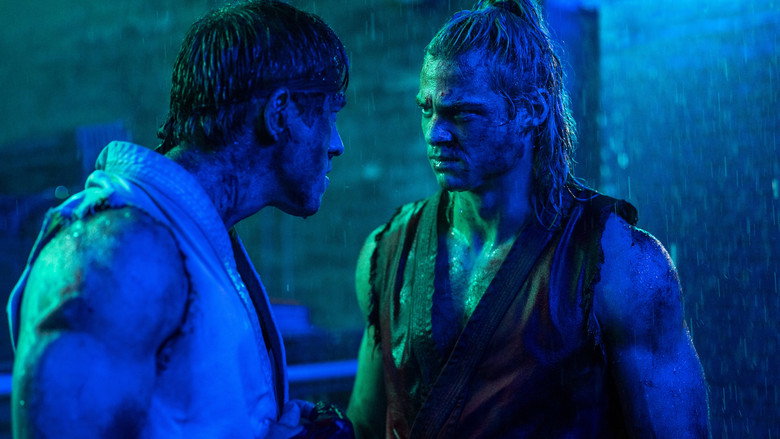
Context: Ryu uses it to beat Ken in their street fight. Ken's first real Hadouken at the climax restores Ryu to himself.

Ryu's hands and the ramen

Meaning: Renunciation of violence and the wish for a peaceful life.
Context: Ryu says his hands once destroyed and now only make ramen.

Dark Hado / Psycho Power

Meaning: Corrupting power, whether it is the darkness inside Ryu or what Bison tries to harvest.
Context: Bison's machine tries to capture it, and Ryu turns into Evil Ryu to beat Akuma.

The tournament

Meaning: A stage for ego and a trap, rather than a test of honor.
Context: Fighters forfeit, the winner is a footnote, and the real fight happens elsewhere.

The chandelier crash

Meaning: Ken's recklessness against Ryu's calm.
Context: Ken's flying kick misses, Ryu sidesteps, and Ken crashes through the chandelier as if it has happened before.

Memorable Quotes

To live, is to fight.
— Ken Masters

Context

Ken says it and Ryu answers 'To fight, is to live'; the exchange recurs between them.

Meaning

The two friends' shared creed, which stands for their bond.
You're not a warrior anymore, you're a sideshow.
— Chun-Li

Context

She calls out Ken, who is washed up at the start.

Meaning

A jab that pushes Ken to prove himself.
All 6 quotes

Philosophical Questions

Can one overcome the darkness within oneself?

Ryu holds back his Dark Hado, then unleashes it to win, and needs Ken's help to return. The film suggests the darkness is never fully gone.

What does envy do to friendship?

Ryu's destroyed invitation and Akuma's fall show that envy corrodes bonds, while confession allows repair.

Is power worth the cost of others' suffering?

Bison treats fighters as resources, and his offhand 'Tuesday' line contrasts with the weight his victims carry.

How It Ends

Alternative Interpretations

Some read the abrupt ending as a deliberate setup for a sequel and a road-trip adventure. Others see it as an unfinished story, since Bison escapes and the tournament winner is a footnote. Ryu's confession can be read as the emotional center of the film, with the fighting merely the vehicle for a story about male friendship and jealousy.

Full ending explanation

Cultural Impact

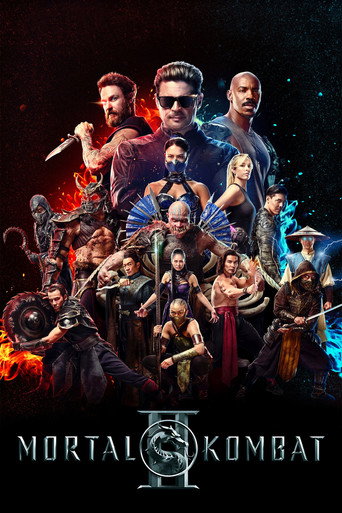
The film arrives as another attempt to make a fighting game franchise work on screen, and it was explicitly framed as aiming to succeed where recent games adaptations such as Mortal Kombat II struggled at the box office. It follows a 1994 live-action film and 2009's The Legend of Chun-Li, and it borrows from the first in its Bison "Tuesday" line.

Critics gave it mixed reviews. It opened at number one in the US with $31 million and had grossed roughly $80 million worldwide against an $82 million budget at last report. Analysts said it would need around $205 million to count as a clear theatrical success, so its franchise future is uncertain.

Audience Reception

Reception was mixed. Praise went to the colorful fan service, the eccentric performances (Dastmalchian's Bison was singled out by some) and the comic lines. Criticism focused on a messy, jumping plot, a barely visible tournament, an underdeveloped villain and an abrupt, unresolved ending that left some viewers frustrated. Overall it is seen as a fun but incomplete setup for a sequel.

Interesting Facts

  • Legendary acquired the live-action film and television rights in April 2023, with Capcom co-producing.
  • Danny and Michael Philippou were announced as directors but dropped out in June 2024, and Kitao Sakurai joined the following February.
  • Sakurai co-wrote the screenplay with T. J. Fixman, from a story by Dalan Musson and Gary Dauberman.
  • The film premiered at Grauman's Chinese Theatre on October 12, 2026, and was released in the US by Paramount on October 16, 2026.
  • The cast includes wrestlers (Roman Reigns as Akuma, Cody Rhodes as Guile), a rapper, a UFC champion and a country singer.
  • Reported budget was about $82 million, and it opened to $31 million domestically and $50.1 million globally.
  • It is the third live-action feature based on the series, after the 1994 film and 2009's The Legend of Chun-Li.
  • Jason Momoa is credited as both a producer and a cast member.

Easter Eggs

Bison's 'Tuesday' line

It echoes the 1994 film's famous line, 'For me, it was Tuesday', in a direct nod to the earlier adaptation.

Sagat's post-credits scene

It teases Sagat training for revenge alongside Bison and sets up a sequel. Sagat was the first game's final boss.

Cammy lampshading Chun-Li's thighs

A joke about the character's famously muscular legs in the games.

Guile's line about a fireball and a claw hand

Jokes about Ryu's Hadouken and Vega's claw; Guile is played by Cody Rhodes.

Blanka's 'Smells like hot dogs'

A quirky bit of fan-service humor.

Frequently Asked Questions

Explore More About This Movie

Dive deeper into specific aspects of the movie with our detailed analysis pages

Comments (0)

Leave a comment

No comments yet. Be the first to share your thoughts!

Similar Movies