Skip to content
Masters of the Universe
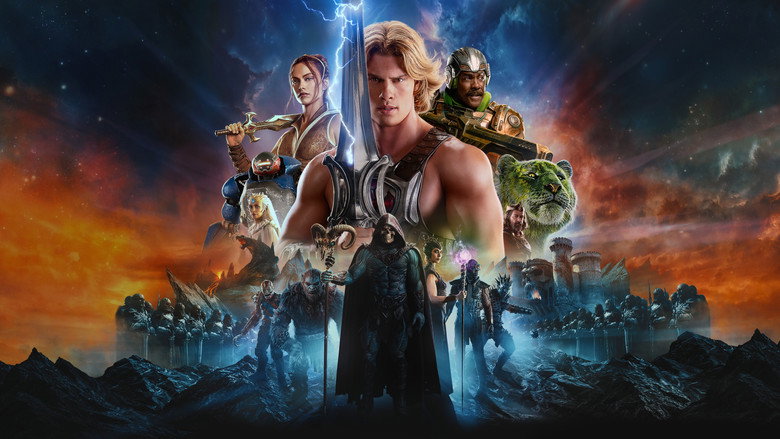
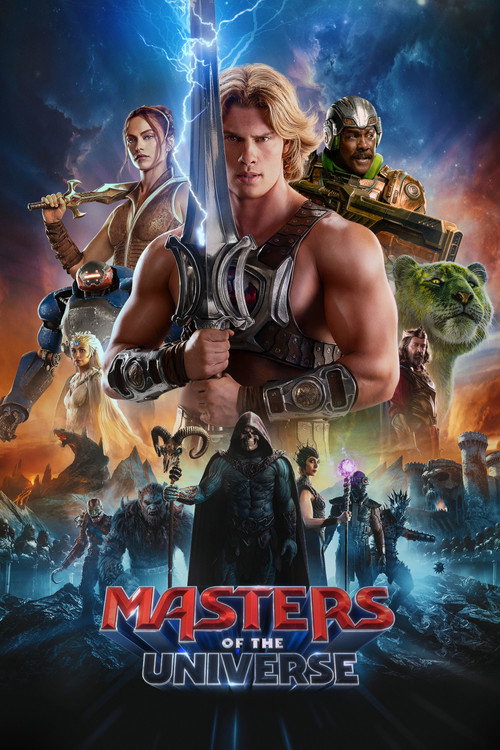
A vibrant, self-aware sci-fi fantasy that pulsates with neon-drenched nostalgia and earnest heart. It bridges childhood innocence with modern masculinity, turning a plastic universe into a kaleidoscopic odyssey.
Masters of the Universe

Masters of the Universe

"Legends aren't born, they're forged."

03 June 2026 United States of America 141 min 7.2 (556)

Director: Travis Knight

Cast: Nicholas Galitzine, Camila Mendes, Idris Elba, Jared Leto, Alison Brie

Fantasy Action Science Fiction The Evolution of Masculinity Destiny and Birthright The Duality of Magic and Science Nostalgia and Identity
Budget: $200,000,000
Box Office: $113,474,410

Overview

Directed by Travis Knight, Masters of the Universe (2026) serves as an ambitious and colorful revival of the iconic 1980s toy franchise. The story begins with a young Prince Adam escaping a devastating civil war on his home planet of Eternia. Spirited away to Earth—the home world of his mother, Queen Marlena—the boy is separated from his birthright, the legendary Sword of Power. He spends his formative years unaware of his true cosmic destiny, working a mundane human resources job and drawing pictures of a fantastical world he can barely remember.

As an adult, Adam's past finally catches up with him, propelling him back across the galaxy to a fractured Eternia. The realm is now firmly under the tyrannical grip of the sinister warlock Keldor, better known as Skeletor. To save his people, Adam must ally with old friends like the brilliant tactician Man-At-Arms and the fierce warrior Teela. Together, they embark on a vibrant sword-and-sorcery adventure where Adam must learn to balance his own vulnerabilities with the immense burden of becoming He-Man, the most powerful man in the universe.
Core Meaning

At its core, Travis Knight's Masters of the Universe is a deconstruction and celebration of modern masculinity. Rather than resting on the outdated laurels of 1980s macho bravado, the film asks what it truly means to be a hero in the modern era. Through Prince Adam's journey, the narrative posits that true strength is not derived merely from bulging muscles or physical dominance, but from empathy, emotional intelligence, and the courage to be vulnerable.

Furthermore, the movie serves as a meditation on the concept of legacy and the burdens of inheritance. Adam's struggle to bridge his humble, earthly upbringing with his cosmic, royal destiny highlights the universal search for identity. The film ultimately suggests that while we are shaped by the worlds we come from, our true power is unlocked only when we choose to wield our responsibilities with a sensitive, self-aware heart.

Thematic DNA

The Evolution of Masculinity 35%
Destiny and Birthright 25%
The Duality of Magic and Science 20%
Nostalgia and Identity 20%

The Evolution of Masculinity

The film deconstructs traditional macho tropes by portraying Prince Adam as a sensitive, self-aware individual. It argues that true strength comes from empathy, emotional intelligence, and vulnerability rather than sheer physical dominance.

Destiny and Birthright

Adam's journey focuses heavily on the internal conflict of returning to a forgotten home to claim a predestined throne, exploring how we reconcile our humble beginnings with immense responsibilities.

The Duality of Magic and Science

Eternia is depicted as a world where ancient sorcery and advanced technology intertwine, reflecting the clash between mysticism (Castle Grayskull) and scientific ingenuity (Man-At-Arms and Roboto).

Nostalgia and Identity

By placing Adam on Earth in a mundane corporate job, the narrative explores the longing for a more colorful, heroic past, serving as a meta-commentary on the audience's relationship with 1980s pop culture.

Character Analysis

Prince Adam / He-Man

Nicholas Galitzine

Archetype: The Reluctant Hero Key Trait: Compassionate and self-aware

Motivation

To reclaim his heritage, save his family, and protect Eternia from Skeletor's wrath.

Character Arc

Transitions from a lost, self-doubting Earth dweller into a confident, emotionally intelligent savior of Eternia who accepts his cosmic legacy.

Keldor / Skeletor

Jared Leto

Archetype: The Tyrant / Shadow Key Trait: Theatrically megalomaniacal

Motivation

To conquer Eternia, rule the universe, and harness the ancient magic hidden within Castle Grayskull.

Character Arc

Remains a static but theatrical force of evil, whose obsession with power ultimately leads to his dramatic physical defeat.

All 5 characters and cast

Symbols & Motifs

The Sword of Power

Meaning:

It symbolizes the heavy burden of responsibility and the physical manifestation of Adam's inner potential and courage.

Context:

The sword is heavily sought after and ultimately wielded by Adam to trigger his transformation into He-Man, bridging the gap between his human frailty and cosmic destiny.

Adam's HR Cubicle

Meaning:

Represents the suppression of one's true potential, the mundane reality of modern life, and the feeling of being disconnected from one's true purpose.

Context:

Featured in the film's first act on Earth, showcasing Adam's unfulfilling adult life before he is called back to Eternia.

Skeletor's Skull

Meaning:

Reflects the corrosive, decaying nature of absolute power and the loss of humanity when a soul is consumed by tyrannical ambition.

Context:

Serving as the face of the villain throughout the film, and appearing as a detached, ominous artifact collected by Evil-Lyn in the post-credits scene.

Memorable Quotes

By the power of Grayskull... I have the power!
— He-Man

Context

Spoken when Adam finally fully embraces his Eternian heritage to fight Skeletor.

Meaning

The iconic transformation mantra, redefined here as a moment of emotional self-actualization rather than just physical empowerment.

Focus on getting behind yourself, not in front of yourself.
— Unnamed Bodybuilder (Dolph Lundgren)

Context

Given to Adam in a gym on Earth during his fitness journey.

Meaning

A meta-piece of advice about not getting ahead of oneself and honoring the past.

All 3 quotes

Philosophical Questions

What constitutes true masculinity in the modern age?

The film explores whether strength is defined by physical domination (Skeletor's method) or through emotional intelligence, vulnerability, and empathy (Adam's journey).

Are we defined by our origins or our upbringing?

Adam's dual identity as an Earth-raised human and an Eternian prince forces him to reconcile whether a person is shaped more by their biological birthright or their lived, environmental experiences.

Alternative Interpretations

A popular alternative reading of the film suggests that the entire narrative is a metaphorical escapist fantasy of a disillusioned millennial. Because Adam is shown working a soul-crushing HR job on Earth, some critics argue that Eternia represents his inner psychological landscape—a colorful coping mechanism to deal with the mundane realities of adult life and modern corporate culture.

Full ending explanation

Cultural Impact

Following the massive cultural footprint of Mattel's Barbie (2023), Masters of the Universe arrived in 2026 bearing the immense weight of being the next major toy-to-film adaptation. While it did not match the billion-dollar box office phenomenon of its predecessor, it made a significant cultural splash by updating the hyper-masculine tropes of the 1980s into a narrative about sensitive, modern masculinity.

The film polarized critics and audiences. Some praised Travis Knight's unashamed embrace of camp, neon aesthetics, and practical-feeling visual effects, lauding the film as a triumphant return to sincere, colorful summer blockbusters. Others felt the film struggled tonally, criticizing its reliance on MCU-style quips and meta-humor that occasionally undercut the epic stakes. Nevertheless, Jared Leto's theatrical performance as Skeletor and the film's dedication to deep-cut lore spawned a renewed internet fascination and meme culture surrounding Eternia, successfully introducing He-Man to Gen Z while satisfying the nostalgia of Gen X.

Audience Reception

Audience reception for Masters of the Universe was largely positive but divided along generational lines. Praised aspects included the vibrant, unapologetically cartoonish visual style, Daniel Pemberton's electrifying score, and Jared Leto's scenery-chewing performance as Skeletor. Fans of the original series were thrilled by the sheer volume of accurate lore, Easter eggs, and the respectful treatment of character designs.

However, the film faced criticism for its tonal inconsistencies. Many viewers felt the script leaned too heavily into self-aware, sarcastic humor—often drawing unfavorable comparisons to modern superhero fatigue and standard cinematic quips. The controversial decision to spend the first act on Earth also frustrated some purists who wanted a purely Eternian adventure. Overall verdict: A highly entertaining, visually spectacular nostalgia trip that succeeds as a popcorn blockbuster, even if its thematic reach occasionally exceeds its grasp.

Interesting Facts

  • Dolph Lundgren, who played He-Man in the critically panned but culturally significant 1987 live-action film, makes a cameo appearance as a bodybuilder giving fitness advice to Nicholas Galitzine's Prince Adam.
  • The film's synth-heavy score was composed by Daniel Pemberton and features electric guitar work by legendary Queen guitarist Brian May.
  • Director Travis Knight leveraged his background in stop-motion animation at Laika studios to create heavily stylized, colorful CGI that mimics the vibrance of the original Filmation cartoon.
  • To reflect a modern sensibility, the script went through several rewrites by Chris Butler, Aaron and Adam Nee, and Dave Callaham to balance earnest fantasy with meta-humor about 1980s masculinity.

Easter Eggs

The Fright Zone Comic Store

The comic book and collectibles shop Adam visits on Earth is named The Fright Zone, a direct homage to the terrifying headquarters of the villain Hordak from the She-Ra: Princess of Power spin-off series.

Big Jim Action Figures

Vintage Big Jim toys can be spotted in the background. This is a nod to Mattel's history, as the original 1980s Battle Cat (Cringer) toy was actually created by reusing and painting over a tiger mold from the Big Jim line.

The Torak Statue

Adam wrestles his sword away from a life-size barbarian statue that closely resembles Torak. Torak was the original working concept name and character design for He-Man created by Mattel designer Mark Taylor.

Orko's Post-Show Lesson

The first mid-credits scene features the floating wizard Orko breaking the fourth wall to deliver a moral lesson to the audience. This is a loving tribute to the educational epilogues that ended every episode of the original 1980s animated series.

Frequently Asked Questions

Explore More About This Movie

Dive deeper into specific aspects of the movie with our detailed analysis pages

Comments (0)

Leave a comment

No comments yet. Be the first to share your thoughts!

Similar Movies