
Skip to content
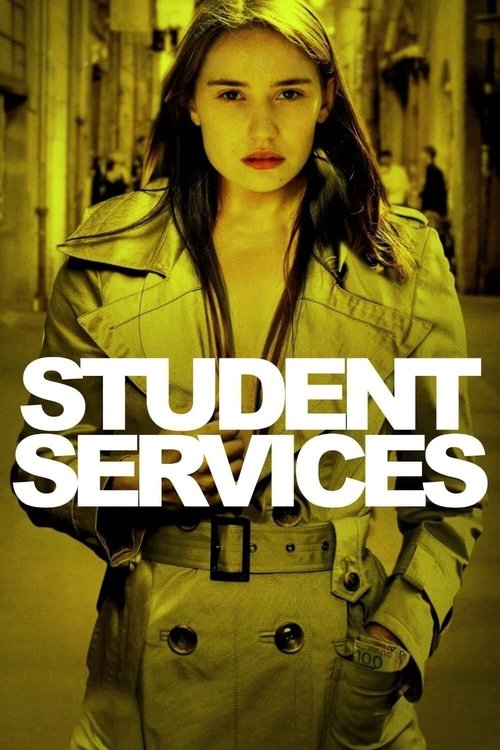
Student Services
An unflinching, claustrophobic drama of quiet desperation, Student Services mirrors a slow-motion drowning, capturing the chilling erosion of youth and dignity under the sterile glare of a computer monitor.
Student Services

Student Services

Mes chères études

18 January 2010 France 101 min 5.3 (146)

Director: Emmanuelle Bercot

Cast: Déborah François, Mathieu Demy, Alain Cauchi, Benjamin Siksou, Anna Sigalevitch

Drama Student Precarity & Economic Austerity Commodification of the Body & Intimacy Psychological Dissociation & Shame Bourgeois Exploitation & Power Imbalance

Overview

Student Services (Mes chères études) is a French social drama directed by Emmanuelle Bercot, adapted from the autobiographical book by an anonymous student writing under the pseudonym Laura D. The story follows Laura (Déborah François), a bright, nineteen-year-old university student living in Paris who works part-time at a call center while pursuing her higher education. Despite her diligence, she lives in acute financial precarity, struggling to pay rent, buy groceries, and cover basic utility bills. When her electricity is cut off and an application for social assistance hits a bureaucratic dead end, Laura is pushed to the edge of financial survival.

Desperate for quick cash to stay in school, Laura responds to an online personal ad posted by an older man named Joe (Alain Cauchi), who offers to pay for female companionship. What begins as a single, hesitant encounter intended solely to clear overdue bills gradually turns into regular sex work. While attempting to compartmentalize her normal life—her studies, her friends, and her boyfriend Manu (Benjamin Siksou)—Laura is pulled deeper into transactional intimacy.

The film examines the gradual erosion of personal boundaries, chronicling how economic hardship forces vulnerable young students to monetize their physical and emotional intimacy in modern consumer society.


Core Meaning

Director Emmanuelle Bercot uses Student Services as a searing indictment of systemic economic neglect and modern commodification. The core thesis of the film is that modern society forces young people to trade bodily autonomy for the basic right to education.

Bercot de-romanticizes sex work, stripping away the cinematic tropes of glamorous courtesans or sensationalized exploitation. Instead, the film demonstrates how transactional sex functions as a mundane, demoralizing byproduct of neoliberal austerity. The film argues that 'fantasy' is commodified like any other consumer good, leaving young women to bear the invisible psychological cost of transactional intimacy.

Thematic DNA

Student Precarity & Economic Austerity 35%
Commodification of the Body & Intimacy 25%
Psychological Dissociation & Shame 20%
Bourgeois Exploitation & Power Imbalance 20%

Student Precarity & Economic Austerity

Revealed through Laura’s daily struggle: fainting in class from hunger, overdue electric bills, and callous bureaucratic welfare systems that leave working-class youth without a safety net.

Commodification of the Body & Intimacy

Explored through the rationalization of sexual encounters as mere 'services' or 'fantasy fulfillment,' illustrating how the market economy invades private physical boundaries.

Psychological Dissociation & Shame

Depicted in Laura’s mental detachment during encounters, obsessive post-encounter hygiene rituals, and the fracturing of her identity between student and escort.

Bourgeois Exploitation & Power Imbalance

Embodied by the wealthy older male clients who weaponize financial dominance, viewing young women as purchasable escapes from their own domestic and professional boredom.

Character Analysis

Laura

Déborah François

Archetype: Tragic Protagonist / Vulnerable Innocent Key Trait: Fragile resilience masked by fierce pride

Motivation

Retaining her independence and paying for her university education.

Character Arc

Transforms from an ambitious, resilient student into a psychologically fragmented woman hollowed out by commodified intimacy and exploitation.

Joe

Alain Cauchi

Archetype: The Paternal Exploiter / Transactional Seducer Key Trait: Euphemistic, calculating paternalism

Motivation

Purchasing youth, validation, and control under the guise of mutual agreement.

Character Arc

Starts by presenting himself as a gentle, understanding benefactor who helps Laura overcome her hesitation, but eventually shows callous disregard when his financial dominance is challenged.

All 5 characters and cast

Symbols & Motifs

The Severed Electricity / Power Meter

Meaning:

Symbolizes Laura’s utter powerlessness and systemic exclusion.

Context:

Darkness in her apartment acts as the catalyst that forces her onto escort websites.

The Computer Screen / Classifieds

Meaning:

A gateway to both escape and commodification; the cold, blue luminescence represents the digital market where bodies are cataloged and priced.

Context:

Used by Laura to search for personal ads and enter transactional arrangements.

Food & Fainting (Hunger)

Meaning:

Emphasizes primal, biological need over intellectual ambition, showing how basic survival supersedes education.

Context:

Laura collapses in the lecture hall due to malnutrition caused by lack of money.

Envelopes of Cash

Meaning:

Tangible markers of her self-alienation; the crisp euro notes represent temporary relief bought at the cost of compounding internal trauma.

Context:

Handed over by clients after encounters to pay for her companionship.

Compulsive Showers & Baths

Meaning:

Recurring cleansing rituals where Laura attempts to physically wash away the emotional residue and degradation of client encounters.

Context:

Depicted immediately following her paid sexual appointments.

Memorable Quotes

Je m'appelle Laura, j'ai 19 ans. Je suis étudiante et je me prostitue pour payer mes études.
— Laura

Context

Delivered during Laura's voiceover monologue.

Meaning

Sets the candid, documentary-style framing directly adapted from Laura D.'s source book, immediately removing societal illusions.

Ce n'est que du fantasme. Tout se vend aujourd'hui, même le fantasme.
— Joe

Context

Spoken by Joe when attempting to normalize and rationalize paid encounters with Laura.

Meaning

Encapsulates the transactional philosophy older clients use to desensitize themselves and their young escorts from the moral reality of prostitution.

All 3 quotes

Philosophical Questions

Can bodily labor be treated purely as an economic commodity without damaging human dignity?

The film illustrates that separating physical acts from psychological integrity is an illusion; the body cannot be leased without psychological consequence.

What are the true societal costs when education becomes privatized or prohibitively expensive?

By showing a dedicated student driven to extreme measures just to afford textbooks, rent, and food, the film asks whether society can claim equal opportunity when higher education demands such personal sacrifices.

Where does consent end and coercion begin in an economy driven by necessity?

Laura 'chooses' escorting freely in legal terms, yet the film questions whether true consent exists when the alternative is starvation and destitution.

Alternative Interpretations

The Socio-Economic Critique: Laura is a casualty of a failed welfare state; her story is not an individual moral failing but the structural consequence of poverty, high living costs, and inadequate youth support systems.

Full ending explanation

Cultural Impact

Released in 2010 in the wake of the 2008 global financial crisis, Student Services reflected real economic pressures bearing down on working-class university students in European metropolises.

The film forms an essential part of an early-2010s French cinematic wave exploring student escorting, paving the way for Malgorzata Szumowska’s Elles (2011, starring Juliette Binoche) and François Ozon’s Jeune & Jolie (2013). While some critics found the narrative trajectory predictable, the film was praised for Déborah François’s uncompromising, raw performance and its unvarnished look at social precarity.

Audience Reception

Praised Elements: Déborah François’s nuanced, emotionally raw lead performance; the film’s grounded realism and refusal to romanticize or glamorize escorting; and the honest portrayal of student poverty and the psychological toll of transactional sex.

Criticisms: The screenplay relying on familiar narrative tropes without deep supporting character development, and episodic, grim pacing that can feel emotionally suffocating and fatalistic.

Controversial Moments: Explicit sexual encounters and uncomfortable client interactions split viewers between viewing them as necessary realism versus uncomfortably graphic cinema.

Overall Verdict: A tough, empathetic, and urgent social drama that stands out for its raw lead performance and social relevance.

Interesting Facts

  • The film is based on the controversial 2008 autobiographical book Mes chères études by Laura D., which sparked nationwide public debate in France about student poverty and prostitution.
  • The French title Mes chères études is a deliberate pun; 'chères' means both 'dear' (beloved) and 'expensive'.
  • The project was produced as a television film for Canal+ (via Les Films du Kiosque) but received theatrical distribution abroad, notably in Italy and Poland, and international home-video releases.
  • Director Emmanuelle Bercot chose Belgian actress Déborah François—who rose to prominence in the Dardenne brothers' Palme d'Or-winner L'Enfant (2005) and The Page Turner (2006)—for her blend of innocence and emotional intensity.
  • Benjamin Siksou, who played Laura’s boyfriend Manu, was a finalist in France’s reality music competition Nouvelle Star in 2008, making this one of his early dramatic acting roles.
  • Cinematographer Christophe Offenstein made deliberate use of natural, available light and cramped, real-apartment sets to give the film a raw, documentary-like naturalism.

Easter Eggs

The Title Pun (Mes chères études)

Acts as a direct cultural commentary on the escalating cost of living for university students in Paris, framing education not as a public right, but as an expensive luxury purchased with human flesh.

Cinematic Trope Subversion

Unlike romanticized depictions of prostitution (such as Pretty Woman or classical French courtesan cinema), Bercot presents encounters in mundane, unglamorous rooms, focusing on the mechanical awkwardness and emotional detachment of the act.

French Student Prostitution Discourse

The film reflects contemporary French sociopolitical debates of 2008–2010 surrounding university unions (UNEF) reporting on student hardship and youth poverty in major metropolitan centers.

Frequently Asked Questions

Explore More About This Movie

Dive deeper into specific aspects of the movie with our detailed analysis pages

Comments (0)

Leave a comment

No comments yet. Be the first to share your thoughts!

Similar Movies