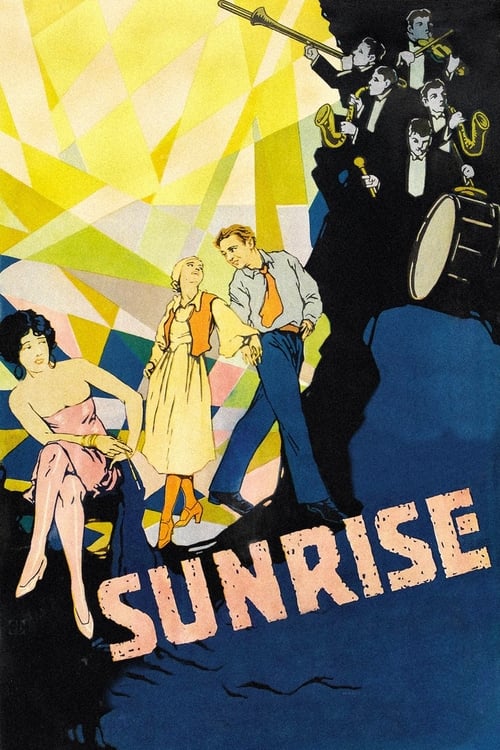
Sunrise: A Song of Two Humans
""An artistic masterpiece and also a joy to watch.""
Overview
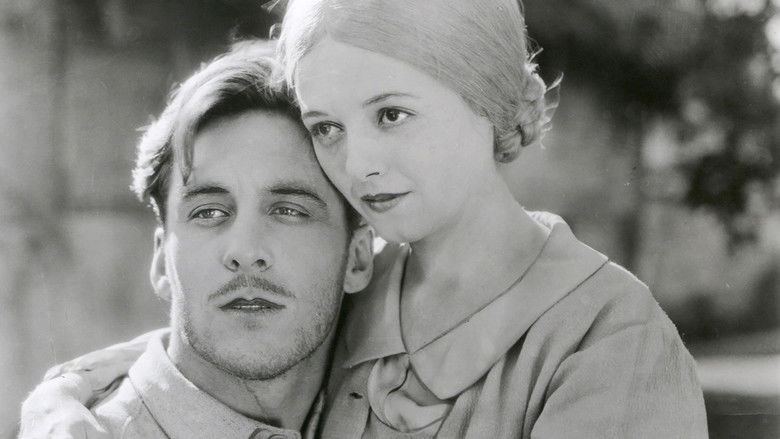
Sunrise: A Song of Two Humans is a foundational work of cinematic art, directed by F.W. Murnau in his American debut. The story centers on a rural farmer, known simply as The Man, whose quiet life is disrupted by the seductive presence of a Woman from the City. Under her dark influence, the Man is persuaded to sell his farm and murder his innocent Wife during a boat trip, planning to stage it as an accidental drowning.
The film transitions from the claustrophobic, misty atmosphere of the countryside to the overwhelming, vibrant chaos of a stylized metropolis. As the Man relents at the final moment and follows his terrified Wife into the city, the narrative shifts from a psychological horror into a luminous romantic comedy and eventually a high-stakes drama. It is a timeless fable about the struggle between urban corruption and pastoral purity, and the endurance of the human spirit.
Core Meaning
The core meaning of Sunrise lies in the universality of human emotion and the possibility of redemption through forgiveness. Murnau intended to create a "song" of human experience that transcends specific geography or time, as noted in the film's opening intertitle. The director explores the duality of the human soul—the capacity for monstrous darkness and divine devotion—suggesting that even the most broken trust can be mended by a shared return to innocence and grace.
Thematic DNA
The Duality of Human Nature
Revealed through The Man's internal conflict, the film portrays the battle between base instincts (represented by the Woman from the City) and moral devotion (represented by The Wife). The visual style uses chiaroscuro lighting to emphasize this internal split.
City vs. Country
A classic modernist theme where the country symbolizes tradition, purity, and labor, while the city represents temptation, decadence, and modern chaos. However, the film subverts this by making the city the site of the couple's reconciliation.
Redemption and Forgiveness
The narrative arc hinges on the Wife's capacity to forgive the Man's murderous intent. This is depicted through religious imagery, specifically the wedding scene where the couple recommits to their vows.
Lust vs. Love
The film contrasts the destructive, obsessive lust for the "Vamp" with the nurturing, enduring love for the Wife. The Woman from the City acts as a catalyst that forces the Man to choose between fleeting desire and stable companionship.
Character Analysis
The Man
George O'Brien
Motivation
Initially driven by lust and the lure of a new life in the city, but eventually motivated by a desperate need for forgiveness and the preservation of his family.
Character Arc
Moves from a state of possession and murderous intent to crushing guilt, and finally to spiritual redemption through his efforts to save and honor his wife.
The Wife
Janet Gaynor
Motivation
Simple love for her husband and child, and a desire to maintain the sanctity of her home.
Character Arc
Starts as a neglected partner, experiences profound terror during the boat trip, and eventually transforms into a figure of grace who chooses to forgive her husband.
The Woman from the City
Margaret Livingston
Motivation
Driven by selfish desire and potentially the financial gain from the sale of the Man's farm.
Character Arc
Remains largely static as a predatory force of modern corruption until she is defeated by the couple's renewed love and leaves the village.
Symbols & Motifs
The Sun/Sunrise
Symbolizes renewal, hope, and the dawn of a new life. It marks the final reconciliation and the banishing of the night's dark temptations.
The film ends with a literal sunrise as the Woman from the City leaves, signifying that the storm in their marriage has passed.
The Reeds
Represents survival and the shift from malice to protection. Initially a tool for a planned crime, they become the instrument of salvation.
The Man hides bundles of reeds in the boat to help him float after he drowns his wife; later, these same reeds keep the Wife afloat during the actual storm.
Water and the Lake
Symbolizes the subconscious, death, and purification. It is the site of both the intended sin and the eventual test of their renewed bond.
The lake serves as the threshold between the country and the city, and is the setting for the film's two most pivotal sequences: the aborted murder and the shipwreck.
The Marsh
Symbolizes moral decay and hidden sin. The foggy, dark landscape mirrors the Man's muddied conscience.
The Man and the Woman from the City meet in the marsh to plot the murder of the Wife.
Memorable Quotes
This song of the Man and his Wife is of no place and every place; you might hear it anywhere, at any time.
— Opening Title Card
Context:
Appears at the very beginning of the film to frame the narrative as a "song" of human experience.
Meaning:
Sets the allegorical tone of the film, suggesting that the story is a universal fable rather than a literal account of specific people.
Couldn't she get... drowned?
— The Woman from the City
Context:
The Woman from the City suggests this to the Man while they are in the marsh, planting the seed of murder in his mind.
Meaning:
Represents the intrusion of darkness into the Man's life. The visual presentation of the text "melting" into the water is a famous example of integrated visual storytelling.
Don't be afraid of me!
— The Man
Context:
The Man follows his fleeing Wife through the woods after the aborted murder attempt, begging her to see him as he truly is.
Meaning:
Highlights the desperate plea for reconciliation and the Man's horror at his own previous intentions. It marks the beginning of his journey toward redemption.
Philosophical Questions
Can true forgiveness exist after a betrayal of this magnitude?
The film asks the audience to accept that the Wife’s love is powerful enough to transcend even the threat of death, challenging the viewer's belief in the boundaries of human grace.
Does modernity inevitably corrupt traditional values?
Through the contrast of the 'Vamp' and the 'Madonna,' the film explores whether the allure of the modern city is a destructive force or merely a different environment for the same human 'song' of joy and sorrow.
Alternative Interpretations
One common alternative reading suggests that the Woman from the City and the Wife are not real characters but externalized projections of the Man's internal struggle between his id (desire/lust) and his superego (duty/moral life). Another interpretation, discussed by some modern critics, views the film's ending as a dark commentary on domestic abuse, suggesting the 'honeymoon' phase in the city is merely a cycle of 'love-bombing' that does not truly erase the Man's violent capacity. Conversely, some scholars view the film as a religious allegory, where the city is a testing ground and the final storm is a baptism that purifies the marriage.
Cultural Impact
Sunrise is frequently cited as the pinnacle of the silent era, representing the moment when the visual language of cinema reached its absolute perfection just as sound was introduced. It successfully blended the German Expressionist movement's psychological depth with Hollywood's narrative clarity and technical resources. Its innovative use of the 'unchained camera' (elaborate tracking shots) and forced perspective influenced generations of directors, including Orson Welles and John Ford. In 1989, it was among the first group of films selected for preservation in the National Film Registry. Critically, it consistently ranks in the top ten of the BFI Sight & Sound Greatest Films of All Time poll.
Audience Reception
Upon its initial release in 1927, Sunrise received critical acclaim but was a commercial disappointment. It was released just days before The Jazz Singer, and the public's immediate fascination with 'talkies' caused Murnau's silent masterpiece to be overshadowed. Critics at the time praised its technical brilliance but some, like those at Time magazine, found the plot 'meagre.' However, its reputation grew exponentially in subsequent decades; it is now universally hailed by audiences and historians as one of the greatest cinematic achievements, currently holding a 98% rating on Rotten Tomatoes.
Interesting Facts
- Sunrise was the first film to win the Academy Award for 'Unique and Artistic Picture' (a category equivalent to Best Picture but discontinued after the first year).
- Janet Gaynor won the very first Academy Award for Best Actress, partly for her performance in this film.
- The city street set cost over $200,000 to build and was so large it was reused in several subsequent Fox productions.
- George O'Brien wore lead-weighted boots in the marsh scenes to make his gait appear more labored and 'weighed down' by guilt.
- F.W. Murnau used 'forced perspective' in the city sets, using smaller sets and child actors in the background to make the streets appear miles long.
- The film was the first feature to use the Fox Movietone sound-on-film system for a synchronized musical score and sound effects.
- Director F.W. Murnau hated title cards and tried to minimize their use, making them integrated into the visual style.
Easter Eggs
The melting intertitles
When the city woman suggests drowning the wife, the words on the screen literally dissolve and 'sink', mirroring the visual suggestion of the crime.
Names used on set
Though the characters are unnamed in the credits, the names Ansass and Indre (from the original novella) were used by the director and cast during filming. Lip-readers can see the Man shouting 'Indre' at the end.
Two Moons
In the marsh sequence, Murnau included two moons in the sky—one real and one reflected/stylized—to enhance the dreamlike, Expressionistic atmosphere of the scene.
⚠️ Spoiler Analysis
Click to reveal detailed analysis with spoilers
Frequently Asked Questions
Explore More About This Movie
Dive deeper into specific aspects of the movie with our detailed analysis pages
Comments (0)
No comments yet. Be the first to share your thoughts!