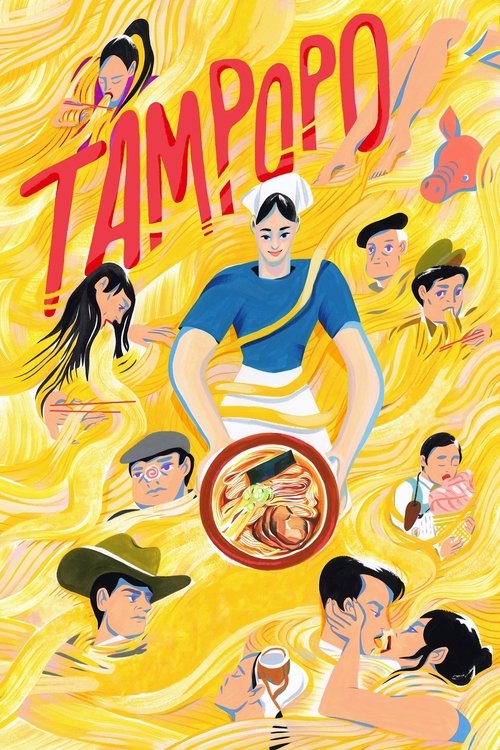
Tampopo
A savory 'Noodle Western' simmering with playful eroticism and communal joy, metaphorically seasoning a widow's journey toward culinary perfection with the rich, complex broth of life's most primal human desires.
Tampopo

Tampopo

タンポポ

"The first Japanese Noodle Western."

23 November 1985 Japan 115 min ⭐ 7.8 (404)
Director: Jūzō Itami
Cast: Tsutomu Yamazaki, Nobuko Miyamoto, Ken Watanabe, Koji Yakusho, Rikiya Yasuoka
Comedy
The Pursuit of Perfection Food as Sensuality Satire of Social Etiquette The Noodle Western (Genre Parody)
Budget: $1,500,000

Overview

A self-styled Noodle Western, Tampopo follows Goro and Gun, two truck drivers who resemble wandering ronin as they ride into town in a tanker truck. They encounter Tampopo, a struggling widow running a lackluster ramen shop. After Goro critiques her noodles as having sincerity but no character, she begs him to become her teacher. Together, they embark on a quest to uncover the secrets of the perfect broth, the springiest noodles, and the most efficient shop layout.

The film is structured like a ramen-bowl of narratives. While the main plot focuses on Tampopo's training—reminiscent of a sports movie or Seven Samurai—the story is frequently interrupted by surreal, satirical, and erotic vignettes. These subplots explore the various ways food intersects with human life, from corporate hierarchies and social etiquette to the literal and metaphorical consumption of love and death.
Core Meaning

The core of the film is a celebration of craftsmanship and the pursuit of mastery. Director Jūzō Itami suggests that true art and meaning are found in the obsessive dedication to one's labor, no matter how humble. By elevating a bowl of ramen to the level of high art, the film argues that the quality of our work reflects the quality of our character. Furthermore, it posits that food is the ultimate universal language, a medium through which we navigate power, express love, and confront our mortality.

Thematic DNA

The Pursuit of Perfection 35%
Food as Sensuality 25%
Satire of Social Etiquette 20%
The Noodle Western (Genre Parody) 20%

The Pursuit of Perfection

The film portrays the rigorous, almost spiritual discipline required to master a craft. Tampopo’s journey is one of constant refinement, moving from amateur enthusiasm to professional expertise through observation, trial, and the wisdom of mentors.

Food as Sensuality

Itami explicitly links the act of eating with erotic desire. Through the character of the Man in White, the film explores how food can be a tool for intimacy, a fetish, and a primal expression of physical pleasure that transcends social norms.

Satire of Social Etiquette

The film mocks rigid and often hypocritical rules of Japanese social behavior. Scenes like the spaghetti-eating class highlight the absurdity of following Western manners that stifle genuine enjoyment and natural instinct.

The Noodle Western (Genre Parody)

Itami uses the tropes of the American Western—the lone hero, the training montage, the final showdown—to frame a domestic culinary story, creating a joyful subversion of traditional masculinity and heroism.

Character Analysis

Tampopo

Nobuko Miyamoto

Archetype: The Determined Heroine
Key Trait: Humility and persistence

Motivation

To provide for her son and honor the craft of ramen making by reaching the pinnacle of culinary quality.

Character Arc

She evolves from a timid, mediocre cook into a confident master artisan through rigorous physical and mental training.

Goro

Tsutomu Yamazaki

Archetype: The Mentor / Ronin
Key Trait: Rugged stoicism

Motivation

A sense of justice and a deep-seated love for well-made food; he helps Tampopo for the sake of the craft.

Character Arc

A wandering trucker who remains emotionally distant but finds fulfillment in passing his knowledge to someone worthy, eventually riding away when the job is done.

The Man in White

Koji Yakusho

Archetype: The Sensualist / Anti-hero
Key Trait: Unabashed hedonism

Motivation

The pursuit of transgressive pleasure and the perfect movie of his own life.

Character Arc

He exists outside the main plot, treating life and food as a purely aesthetic performance until his theatrical death.

Gun

Ken Watanabe

Archetype: The Sidekick
Key Trait: Enthusiastic loyalty

Motivation

Loyalty to Goro and a shared appetite for adventure and excellent noodles.

Character Arc

Goro’s younger companion who assists in the mission, representing the eager observer and youthful energy.

Symbols & Motifs

The Egg Yolk

Meaning:

Symbolizes extreme intimacy, trust, and the fragility of pleasure. The act of passing the yolk between mouths without breaking it represents the peak of sensual connection.

Context:

Used in an erotic scene between the Man in White and his mistress, where they pass the yolk back and forth until it eventually bursts.

Tampopo (Dandelion)

Meaning:

Represents resilience and common beauty. Like a dandelion, she is hardy, ubiquitous, and blossoms even in a harsh environment.

Context:

The protagonist’s name and the eventual name of her ramen shop, signifying her transformation into a flower of the people.

The Ramen Bowl

Meaning:

A metaphor for the complexity of life and the universe (Gestalt). The harmony of ingredients reflects the balance needed in human relationships and society.

Context:

Introduced early through the Ramen Master's lesson, where he teaches a student to appreciate every element of the bowl before eating.

The White Suit

Meaning:

Symbolizes aestheticism and the artifice of cinema. It marks the Man in White as a figure of the screen rather than the real world of the ramen shop.

Context:

Worn by the gangster character who opens the film by breaking the fourth wall and ultimately dies in a cinematic, blood-spattered climax.

Memorable Quotes

First, observe the whole bowl. Appreciate its gestalt.

— The Ramen Master

Context:

The Master teaches a student the ritualistic way to approach a bowl of ramen.

Meaning:

Emphasizes that ramen is not just food, but a cohesive work of art that requires mindfulness.

It's sincere, but it lacks character.

— Goro

Context:

Goro's blunt first assessment of Tampopo's ramen, which prompts her to seek his help.

Meaning:

Highlights the difference between mere effort and true mastery.

Eat your mother's last meal! Eat it while it's still hot!

— The Husband

Context:

A housewife dies immediately after cooking one last meal for her grieving family.

Meaning:

A heart-wrenching expression of food as a final legacy and act of love.

Philosophical Questions

Is the pursuit of perfection in an ephemeral object like food a noble act?

The film suggests that because food is consumed and disappears, the act of creation itself becomes the only permanent achievement.

How do social rituals both connect and isolate us?

The etiquette scenes show rituals as a way to maintain order but also as a way to suppress genuine humanity, contrasted with the messy joy of the ramen shop.

Alternative Interpretations

Critics often view Tampopo as an allegory for the filmmaking process. The construction of the ramen shop mirrors the assembly of a film crew, with Tampopo as the director striving for balance. Another reading is a feminist interpretation: despite the male mentors, the film celebrates Tampopo's individual agency and resilience as she achieves independence in a male-dominated business world.

Cultural Impact

Tampopo is widely credited with helping launch the global foodie culture. Upon its release in the West, it became an art-house phenomenon and introduced international viewers to the depth of Japanese ramen. It is often cited as the definitive example of food porn. Critically, it established Jūzō Itami as a master of social satire who could blend humor with profound cultural observation. Its influence persists in modern culinary media like Chef's Table and The Bear.

Audience Reception

Tampopo was a massive critical success, praised for its whimsical tone and innovative structure. Audiences loved its ability to provoke visceral hunger. While some initial viewers were confused by the vignettes, it has since become a beloved cult classic with a 100% rating on Rotten Tomatoes.

Interesting Facts

  • Director Jūzō Itami was married to lead actress Nobuko Miyamoto.
  • The film's term 'Ramen Western' was inspired by the 'Spaghetti Western' subgenre.
  • The crew spent months testing different ramen recipes to ensure they looked appetizing on film.
  • This was one of the first major film roles for Ken Watanabe, who later became a global star.
  • The Man in White’s opening monologue was shot in a real movie theater with actors watching a screen.
  • Itami personally drew the caricatures of the characters used in promotional materials.

Easter Eggs

Shane and Rio Bravo References

Goro's departure at the end mirrors the classic trope where the hero must leave the community he saved because he belongs to the road.

Fourth Wall Breaking

The opening scene is a direct homage to Brechtian theater, where the film acknowledges itself as fiction.

⚠️ Spoiler Analysis

Click to reveal detailed analysis with spoilers

Frequently Asked Questions

Explore More About This Movie

Dive deeper into specific aspects of the movie with our detailed analysis pages

Comments (0)

Leave a comment

No comments yet. Be the first to share your thoughts!