Skip to content
Tengoku Daimakyo
A melancholy post-apocalyptic mystery where two worlds, one walled and gleaming, one ruined and overgrown, mirror each other. Wonder and dread mix like wildflowers breaking through cracked concrete.
Tengoku Daimakyo

Tengoku Daimakyo

天国大魔境

"Do you want to go outside of the outside?"

01 April 2023 — 24 June 2023 Japan 1 season 13 episode Ended 8.0 (310)

Cast: Gen Sato, Sayaka Senbongi, Hibiku Yamamura, Toshiyuki Toyonaga, Misato Fukuen

Animation Sci-Fi & Fantasy Action & Adventure Mystery Found Family and Companionship Heaven versus hell Identity and gender Survival after catastrophe Innocence and truth

Overview

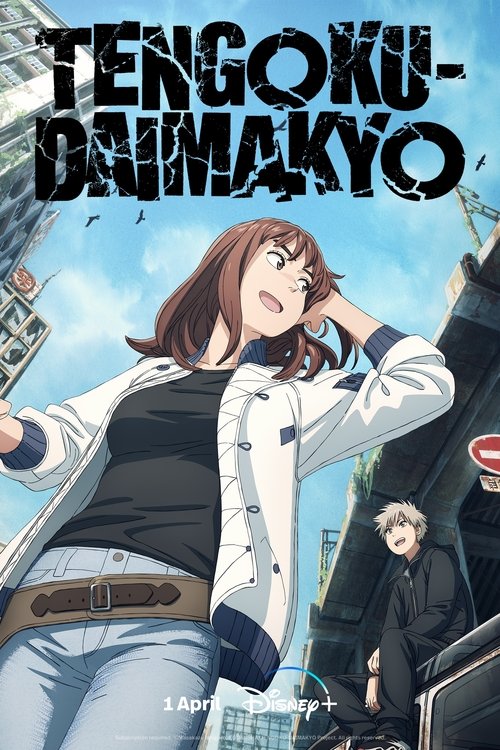
Heavenly Delusion (Tengoku Daimakyo) is a 13-episode adaptation by Production I.G of Masakazu Ishiguro's manga. It aired from April to June 2023. It tells two stories at once, set in a Japan wrecked by a disaster that ended modern civilization.

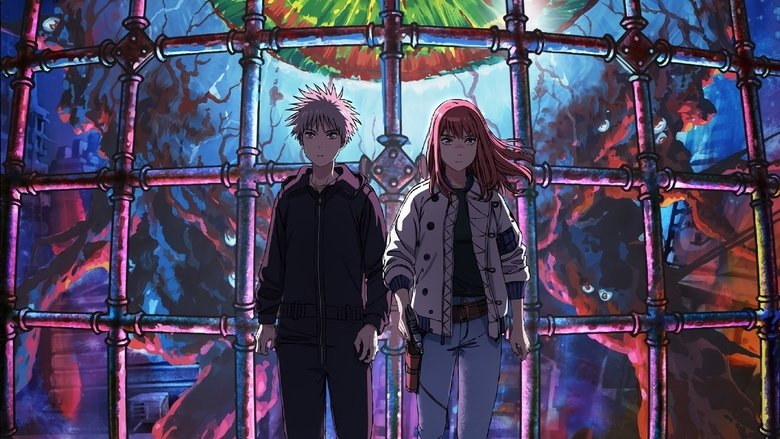
In one story, children live in a sealed facility, the Takahara Academy, which looks like a gentle school. One of them, Tokio, receives a strange message asking whether she wants to go outside of the outside. In the other, a boy named Maru travels the ruined country with the sharp-tongued bodyguard Kiruko. They are looking for a place called "Heaven," and Maru looks strikingly like Tokio.

The series builds slowly. It mixes road-trip adventure, quiet comedy, sudden violence and mystery. It keeps its questions open on purpose. The anime ends before the manga does, so it works as an opening movement and not a closed story.
Core Meaning

The series asks what "heaven" and "hell" actually are. A safe, beautiful enclosed place can hide something monstrous. A ruined world can hold real warmth. The two parallel storylines are built to show that the label of paradise depends on who is telling you about it, and what they want.

Ishiguro has said the story draws on his own feelings about gender and natural disasters. He has also said he explored the sexually ambiguous parts of himself. The series treats identity, including the gap between body and mind, as something people must live with and cannot settle by definition. At its heart is a bond between two people who choose each other through hardship.

Thematic DNA

Heaven versus hell 30%
Identity and gender 25%
Survival after catastrophe 20%
Innocence and truth 15%
Found family and companionship 10%

Heaven versus hell

The walled academy is presented as safe, and the outside is called hell, while Maru and Kiruko search for a heaven that may be nothing of the kind. The two narratives keep trading places in what they suggest about which world is truly paradise.

Identity and gender

Kiruko's body and mind, and Maru's feelings for her, drive the emotional core. The series treats the question seriously, not as a gimmick. Ishiguro has called it a kind of transsexual sci-fi.

Survival after catastrophe

Ruined cities, tent towns, bandits and monsters show how people rebuild a 'normal' life. The disaster themes come from Ishiguro's personal feelings about natural disasters and from his study of Japan's post-war reconstruction.

Innocence and truth

Tokio and Maru are both sheltered in different ways, one by walls and the other by a childhood of following adults. Their growing awareness of what the world really is forms the coming-of-age thread.

Found family and companionship

Maru and Kiruko's buddy dynamic develops from bodyguard and ward into deep trust. It is the warmth that offsets the bleak setting.

Character Analysis

Maru

Gen Sato

Archetype: Innocent hero Key Trait: Cheerful and gentle, but dangerously quiet when truly angry

Motivation

To find Heaven and deliver a cure to a person with his face. Over time the quest becomes inseparable from protecting Kiruko.

Character Arc

He starts as an orphan carrying out his dying caretaker's mission. Over the journey he becomes more self-determined and learns to say what he feels. His love for Kiruko becomes the centre of his growth.

Kiruko

Sayaka Senbongi

Archetype: Guarded mentor and bodyguard Key Trait: Fierce and secretive, with a habit of burning books so that only she knows what is in them

Motivation

She has her own goals tied to her past and her brother. Her protection of Maru gradually turns into real attachment.

Character Arc

She begins as a blunt, hardened protector who hides her secret. She slowly opens up to Maru, and the show treats her gender identity seriously. She comes to rely on him as much as he does on her.

All 4 characters and cast

Symbols & Motifs

The walls of Takahara Academy

Meaning: Protection that doubles as confinement, and comfort built on a lie.
Context: The children are kept inside and told the world beyond is hell. The 'outside of the outside' message challenges that boundary.

Heaven (the destination)

Meaning: Hope, and the danger of hope pinned on a place.
Context: Maru and Kiruko ask everyone they meet about a place called Heaven. The answers are comic, misleading and sometimes sad, as when one villager first says it is 'right here'.

Identical faces

Meaning: Fate, lineage and the question of what makes a person unique.
Context: Maru looks just like Tokio, and Mimihime predicts that someone with her face will come from outside.

Kiruko's gun

Meaning: Technology tied to the disaster and the origins of the world's ruin.
Context: The weapon bears the same logo as the Takahara Academy, which links the two storylines.

Nature reclaiming ruins

Meaning: The indifference of the world to human civilization, and a quiet beauty after collapse.
Context: Overgrown, drowned and ruined landscapes fill the journey scenes.

Memorable Quotes

Do you want to go outside of the outside?
— Message to Tokio

Context

Tokio finds it as an unexpected question during a pop quiz in the first episode.

Meaning

The question that starts the story. It challenges the idea that the safe world is all that exists.

Episode Highlights

Heaven and Hell

S1E1

It introduces both settings. The school is intercut with Maru and Kiruko's trip, and the bandit encounter sets up the series' humour and tension.

Significance:

It sets the dual structure and the central question about heaven and hell. Critics noted the adaptation rearranged the manga's first chapter to hook viewers.

Two Confessions

S1E2

Kiruko's secret about her gender is revealed. It recasts earlier jokes and foreshadowing.

Significance:

It sets the emotional foundation for the Maru and Kiruko relationship.

Day of Fate

S1E5

Maru and Kiruko return to Tokyo and find a crowded tent city. Maru is spotted by the neighborhood watch.

Significance:

It deepens the mystery of the world and its people.

Philosophical Questions

Is safety worth the loss of truth and freedom?

The academy's children are protected but kept ignorant, while the outside is dangerous but real. The series refuses to make either choice simple.

Is identity located in the body or the mind?

Kiruko's situation and Maru's feelings explore whether love and selfhood attach to a body, a mind or a relationship. Ishiguro said he agrees that mental masculinity and femininity are less clearly separated than physical sex.

What counts as paradise?

The recurring question 'where is Heaven?' receives answers that range from a joke to a painful memory, suggesting paradise is relative.

How It Ends

Alternative Interpretations

Some viewers read the story mainly as a mystery about the world's disaster. Others read it as a love story that challenges ideas of gender, since Ishiguro described the question of Maru's feelings persisting after learning the truth. A third reading sees it as a fable about institutions that shelter and control the young.

Full ending explanation

Cultural Impact

The anime received highly positive reviews for its visuals, interwoven storylines, sense of mystery and character development. Game Rant called it one of the most rewarding shows of 2023, and NME praised its avoidance of clunky exposition. One reviewer noted its exploration of identity, sexual orientation and coming of age. The series is part of a wave of thoughtful post-apocalyptic anime that blends genre with questions of identity. Its source manga has won accolades including Japan Expo Awards.

Audience Reception

Praise focused on the animation, the atmosphere, the slow-burn mystery and the central relationship. Reviewers valued the lack of heavy exposition and the strong character development.

The main criticism is pacing and incompleteness. One reviewer found it hard to switch between two storylines and felt the show ended without a real ending, hoping for a second season. The overall verdict is that it is a strong, intriguing adaptation that leaves viewers wanting more.

Interesting Facts

  • The anime was produced by Production I.G and aired April 1 to June 24, 2023, with 13 episodes.
  • It was directed by Hirotaka Mori, written by Makoto Fukami, and scored by Kensuke Ushio.
  • The opening theme is 'Innocent Arrogance' by BiSH, and the ending theme is by ASOBI Doumei.
  • Director of photography Kentarou Waki picked Mori as director because of their close relationship.
  • Ishiguro studied declassified American photographic archives of post-war Japan to portray ruined landscapes realistically.
  • Ishiguro cited Akira as an inspiration for his collapsed, dystopian futures.
  • The manga began in Monthly Afternoon in January 2018 and had over two million copies in circulation by July 2025.

Frequently Asked Questions

Explore More About This Series

Dive deeper into specific aspects of the series with our detailed analysis pages

Comments (0)

Leave a comment

No comments yet. Be the first to share your thoughts!

Similar Movies