Skip to content
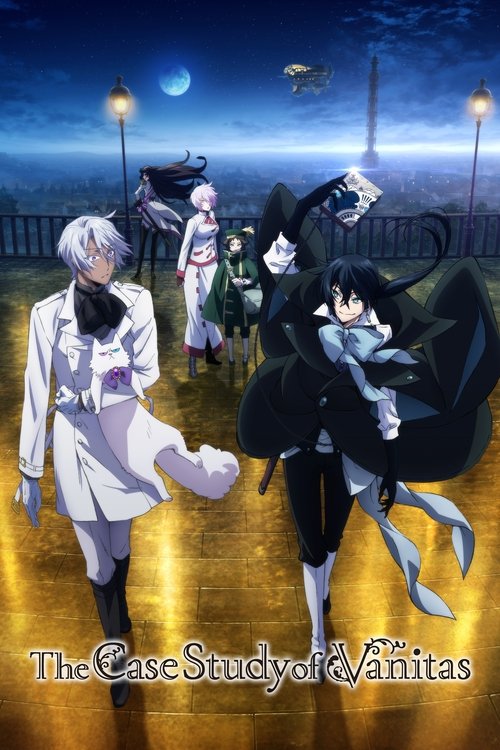
The Case Study of Vanitas
A luminous gothic-steampunk fantasy cloaked in melancholic grandeur, brimming with desperate longing and theatrical defiance, where fragile souls dance across the cobblestones of a gaslit Paris beneath crimson and azure moons.
The Case Study of Vanitas

The Case Study of Vanitas

ヴァニタスの手記

03 July 2021 — 02 April 2022 Japan 1 season 24 episode Ended 8.3 (254)

Cast: Natsuki Hanae, Kaito Ishikawa, Inori Minase, Shino Shimoji, Ai Kayano

Animation Sci-Fi & Fantasy Action & Adventure Mystery Trauma, Self-Loathing, and the Pursuit of Worth Identity, "True Names," and Bodily Autonomy Companionship, Intimacy, and Vulnerability Prejudice, Otherness, and Societal Duality Determinism vs. Personal Agency

Overview

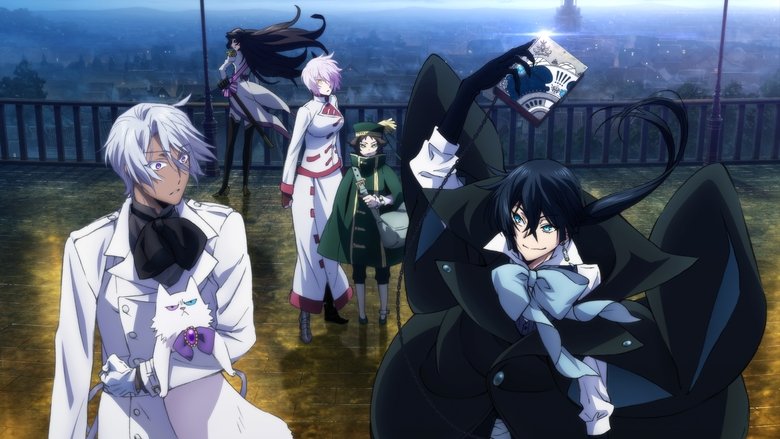
The Case Study of Vanitas (Vanitas no Carte) is set in an alternate 19th-century steampunk Paris where humans and vampires uneasily coexist following the historical cataclysm known as the Babel Incident. The narrative begins when Noé Archiviste, an earnest young vampire blessed with the rare ability to read memories through blood, boards the giant airship La Baleine to investigate rumors of the legendary grimoire known as the "Book of Vanitas". There, he encounters Vanitas, an eccentric, self-proclaimed human doctor who wields the very mechanical tome in question. Instead of using the book to eradicate vampires as legend foretold, Vanitas uses its power over the "World Formula" to restore vampires whose "True Names" have been corrupted by a supernatural malady into monstrous curse-bearers.

Reluctantly partnering together, Vanitas and Noé are drawn deep into the political intrigue and aristocratic underworld of vampire high society in the alternate dimension of Altus Paris. Their investigations pit them against shadowy puppet-masters, fanatical vampire-hunting Catholic paladins known as Chasseurs, and the elusive entity known as Charlatan (Naenia), an apparition corrupting vampire True Names to feed off their despair. As they journey from lavish masquerades to catacombs and the snowbound forests of Gévaudan, their bond deepens while being tested by personal trauma, shifting loyalties, and irreconcilable philosophies regarding mortality, autonomy, and the cost of salvation.

Across its 24-episode arc, the series peels back the layers of its dual protagonists. What initially appears to be an episodic detective journey into supernatural pathology transforms into an examination of guilt, self-hatred, and intimacy. The story builds toward an unavoidable reckoning where past debts and childhood bonds threaten to tear Vanitas and Noé apart, framing the entire narrative as an affectionate yet tragic chronicle recorded in Noé's personal memoirs.
Core Meaning

The overarching message of The Case Study of Vanitas centers on the struggle for emotional agency and the painful vulnerability of accepting love when overwhelmed by self-loathing. Through Vanitas's paradox—a man who fiercely saves others while refusing to believe he is worthy of salvation himself—the creators examine how past trauma warps human connection into a transactional battleground.

The story posits that true healing does not come from rewriting an individual's past or forcing idealized outcomes upon them, but from walking alongside another soul, bearing witness to their suffering, and respecting their right to choose their own destiny—even if that destiny embraces mortality and imperfection.

Thematic DNA

Trauma, Self-Loathing, and the Pursuit of Worth 30%
Identity, "True Names," and Bodily Autonomy 25%
Companionship, Intimacy, and Vulnerability 20%
Prejudice, Otherness, and Societal Duality 15%
Determinism vs. Personal Agency 10%

Trauma, Self-Loathing, and the Pursuit of Worth

Explored primarily through Vanitas and Chloé d'Apchier. Characters bear deep psychological scars inflicted by parental figures, medical experimentation, and ostracization. The series tracks how self-hatred manifests as extreme self-sacrifice or defensive cruelty, challenging the characters to accept warmth without weaponizing their pain.

Identity, "True Names," and Bodily Autonomy

In this world, a vampire's soul and existence are bound to their malnomen and True Name. When Charlatan corrupts a name, a person is reduced to an uncontrollable beast. The restoration of a True Name serves as a narrative and thematic metaphor for regaining bodily autonomy and selfhood against predatory systems.

Companionship, Intimacy, and Vulnerability

The evolving relationship between Vanitas and Noé, as well as their dynamics with Jeanne and Dominique, unpacks the terror of emotional exposure. The narrative contrasts romantic, platonic, and familial bonds, highlighting that closeness requires tearing down emotional walls.

Prejudice, Otherness, and Societal Duality

Illustrated through the schism between humans and vampires, the Chasseurs' institutional religious hatred, and the internal prejudice vampires harbor against the Blue Moon clan. The series illustrates how fear of the "other" is manufactured and weaponized by ruling classes to maintain power.

Determinism vs. Personal Agency

Framed by Noé's opening narration hinting at Vanitas's ultimate demise, the series questions whether fate is immutable or if the choices one makes along the way provide meaning to an inevitable end.

Character Analysis

Vanitas

Natsuki Hanae

Archetype: Flawed Antihero / Trickster Healer Key Trait: Masked vulnerability beneath cynical bravado.

Motivation

Spite toward the Blue Moon vampire and a paradoxical compulsion to save all vampires against their will.

Character Arc

Evolves from a pathologically detached, suicidal operative into a man who tentatively allows himself to love and be loved, confronting his traumatic past with Dr. Moreau and Luna.

Noé Archiviste

Kaito Ishikawa

Archetype: The Reluctant Hero / Inquisitive Idealist Key Trait: Unflinching moral earnestness and physical prowess.

Motivation

To discover the truth behind the Book of Vanitas and prevent the tragedy of his childhood friend Louis from repeating.

Character Arc

Begins as an innocent, sheltered vampire entering Paris; gradually confronts the grim complexities of mortality, loss, betrayal, and his own capacity for violence when protecting those he loves.

All 4 characters and cast

Symbols & Motifs

The Book of Vanitas (Grimoire)

Meaning:

Represents the power to rewrite the fundamental World Formula. While historically feared as an instrument of destruction, Vanitas reclaims it as a tool for healing, symbolizing the dual capacity of knowledge to either harm or heal.

Context:

Bound in dark leather with clockwork gears and glowing azure pages, it is wielded by Vanitas throughout his missions to restore corrupted vampires.

The Crimson and Blue Moons

Meaning:

The Crimson Moon symbolizes vampire tradition, conformity, and orthodox lineage; the Blue Moon represents the outcast, the aberrant, and the cursed. The azure lunar aesthetic underlines the beauty found in defiance and nonconformity.

Context:

Visualized across the skies of Paris and Altus Paris, serving as constant markers of lineage, societal division, and destiny.

Blood and Memory

Meaning:

Framed not only as sustenance or erotic intimacy, but as psychological communion. Blood represents a repository of lived experiences, illustrating that understanding someone requires confronting their rawest memories.

Context:

Manifests during vampire feeding sequences, particularly through Noé's Archiviste ability to read memories by drinking blood.

The Hourglass Earring

Meaning:

Represents running time, fleeting mortality, and the heavy burden of unresolved pasts.

Context:

Worn by Vanitas, having been inherited from the original Vampire of the Blue Moon (Luna).

Masquerade Masks and Alter Egos

Meaning:

Symbolize societal deception, hidden traumas, and the facades individuals build to guard their genuine identities.

Context:

Ubiquitous in Altus Paris and prominently featured during Charlatan's eerie parade and masked balls.

Memorable Quotes

俺は俺の選んだ方法で、俺の好きなように、お前たちの意志なんぞ無視して、お前たちを救ってやる!
— Vanitas

Context

Delivered in Episode 1 (Mémoire 1) aboard La Baleine to the cursed vampire Amelia and the shocked crowd.

Meaning

Defines Vanitas's contradictory, defiant savior complex, establishing his unilateral mission to rescue vampires regardless of their approval.

これは、俺がヴァニタスと出会い、共に歩み、多くを得て、そして――彼を俺の手で殺すまでの物語だ。
— Noé Archiviste

Context

Spoken in Episode 1 (Mémoire 1) as the opening and recurring narrative framing device.

Meaning

The series' framing monologue that establishes the tragic inevitability hanging over their partnership and friendship.

All 3 quotes

Episode Highlights

Vanitas: In the Event of Rusty Hopes (Vanitas―ラスティ=ホープスにて)

S1E1

Introduces the steampunk Paris setting, the airship encounter, and Noé's fateful meeting with Vanitas.

Significance:

Sets up the central premise of restoring cursed vampires and establishes the overarching tragic framing device of Vanitas's future demise.

Night of Mocking Masks (Bal masqué―仮面が嗤う夜)

S1E4

Vanitas and Noé infiltrate the Altus Paris masked ball, triggering a major confrontation.

Significance:

Marks the dramatic entrance of Charlatan (Naenia) and reveals the widespread threat of curse-bearers within high society.

Love (Femme fatale―恋)

S1E7

Explores the chaotic faux-courtship between Vanitas and Jeanne across Paris.

Significance:

Juxtaposes comedic romance tropes with deep psychological tension and unique vampire sensory biology.

Those Who Harbor Malice (Chasseur―紅を狩る者)

S1E9

Takes the protagonists deep into the Paris Catacombs to face the Chasseurs.

Significance:

Introduces Paladin Roland Fortis and unveils the horrific human experimentation conducted in Dr. Moreau's laboratory.

Number 69 (No.69―傷痕)

S1E10

Dives into Vanitas's past as a human test subject designated "Number 69".

Significance:

Grounds Vanitas's core trauma, medical experimentation history, and pivotal relationship with the Blue Moon vampire Luna.

The Beast of Gévaudan (Chasse aux loups―獣の森)

S1E16

Kicks off the Gévaudan arc in a snowbound landscape afflicted by spatial distortion.

Significance:

Introduces the Silver Witch Chloé d'Apchier, Jean-Jacques, and complex alterations to the World Formula.

The Inharmonious Melody (Mal d'amour―不協和音)

S1E20

Presents the emotional climax of the Gévaudan arc where Chloé's tragic past is fully revealed.

Significance:

Features a desperate formula rewrite by Vanitas to restore Chloé's True Name, successfully breaking her cycle of self-sacrifice.

Tears Like Rain (Après la pluie―雨は止まず)

S1E23

Depicts the brutal physical and psychological duel between Vanitas and Noé atop the Paris rooftops.

Significance:

Pushes the protagonists' core philosophies into violent collision due to Mikhail's hostage manipulation and Vanitas's guarded memories.

His Wish (Le nom―僕の願い)

S1E24

Resolves the immediate conflict with Mikhail and reveals deeper conspiracies surrounding the Shapeless One (Teacher).

Significance:

Reaffirms Vanitas and Noé's commitment to continue walking together despite looming tragedies, concluding the season.

Philosophical Questions

Is forced salvation truly benevolent?

When Vanitas insists on saving curse-bearers regardless of their consent, the series interrogates whether saving someone's life against their explicit will is an act of genuine love or an act of selfish ego.

What constitutes true identity?

Through the concept of the True Name (malnomen), the narrative questions whether an individual's essence is defined by internal self-conception, societal perception, or the memories one carries.

Can an individual who hates themselves truly accept love?

Vanitas's psychological turmoil questions whether mutual intimacy is possible without first achieving a baseline of self-forgiveness and personal acceptance.

Alternative Interpretations

The series invites multiple critical readings:

Full ending explanation

Cultural Impact

The Case Study of Vanitas emerged during a modern revival of supernatural and gothic anime, standing out by deliberately fusing 19th-century fin-de-siècle French romanticism with anime aesthetic sensibilities. In contrast to standard vampire tropes that frame vampires as purely predatory or romanticized creatures of the night, Mochizuki and Bones framed vampirism through a blend of medical pathology, existential identity, and philosophical inquiry.

The show received critical acclaim within the anime community for its portrayal of nuanced relationships, avoiding standard genre boundaries and offering deep explorations of mental health, codependency, and survivor's guilt. It demonstrated how historical-fantasy world-building can elevate psychological character studies.

Audience Reception

The Case Study of Vanitas was widely praised by critics and viewers for the dynamic chemistry between Vanitas and Noé, the visual direction by Tomoyuki Itamura, Yoshiyuki Ito's character animation, and Yuki Kajiura's evocative musical score. The Gévaudan arc in Cour 2 was singled out for its emotional depth and thematic resolution.

Some criticisms noted that the sudden tonal shifts between serious gothic tragedy and chibi/slapstick comedy felt jarring at times, while others felt the complex political lore surrounding the senate and royalty moved too quickly in the middle of Cour 1. Overall, it is regarded as a visually stunning, emotionally rich, and thematically sophisticated gothic dark fantasy from Studio Bones.

Interesting Facts

  • Director Tomoyuki Itamura brought signature avant-garde framing, dynamic typographic cuts, and surreal visual pacing from his work on the Monogatari franchise to Studio Bones.
  • Original manga creator Jun Mochizuki visited France prior to writing the manga, using architectural and street-level photographs of Paris and the countryside to construct the setting.
  • Famed composer Yuki Kajiura composed the soundtrack, incorporating operatic vocal tracks, accordion melodies, and European folk arrangements tailored to the steampunk French aesthetic.
  • The 24-episode season was produced and released on a continuous split-cour schedule (Cour 1 in Summer 2021, Cour 2 in Winter 2022) to maintain animation quality.
  • Series composer Deko Akao streamlined several heavy political lore explanations from the manga to elevate the pacing of character-driven drama and mysteries.

Easter Eggs

18th-Century Beast of Gévaudan Legend

The second cour directly adapts the French historical myth of the Bête du Gévaudan (1764–1767), reimagining historical events as an altered-formula vampire crisis involving the Marquis d'Apchier.

Marquis de Sade Nomenclature

Dominique, Louis, and the House of de Sade are named directly after the infamous French nobleman and writer Marquis de Sade, reflecting themes of psychological taboo, autonomy, and pain.

Astolfo of Charlemagne's Paladins

Paladin Astolfo Granatum derives his name from Astolfo, the famed English paladin of Charlemagne in French romance literature (Chanson de Roland), carrying forward motifs of unhinged zealotry and legendary lances.

Historical Airships & Industrial Steampunk

The giant airship La Baleine ("The Whale") and the aesthetic of Astermite-powered technology pay homage to Jules Verne's retro-futuristic French science fiction.

Frequently Asked Questions

Explore More About This Movie

Dive deeper into specific aspects of the movie with our detailed analysis pages

Comments (0)

Leave a comment

No comments yet. Be the first to share your thoughts!

Similar Movies