Skip to content
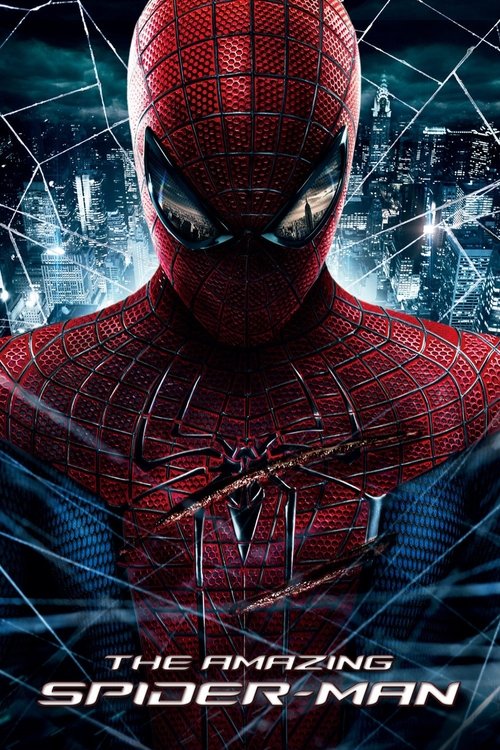
The Amazing Spider-Man
Framed in twilight-hued shadow and kinetic urban grace, this gritty romantic action-thriller weaves raw adolescent grief with electrifying velocity, capturing a scarred, lonely heart swinging through a maze of soaring concrete towers like a silver thread in rain.
The Amazing Spider-Man

The Amazing Spider-Man

"The untold story begins."

23 June 2012 United States of America 136 min 6.7 (18,769)

Director: Marc Webb

Cast: Andrew Garfield, Emma Stone, Rhys Ifans, Denis Leary, Martin Sheen

Action Adventure Science Fiction Responsibility and Moral Obligation vs. Vengeance The Search for Identity and Paternal Legacy The Dual Nature of Science and Human Imperfection Vulnerability, Trust, and Sacrificial Love Civic Solidarity and Everyman Heroism
Budget: $215,000,000
Box Office: $758,725,893

Overview

The Amazing Spider-Man (2012), directed by Marc Webb, presents a modernized, grounded origin story for Marvel’s flagship wall-crawler. The narrative follows Peter Parker (Andrew Garfield), an intellectually gifted yet socially alienated high school teenager living in Queens with his loving Aunt May (Sally Field) and Uncle Ben (Martin Sheen). Abandoned as a young child by his parents under mysterious circumstances, Peter remains haunted by their disappearance until he discovers his father's hidden leather briefcase containing secret research documents from Oscorp Industries.

Sneaking into Oscorp headquarters under the guise of an intern, Peter stumbles into a high-tech bio-genetics laboratory where he comes into contact with genetically modified spiders. A spider bite endows him with extraordinary arachnid abilities—superhuman strength, heightened reflexes, wall-crawling capabilities, and an uncanny intuitive sense. Simultaneously, Peter forms a bond with Dr. Curt Connors (Rhys Ifans), his father’s former research partner, assisting him in completing a revolutionary cross-species genetics formula designed to regenerate missing limbs.

Tragedy strikes when a moment of teenage selfishness leads to the tragic murder of Uncle Ben, sparking Peter's intense quest for justice and revenge. As Peter crafts a masked vigilante persona and mechanical web-shooters, he must balance his blooming romance with his brilliant classmate Gwen Stacy (Emma Stone) and the suspicions of her father, NYPD Captain George Stacy (Denis Leary). Meanwhile, Dr. Connors tests the limb-regeneration serum on himself, accidentally unleashing a terrifying, monstrous alter-ego known as the Lizard upon Manhattan.
Core Meaning

At its core, Marc Webb’s The Amazing Spider-Man explores the existential question posed explicitly by Peter's English teacher in the film: "Who am I?" The director reframes the classic superhero coming-of-age narrative into a deeply personal study of youth trauma, abandonment, and moral accountability. Rather than presenting a clean, idealistic hero from day one, the film highlights how power without emotional maturity initially yields destructive vigilante vengeance.

The central message redefines legacy and duty. As articulated through Uncle Ben's guiding philosophy, true manhood and heroism do not stem from special talents or personal grievances, but from recognizing an innate moral obligation to protect others. The film argues that true strength lies in vulnerability and self-sacrifice, transforming raw personal pain into active civic responsibility.

Thematic DNA

Responsibility and Moral Obligation vs. Vengeance 30%
The Search for Identity and Paternal Legacy 25%
The Dual Nature of Science and Human Imperfection 20%
Vulnerability, Trust, and Sacrificial Love 15%
Civic Solidarity and Everyman Heroism 10%

Responsibility and Moral Obligation vs. Vengeance

Peter initially uses his powers to hunt down a specific armed robber matching his uncle's killer, acting out of anger and guilt. His transformation into Spider-Man is not an instant heroic awakening, but a gradual moral shift from vigilante revenge to selfless protection of the public, catalyzed by Uncle Ben’s voicemail message.

The Search for Identity and Paternal Legacy

Peter's arc revolves around fill-in father figures (Uncle Ben, Dr. Connors, Captain Stacy) and the ghost of his biological father, Richard Parker. The plot highlights how an orphan's quest to understand his origins shapes his self-image and character choices.

The Dual Nature of Science and Human Imperfection

Through Dr. Curt Connors, the film addresses the peril of biological hubris. Driven by a desire to eradicate human physical weakness and disability, Connors' transhumanist experiment produces monstrosity, demonstrating that attempting to forcibly "fix" human nature can erode moral humanity.

Vulnerability, Trust, and Sacrificial Love

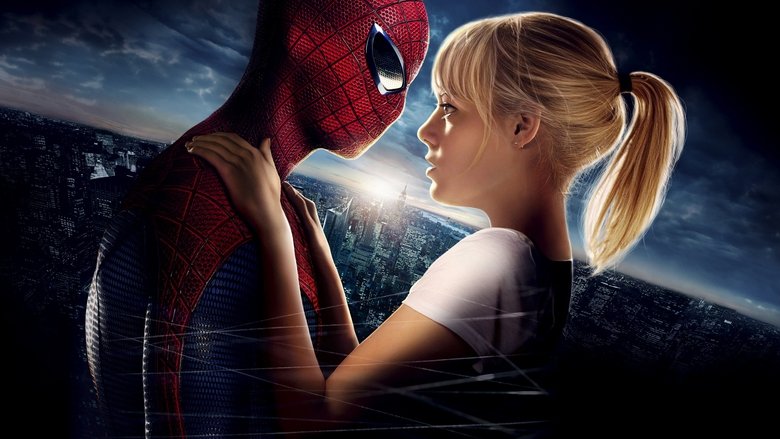
Unlike traditional superhero tropes where the hero conceals his secret to protect loved ones, Peter shares his identity early on with Gwen Stacy. Their relationship is grounded in mutual intellectual respect, honesty, and shared burden, emphasizing that authentic connection requires dropping emotional masks.

Civic Solidarity and Everyman Heroism

The climax highlights that Spider-Man does not stand alone. Ordinary citizens—symbolized by New York crane operators aligning their equipment to aid a wounded hero—demonstrate that heroism is a collective effort inherent to the working-class spirit of the city.

Character Analysis

Peter Parker / Spider-Man

Andrew Garfield

Archetype: Reluctant Hero / Coming-of-Age Protagonist Key Trait: Sarcastic, quick-witted intelligence balanced with deep emotional vulnerability.

Motivation

To uncover the truth about his parents while living up to Uncle Ben's legacy of responsibility.

Character Arc

Evolves from a brooding, traumatized outcast motivated by personal revenge into a self-sacrificing, responsible hero who embraces his role as Manhattan’s protector.

Gwen Stacy

Emma Stone

Archetype: Heroic Companion / Deconstructive Love Interest Key Trait: Sharp intellect, independence, and unwavering empathy.

Motivation

Protecting her loved ones and applying her scientific mind for the public good.

Character Arc

Functions as an active, courageous partner rather than a passive damsel; aids Peter scientifically in the lab to craft an antidote during the climax.

All 5 characters and cast

Symbols & Motifs

Richard Parker's Leather Briefcase

Meaning:

Symbolizes Peter's unresolved childhood trauma, hidden truths, and the physical inheritance of his father's unfinished legacy.

Context:

Discovered in the attic, acting as the narrative catalyst that prompts Peter to investigate Oscorp.

Mechanical Web-Shooters & BioSilk

Meaning:

Symbolizes Peter's high intellect, resourcefulness, and human craftiness. Unlike biological web-shooting, mechanical shooters represent active agency and control.

Context:

Hand-crafted by Peter using modified wristwatches and stolen Oscorp BioSilk tech.

The Spider Mask / Lenses

Meaning:

Represents both an emotional shield against trauma and a transformation of identity. Initially worn to hide his face while seeking revenge, it evolves into a symbol of hope for New York.

Context:

Worn throughout vigilante patrols and refined using sunglasses lenses and spandex fabric.

The Missing Right Arm / Lizard Tail

Meaning:

Symbolizes physical limitation, envy, and the tragic consequence of unbridled scientific arrogance attempting to override natural human flaws.

Context:

Reflected in Dr. Connors' daily struggles and his monstrous physical manifestation as the Lizard.

New York Construction Cranes

Meaning:

Symbolizes community unity, working-class solidarity, and the urban network that supports and lifts up the lone hero.

Context:

Positioned along 54th Street by crane operators to create a swinging pathway for a wounded Spider-Man.

Eyeglasses / Camera Lenses

Meaning:

Used throughout the film as a visual motif of perception and objective observation of the world.

Context:

Peter discards his prescription glasses after gaining powers and frequently observes through his SLR camera.

Memorable Quotes

Your father lived by a philosophy—a principle, really. He believed that if you could do good things for other people, you had a moral obligation to do those things! That's what's at stake here; not choice... responsibility.
— Uncle Ben Parker

Context

Spoken to Peter on the street outside school after Peter forgot to walk Aunt May home.

Meaning

This rephrasing of the traditional "With great power comes great responsibility" motto defines the central philosophical thesis of the film.

My weakness... small knives!
— Spider-Man (Peter Parker)

Context

Delivered while cornering a car thief in an alleyway who brandishes a pocketknife.

Meaning

Demonstrates the humorous, comic-accurate snark and banter characteristic of Andrew Garfield's Spider-Man persona.

All 5 quotes

Philosophical Questions

Is moral responsibility an intrinsic duty or a matter of choice?

The film argues that possessing the capability to help others transforms moral action from a luxury into a mandatory obligation.

Does eliminating human vulnerability diminish our humanity?

Through Dr. Connors, the movie questions whether striving for biological "perfection" threatens the essential moral traits of empathy and humility.

Can personal justice exist without descending into vengeance?

Peter’s transformation demonstrates the fine line between vigilante retribution and genuine heroic protection.

Alternative Interpretations

1. The Psychological Trauma & Dissociation Reading: This perspective reads Spider-Man's mask not just as crime-fighting gear, but as a coping mechanism for post-traumatic stress following dual abandonment (his parents' departure and Uncle Ben's murder). The mask allows Peter to project confidence and quips while masking internal grief.

Full ending explanation

Cultural Impact

Released in summer 2012, The Amazing Spider-Man arrived just five years after Sam Raimi's Spider-Man 3 (2007). In a post-The Dark Knight (2008) landscape, Hollywood leaned heavily into darker, grounded visual aesthetics and realistic character psychology.

The film was a financial success, grossing $757.9 million worldwide against a $200–230 million budget. While critics praised Garfield and Stone's chemistry, some criticized the quick origin turnaround. However, Andrew Garfield's return in Spider-Man: No Way Home (2021) sparked widespread critical reappraisal, with fans celebrating his emotional depth, comic accuracy, and unique physical performance.

Audience Reception

Audience and critical reception highlighted several key elements:

  • Positive Aspects: Garfield & Stone's electric on-screen chemistry, realistic 3D & first-person POV camera work, high-flying practical stuntwork, and comic-accurate sarcastic banter.
  • Criticisms: Retreading the origin story only 5 years after prior films, unresolved parent backstory subplots, criticized Lizard CGI facial design, and pacing lags in the middle act.

Overall Verdict: A stylish, emotionally grounded reboot that excels in character dynamics, lead performances, and physical action sequences.

Interesting Facts

  • Director Marc Webb insisted on using physical stuntmen for swinging sequences wherever possible under Harlem’s elevated train tracks.
  • The production was one of the earliest major feature films shot natively in 3D using RED Epic digital cameras.
  • Sally Field took the role of Aunt May primarily as a personal favor to her close friend, producer Laura Ziskin.
  • Rhys Ifans spent weeks prior to and during shooting with his right arm bound behind his back to learn how to accomplish daily tasks single-handedly.
  • Andrew Garfield underwent four months of rigorous training, studying parkour, gymnastics, and the behavioral movements of real spiders.
  • The natural romantic chemistry between Andrew Garfield and Emma Stone led to a real-life relationship that lasted several years.

Easter Eggs

Stan Lee's Headphone Cameo

Co-creator Stan Lee makes an iconic cameo as a Midtown High librarian quietly listening to classical music on headphones, completely oblivious to Spider-Man and the Lizard wrecking the room behind him.

Donald Glover Poster

In Peter Parker's bedroom, a poster featuring Donald Glover (from Community) is briefly visible, honoring the fan-backed "Donald Glover for Spider-Man" internet movement that inspired comic writer Brian Michael Bendis to co-create Miles Morales.

The Midtown High Meta-Quote

The English teacher states, "There's only one plot in all of fiction: 'Who am I?'"—a meta-commentary on narrative storytelling and Peter's coming-of-age journey.

Branzino Dinner Scene Reference

The awkward Stacy family dinner scene featuring Mediterranean branzino fish was later easter-egged in Spider-Man: Homecoming (2017) when Flash Thompson mentions returning his order of branzino.

Norman Osborn's Shadowy Presence

Norman Osborn is mentioned as a dying corporate figurehead whose secret terminal condition drives Oscorp's unethical genetic research, laying early ground for future lore.

Frequently Asked Questions

Explore More About This Movie

Dive deeper into specific aspects of the movie with our detailed analysis pages

Comments (0)

Leave a comment

No comments yet. Be the first to share your thoughts!

Similar Movies