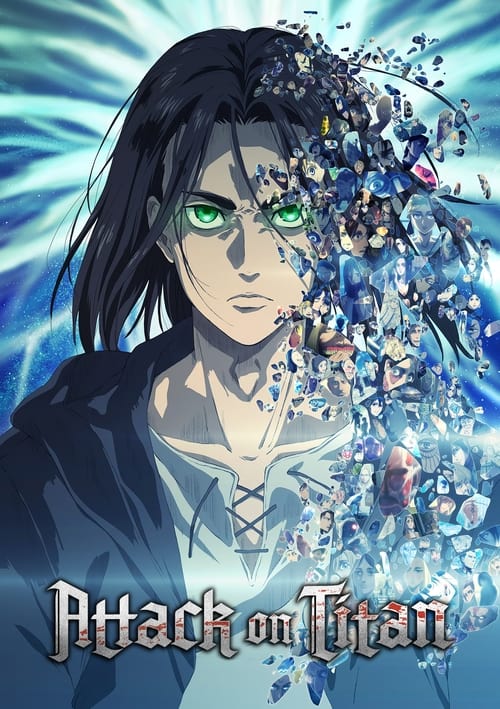
Attack on Titan
進撃の巨人
"Home was a pen. Humanity, cattle."
Overview
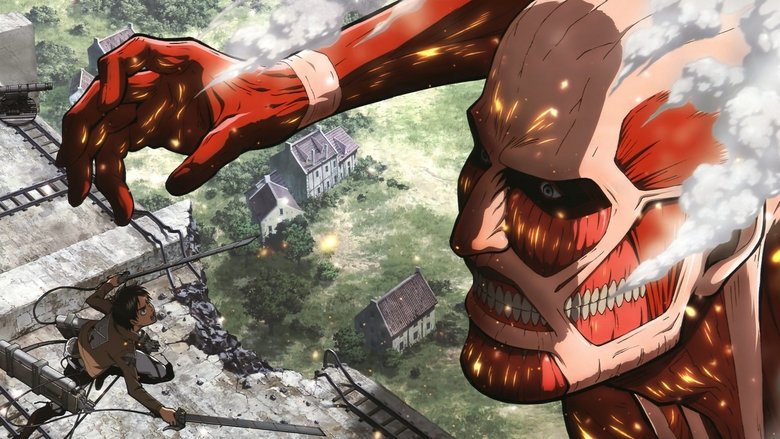
"Attack on Titan" begins in a post-apocalyptic world where the last remnants of humanity live behind three enormous concentric walls. These barriers are their only defense against the Titans, giant, man-eating humanoids of mysterious origin. The story follows Eren Yeager, a young boy who vows to exterminate the Titans after his hometown is destroyed and his mother is killed in an attack.
Along with his childhood friends Mikasa Ackerman and Armin Arlert, Eren joins the Survey Corps, the military branch that dares to venture beyond the walls to fight the Titans and reclaim the world. As the trio progresses from idealistic recruits to hardened soldiers, they uncover shocking truths about the Titans, the history of their walled society, and the true nature of the world they inhabit. The series evolves from a desperate struggle for survival into a complex political and philosophical epic, questioning the nature of freedom, the cycle of hatred, and the blurred lines between hero and monster.
Core Meaning
The core meaning of "Attack on Titan" is a profound and often bleak exploration of the cyclical nature of hatred and violence. It argues that conflict is an inescapable part of human existence, passed down through generations and fueled by prejudice, propaganda, and the thirst for revenge. The series posits that the pursuit of absolute freedom can lead to oppression and destruction, forcing its characters and audience to confront the idea that there are no simple heroes or villains. Ultimately, the creators want to convey that while the cycle of violence may be unbreakable, the struggle for understanding, empathy, and the choice to protect loved ones in a cruel world holds its own profound, albeit tragic, meaning.
Thematic DNA
The Cycle of Hatred and Violence
This is the central theme of the series. Initially, the conflict is a straightforward fight of humanity against monstrous Titans. However, as the story unfolds, it is revealed that the Titans are transformed humans, and the true enemy is other humans from across the sea. The narrative demonstrates how generations inherit the conflicts and prejudices of their ancestors. The hatred between the Eldians of Paradis and the nation of Marley fuels a relentless cycle of revenge, with each side committing atrocities that justify retaliation from the other. Eren Yeager's journey tragically embodies this theme, as he transforms from a victim seeking vengeance into an aggressor who perpetuates the cycle on a global scale.
Freedom vs. Determinism
The concept of freedom is a powerful motivator for the characters, especially Eren, who feels like he has been living in a cage. The Survey Corps' emblem, the "Wings of Freedom," symbolizes this desperate desire to break free from the walls and the Titan threat. However, the series deeply questions the nature of true freedom. Through the power of the Attack Titan, Eren sees future memories, suggesting his path is predetermined. This creates a paradox: is he truly free if he is a slave to a future he cannot change? The series explores the philosophical struggle between free will and fate, suggesting that the relentless pursuit of an idealized freedom can become its own form of bondage.
War, Propaganda, and Dehumanization
"Attack on Titan" is a stark anti-war story that depicts the brutal reality of conflict. It shows how governments manipulate history and use propaganda to justify violence and control their populace. The Eldians on Paradis are raised to believe they are the last of humanity, while the rest of the world is taught that Eldians are "devils" who must be eradicated. This dehumanization makes it easier for both sides to commit horrific acts of violence against one another. The series critically examines nationalism and how historical grievances are weaponized, leading to endless conflict.
Sacrifice and the Loss of Innocence
Sacrifice is a constant and brutal necessity in the series. Characters are forced to give up their lives, their humanity, and their dreams for what they believe is the greater good. The Survey Corps' motto, "Shinzou wo Sasageyo!" ("Dedicate your hearts!"), encapsulates this theme perfectly, as soldiers are expected to give their lives for the cause of humanity. The story chronicles the devastating loss of innocence among its young protagonists, who are thrust into a horrific war as children and are forced to make impossible choices that stain their hands and souls, transforming them from hopeful youths into jaded veterans.
Character Analysis
Eren Yeager
Yuki Kaji
Motivation
Eren's primary motivation is the pursuit of freedom—for himself, his friends, and his people. This desire is absolute and uncompromising. Initially, it's a desire for freedom from the Titans. Later, it becomes a desire for freedom from a world that hates and wants to destroy his people. His motivations become tragically intertwined with a deterministic path he sees through his future memories, leading him to believe that mass destruction is the only way to achieve his vision of freedom.
Character Arc
Eren's arc is a tragic transformation from a determined, vengeful hero into a genocidal anti-hero. Initially driven by a simple, furious desire to kill all Titans after witnessing his mother's death, his worldview shatters upon learning the truth of the world. He discovers that his true enemies are not mindless monsters, but other humans. This revelation, combined with the future memories he inherits, convinces him that the only way to protect his home and friends and end the cycle of hatred is to become the world's greatest monster. He initiates "The Rumbling," a global genocide, forcing his friends into the position of having to kill him to save humanity, thereby making them heroes in the eyes of the survivors.
Mikasa Ackerman
Yui Ishikawa
Motivation
Mikasa's core motivation is to protect her last remaining family, primarily Eren and Armin. The scarf Eren gave her as a child is a symbol of the warmth and home she wants to preserve. While her love for Eren is her driving force, her motivation evolves to encompass protecting the innocent and upholding the values her friends once fought for, even if it means confronting Eren himself.
Character Arc
Mikasa's arc is about finding her identity and agency beyond her devotion to Eren. After Eren saves her as a child, she dedicates her life to protecting him, becoming an exceptionally skilled soldier. For much of the series, her actions are dictated by Eren's safety. However, when Eren's path turns towards global destruction, she faces an immense internal conflict between her love for him and her moral duty to humanity. Her journey culminates in the ultimate act of self-determination: choosing to kill Eren to stop the Rumbling, thereby freeing both the world from destruction and herself from her emotional dependency, as well as freeing the Founder Ymir from her own bondage.
Armin Arlert
Marina Inoue
Motivation
Armin is motivated by a deep curiosity to see and understand the world beyond the walls, a dream he shared with Eren. He believes in the power of communication and understanding over conflict. His ultimate motivation is to find a peaceful solution and prove that humanity can rise above its violent nature. He serves as Eren's conscience and foil, always trying to find a non-violent path forward.
Character Arc
Armin begins as a physically weak and timid child, often bullied and protected by Eren and Mikasa. His arc is about embracing his true strength: his brilliant strategic mind and profound empathy. He consistently devises the plans that save his friends and humanity from seemingly impossible situations. After inheriting the Colossal Titan from Bertholdt, he grapples with the immense power and the burden of his predecessor's memories. Armin's journey is one of growing confidence and becoming the moral and diplomatic compass for the group, ultimately leading the efforts to negotiate peace in the post-Rumbling world.
Levi Ackerman
Hiroshi Kamiya
Motivation
Levi is motivated by a powerful desire to create a world where his comrades' deaths have meaning and are not in vain. He fights to end the Titan threat to prevent future generations from suffering the same losses. His promise to Erwin to kill Zeke (the Beast Titan) becomes a deeply personal and driving vendetta. Above all, he is motivated by a duty to protect humanity, making difficult, pragmatic decisions for the greater good.
Character Arc
Known as "Humanity's Strongest Soldier," Levi starts as a cold, stoic, and seemingly unapproachable captain. His arc is a gradual revealing of the deep-seated empathy and immense burden of loss he carries beneath his hardened exterior. Raised in the brutal Underground, his initial cynicism is tempered by his trust in Commander Erwin Smith. After Erwin's death, Levi carries the weight of his final command: to kill the Beast Titan. This promise drives him through immense personal injury and loss. His journey is not about changing his core beliefs, but about enduring and persevering against a world that constantly challenges them, ultimately becoming a mentor figure who guides the next generation even after the fighting ends.
Symbols & Motifs
The Walls (Maria, Rose, Sina)
The Walls represent a complex duality of safety and imprisonment. On the surface, they are humanity's last bastion of protection against the Titans. However, they also symbolize fear, ignorance, and confinement, trapping humanity in a "cage" and preventing them from seeking the truth of the outside world. They also represent social stratification and the psychological barriers characters build within themselves.
The entire society is structured around the three walls. The breach of Wall Maria in the first episode is the catalyst for the entire series, shattering the illusion of safety. The eventual revelation that the walls are made of millions of Colossal Titans completely upends their symbolic meaning, turning them from a defensive shield into a potential weapon of mass destruction.
The Titans
Initially, the Titans symbolize overwhelming, mindless terror and the brutal, chaotic forces of nature. As the series progresses, their meaning deepens to represent the monstrous side of humanity itself—a physical manifestation of the Eldians' cursed history and the power that has caused so much suffering. They become a symbol of how humans can be turned into monsters by the hatred and actions of others.
Titans are the primary antagonists for the first three seasons. The discovery that they are transformed humans (Eldians from Marley) is a major turning point. Main characters like Eren can also transform, blurring the line between human and monster and showing that this fearsome power can be wielded for different, often conflicting, purposes.
The Wings of Freedom
The emblem of the Survey Corps, the Wings of Freedom, symbolizes humanity's hope, defiance, and the desperate longing to reclaim the world and be free from the oppression of the Titans and the confinement of the Walls. The two wings, one white and one black (or blue in the anime), can also represent the dual nature of humanity—good and evil, hope and despair—and the moral ambiguity of the fight for freedom.
This symbol is worn proudly by all members of the Survey Corps, including Eren, Mikasa, Armin, and Levi. It's a constant visual reminder of their goal and the sacrifices made to achieve it. The phrase is often used in speeches and moments of high drama to inspire the soldiers to push beyond their fear.
Birds
Birds, often shown soaring freely in the sky, are a powerful and recurring symbol of the absolute freedom that characters like Eren yearn for. They represent an existence without walls, boundaries, or oppression. In the finale, a bird wrapping Mikasa's scarf is interpreted by some as a metaphor for Eren's spirit finally being free and keeping his promise to her.
Birds appear at many significant moments throughout the series, often juxtaposed with the trapped state of the human characters. Eren frequently looks to the sky and sees them. The final scenes of the series feature a bird interacting with Mikasa at Eren's grave, providing a poignant and ambiguous final image.
Memorable Quotes
この世界は残酷だ…そして…とても美しい。
— Mikasa Ackerman
Context:
Mikasa first voices this sentiment internally during the Battle of Trost in Season 1, Episode 7. Believing Eren to be dead, she is about to give up but remembers his words and the beautiful moments of her life, inspiring her to continue fighting. The quote becomes a recurring theme for her character.
Meaning:
"This world is cruel... and also... very beautiful." This quote encapsulates one of the series' core philosophical dualities. It reflects Mikasa's personal experience of losing her parents but finding a new family with Eren. It speaks to the broader theme that even amidst the horror, suffering, and violence of their world, there are moments of beauty, love, and friendship worth fighting for.
戦わなければ勝てない。
— Eren Yeager
Context:
Eren screams this at Mikasa in a flashback in Season 1, Episode 6, when they are children facing the murderers of Mikasa's parents. This moment is pivotal, as it awakens the dormant Ackerman power within Mikasa and solidifies their bond. The phrase becomes his personal war cry, often shortened to just "Tatakae!" ("Fight!").
Meaning:
"If you don't fight, you can't win!" This is Eren's defining mantra, representing his unwavering resolve and belief that action and struggle are necessary for survival and victory. It's a simple yet powerful philosophy that drives him throughout the series. It's the phrase he uses to awaken Mikasa's own survival instincts when they were children.
心臓を捧げよ!
— Erwin Smith
Context:
Commander Erwin Smith uses this phrase most iconically. A key moment is in Season 3, Episode 16 ("Perfect Game"), where he delivers a powerful speech, shouting this phrase as he leads the recruits on a suicide charge against the Beast Titan to create an opening for Levi. It is also the title of the second season's opening theme song.
Meaning:
"Dedicate your hearts!" (or "Shinzou wo Sasageyo!"). This is the official salute and battle cry of the Survey Corps. It signifies the ultimate sacrifice and unwavering commitment required of the soldiers. It's a command to offer up one's entire being—body, soul, and life—for the cause of humanity's freedom. The phrase embodies the themes of sacrifice, duty, and hope.
お前が悔いのない選択を自分でするんだ。
— Levi Ackerman
Context:
Levi says this in Season 1, Episode 19, during the 57th Exterior Scouting Mission. The Female Titan is pursuing his squad, and Eren is desperate to transform and fight. Levi advises him to choose between trusting his comrades or trusting himself, but to do so in a way he won't regret later. This moment is a key part of Levi's mentorship of Eren.
Meaning:
"Choose whichever you'll regret the least." This quote from Levi to Eren highlights the series' moral ambiguity and the burden of choice in impossible situations. Levi acknowledges that there is no definitively 'right' answer in their world; the only thing a person can do is make a decision and live with the consequences without regret.
Episode Highlights
First Battle: The Struggle for Trost, Part 1
Five years after the fall of Wall Maria, the Colossal Titan reappears and breaches the Trost District gate. The newly graduated cadets are thrust into their first real battle against a swarm of Titans. The episode is a brutal showcase of the horrifying reality of their fight, culminating in a shocking climax where Eren Yeager is seemingly devoured by a Titan while saving Armin.
This episode shatters any notion of plot armor for the protagonist and establishes the series' grim and unpredictable tone. Eren's apparent death is a massive turning point that sets the stage for the reveal of his Titan powers, the central mystery of the first season. It demonstrates the sheer terror and chaos of a Titan attack from the soldiers' perspective.
Warrior
Atop Wall Rose, Reiner Braun and Bertholdt Hoover confront Eren. In a stunningly casual yet tense conversation, Reiner reveals that he is the Armored Titan and Bertholdt is the Colossal Titan. Shocked and betrayed, Eren refuses to go with them, leading to a massive battle as both sides transform.
This episode contains one of the most significant plot twists in the entire series. It recontextualizes the previous seasons by revealing that humanity's greatest enemies were living among them as comrades. The reveal is not treated as a dramatic battle cry, but a tired confession, which makes the betrayal feel deeply personal and tragic, forever changing the nature of the conflict.
Hero
The climax of the Battle of Shiganshina. As Erwin leads a suicide charge to distract the Beast Titan, Levi launches a spectacular assault. Simultaneously, Armin devises a desperate plan, sacrificing himself by enduring the Colossal Titan's burning steam to give Eren the opening needed to finally defeat Bertholdt.
Considered one of the best episodes in the series, "Hero" is a masterpiece of emotional storytelling and action. It features the devastating culmination of Erwin's and Armin's character arcs through ultimate acts of sacrifice. The episode is a brutal, emotional gut-punch that showcases the highest stakes of their war and the impossible choices the survivors are forced to make.
From You, 2,000 Years Ago
Within the mysterious realm of the Paths, Eren and Zeke witness the memories of their father. More profoundly, the episode delves into the tragic history of the founder, Ymir Fritz, a slave girl who gained the power of the Titans. Eren connects with her, rejecting Zeke's plan and convincing Ymir to lend him her power to unleash the Rumbling.
This episode is a massive lore dump that finally explains the origin of the Titans and the 2,000-year-long tragedy of Ymir. It provides the crucial context for the entire series' conflict and is the definitive turning point for Eren's character, as he seizes control of the Founder's power and officially begins his genocidal march against the world.
The Final Chapters: Special 2 (A Long Dream)
The series finale. The remaining members of the alliance engage in a final, desperate battle against Eren on the back of his massive Founding Titan. The episode culminates in Mikasa entering the Titan's mouth, where she decapitates Eren, ending the Rumbling and the power of the Titans forever.
This episode provides the tragic and highly debated conclusion to the entire saga. It resolves the central conflict through the ultimate sacrifice, forcing Mikasa to kill the person she loves most to save the world. It brings the themes of love, freedom, and the cycle of hatred to a head, leaving the audience with an ambiguous but poignant message about the future of humanity.
Philosophical Questions
What is the true meaning of freedom?
The series constantly explores whether freedom is the absence of physical restraint (like the walls), the ability to make choices (free will), or a state of being. Eren's quest for absolute freedom leads him to become a monster who takes freedom away from others. The story questions if true freedom is ever attainable or if everyone is, as Kenny Ackerman says, "a slave to something."
Can the cycle of violence ever be broken?
This is the central question of the series. Each act of violence is a direct retaliation for a previous one, stretching back generations. Characters like Armin believe in diplomacy and understanding, while Eren comes to believe that the only way to end the cycle is to completely eradicate the "other side." The ambiguous ending, which shows peace for a time but eventual future conflict, suggests that while hatred can be paused, it may be an inescapable part of human nature.
Are people born evil, or are they made into monsters by their circumstances?
The series consistently blurs the line between hero and villain. Characters like Reiner, Bertholdt, and even Eren are not depicted as inherently evil, but as people who have been traumatized, indoctrinated, and forced into monstrous acts by their environment and the historical hatred they inherited. The story suggests that anyone, given the right circumstances, can become a monster.
Alternative Interpretations
The series, particularly its ending, is subject to intense debate and multiple interpretations. One common interpretation views Eren's Rumbling as a tragic, but necessary, act of self-defense—a "dark salvation" for his people who faced imminent destruction from a hateful world. This perspective sees Eren as a tragic hero who sacrificed his own humanity for his friends.
A contrasting interpretation condemns Eren's actions as an unforgivable fascist genocide, arguing that the series serves as a cautionary tale about the dangers of nationalism and radicalization. Critics of this view sometimes argue the story doesn't take a clear enough stance against Eren's actions.
Another perspective focuses on a deterministic worldview, suggesting that Eren had no real choice and was a slave to the future he had seen, making the entire story a tragedy of fate. The final panels of the manga, which show Paradis being destroyed by war in the distant future, have led to a nihilistic interpretation that Eren's sacrifice ultimately changed nothing and that humanity is doomed to repeat its cycle of violence regardless.
Cultural Impact
"Attack on Titan" is widely regarded as one of the most significant and influential anime of the 21st century. It became a global phenomenon, credited with introducing a new wave of fans to anime in the West and bringing the medium into mainstream pop culture conversations, similar to giants like "Dragon Ball Z" and "Naruto." The series has been lauded by critics and academics for its complex narrative and its willingness to tackle mature themes such as the horrors of war, fascism, genocide, and existentialism, often being compared to prestigious live-action shows like "Game of Thrones" and "Breaking Bad" for its moral complexity and shocking plot twists. Its popularity led to significant financial success, with the manga becoming one of the best-selling of all time and the anime's release reportedly causing its publisher Kodansha's first revenue increase in 19 years. The series has also inspired countless memes, fan works, and collaborations, including with major video games like "Fortnite" and "Call of Duty," cementing its indelible mark on global pop culture. Its legacy is that of a boundary-pushing series that elevated the possibilities of animated storytelling, proving that anime could be a medium for profound and dark philosophical inquiry.
Audience Reception
"Attack on Titan" received widespread critical acclaim and amassed a massive, passionate global fanbase. It is consistently ranked as one of the greatest anime series of all time. The first season was a breakout hit, praised for its thrilling action, visceral horror, and compelling premise. While the second season was shorter, it was lauded for its significant plot twists and deeper character development. Season 3 is often considered a masterpiece, with arcs like "Return to Shiganshina" containing some of the highest-rated episodes in television history on platforms like IMDb, such as "Hero" and "Perfect Game." The fourth and final season, handled by studio MAPPA, was praised for its darker, more mature tone and its faithful adaptation of the manga's complex political narrative. However, the ending of the manga was highly divisive among readers. When the anime finale aired, it remained controversial, with some fans finding the conclusion profound and emotionally resonant, while others criticized Eren's motivations as illogical and the resolution as unsatisfying. Despite the debate, the overall reception remains overwhelmingly positive, with the series celebrated for its ambitious storytelling and lasting impact.
Interesting Facts
- The creator, Hajime Isayama, was inspired to create the Titans after a disturbing encounter with a drunk, incoherent customer at an internet café where he worked. This inability to communicate made him realize the most familiar and frightening animal is the human being.
- The walled city of Shiganshina and its districts are heavily inspired by the real-life German town of Nördlingen, which is also a medieval town completely contained within a circular wall.
- The design of the Armored Titan was based on the physique of professional wrestler and MMA fighter Brock Lesnar.
- Hajime Isayama was closely involved with the production of the final season, and he requested changes to the anime's ending from his original manga version. One key change was in Armin's final conversation with Eren, making it clear that Armin holds Eren accountable for the genocide rather than thanking him for it.
- The voice actor for Eren Yeager, Yuki Kaji, and the voice actress for Armin Arlert, Marina Inoue, are both female, which is not uncommon for young male shonen protagonists in Japan.
- Due to the immense pressure and burnout from animating the first three seasons, Wit Studio declined to produce the final season, which was then picked up by studio MAPPA.
Easter Eggs
In Season 1, Episode 3, when Eren is talking about the Armored Titan, the camera briefly focuses on Reiner, who is listening intently. This was a subtle piece of foreshadowing to his true identity.
This is one of many early hints that the Titan shifters were hidden among the main cast. On a rewatch, these small moments become glaringly obvious, highlighting the meticulous planning of the narrative from the very beginning.
In Season 1, Episode 3, after Eren fails to use the ODM gear and hits his head, a faint puff of steam can be seen rising from the injury, hinting at his latent Titan healing abilities long before he transforms.
This almost unnoticeable detail is the first visual clue that there is something physically different about Eren. It's an Easter egg that rewards eagle-eyed viewers and demonstrates the series' commitment to subtle foreshadowing.
In the anime spinoff "Attack on Titan: Junior High," a parody series, Frieda Reiss is seen hugging Historia in one scene. This occurred years before Frieda was properly introduced in the main series' storyline.
This was a surprising bit of foreshadowing hidden within a gag comedy series. For manga readers, it was a nod to future events, but for anime-only viewers, it was a completely hidden detail that would only make sense years later.
⚠️ Spoiler Analysis
Click to reveal detailed analysis with spoilers
Frequently Asked Questions
Explore More About This Movie
Dive deeper into specific aspects of the movie with our detailed analysis pages
Comments (0)
No comments yet. Be the first to share your thoughts!