Skip to content
The Artist
A nostalgic romantic comedy-drama wrapped in monochrome elegance, radiating melancholic yearning and exuberant joy as silent shadows dance across an incandescent screen to escape the crushing march of time.
The Artist
The Artist

"A breath of fresh vintage air."

12 October 2011 Belgium 100 min 7.4 (3,602)

Director: Michel Hazanavicius

Cast: Jean Dujardin, Bérénice Bejo, John Goodman, James Cromwell, Penelope Ann Miller

Drama Comedy Romance Technological Progress vs. Human Resistance Ego, Pride, and the Masks of Celebrity Empathy, Devotion, and Reversal of Roles The Power of Physicality and Visual Storytelling
Budget: $15,000,000
Box Office: $133,432,856

The Artist — Ending Explained

⚠️ Spoiler Analysis

Following the 1929 stock market crash and the commercial failure of George's self-financed silent production Tears of Love, Valentin slides into total bankruptcy and pawns his belongings. Living in a dilapidated apartment, he fires his devoted chauffeur Clifton when he can no longer pay him. In an alcoholic depression, George sets his personal film archives on fire, barely surviving the blaze when his heroic dog summons help from a street officer.

Peppy Miller brings the injured star to her mansion to convalesce. There, George discovers a concealed room storing all his auctioned possessions, which Peppy had secretly bought. Mortified by the realization that he is relying on charity, George returns to his burned-out flat, holds a revolver to his mouth, and prepares to take his own life. Underscored by Herrmann's Vertigo theme, Peppy races to his apartment, crashing her vehicle into a tree outside; the visual "BANG!" on screen is revealed to be her car crash, not a gunshot.

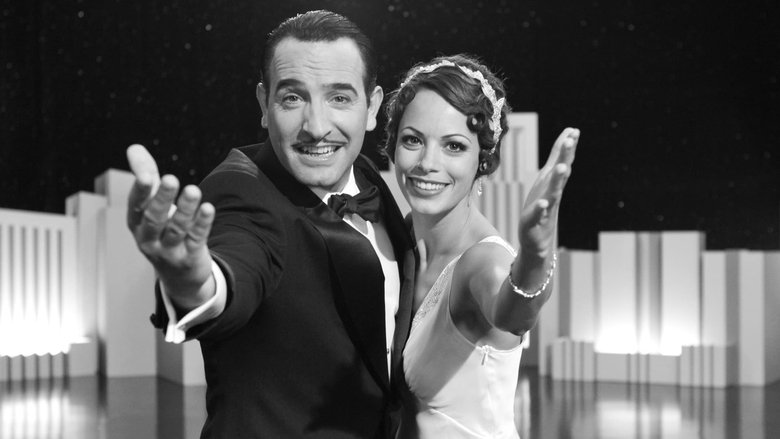
Intervening before he can pull the trigger, Peppy convinces George that their artistic futures lie together. Capitalizing on George's rhythmic physicality, she persuades studio head Al Zimmer to cast them in a joint musical. After completing a dazzling tap dance routine, the soundtrack captures their panting breaths, Zimmer calls cut, and George responds with the film's only spoken dialogue—uttering "With pleasure!" in an authentic French accent before Zimmer calls "Action!" to usher in the sound era.

Alternative Interpretations

Critics and scholars have read the historical shift from silent pictures to talkies as an allegorical reflection of contemporary digital disruptions, such as the obsolescence of celluloid film, the rise of streaming platforms over theaters, and the emergence of automated generative technologies in creative spaces.

Another common reading analyzes George's vocal silence as a shield for immigrant linguistic anxiety: his reluctance to speak reflects a fear of shattering his dashing persona with a heavy European accent. Additionally, commentators debate whether the film's joyous musical conclusion offers an uplifting celebration of Hollywood optimism or an evasive fairy-tale gloss over the tragic ruin experienced by historical silent film stars.

Explore More About This Movie

Dive deeper into specific aspects of the movie with our detailed analysis pages

Similar Movies