Isle of Dogs
"Loyalty has a scent. And it smells like rebellion."
Overview
Set in a dystopian near-future Japan, the city of Megasaki faces a canine flu outbreak. The authoritarian Mayor Kobayashi, hailing from a long line of cat-loving leaders, signs a decree banishing all dogs to Trash Island, a desolate wasteland of refuse. The first dog exiled is Spots, the loyal guardian of Atari Kobayashi, the mayor's 12-year-old orphaned ward.
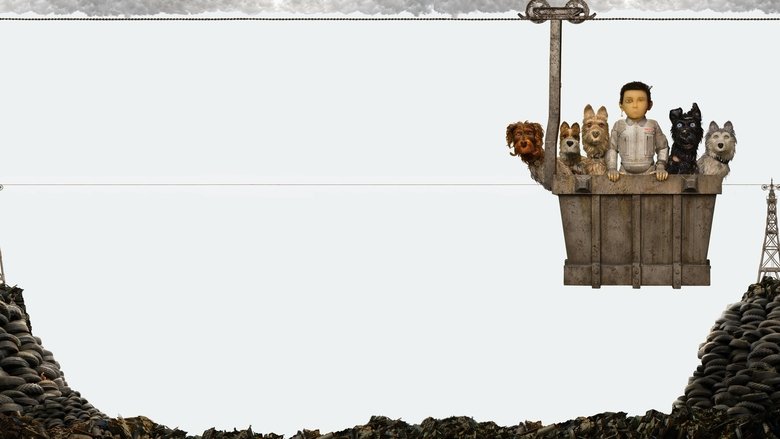
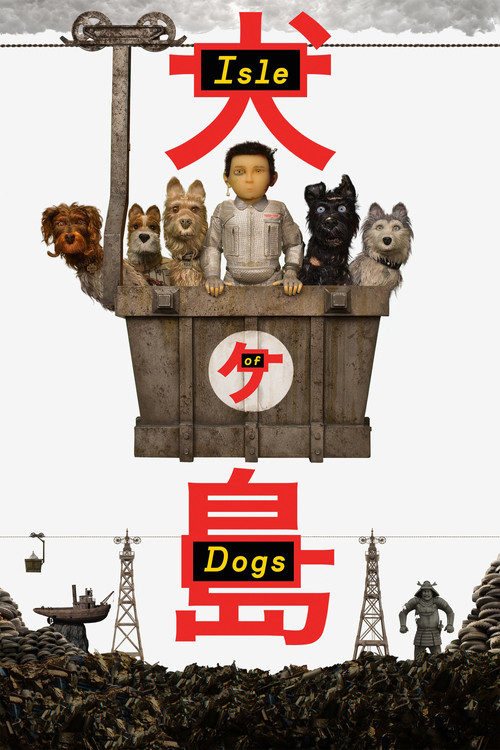
Six months later, Atari hijacks a small plane and flies to the island, determined to find his beloved friend. After crash-landing, he is discovered by a pack of alpha dogs: Rex, King, Duke, and Boss, all former pets, and their cynical, stray leader, Chief. While the others are sympathetic, Chief is distrustful of humans. Reluctantly, the pack agrees to help the young pilot on his perilous quest across the hazardous island, evading capture by Kobayashi's forces who have been sent to retrieve Atari.
Meanwhile, back in Megasaki, an American foreign exchange student and activist named Tracy Walker suspects a conspiracy behind the dog flu and the exile, leading her to investigate the corrupt mayor's administration. The dual journeys—Atari's physical quest for his dog and Tracy's investigation into political corruption—converge to expose a deep-seated plot against Megasaki's canine population.
Core Meaning
At its heart, Isle of Dogs is a powerful allegory about political corruption, propaganda, and the marginalization of entire populations. The film explores how fear can be manipulated by authoritarian leaders to scapegoat a specific group—in this case, dogs—for societal problems. Director Wes Anderson uses the story of a boy's unwavering loyalty to his pet to champion themes of resistance against tyranny, the importance of truth (as pursued by the student activists), and the unbreakable bond between humans and animals. The film ultimately posits that compassion, solidarity, and courage can overcome state-sponsored prejudice and injustice, leading to the restoration of a just and humane society.
Thematic DNA
Political Corruption and Propaganda
The central conflict is driven by Mayor Kobayashi's corrupt regime, which fabricates the dog flu crisis to consolidate power and fulfill an ancestral vendetta against dogs. He uses propaganda and fear-mongering to turn the public against a vulnerable population, exiling them to a toxic wasteland. This theme serves as a direct commentary on real-world political issues like xenophobia, the manufacturing of crises for political gain, and the suppression of science and truth, as seen when Professor Watanabe's cure is rejected and he is subsequently assassinated.
Loyalty and Friendship
The film's emotional core is the unwavering loyalty between Atari and his dog, Spots, which fuels the entire narrative. This theme extends to the pack of dogs who, despite their cynicism and hardship, ultimately choose to help Atari, forming a new kind of family. The most significant development is the bond formed between Atari and the stray, Chief, who learns to trust and love a human for the first time, illustrating the transformative power of interspecies companionship.
Exile and Marginalization
The dogs are portrayed as a marginalized group, scapegoated and banished from society. Trash Island itself is a powerful visual representation of this othering, a desolate place for the unwanted. The dogs' struggle for survival mirrors the plight of refugees and other ostracized communities. The film explores the psychological toll of being an outcast, from the former pets' nostalgia for their old lives to Chief's hardened cynicism born from a life as a stray.
Activism and Resistance
Resistance to Kobayashi's tyranny comes from the youth. Atari's personal quest is an act of defiance, while Tracy Walker and her fellow student journalists represent the power of investigative reporting and activism in uncovering the truth and mobilizing public opinion. Their collective actions demonstrate that even in the face of an authoritarian state, individuals and small groups can effect significant change.
Character Analysis
Chief
Bryan Cranston
Motivation
Initially motivated by survival and a deep-seated distrust of humans, his motivation shifts to protecting Atari. This change is prompted by a combination of the pack's democratic decision, his affection for Nutmeg, and Atari's unwavering kindness and loyalty.
Character Arc
Chief begins as a cynical, aggressive stray who is fiercely independent and distrustful of humans, proudly stating, "I bite." His experiences have taught him that masters are not to be trusted. Through his journey with Atari, he gradually opens up, forming a powerful bond with the boy. He rediscovers his capacity for loyalty and affection, culminating in him accepting Atari as his master and becoming his new bodyguard dog. His physical transformation, when washed reveals he is a rare breed like Spots, mirrors his internal change from a hardened stray to a loyal companion.
Atari Kobayashi
Koyu Rankin
Motivation
His primary motivation is his deep love and loyalty for his dog, Spots. This simple, pure goal drives him to undertake an incredibly dangerous journey and stand up to the most powerful figure in the city, his own uncle.
Character Arc
Atari starts as a determined but vulnerable 12-year-old on a singular mission to find his dog. As an orphan under the care of his corrupt uncle, his bond with Spots is his most important relationship. His journey across Trash Island is a coming-of-age story; he demonstrates immense courage, resourcefulness, and empathy. By the end of the film, he not only rescues his dog but inspires a revolution, overthrows a corrupt regime, and becomes the new mayor of Megasaki, transitioning from a lonely boy to a responsible and compassionate leader.
Mayor Kenji Kobayashi
Kunichi Nomura
Motivation
His motivation stems from a combination of political ambition and a historical family prejudice against dogs. He seeks to eliminate the canine population to fulfill his ancestors' wishes and secure his political control over Megasaki.
Character Arc
Mayor Kobayashi is presented as a ruthless, authoritarian villain, driven by a familial, cat-loving legacy and a thirst for power. He engineers the dog flu crisis and shows no remorse for exiling the dogs or assassinating his political rival. However, he undergoes a last-minute redemption. Moved by Atari's haiku and his nephew's loyalty, he has a change of heart, repeals his decree, and ultimately saves Atari's life by donating a kidney. His arc shows that even a hardened political figure can be moved by genuine emotion and familial connection, though it ends with him imprisoned for his crimes.
Tracy Walker
Greta Gerwig
Motivation
Motivated by a strong sense of justice and a belief in the truth, Tracy is determined to expose Mayor Kobayashi's corruption. She is driven to fight for the powerless (the dogs) and hold the powerful accountable.
Character Arc
Tracy is an American foreign exchange student who functions as the leader of the pro-dog resistance in Megasaki. She starts as a conspiracy theorist, convinced of the government's corruption. Her arc is one of validation; she follows her instincts, conducts a thorough investigation, and successfully uncovers the truth about the dog flu conspiracy. She transforms from a lone voice of dissent into the catalyst for the public's change of heart, proving her theories correct and helping to save the dogs.
Symbols & Motifs
Trash Island
Trash Island symbolizes exile, segregation, and the consequences of societal neglect. It is a literal dumping ground for what society deems undesirable—both its garbage and its dogs. It represents a ghetto or concentration camp, a place where a marginalized population is sent to be forgotten and left to perish.
The island is the primary setting for the dogs' story. Its landscape, composed of compressed garbage, toxic sludge, and abandoned structures, visually underscores the dogs' miserable existence and the cruelty of their banishment.
Untranslated Japanese Dialogue
The decision to leave most of the Japanese dialogue unsubtitled serves multiple purposes. For non-Japanese speaking audiences, it immerses them in the dogs' perspective, as they too cannot understand the humans. It also highlights the theme of communication and miscommunication, forcing the viewer to rely on context, tone, and visual cues, just as the characters do. This artistic choice became a central point in discussions about cultural appropriation.
Throughout the film, Atari speaks in Japanese without subtitles. His meaning is conveyed through his actions, the dogs' reactions, or occasional translations from an interpreter character, emphasizing the communication barrier and the emotional connection that transcends it.
Haiku
The haiku Atari recites near the film's climax—"Whatever happened to man's best friend? / Falling spring blossom"—symbolizes a return to empathy and tradition. It is a concise, powerful expression of loss and love that ultimately moves Mayor Kobayashi to have a change of heart, representing the idea that art and emotion can triumph over cold, calculated cruelty.
At the climax, Atari presents this poem to his uncle, Mayor Kobayashi, reminding him of the bond that once existed between humans and dogs. This emotional appeal succeeds where scientific proof and activist protests failed, triggering the story's resolution.
Memorable Quotes
I bite.
— Chief
Context:
Chief says this to Atari early in their encounter when the boy first attempts to show him affection by petting him. It establishes the initial conflict and emotional distance between the two central characters.
Meaning:
This is Chief's simple, recurring declaration of his identity as a stray. It's a warning, a defense mechanism, and a summary of his worldview shaped by a hard life. It signifies his resistance to being tamed or controlled by humans.
Will you help him, the little pilot?
— Nutmeg
Context:
Nutmeg asks Chief this after he has initially refused to help Atari find Spots. Her gentle persuasion, combined with Chief's attraction to her, plays a significant role in his decision to join the quest.
Meaning:
Nutmeg's question serves as a moral appeal to Chief. By framing Atari as a "little pilot" and reminding Chief that "dogs love those," she challenges his hardened cynicism and appeals to a more instinctual, compassionate canine nature. It's a key moment that pushes Chief toward his eventual alliance with Atari.
Whatever happened to man's best friend? Falling spring blossom.
— Atari Kobayashi
Context:
Atari recites this poem to Mayor Kobayashi during the public ceremony where the dogs are meant to be exterminated. The poem triggers the Mayor's change of heart and is the turning point that leads to the salvation of the dogs.
Meaning:
This haiku, delivered at the film's climax, encapsulates the central theme of lost loyalty and the beauty of the human-animal bond. It's an artistic and emotional appeal that transcends political rhetoric and scientific data, directly targeting Mayor Kobayashi's buried empathy and sense of honor.
Philosophical Questions
What defines 'personhood' and do non-human animals qualify?
The film deeply explores this question by giving the dogs complex inner lives, emotions, political structures (they vote on decisions), and distinct personalities. They are arguably more 'human' than the actual human villains. By blurring the lines between human and animal, the film challenges the anthropocentric view that personhood is exclusive to humans. It suggests that qualities like loyalty, grief, courage, and the capacity for friendship are the true markers of being a person, regardless of species.
How does language shape our perception of 'the other'?
By having the dogs speak English and the human Japanese characters speak their native language (often untranslated for the English-speaking audience), the film forces the viewer to identify with the non-human characters. It raises questions about empathy and perspective. Can we truly understand someone if we don't speak their language? The film suggests that emotional connection and shared experience can transcend linguistic barriers, as seen between Atari and Chief. At the same time, the controversial choice highlights how language can be used, intentionally or not, to marginalize and create distance.
What is the nature of loyalty in the face of tyranny?
The film presents loyalty as the highest virtue. Atari's loyalty to Spots is the catalyst for the entire plot. This personal loyalty becomes a form of political resistance. In a state that demands conformity and demonizes a segment of the population, Atari's simple, unwavering dedication to his friend is a radical act. The film questions whether loyalty should be to the state or to one's own moral compass and personal bonds.
Alternative Interpretations
The most significant alternative interpretation of Isle of Dogs revolves around the controversy of cultural appropriation versus cultural appreciation. While the mainstream reading sees a tale of loyalty and political allegory, a critical perspective views it as an example of Orientalism. In this interpretation, the film uses Japan as an exotic, aesthetic backdrop without deeply engaging with its culture or giving agency to its Japanese characters. The dogs, who speak English with American accents, are seen as the relatable protagonists, while the Japanese humans are rendered as "other," with their language often left untranslated.
Another point of contention is the role of Tracy Walker. She can be seen as a heroic activist fighting for justice. Alternatively, she is interpreted as a "white savior" figure, a trope where a white character rescues people of color from their own problems. This reading suggests that the film implies the Japanese pro-dog activists are incapable of saving the day without the leadership of a decisive American. However, some analyses counter this by pointing out that Tracy's direct efforts are ultimately thwarted by the Mayor, and the final victory is a more collaborative effort.
Finally, some have read the film through a Marxist lens, with the dogs representing a proletarian class, cast out by the capitalist, authoritarian Kobayashi regime. Their pack-like, democratic decision-making contrasts with Kobayashi's tyranny, and their eventual uprising represents a populist socialist victory.
Cultural Impact
Upon its release, Isle of Dogs was met with widespread critical acclaim for its stunning stop-motion animation, intricate world-building, and heartfelt story, earning two Academy Award nominations. However, the film also sparked a significant and complex cultural debate. Numerous critics and viewers raised concerns about cultural appropriation and Orientalism. The primary points of controversy included the film's depiction of Japan through the lens of a white American director, the use of untranslated Japanese dialogue which some felt marginalized the human characters, and the character of Tracy Walker, who was seen as a "white savior" archetype.
Proponents of the film, including director Wes Anderson himself, argued that the movie was a fantasy and an homage, a "re-imagining of Japan through my experience of Japanese cinema," specifically the works of Kurosawa and Miyazaki, rather than an attempt at a realistic depiction. Some Japanese critics and viewers found the linguistic choices to be an interesting artistic exploration of translation and perspective, rather than an act of dehumanization. The debate surrounding Isle of Dogs became a prominent case study in conversations about cultural representation in Western media, challenging audiences and creators to consider the nuances of artistic inspiration versus cultural appropriation. Despite the controversy, the film's unique aesthetic and poignant themes of loyalty and resistance against tyranny have cemented its place as a memorable and thought-provoking piece of modern animation.
Audience Reception
Audience reception for Isle of Dogs was largely positive, with viewers praising its stunning and meticulous stop-motion animation, unique visual style, and charming, quirky humor—all hallmarks of a Wes Anderson film. The heartfelt story of a boy's love for his dog and the compelling character arc of Chief resonated strongly with many. The all-star voice cast, particularly Bryan Cranston's performance as Chief, received significant acclaim.
However, the film was not without its critics among the general audience. The primary point of criticism mirrored the professional reviews, focusing on the accusations of cultural appropriation. Some viewers felt uncomfortable with the film's treatment of its Japanese setting and characters, finding it to be a superficial or stereotypical portrayal. The "white savior" trope associated with the character Tracy Walker was also a common point of contention. The untranslated Japanese dialogue was a divisive artistic choice; while some found it immersive and clever, others felt it was alienating and served to dehumanize the human characters. Overall, while most viewers enjoyed it as a visually inventive and emotionally engaging film, a vocal minority found its cultural representation problematic.
Interesting Facts
- The film was produced in East London, only about three miles from the actual Isle of Dogs, a peninsula on the River Thames.
- The fur of the dog puppets was made from alpaca wool to give it a unique, scruffy texture.
- The title "Isle of Dogs," when said aloud, sounds like "I love dogs."
- Wes Anderson was inspired to make the film by his love for Japanese cinema, particularly the works of Akira Kurosawa and Hayao Miyazaki, as well as classic Rankin/Bass stop-motion holiday specials.
- This is Wes Anderson's second feature-length stop-motion animated film, the first being *Fantastic Mr. Fox* (2009).
- A fundraising competition was held where a donor to Martin Scorsese's The Film Foundation could win a trip to the set and a voice role as one of the dogs.
- Actress Greta Gerwig, who voices Tracy Walker, also voiced her character in the French-dubbed version of the film, as she is fluent in French.
- There's a running gag in Wes Anderson's films where dogs often meet unfortunate ends; this film is seen by some as his "apology to dog lovers."
Easter Eggs
Homages to Akira Kurosawa
The film is filled with visual and thematic references to the films of legendary Japanese director Akira Kurosawa. The compositions of certain shots, the use of drums in the score, and the story elements of warring clans are direct nods. For example, the film's poster design mimics posters for Kurosawa's films, and some scenes are framed to resemble shots from movies like Seven Samurai and High and Low.
Toho Studios Logo Reference
A mountain on Trash Island is named "Toho Mountain." This is a direct reference to Toho Studios, the iconic Japanese film studio famous for producing the Godzilla films and many of Akira Kurosawa's masterpieces. This acknowledges the film's debt to the history of Japanese cinema.
Yoko Ono Cameo
Yoko Ono voices the character of Assistant Scientist Yoko Ono. This is a meta-cameo where the famous artist and activist plays a character named after herself, adding a layer of Anderson's signature quirkiness.
⚠️ Spoiler Analysis
Click to reveal detailed analysis with spoilers
Frequently Asked Questions
Explore More About This Movie
Dive deeper into specific aspects of the movie with our detailed analysis pages
Comments (0)
No comments yet. Be the first to share your thoughts!