Skip to content
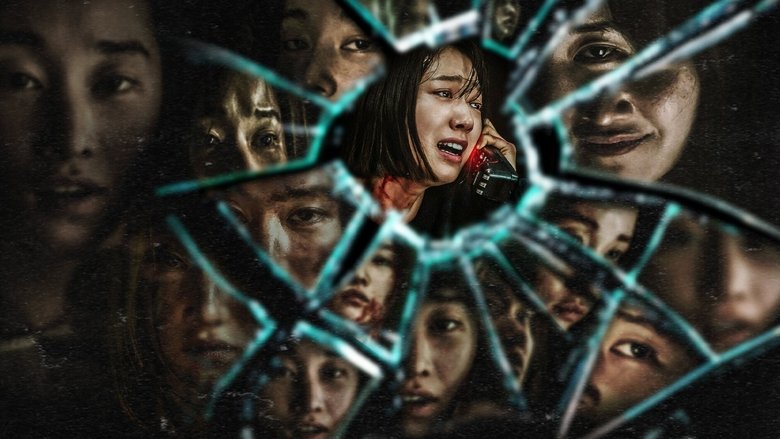
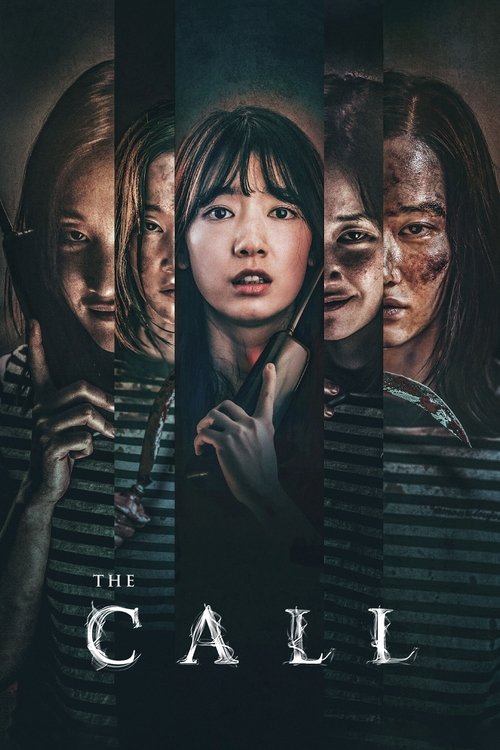
The Call
A suffocating temporal nightmare where dread and frantic desperation collide, capturing the terrifying realization that rewriting the ashes of yesterday only fuels a predatory inferno waiting to consume the present.
The Call

The Call

"A call from a serial killer... She'll begin to hunt your past."

23 November 2020 South Korea 112 min 7.5 (1,014)

Director: Lee Chung-hyun

Cast: Park Shin-hye, Jeon Jong-seo, Kim Sung-ryung, Lee El, Park Ho-san

Thriller Mystery Science Fiction The Butterfly Effect & Temporal Consequences Unprocessed Grief, Guilt, and Maternal Trauma Psychopathy vs. Vulnerability (Duality of Human Nature) Isolation and Desperation for Connection

Overview

The Call (Korean: 콜, Kol) is a South Korean psychological thriller and science fiction horror film directed by Lee Chung-hyun. The narrative follows Kim Seo-yeon, a young woman who returns to her childhood family home in a quiet rural village to visit her ailing, estranged mother. After misplacing her smartphone on a train, Seo-yeon plugs in an antiquated cordless landline phone tucked away in the house. Almost immediately, she begins receiving frantic, distressed calls from a woman named Oh Young-sook, who claims she is being held captive and abused by her adoptive shaman mother.

As the conversations unfold, Seo-yeon makes the shocking discovery that Young-sook is living in the exact same house, but twenty years in the past, in the year 1999. Bound by shared feelings of isolation and complicated family wounds, the two women forge an improbable bond across time. When Young-sook discovers she can alter past events that tragic incident in Seo-yeon’s life, their cross-era collaboration initially brings miraculous relief.

However, as alterations in the 1999 timeline trigger volatile, ripple-effect transformations in the present day, Seo-yeon realizes that intervening in the past comes with catastrophic collateral damage. The supernatural telephone connection shifts from an avenue of salvation into a high-stakes cat-and-mouse duel across decades, where every word spoken and every choice made threatens Seo-yeon's existence.
Core Meaning

Director Lee Chung-hyun crafts an allegory about the catastrophic danger of unbridled regret, escapism, and the ethical perils of tampering with consequence. The film demonstrates that trauma and grief cannot simply be excised through retroactive shortcuts without giving rise to worse horrors. Through the interplay between Seo-yeon and Young-sook, the film warns that running from personal accountability and manipulating history to satisfy desires disrupts the delicate moral and temporal fabric of reality, turning unearned fortune into a living curse.

Thematic DNA

The Butterfly Effect & Temporal Consequences 40%
Unprocessed Grief, Guilt, and Maternal Trauma 25%
Psychopathy vs. Vulnerability (Duality of Human Nature) 20%
Isolation and Desperation for Connection 15%

The Butterfly Effect & Temporal Consequences

The core mechanical and narrative theme is how minor alterations in past causality cascade into radical, uncontrollable shifts in present reality. The film illustrates that tampering with history creates an irreversible vortex where every "fix" causes collateral tragedy.

Unprocessed Grief, Guilt, and Maternal Trauma

Both female leads are defined by their fraught, damaged bonds with their maternal figures. Seo-yeon projects deep-seated resentment onto her mother for past tragedy, while Young-sook is abused by a mother figure practicing shamanistic exorcisms. The struggle to process familial resentment drives every catastrophic choice in the film.

Psychopathy vs. Vulnerability (Duality of Human Nature)

The two central characters mirror each other. What initially appears to be two vulnerable, mistreated girls seeking empathy morphs into a stark contrast between a flawed human being (Seo-yeon) and an untethered, predatory psychopath (Young-sook) given absolute leverage.

Isolation and Desperation for Connection

The catalyst of the entire conflict is deep emotional loneliness. Cut off from emotional support systems, both women latch onto an impossible, disembodied voice on the telephone line, showing how isolation blinds individuals to existential danger.

Character Analysis

Kim Seo-yeon

Park Shin-hye

Archetype: Tragic Protagonist / Imperfect Hero Key Trait: Emotionally reactive, persistent, yet prone to self-deception

Motivation

To rescue her family, preserve her reclaimed reality, and eliminate the monster she inadvertently freed.

Character Arc

Begins as a bitter, grieving young woman weighed down by past resentment towards her mother; after experiencing an illusory idyllic life, she is forced into a fight for survival, ultimately recognizing her mother's unconditional love.

Oh Young-sook

Jeon Jong-seo

Archetype: Psychopathic Antihero turned Monstrous Antagonist Key Trait: Unpredictable volatility, explosive rage, and manipulative cunning

Motivation

Self-preservation, unrestrained autonomy, and domination over the future timeline.

Character Arc

Starts as an abused, seemingly helpless young woman in 1999; once freed from her stepmother's control, she sheds all restraint and evolves into a serial killer empowered by future knowledge.

All 4 characters and cast

Symbols & Motifs

The Cordless Landline Telephone

Meaning:

The temporal umbilical cord connecting 1999 and 2019, symbolizing the fragile line between communication, manipulation, and doom.

Context:

Found tucked away in the family home; when connected, it bridges calls across a twenty-year temporal gap between the two protagonists.

The Domestic Freezer / Refrigerator

Meaning:

Reflects the icy coldness of death and the hidden rot concealed beneath domestic facades.

Context:

Utilized in 1999 by Young-sook as a domestic storage unit to hide butcher bags and the dismembered remains of her murder victims.

Seo-yeon’s Burn Scars

Meaning:

Visual markers of shifting causality and the immediate, permanent scarring power of unresolved past trauma.

Context:

Manifest in real-time on adult Seo-yeon's body in 2019 while Young-sook tortures the child version of Seo-yeon with boiling water in 1999.

Seo Taiji and Boys Cassette Tape

Meaning:

Represents Young-sook's stunted development, her rebellion against her repressive stepmother, and a desperate yearning for contemporary youth culture.

Context:

Listened to obsessively by Young-sook in 1999 as her primary cultural escape from captivity.

The Shaman Knife and Talismans

Meaning:

Symbolize traditional fatalism and foresight; ironically, the sacred instruments intended to purge evil become the very weapons that unleash it.

Context:

Used by Young-sook’s shaman stepmother during rituals and attempted exorcisms to ward off malevolent destiny.

Memorable Quotes

이런 사소한 거 하나로 사람 인생이 바뀐다니까.
— Oh Young-sook

Context

Spoken casually to Seo-yeon when realizing how altering past events causes immediate changes in the present.

Meaning

Highlights the terrifying realization that past actions directly rewrite future reality, establishing the volatile power balance between the protagonists.

거기 지금 몇 년도죠?
— Kim Seo-yeon

Context

Spoken into the landline when Seo-yeon first connects the bizarre clues and realizes she is communicating across a 20-year time gap.

Meaning

Marks the discovery of the supernatural temporal rupture that connects the two distinct timelines.

All 4 quotes

Philosophical Questions

Is the human urge to erase grief inherently self-destructive?

The narrative suggests pain and loss are essential to human reality; trying to erase past tragedy unnaturally destroys moral equilibrium.

Does absolute knowledge of the future corrupt human empathy?

Once Young-sook gains knowledge of her arrest and fate, she sheds all humanity and becomes purely Machiavellian.

Can fate and nature be altered, or are some destinies immutable?

Despite all temporal permutations, Young-sook remains a killer and Seo-yeon remains trapped by trauma, questioning whether free will can overcome inherent nature.

Alternative Interpretations

The film invites several distinct narrative and thematic readings:

Full ending explanation

Cultural Impact

The Call arrived during a major renaissance for South Korean genre filmmaking on global streaming platforms. Building on the global attention garnered by Bong Joon-ho's Parasite (2019) and Yeon Sang-ho's Train to Busan (2016), the film proved that mid-budget Korean thrillers could attain international critical acclaim without theatrical distribution.

The film subverted traditional Korean thriller formulas—frequently dominated by male detectives, gangsters, and revengers—by anchoring a high-concept sci-fi thriller entirely around four distinct female lead archetypes. It also cemented Jeon Jong-seo's reputation as one of the most electric performers of Korean modern cinema following her breakout in Burning (2018).

Audience Reception

The Call received highly positive reviews, achieving an estimated 80–85% approval rating. Critics and general audiences universally lauded Jeon Jong-seo's electrifying, unhinged villainous performance, the seamless visual world-building, and Dalpalan’s pulsating musical score. The escalating tension, dynamic visual transitions, and relentless female-led structure were singled out as major achievements.

Minor criticisms focused on temporal paradoxes and logic inconsistencies typical of time-travel mechanics (such as the timing of how memories and physical objects alter in real time). Additionally, the bleak mid-credits stinger generated polarizing debate between viewers who admired its uncompromised nihilism and those who felt it undermined the hard-won emotional climax.

Interesting Facts

  • Director Lee Chung-hyun made his feature-length directorial debut with The Call at the age of 30, having previously gained industry acclaim for his award-winning 14-minute single-take short film Bargain (2015).
  • The movie is adapted from the 2011 British-Puerto Rican supernatural thriller The Caller (directed by Matthew Parkhill), expanding the antagonist's role from a disembodied voice into a fully visualized co-lead.
  • While shooting phone conversations, Park Shin-hye and Jeon Jong-seo stood behind the camera on each other’s shoot days to deliver their dialogue live off-camera, allowing genuine emotional chemistry.
  • The heated phone arguments filled with profanity were largely improvised by Park Shin-hye and Jeon Jong-seo to reflect authentic psychological rage.
  • Following the production of The Call, director Lee Chung-hyun and lead actress Jeon Jong-seo entered a relationship and later re-teamed on the 2023 Netflix film Ballerina.
  • For her chilling portrayal of Young-sook, Jeon Jong-seo won Best Actress (Film) at the 57th Baeksang Arts Awards (2021) and the 30th Buil Film Awards (2021).
  • Originally scheduled for a South Korean theatrical run in March 2020, its cinema debut was scrapped due to the COVID-19 pandemic, leading to a worldwide Netflix release in November 2020.

Easter Eggs

Seo Taiji's Cultural Marker

Young-sook’s devotion to Seo Taiji grounds her era in 1999, capturing the height of South Korea's late-90s musical and youth rebellion counterculture.

Transformative Architecture

Set decorator details and paint tones in the house dynamically alter in background shots whenever the timeline shifts, serving as subtle spatial indicators before characters consciously notice them.

Korean Shamanism (Muism)

The stepmother’s rituals, talismans, and bell-shaking reference authentic Korean Gut ceremonies performed to ward off malevolent spirits (gwisil) and cleanse corrupted souls.

Cinematic Homage to Carrie

Young-sook’s confinement and abuse under the guise of religious/spiritual purification directly echo Stephen King’s Carrie, setting up a monstrous explosion of violence once the suppressed figure breaks free.

Frequently Asked Questions

Explore More About This Movie

Dive deeper into specific aspects of the movie with our detailed analysis pages

Comments (0)

Leave a comment

No comments yet. Be the first to share your thoughts!

Similar Movies