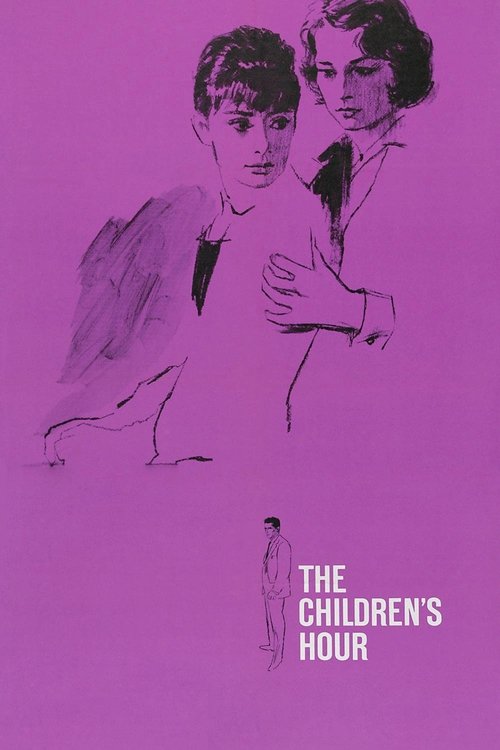
The Children's Hour
"Can an ugly rumor destroy what's beautiful?"
Overview
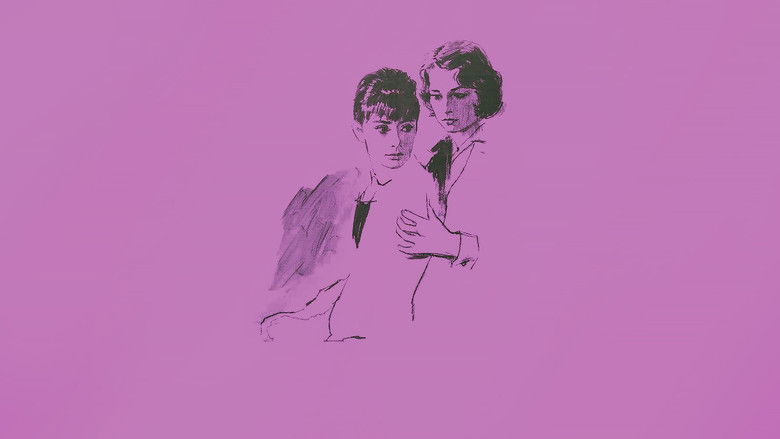
The Children's Hour (1961), directed by William Wyler, follows Karen Wright and Martha Dobie, two long-time friends who have finally established a successful private boarding school for girls. Their hard-earned stability is suddenly threatened when Karen announces her engagement to Dr. Joe Cardin, a development that leaves Martha inexplicably agitated and sparks underlying tensions within the school's idyllic walls.
The true inciting incident occurs when Mary Tilford, a malicious and manipulative student, is punished for her deceitful behavior. In ruthless retaliation, Mary concocts a scandalous lie, accusing the two headmistresses of being in an "unnatural" relationship. She whispers this ruinous rumor to her wealthy and influential grandmother, who immediately begins pulling students from the school and rallying the conservative community against the women.
As the devastating rumor spreads like wildfire, Karen and Martha are completely ostracized, losing their school, a subsequent libel lawsuit, and their reputations. The film masterfully builds a claustrophobic atmosphere as the two women are trapped in their empty school, forced to confront not only the hostility of the outside world but also the deeply repressed truths hiding within themselves.
Core Meaning
William Wyler and playwright Lillian Hellman use the destructive power of a child's lie to expose the terrifying fragility of reputation and the brutal intolerance of society. The film's core message is an uncompromising indictment of homophobia, moral panic, and the ease with which communities destroy lives based on unfounded rumors. It critiques how society's rigid moral codes and prejudices force individuals into tragic self-hatred, demonstrating that in an intolerant world, the mere accusation of difference can be a death sentence.
Thematic DNA
The Destructive Power of Rumor and Gossip
This theme is the narrative engine of the film, revealed through Mary's fabricated lie and how her grandmother weaponizes it. The film demonstrates how quickly society accepts scandalous gossip without proof, allowing a whispered untruth to systematically dismantle careers, relationships, and human lives.
Internalized Homophobia and Shame
Revealed primarily through Martha's tragic character arc. When the false accusation forces her to examine her own feelings, she realizes she actually harbors a romantic love for Karen. Conditioned by the prejudices of the 1960s, Martha internalizes the town's hatred, calling herself "sick and dirty" and ultimately taking her own life out of unbearable shame.
Societal Intolerance and Moral Panic
This theme is depicted through the silent, swift, and unforgiving reaction of the townspeople. Parents withdraw their children without offering the women a chance to defend themselves, and the community treats Karen and Martha as contagious pariahs, illustrating the cruelty of herd mentality and moral panic.
The Loss of Childhood Innocence
The film aggressively subverts the trope of the "innocent child." Through the characters of Mary and the girls she manipulates, the film shows that children are fully capable of malice, psychological manipulation, blackmail, and destroying adult lives to serve their own selfish ends.
Character Analysis
Martha Dobie
Shirley MacLaine
Motivation
Initially, to protect her school and her exclusive bond with Karen; ultimately, to punish herself for her newfound truth and to "free" Karen from her taint.
Character Arc
Martha transforms from a devoted, slightly overbearing friend into a woman shattered by public scrutiny. The accusation forces her to realize her repressed lesbian identity, and unable to live with the self-hatred instilled by her society, she commits suicide.
Karen Wright
Audrey Hepburn
Motivation
To clear her name, protect her best friend, and salvage the life she worked so hard to build.
Character Arc
Karen goes from a confident, engaged woman to a socially ruined pariah. She remains fiercely loyal to Martha, but by the end of the film, she is left completely alone, having lost her school, her fiancé, and her best friend.
Mary Tilford
Karen Balkin
Motivation
Spite, a desire for control over her peers, and revenge against authority figures who attempt to discipline her.
Character Arc
Mary remains unrepentant and malicious throughout the narrative. She successfully destroys her teachers' lives merely to avoid a minor punishment, showing no genuine remorse for the devastation she causes.
Dr. Joe Cardin
James Garner
Motivation
To protect Karen, maintain his sense of justice, and salvage their impending marriage.
Character Arc
Joe tries to stand by Karen and Martha, defending them against his own aunt. However, his lingering, subconscious doubts cause Karen to end their engagement, leaving him helpless.
Amelia Tilford
Fay Bainter
Motivation
To protect her granddaughter and aggressively uphold the town's strict moral purity.
Character Arc
Amelia acts as the moral arbiter of the town, destroying the women with righteous conviction. She is eventually broken when she discovers her granddaughter's lie, leading to a futile, too-late apology.
Symbols & Motifs
The Whispered Lie
It symbolizes the insidious, unspoken nature of taboo subjects (like homosexuality) in mid-century society. The fact that the accusation is whispered reflects society's refusal to even say the words aloud.
Used most prominently when Mary whispers the scandalous rumor into her grandmother's ear; the audience never hears the exact words, yet the devastating impact is immediately clear.
The Empty School
The school symbolizes the isolation, social exile, and emotional purgatory of the two women. Once a place of growth and future, it turns into a tomb.
After the parents withdraw all the students, Karen and Martha are left wandering the large, silent halls, visually representing how society has completely abandoned them.
The Stolen Bracelet
It symbolizes hidden guilt and the infectious nature of deceit. It shows how the fear of exposure breeds even more lies and manipulation.
Mary uses her knowledge of Rosalie's theft to blackmail her into corroborating the devastating lie against the teachers, binding the two girls in a web of shared guilt.
Martha's Locked Door
The locked door represents the final, insurmountable barrier between Martha's agonizing internal truth and the judgmental outside world.
It appears in the film's climax when Karen tries to reach Martha. The door separates Karen's platonic loyalty from Martha's fatal despair, culminating in Martha's suicide behind it.
Memorable Quotes
I've been telling myself that since the night I heard the child say it... But I know about it now. It's there. I don't know how, I don't know why. But I did love you! I do love you!
— Martha Dobie
Context:
Spoken to Karen when the two women are alone in the empty school after losing their libel suit and their livelihoods.
Meaning:
This is the heartbreaking climax where Martha finally confesses her repressed feelings, realizing that the child's malicious lie actually contained a psychological truth she had hidden from herself.
Oh, I feel so damn sick and dirty I can't stand it anymore!
— Martha Dobie
Context:
Part of Martha's emotional breakdown right before she retreats to her room to commit suicide.
Meaning:
A raw reflection of the intense internalized homophobia and shame dictated by the society of the era, showing how the world's hatred has poisoned Martha's view of her own soul.
You're guilty of nothing!
— Karen Wright
Context:
Karen's immediate, frantic reaction to Martha confessing her romantic love and feeling of guilt.
Meaning:
Demonstrates Karen's desperate attempt to absolve her friend and maintain their platonic bond. It shows her enduring loyalty, but also her tragic inability to fully grasp the depth of Martha's internal torment.
Tomorrow? That's a funny word. Karen, we would have had to invent a new language, as children do, without words like tomorrow.
— Martha Dobie
Context:
Spoken after Karen tries to comfort a distraught Martha by telling her they will forget all of this by "tomorrow."
Meaning:
Shows Martha's utter hopelessness and absolute realization that they have no future, foreshadowing her imminent decision to end her life.
Philosophical Questions
Can a lie become the truth if society collectively believes it?
The film explores how an entirely fabricated rumor, weaponized by a child, fundamentally alters reality. Even though Mary lied, the social consequences become very real, destroying careers and lives, and ironically forcing Martha to confront a truth she had successfully hidden even from herself.
Are children inherently innocent?
By portraying young girls capable of extortion, psychological manipulation, and life-ruining malice, the film actively challenges the philosophical assumption of childhood purity, suggesting that cruelty and deceit are human traits that exist long before adulthood.
What is the true cost of societal conformity?
The film asks what happens when a society aggressively enforces rigid moral codes. It reveals that the cost is the psychological destruction of individuals who do not fit the mold, as Martha internalizes the town's disgust until she feels "sick and dirty" enough to take her own life.
Alternative Interpretations
While the surface text frames Martha's realization of her lesbianism as the tragedy that breaks her, alternative readings offer different perspectives. Some feminist critics argue that the film is fundamentally about the terrifying power of patriarchy and censorship. In this reading, the women's school is a matriarchal utopia that is systematically destroyed by patriarchal forces—represented by the intrusive fathers pulling their children out, the male judges, and Dr. Cardin's ultimate lack of faith. Another popular interpretation focuses on Karen's sexuality; while she claims to only love Joe, her quick forgiveness of Martha's jealousy, her tender physical gestures, and her ultimate rejection of Joe suggest that Karen might also harbor repressed romantic feelings for Martha, making her final isolation even more tragic. Finally, some audiences read Martha's suicide not merely as a surrender to internalized homophobia, but as a final, desperate act of self-sacrifice to permanently protect Karen from being associated with her "tainted" identity.
Cultural Impact
The Children's Hour (1961) stands as a landmark film in queer cinema history, marking one of the first times a mainstream Hollywood studio directly tackled the subject of lesbianism. Released as the restrictive Hays Code was beginning to fracture, the film dared to restore the original LGBTQ+ themes of Lillian Hellman's 1934 play—themes that director William Wyler had been forced to completely erase in his 1936 adaptation. While contemporary critics were divided, the film's cultural legacy is profound. For decades, it served as a primary example of the "tragic queer" trope, wherein homosexuality was inevitably linked with suffering, shame, and death in media. However, modern feminist and queer theorists often analyze the film as a vital document of mid-century repression and the "Lavender Scare," arguing that the true villain of the piece is the terrifyingly intolerant society rather than the characters' sexuality. Despite its inherently tragic conclusion, the film cracked the door open for more explicit explorations of sexuality in American cinema and remains a potent, chilling condemnation of moral panic and bigotry.
Audience Reception
Audiences and critics in 1961 were largely polarized by The Children's Hour. Many praised the powerful, understated performances of Audrey Hepburn and the raw emotional intensity of Shirley MacLaine, as well as the film's exquisite, high-contrast black-and-white cinematography. The film was recognized as a brave endeavor for tackling taboo subjects during a highly conservative era. However, a major point of criticism was the film's pacing and tone, which some found too stagy and melodramatic, resembling its theatrical origins a bit too closely. Controversially, many modern audiences criticize the film for perpetuating the "bury your gays" trope, feeling frustrated by Martha's intense self-loathing and inevitable suicide. Despite this, the overall verdict is that it remains a deeply moving, beautifully crafted, and historically significant piece of cinema that captures the brutal realities of mid-century prejudice.
Interesting Facts
- Director William Wyler previously adapted the same Lillian Hellman play in 1936 under the title 'These Three', but due to the strict Hays Code, all lesbian themes had to be erased and replaced with a heterosexual love triangle.
- Miriam Hopkins, who plays Martha's eccentric Aunt Lily in the 1961 film, actually played the lead role of Martha in Wyler's 1936 adaptation 'These Three'.
- Shirley MacLaine revealed in the 1996 documentary 'The Celluloid Closet' that she and Audrey Hepburn never explicitly discussed their characters' alleged homosexuality during the film's production, reflecting the era's deep discomfort with the subject.
- Lillian Hellman's original 1934 play was inspired by the true story of two Scottish school headmistresses in 1809 whose lives were ruined by a student's rumor.
- William Wyler reportedly cut several scenes that hinted more strongly at Martha's homosexuality out of fear that the film would not receive the seal of approval from the Motion Picture Production Code.
Easter Eggs
Miriam Hopkins' Casting
Casting Miriam Hopkins as Aunt Lily is a brilliant meta-reference to the 1936 film These Three, where Hopkins played the lead role of Martha. It serves as a bridge between Wyler's two distinct adaptations of the same play and highlights the evolution of Hollywood censorship.
The Concept of the Forbidden Book
While the film subtly implies the girls were passing around a scandalous book, Lillian Hellman's play specifically identifies it as Mademoiselle de Maupin, an 1835 French novel featuring lesbian themes. This hidden detail explains exactly how the young Mary conceived of the concept of a same-sex relationship to use as her weapon.
⚠️ Spoiler Analysis
Click to reveal detailed analysis with spoilers
Frequently Asked Questions
Explore More About This Movie
Dive deeper into specific aspects of the movie with our detailed analysis pages
Comments (0)
No comments yet. Be the first to share your thoughts!