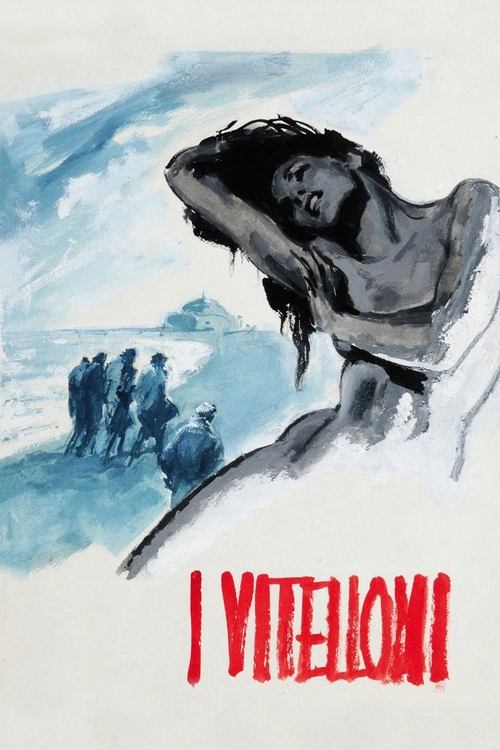
I Vitelloni
A melancholic yet comic portrait of overgrown boys adrift in a coastal town, capturing the bittersweet paralysis of youth and the quiet courage required to board the midnight train toward adulthood.
I Vitelloni

I Vitelloni

I vitelloni

"We are the hollow men in this last of meeting places we grope together and avoid speech. Gathered on this beach of the torrid river."

17 September 1953 France 103 min ⭐ 7.6 (726)
Director: Federico Fellini
Cast: Franco Interlenghi, Alberto Sordi, Franco Fabrizi, Leopoldo Trieste, Riccardo Fellini
Drama Comedy
Arrested Development and Immaturity The Ennui of Small-Town Life Masculinity and Machismo The Desire for Escape

Overview

Federico Fellini's I Vitelloni (1953) is a cornerstone of Italian cinema that serves as a bridge between the Neorealist movement and the director's later stylized masterpieces. The film introduces us to five inseparable friends in their late twenties and early thirties—Fausto, Alberto, Leopoldo, Riccardo, and Moraldo—who live in a sleepy provincial town on the Adriatic coast.

Dubbed 'vitelloni' (literally 'large calves' or 'overgrown boys'), these men spend their days wandering the desolate winter beaches, chasing women, avoiding work, and dreaming of a more glamorous life they never actively pursue. The plot loosely chronicles a year in their lives, focusing on the charismatic but wildly irresponsible Fausto's forced marriage to Moraldo's sister Sandra, Alberto's pathetic dependence on his mother and sister, and Leopoldo's dashed artistic aspirations.

Through episodic, tragicomic vignettes, Fellini explores the deep-seated ennui and arrested development of his protagonists. While four of the men remain paralyzed by their own immaturity and the comforting stagnation of their hometown, the quiet and observant Moraldo (often seen as Fellini's cinematic alter-ego) slowly realizes that to truly live, he must break free from the protective, yet suffocating, net of his friends and family.

Core Meaning

The central meaning of I Vitelloni revolves around the universal, bittersweet transition from adolescence to adulthood—a moment when one must choose whether to grow up or remain a child forever. Fellini uses his semi-autobiographical experiences to critique post-war Italian masculinity and the stifling comfort of provincial life. The film ultimately suggests that true maturity requires taking a terrifying leap into the unknown, leaving behind the safety of home, familial dependence, and the illusions of perpetual youth.

Thematic DNA

Arrested Development and Immaturity 30%
The Ennui of Small-Town Life 30%
Masculinity and Machismo 20%
The Desire for Escape 20%

Arrested Development and Immaturity

Revealed through the men's dependence on their parents, their refusal to work, and Fausto's constant evasion of marital responsibilities [1.1]. The 'vitelloni' are physically grown but behave like idle teenagers, showcasing a societal paralysis.

The Ennui of Small-Town Life

The predictable rhythms, limited opportunities, and desolate coastal winters create a microcosm of stagnation that traps the characters. The town itself acts as a comfortable but suffocating cage.

Masculinity and Machismo

Fellini critiques traditional post-war Italian masculinity by portraying these men as swaggering but ultimately cowardly and dependent on the women they exploit or mock. Fausto's womanizing masks his profound immaturity.

The Desire for Escape

Manifested in the characters' endless talk of moving to the city, which only Moraldo eventually acts upon. This theme symbolizes the tension between comfortable inertia and the frightening growth required to leave home.

Character Analysis

Fausto

FrancoFabrizi

Archetype: Antihero/TheScoundrel
Key Trait: Charismatic but cowardly

Motivation

Self-gratification and avoidance of consequence.

Character Arc

ForcedtomarrySandraafterimpregnatingher, hecontinuallycheatsandavoidsresponsibilityuntilhisfatherpubliclybeatshim, forcingamomentarysubmissiontodomesticlife[1.1].

Alberto

Alberto Sordi

Archetype: The Fool
Key Trait: Immature and dramatic

Motivation

Maintaining his comfortable, carefree existence without working.

Character Arc

A dramatic mama's boy who mocks working people but is financially supported by his sister; he is devastated when she finally elopes, leaving him to face reality.

Leopoldo

Leopoldo Trieste

Archetype: The Dreamer
Key Trait: Pretentious but naive

Motivation

Literary fame and artistic validation.

Character Arc

An aspiring playwright who views himself as the town's resident intellectual, but whose dreams are shattered when a visiting actor he idolizes turns out to be a predator.

Moraldo

Franco Interlenghi

Archetype: The Observer / Alter-Ego
Key Trait: Reflective and compassionate

Motivation

Seeking a deeper meaning to life beyond the town's borders.

Character Arc

He spends the film quietly observing his friends' failures and his sister's heartbreak. He is the only one who undergoes true character development, finally finding the courage to leave town.

Symbols & Motifs

Vitelloni(TheCalves)

Meaning:

Thetitletranslatesto'bigveals'orovergrowncalves, symbolizingthephysicalmaturityofthemencontrastingwiththeirchildishdependenceontheirparents[1.2].

Context:

Reflected in their lazy behavior, endless wandering, and reliance on their families for money and shelter throughout the film.

The Ocean / Desolate Beach

Meaning:

Represents the boundaries of their world, the emptiness of their lives, and their unfulfilled longings.

Context:

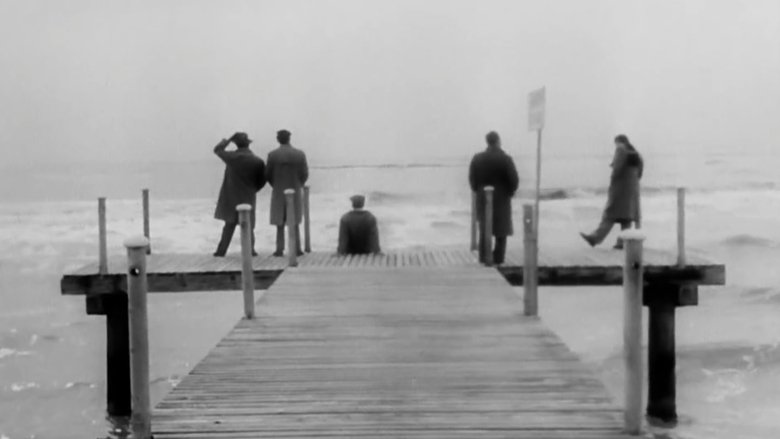
The iconic wide shots of the men wandering aimlessly along the winter seashore, staring out into the distance.

The Train

Meaning:

A vehicle for actualization, escape, and the inevitable passage of time.

Context:

Heard in the distance during Moraldo's sleepless nights, and ultimately boarded by him at the film's climax to leave the town for the city.

The Carnival / Masquerade

Meaning:

The illusion of joy and the fleeting nature of youth and distraction, masking deep inner melancholy.

Context:

During the party where Alberto cross-dresses, the euphoric celebration eventually gives way to a depressing, hungover morning.

Memorable Quotes

Wealltalkedaboutleaving, butonlyoneofus, onemorning, withoutawordtoasoul, actuallyleft.

— TheNarrator

Context:

Spoken at the end of the film as Moraldo departs on the train.

Meaning:

Summarizesthetragedyofthevitelloni—theyaremenofemptywords, andonlyactionbreaksthecycle[2.5].

You're nobody. Everybody here is nobody.

— Alberto

Context:

Spoken by Alberto, drunk and in drag, to Moraldo after the town's yearly carnival party.

Meaning:

A rare moment of drunken self-awareness where the illusion of their grandiosity falls away, revealing their profound emptiness.

What else is there for us to do? Another day has come to an end. Nothing left but to go home, just as on every night.

— The Narrator

Context:

Spoken over scenes of the men aimlessly wandering the streets at night.

Meaning:

Highlights the crushing, cyclical boredom and lack of purpose in their provincial lives.

Philosophical Questions

Isitbettertolivecomfortablyinillusionorfacetheharshrealityofindependence?

Thefilmcontraststheagonizingcomfortofthevitelloni, whoareprotectedbytheirfamiliesbutspirituallydead, withMoraldo'sterrifyingleapintotheunknown, askingwhethersecurityisworththepriceofone'ssoul[1.1].

Can one truly outgrow their origins without abandoning those they love?

Moraldo loves his friends and sister deeply, but realizes that staying to support them means sacrificing his own future. The film questions the moral cost of self-actualization.

Alternative Interpretations

While the film is widely accepted as a straightforward critique of arrested development, alternative interpretations focus heavily on the ambiguity of the ending. Some critics argue that Moraldo's departure is not a triumph of maturity, but rather another impulsive, childish act, as he boards the train with no money, no plan, and no clear destination. In this reading, he is merely running away from his problems rather than growing up.

Another sociological interpretation views the 'vitelloni' not as personal failures, but as victims of post-fascist Italy. Having grown up under Mussolini's regime and entering adulthood in a devastated post-war economy, these young men found themselves in a historical vacuum—robbed of the grand destinies promised by fascist propaganda and left with no clear role in the new society.

Cultural Impact

I Vitelloni marked a significant turning point in Italian cinema, serving as a transitional bridge between the gritty realism of the post-war Neorealist movement and Federico Fellini's signature style of subjective, poetic surrealism. Earning the Silver Lion at the 1953 Venice Film Festival and an Academy Award nomination for Best Original Screenplay, the film established Fellini as a major international auteur.

Its cultural influence is vast, practically inventing the 'slacker' subgenre and the cinematic portrayal of male arrested development. The film's blueprint of aimless youths in a provincial town directly inspired George Lucas's American Graffiti (1973) and Barry Levinson's Diner (1982). Most notably, Martin Scorsese has frequently cited I Vitelloni as a profound influence on his masterpiece Mean Streets (1973), drawing heavily on Fellini's empathetic but critical depiction of local camaraderie, machismo, and the desperation to escape one's hometown.

Audience Reception

I Vitelloni was Fellini's first major commercial and critical success, resonating deeply with audiences who recognized the universal tragedy of wasted youth and small-town stagnation. Critics consistently praise the film for its balance of biting satire and profound empathy; Fellini judges his characters' flaws but never stops loving them.

Audiences often highlight the film's melancholic humor and the brilliant ensemble acting, particularly Alberto Sordi's tragicomic performance. While some contemporary viewers might find the episodic narrative loose or the treatment of women by the male characters frustrating, this misogyny is widely understood as the exact object of Fellini's critique—exposing the toxic, hollow core of machismo. Overall, it remains revered as a perfectly crafted, emotionally resonant coming-of-age story.

Interesting Facts

  • The film was nominated for an Academy Award for Best Original Screenplay (shared by Fellini, Ennio Flaiano, and Tullio Pinelli) [1.3].
  • Legendary filmmaker Martin Scorsese cited I Vitelloni as a pivotal inspiration for his 1973 film Mean Streets, recognizing the same small-town dynamics and male camaraderie.
  • The character of Riccardo is played by Federico Fellini's actual brother, Riccardo Fellini.
  • The film was shot on location in Italian towns such as Ostia and Viterbo to evoke the feeling of Fellini's own hometown of Rimini.
  • The title translates to 'the veal calves,' a colloquialism for overgrown, idle young men who live off their parents.

Easter Eggs

TheyoungstationboynamedGuido

MoraldobefriendsayoungrailwayworkernamedGuido.FelliniwouldlaterusethenameGuidoforhisfamousalter-egodirectorprotagonist(playedbyMarcelloMastroianni)inhis1963masterpiece[1.4].

Moraldo's departure mirrors Fellini's life

Moraldo's journey to the big city directly parallels Fellini's own biographical departure from Rimini to Rome to pursue his career.

⚠️ Spoiler Analysis

Click to reveal detailed analysis with spoilers

Frequently Asked Questions

Explore More About This Movie

Dive deeper into specific aspects of the movie with our detailed analysis pages

Comments (0)

Leave a comment

No comments yet. Be the first to share your thoughts!