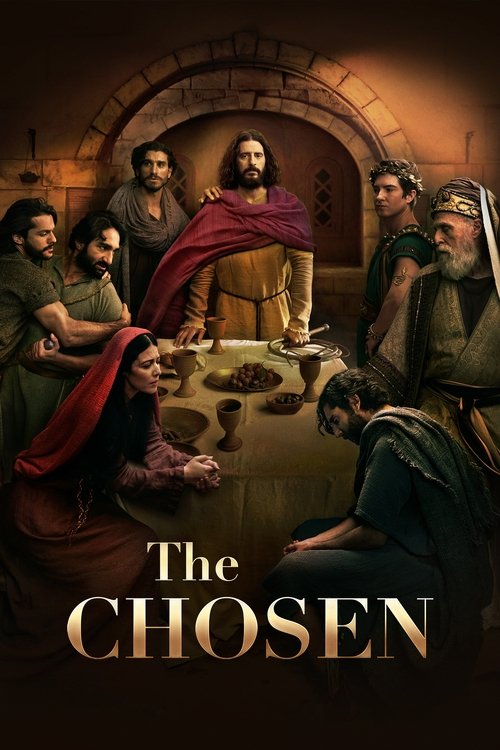
The Chosen
"Rise up."
Overview
The Chosen offers a groundbreaking, multi-season depiction of the life of Jesus of Nazareth, uniquely told through the eyes of those who knew him. Set against the backdrop of 1st-century Galilee under Roman oppression, the series begins not with Jesus's birth, but with the messy, complicated lives of the people he will soon call to follow him. We meet Simon, a charismatic fisherman drowning in debt; Mary Magdalene, a woman wrestling with literal and figurative demons; Matthew, a brilliant but ostracized tax collector; and Nicodemus, a respected Pharisee whose faith is shaken to its core.
As the seasons unfold, the series charts Jesus's burgeoning public ministry, from his first miracles like turning water into wine at Cana to monumental events like the Sermon on the Mount and the feeding of the five thousand. The narrative focuses deeply on the formation of his group of disciples, exploring their personal sacrifices, doubts, and burgeoning faith. It masterfully builds the backstories of these individuals, transforming them from names in scripture into relatable, flawed, and compelling human beings. The story arc shows the growing fame and the increasing tension it creates with both Roman and religious authorities, setting the stage for the inevitable, world-altering confrontation in Jerusalem.
Core Meaning
The core meaning of The Chosen is to present an authentic, relatable, and human portrait of Jesus and his followers, stripping away the stained-glass formality of previous depictions. The creators aimed to explore the life of Christ through a more "personal, intimate, [and] immediate" lens, focusing on the transformative power of a personal encounter with the divine. At its heart, the series is about the concept of being 'chosen' — that ordinary, flawed, and broken people are called by God to be part of an extraordinary mission. It emphasizes that this calling is not about achieving perfection, but about responding to grace. Through the detailed backstories and interpersonal dynamics of the disciples, the show conveys a central message: the gospel story is not just a grand, epic tale, but a collection of intimate, life-altering relationships.
Thematic DNA
The Humanity of the Divine and the Flaws of the Faithful
The series consistently portrays Jesus with a profound sense of humanity, including a sense of humor, moments of weariness, and deep, personal friendships. This approach makes him more accessible than traditional, stoic portrayals. Complementing this is a deep dive into the flaws of his disciples: Simon's impulsiveness and debt, Matthew's social alienation, Mary's past trauma, and the group's frequent squabbles and misunderstandings. This theme underscores that faith is not for the perfect, but is a messy, transformative journey for real people.
Personal Transformation and Redemption
Nearly every major character arc is a story of redemption. Mary Magdalene's healing in the first episode sets the tone, moving from demon-possessed outcast to a devoted follower. Simon the fisherman becomes Peter the rock. Matthew the reviled tax collector becomes a chronicler of the gospel. The series emphasizes that an encounter with Jesus results in a profound internal change, summed up by Mary's line: "I was one way and now I am completely different. And the thing that happened in between was Him."
Community and Conflict
While Jesus calls individuals, he immediately forms them into a community. A major focus across the seasons is the dynamic within this group. The show explores the friction between former rivals, like Simon Peter and the tax collector Matthew, and the logistical and interpersonal challenges of their shared mission. It portrays the disciples not as a monolithic, harmonious group, but as a found family learning to live and work together, their unity forged through shared experience and Jesus's guidance.
Insider vs. Outsider
The Chosen repeatedly highlights Jesus's focus on those on the margins of society. He dines with tax collectors, calls fishermen, heals lepers, and engages in a deep theological conversation with a Samaritan woman—all actions that defy the social and religious norms of the time. This theme challenges the established religious authorities like the Pharisees, creating a central conflict between the established, rule-based system and Jesus's radical, relationship-based ministry.
Character Analysis
Jesus of Nazareth
Jonathan Roumie
Motivation
To fulfill the will of his Father by seeking and saving the lost. His motivation is divine love, expressed through teaching, healing, and calling people into a new way of life. He is driven to build a community of followers who will carry his message to the world.
Character Arc
Jesus's arc is not one of personal change, but of escalating public ministry and the increasing weight of his mission. He begins quietly, working as a craftsman and performing small, private miracles. As he calls his disciples, his work becomes more public, drawing massive crowds and the attention of authorities. Across the seasons, the series shows him balancing his divine knowledge with genuine human emotion—joy, sorrow, frustration, and compassion. His journey is one of revealing his identity to the world and preparing his followers for his eventual departure, with the tone shifting from hope and wonder in early seasons to one of urgency and impending sorrow in Season 4.
Simon Peter
Shahar Isaac
Motivation
Initially, his motivation is survival and protecting his family. After meeting Jesus, his core motivation becomes a fierce, if often flawed, devotion to his teacher. He desperately wants to please Jesus and be a leader, but must learn that true leadership comes from trust and humility, not just strength.
Character Arc
Simon begins as a brash, debt-ridden fisherman, working with the Romans behind his partners' backs to save his family. His first encounter with Jesus and the miraculous catch of fish is a moment of profound repentance. Throughout the series, his arc is a struggle between his impulsive, passionate nature and the steady faith Jesus calls him to. He often acts as the group's de facto leader but frequently stumbles, questions, and acts out of fear or anger. His journey is one of being molded from an unstable man into "Peter," the rock, a process marked by significant failures and powerful moments of faith, culminating in his confession of Jesus as the Messiah.
Mary Magdalene
Elizabeth Tabish
Motivation
Profound gratitude and love for the man who saved her. Having been brought from utter darkness into light, her motivation is to stay close to Jesus and support his ministry in any way she can. She is a constant reminder of the transformative power of his call.
Character Arc
The series begins with her story. Known as "Lilith," she is tormented by demons and lives as an outcast in the Red Quarter of Capernaum. Her dramatic healing by Jesus in the first episode is her foundational moment. Her arc is one of moving from a place of deep trauma and shame to becoming a steadfast, perceptive, and vital member of Jesus's inner circle. She is often shown as being more spiritually attuned than the male disciples and serves as a source of quiet strength and support within the group, having been the first to experience Jesus's profound redemptive power.
Matthew
Paras Patel
Motivation
A deep desire for order, truth, and understanding. He is driven to document what he sees and comprehend the man who accepted him when no one else would. His motivation evolves from seeking logical explanations to faithfully recording the story he is a part of.
Character Arc
Matthew is introduced as a tax collector, a pariah to his fellow Jews, and is portrayed as being on the autism spectrum. He is methodical, logical, and initially struggles to reconcile the miracles he sees with reality. His arc is a journey from isolation to community. After Jesus calls him, he must learn to navigate social interactions and find his place among people who despise his former profession, particularly Simon Peter. Over time, he uses his unique observational skills and meticulous nature to become the group's chronicler, documenting their journey and finding acceptance and purpose within a community he never thought would welcome him.
Symbols & Motifs
Fish
Symbolizes both the disciples' humble origins and their new calling. The fish is a literal part of their livelihood but is transformed by Jesus into a metaphor for their mission.
Central to Simon Peter and Andrew's introduction as struggling fishermen. The miraculous catch of fish in Season 1, Episode 4 is the turning point that solidifies their decision to follow Jesus. Jesus's line, "Follow Me, and I will make you fishers of men," is a foundational moment for the entire series. The fish also appears in the miracle of the feeding of the five thousand.
Water
Represents multiple concepts: chaos and peril (the stormy sea), miraculous provision (water into wine), and spiritual cleansing or rebirth (the encounter at Jacob's Well).
In Season 1, Jesus turns water into wine at the wedding in Cana. Simon's near-drowning and the miraculous catch of fish happen on the Sea of Galilee. Jesus's conversation with the Samaritan woman at Jacob's Well revolves around the metaphor of "living water." In Season 3, the climax involves Jesus walking on water during a storm, directly confronting the disciples' fear of chaos.
The Shabbat Dinner
Symbolizes community, rest, and the sacredness of relationships. It serves as a recurring setting for key character interactions and revelations.
Season 1, Episode 2, is titled "Shabbat" and establishes the importance of this tradition. Mary Magdalene hosts a Shabbat dinner where the disciples gather, revealing their personalities and beginning to form bonds. It's in this intimate setting that they move from being a collection of individuals to a community.
Memorable Quotes
I was one way and now I'm completely different. And the thing that happened in between... was Him.
— Mary Magdalene
Context:
Season 1, Episode 2 ("Shabbat"). Mary is explaining her miraculous healing to a bewildered Nicodemus, who had previously failed to exorcise her demons.
Meaning:
This quote encapsulates the series' central theme of transformation. Mary says this to Nicodemus, perfectly summarizing the profound and inexplicable change that an encounter with Jesus brings, beyond any religious ritual or human aid.
Get used to different.
— Jesus
Context:
Said multiple times throughout the series, notably in Season 1 when Jesus calls Matthew the tax collector, shocking Simon Peter and the others. It serves as Jesus's simple explanation for his radical and unconventional actions.
Meaning:
This becomes a recurring tagline for the series. It signifies that Jesus's methods, teachings, and choice of followers will consistently defy expectations and challenge the established religious and social norms. It's a call for his disciples and the audience to abandon preconceived notions.
Jesus, if you do not renounce your words, we will have no choice but to follow the law of Moses... [Jesus replies] I am the law of Moses.
— A Synagogue Leader and Jesus
Context:
Season 3, Episode 3 ("Physician, Heal Yourself"). Jesus is confronted in the synagogue of his hometown, Nazareth, after reading from the scroll of Isaiah and applying the prophecy to himself.
Meaning:
A stunning and direct claim of divinity. In this moment, Jesus moves beyond being a teacher or healer and explicitly declares himself the fulfillment and embodiment of all that his Jewish listeners hold sacred, creating a major turning point and escalating the conflict with the authorities.
When you were in your lowest moment, and you were alone, I did not turn My face from you. I saw you, under the fig tree.
— Jesus
Context:
Season 2, Episode 2 ("I Saw You"). Jesus says this to a skeptical Nathanael upon their first meeting. Philip had just brought Nathanael, who was despairing alone under a fig tree after a professional failure.
Meaning:
This quote demonstrates Jesus's divine omniscience and his intimate, personal knowledge of each individual's struggles. It's a powerful moment of being seen and known, breaking through Nathanael's cynicism and leading to his declaration of faith.
Episode Highlights
I Have Called You By Name
This episode is significant for establishing the show's unique focus on the backstories of those Jesus encountered. It centers on Mary Magdalene's trauma and demonic possession, Simon and Andrew's financial desperation, and Matthew's isolation as a tax collector. Jesus only appears at the very end, making his arrival incredibly powerful.
It sets the narrative tone for the entire series: this is a story about broken people whom Jesus comes to heal and call. Mary's healing is the first major transformative event and serves as the emotional anchor for the beginning of Jesus's ministry.
The Wedding Gift
Jesus and his new followers attend a wedding in Cana where the wine runs out, a major social catastrophe. At his mother's urging, Jesus performs his first public miracle, turning massive stone jars of water into the finest wine.
This episode marks the beginning of Jesus's public ministry. It showcases his compassion for ordinary human problems and establishes his authority over the natural world, solidifying the faith of his first disciples and setting him on a path of public renown.
I Am He
Traveling through Samaria, a region despised by Jews, Jesus stops at Jacob's Well and strikes up a conversation with a Samaritan woman who is an outcast in her own community. He reveals her past and offers her "living water."
This is the first time in the series that Jesus explicitly reveals his identity as the Messiah. His deliberate crossing of cultural and gender boundaries to engage with the Samaritan woman demonstrates the radical inclusivity of his ministry, and her subsequent testimony launches his ministry in a non-Jewish region.
Beyond Mountains
The disciples prepare for the Sermon on the Mount, with Matthew using his organizational skills to help structure the teachings. The episode builds to the beginning of the most famous sermon in history, showing the immense preparation and anticipation.
This episode is a culmination of the first two seasons of teaching. It's a pivotal moment where Jesus's core teachings are delivered to a massive crowd, establishing the ethical and spiritual foundation of his movement and solidifying his status as a major public figure.
Sustenance
Faced with a crowd of over five thousand hungry people in a desolate place, the disciples are at a loss. Jesus takes their meager offering of a few loaves and fish and miraculously multiplies it to feed everyone, with baskets of leftovers. The episode also deals with the aftermath of Simon and Eden's miscarriage.
This is one of Jesus's most spectacular miracles, demonstrating his power to provide on an epic scale. It solidifies his popularity with the masses but also deepens the disciples' understanding of who he is, while grounding the supernatural event in the raw, human grief of Simon and Eden's loss.
Humble
The season finale deals with the aftermath of Jesus raising Lazarus from the dead. This ultimate miracle removes any remaining doubt for his followers but solidifies the determination of the religious authorities to kill him. The episode ends with Jesus's final approach to Jerusalem for the Passover, setting the stage for Holy Week.
This episode marks the point of no return. The raising of Lazarus is the final sign that forces the hand of Jesus's enemies, directly leading to the events of the Passion. It's a dramatic pivot from a ministry of public miracles to the final, somber journey to the cross.
Philosophical Questions
What is the nature of faith when miracles are not granted?
The series explores this most poignantly through the character of Little James, whose actor has a real-life physical disability. James follows Jesus, witnesses countless healings, and is even sent out to heal others, yet he himself is not healed. In Season 3, he directly asks Jesus why. Jesus's response delves into the idea that faith is not transactional and that one's suffering can serve a higher purpose, allowing them to connect with and minister to others in a way that someone who hasn't suffered cannot. This challenges the simplistic view that faith always results in physical deliverance.
How does divine calling interact with personal life and trauma?
The Chosen repeatedly examines the immense personal cost of following Jesus. Simon Peter must leave his wife, Eden, and his livelihood, creating tension in his marriage, especially when they suffer a miscarriage while he is away. Matthew is forced to reconcile with his estranged parents. Mary Magdalene must constantly live with the memory of her past trauma. The series suggests that a divine calling does not erase personal history or responsibilities but rather redeems them, forcing the characters to navigate the complex intersection of their past lives and their new mission.
Can flawed, ordinary people truly be agents of divine change?
This is a central question of the entire series. The disciples are not scholars or saints; they are fishermen, a tax collector, a caterer, and a zealot. They are riddled with doubt, ambition, and prejudice. They argue amongst themselves and misunderstand Jesus's teachings constantly. Yet, Jesus entrusts them with his world-changing mission. The show explores the idea that God doesn't choose the qualified; he qualifies the chosen. Their journey shows that divine work is carried out through imperfect human vessels, whose strength is found not in their own abilities but in their reliance on him.
Alternative Interpretations
While widely praised, The Chosen has prompted various interpretations and theological discussions, particularly regarding its use of artistic license.
- A Humanized or Diminished Jesus?: The show's portrayal of Jesus with a sense of humor, who gets tired, and who practices his sermons has been celebrated by many for making him relatable. However, some critics argue this emphasis on his humanity occasionally risks diminishing the communication of his divinity. They question whether a 'relatable' Jesus undercuts the awe and mystery inherent in the Gospel accounts.
- Biblical Fiction vs. Scriptural Authority: The series opens with a disclaimer acknowledging the addition of backstories and condensed timelines to support the "truth and intention of the Scriptures." This approach, known as 'biblical fiction,' is a point of debate. Supporters see it as a powerful tool to engage viewers and encourage them to read the Gospels. A more critical interpretation is that by creating non-biblical scenes and dialogue, the show risks elevating its fictional narrative to the level of scripture in the minds of some viewers, potentially causing confusion about what is and isn't in the Bible.
- Ecumenical Bridge or Theological Compromise?: The show's broad appeal across different Christian denominations is a key part of its impact. This is achieved by focusing on the Gospel stories that unite Christians. However, this has led to questions about its theological underpinnings. The involvement of people from various faith backgrounds in its production and distribution (including a partnership with Angel Studios, whose founders are Latter-day Saints) has led some conservative evangelical groups to scrutinize the project for potential theological compromise, despite the creative control remaining with creator Dallas Jenkins, an evangelical Christian.
Cultural Impact
The Chosen has had a profound cultural impact, primarily by revolutionizing faith-based media production and distribution. Its record-shattering crowdfunding success demonstrated a viable alternative to the traditional Hollywood studio system, proving that a dedicated audience is willing to directly finance content they believe in. This was followed by an equally disruptive distribution model: making the entire series available for free on its own app, a move that massively broadened its global reach, with hundreds of millions of views in over 180 countries and translations into more than 50 languages.
Critically, the show achieved a level of quality and narrative depth often perceived as lacking in the faith-based genre, earning praise from both religious and secular audiences for its authentic characters and high production values. It created a new standard for biblical adaptations by focusing on the humanity of the characters, giving them plausible backstories and relatable struggles. This approach has fostered a significant ecumenical appeal, resonating with viewers across Catholic, Protestant, and Evangelical denominations. The series has spawned a massive fan community, complete with conventions (ChosenCon), merchandise, and Bible studies, becoming a significant touchpoint in modern Christian pop culture. Its legacy is a paradigm shift in how religious stories can be funded, produced, and shared globally, empowering creators to bypass traditional gatekeepers and connect directly with their audience.
Audience Reception
Audience reception for The Chosen has been overwhelmingly positive, making it a global phenomenon largely through word-of-mouth and social media buzz. It holds exceptionally high audience scores on platforms like Rotten Tomatoes (99%) and IMDb (9.3/10 as of late 2024), indicating widespread acclaim.
Viewers universally praise the show's humanizing portrayal of biblical figures. The character-driven approach, which gives depth and relatable flaws to the disciples and even Jesus, is the most frequently cited strength. Audiences appreciate the authentic feel, quality acting, and high production value, which they often contrast favorably with other faith-based media. The show's emotional impact is another key point of praise, with many viewers noting that it has deepened their personal faith and encouraged them to engage with the Gospels in a new way.
Criticism from the general audience is minimal but tends to focus on a few areas. Some viewers find the pacing slow at times, particularly in seasons that focus heavily on the disciples' interpersonal conflicts. The primary point of contention, however, comes from theological circles and centers on the use of artistic license. Debates exist over whether the added, non-scriptural backstories and dialogue are helpful elaborations or distracting deviations from the biblical text. Despite these critiques, the vast majority of the audience has embraced the series as a powerful and moving depiction of the life of Christ.
Interesting Facts
- The series is the #1 highest crowd-funded media project of all time, raising over $10 million for its first season from more than 19,000 people. It has continued to be funded through a "Pay It Forward" model where viewers can contribute to fund future seasons for others to watch for free.
- Creator Dallas Jenkins was at a career low point after a feature film flopped in 2017. He then produced a short film for his church's Christmas Eve service, "The Shepherd," which became the pilot for The Chosen and revived his career.
- It is the first-ever multi-season series about the life of Jesus. The plan is for a seven-season run.
- Actor Jordan Walker Ross, who plays Little James, has scoliosis and minor cerebral palsy, which causes him to walk with a limp. Instead of hiding it, the show's creators incorporated his real-life disability into his character's story, exploring themes of healing and faith when one isn't physically healed.
- To ensure theological and historical accuracy, Jenkins and the writers consult with a panel of experts, including a Messianic Jewish rabbi, an evangelical professor, and a Catholic priest.
- The production built a 30,000-square-foot soundstage and a recreation of first-century Capernaum in Midlothian, Texas, which serves as its primary filming location.
⚠️ Spoiler Analysis
Click to reveal detailed analysis with spoilers
Frequently Asked Questions
Explore More About This Movie
Dive deeper into specific aspects of the movie with our detailed analysis pages
Comments (0)
No comments yet. Be the first to share your thoughts!