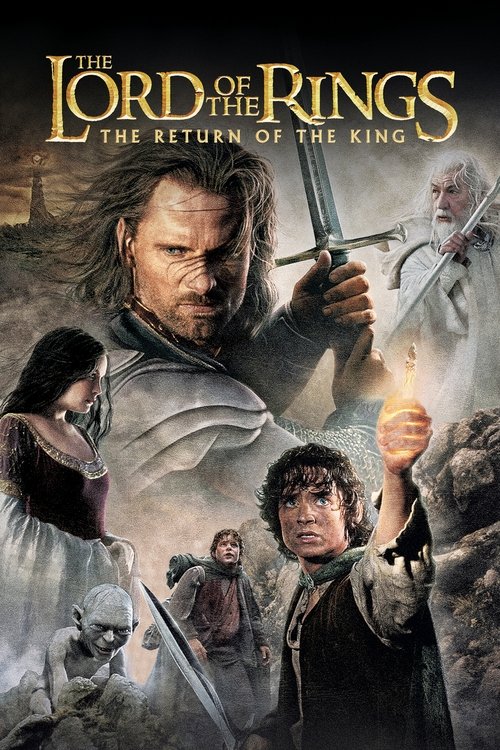
The Lord of the Rings: The Return of the King
An epic fantasy crescendo of heart-wrenching sacrifice and triumphant hope, painted on a canvas of spectacular battles and intimate friendships.
The Lord of the Rings: The Return of the King

The Lord of the Rings: The Return of the King

"There can be no triumph without loss. No victory without suffering. No freedom without sacrifice."

17 December 2003 New Zealand 201 min ⭐ 8.5 (25,497)
Director: Peter Jackson
Cast: Elijah Wood, Ian McKellen, Viggo Mortensen, Sean Astin, Andy Serkis
Fantasy Action Adventure
Good vs. Evil Sacrifice and Redemption Friendship and Loyalty The Corrupting Nature of Power
Budget: $94,000,000
Box Office: $1,118,888,979

Overview

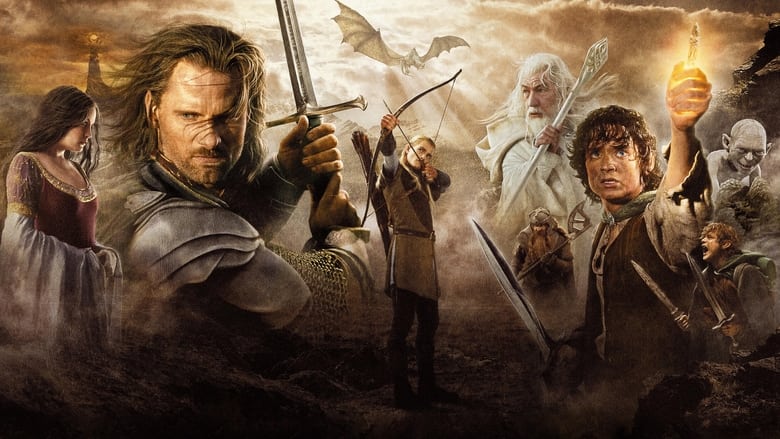
The Lord of the Rings: The Return of the King is the epic conclusion to Peter Jackson's monumental trilogy. The film follows the final stages of the War of the Ring, as the scattered members of the Fellowship of the Ring play their parts in the ultimate confrontation with the Dark Lord Sauron. While Aragorn, the heir to the throne of Gondor, embraces his destiny and leads the armies of Men in a desperate battle against Sauron's forces to distract the Dark Lord, the hobbits Frodo and Sam continue their perilous journey into the heart of Mordor to destroy the One Ring.

Guided by the treacherous Gollum, Frodo and Sam face immense physical and psychological challenges, including betrayal, starvation, and the corrupting influence of the Ring itself. Their friendship is tested to its limits as they navigate the desolate landscapes of Mordor and evade Sauron's watchful eye. Meanwhile, the remaining members of the Fellowship, including Gandalf, Legolas, and Gimli, rally the forces of good for a final, cataclysmic battle at the Black Gate, hoping to give Frodo the chance he needs to complete his quest.

The film culminates in a multi-layered climax, interweaving the epic siege of Minas Tirith, Aragorn's confrontation with the armies of Mordor, and Frodo and Sam's final, desperate struggle at Mount Doom. It is a story of immense courage, the enduring power of hope, and the idea that even the smallest person can change the course of the future.
Core Meaning

The core meaning of The Lord of the Rings: The Return of the King revolves around the idea that hope, friendship, and individual courage can triumph over overwhelming evil. Director Peter Jackson, staying true to J.R.R. Tolkien's vision, emphasizes that the fight against darkness is not won by military might alone, but by the resilience of the spirit and the selfless acts of ordinary individuals. The film carries a powerful message about the corrupting nature of power, symbolized by the One Ring, and the immense personal sacrifice required to overcome it. It suggests that true heroism lies not in grand gestures, but in the quiet determination to do what is right, even in the face of despair. Ultimately, the film is a celebration of the enduring power of good and the idea that even in the darkest of times, there is always hope for a new dawn.

Thematic DNA

Good vs. Evil 35%
Sacrifice and Redemption 30%
Friendship and Loyalty 25%
The Corrupting Nature of Power 10%

Good vs. Evil

The theme of good versus evil is central to the film, portraying a classic struggle between the forces of light and darkness. Sauron and his armies of Orcs represent a malevolent force seeking to dominate and enslave Middle-earth, while the Fellowship and their allies embody courage, love, and the will to fight for freedom. The film explores the idea that this is not just an external battle, but an internal one as well, as characters like Frodo and Boromir grapple with the temptation of the Ring's power.

Sacrifice and Redemption

Sacrifice is a recurring and powerful theme, with numerous characters giving up their personal desires, and in some cases their lives, for the greater good. Frodo's journey is the ultimate act of self-sacrifice as he endures immense suffering to destroy the Ring. The theme of redemption is also explored, particularly through the characters of Gollum and Boromir's brother, Faramir, suggesting that even those who have fallen can find a path to atonement.

Friendship and Loyalty

The unwavering bond between Frodo and Sam is the emotional core of the film. Sam's loyalty and determination to protect Frodo, even when all hope seems lost, is a powerful testament to the strength of their friendship. The film suggests that it is these personal connections and the willingness to support one another that ultimately enable the characters to overcome the forces of evil. The fellowship between Legolas and Gimli, and the loyalty of the Rohirrim to Gondor also highlight the importance of unity and camaraderie.

The Corrupting Nature of Power

The One Ring serves as a potent symbol of the corrupting influence of power. The film delves into how the desire for the Ring can twist and destroy individuals, as seen in the tragic story of Sméagol's transformation into Gollum. Frodo's own struggle with the Ring's growing influence on him, and his ultimate inability to destroy it himself, underscores the idea that absolute power is a burden too great for any one person to bear.

Character Analysis

Aragorn

Viggo Mortensen

Archetype: The Reluctant Hero/The Returned King
Key Trait: Noble and Resolute

Motivation

Aragorn is motivated by his love for Arwen, his duty to his people, and his desire to protect his friends and all of Middle-earth from Sauron's tyranny. He is driven by a sense of responsibility to his lineage and the future of the world of Men.

Character Arc

Aragorn's arc in The Return of the King is the culmination of his journey from a hesitant ranger to a decisive and noble king. He fully embraces his destiny, overcoming his self-doubt and the fear of repeating his ancestor Isildur's failure. He leads the forces of good with courage and wisdom, ultimately accepting the mantle of leadership and restoring the throne of Gondor.

Frodo Baggins

Elijah Wood

Archetype: The Martyr/The Everyman Hero
Key Trait: Resilient and Self-sacrificing

Motivation

Frodo's primary motivation is to destroy the One Ring and save the Shire and the rest of Middle-earth from Sauron. He is driven by a sense of duty and the knowledge that he is the only one who can complete this perilous quest.

Character Arc

Frodo's arc is one of immense suffering and ultimate sacrifice. The burden of the Ring weighs heavily on him, both physically and spiritually, leading to his gradual deterioration. While he shows incredible resilience and determination, he ultimately succumbs to the Ring's power at the precipice of Mount Doom, highlighting the overwhelming nature of its evil. His journey is a testament to the idea that even in failure, the struggle itself can be heroic.

Samwise Gamgee

Sean Astin

Archetype: The Loyal Companion/The Unsung Hero
Key Trait: Loyal and Courageous

Motivation

Sam's motivation is his deep and abiding love and loyalty for Frodo. He is driven by a promise to Gandalf to protect his master, and his simple, good-hearted nature fuels his determination to see the quest through to the end.

Character Arc

Sam's arc is one of growth from a simple gardener into a true hero. His unwavering loyalty, courage, and optimism are instrumental in the success of the quest. He repeatedly saves Frodo from despair and danger, and his willingness to carry Frodo up Mount Doom is a defining moment of heroism. Many consider Sam to be the true hero of the story.

Gandalf the White

Ian McKellen

Archetype: The Mentor/The Wise Old Man
Key Trait: Wise and Powerful

Motivation

Gandalf's motivation is to aid the free peoples of Middle-earth in their fight against Sauron. As an Istari, he was sent to guide and inspire, not to dominate. He is driven by a deep understanding of the stakes and a commitment to preserving the good in the world.

Character Arc

As Gandalf the White, his power and wisdom are at their peak. He serves as a beacon of hope and a strategic leader for the forces of good. His arc is less about personal transformation and more about fulfilling his divine purpose in Middle-earth. He rallies the armies of Men, confronts the Witch-king, and provides crucial guidance and reassurance in the face of overwhelming odds.

Gollum/Sméagol

Andy Serkis

Archetype: The Shadow Self/The Tragic Villain
Key Trait: Obsessed and Tragic

Motivation

Gollum's sole motivation is to reclaim the One Ring, which he calls 'my Precious.' This obsession consumes him, driving all of his actions and leading him to betray Frodo and Sam.

Character Arc

Gollum's arc is a tragic exploration of addiction and the duality of good and evil. The film masterfully portrays the internal conflict between his two personalities: the wretched, Ring-obsessed Gollum and the pitiable, long-lost Sméagol. Ultimately, his obsession with the Ring leads to his demise, but in a twist of fate, his final act of treachery is what leads to the Ring's destruction.

Symbols & Motifs

The One Ring

Meaning:

The One Ring symbolizes absolute power and its inherent potential for corruption and evil. It represents temptation and the destructive nature of greed and desire. The Ring's invisibility also suggests a loss of identity and a separation from community for the one who wields it.

Context:

The Ring is the central object of the entire trilogy. Frodo's quest is to destroy it in the fires of Mount Doom. Its corrupting influence is seen in Gollum's obsession, Boromir's temptation, and Frodo's increasing burden and eventual succumbing to its power at the climax of the film.

The White Tree of Gondor

Meaning:

The White Tree of Gondor symbolizes the line of the kings of Gondor and the hope for the restoration of the kingdom. Its withered state at the beginning of the film reflects the decay of Gondor under Denethor's rule, while its eventual blossoming signifies the return of the king and the renewal of the kingdom.

Context:

The dead tree is a prominent image in Minas Tirith. Pippin notices it upon his arrival, symbolizing the city's despair. After Aragorn is crowned king, he finds a new sapling of the White Tree, which is then planted in the citadel, representing a new era of peace and prosperity for Gondor.

The Light of Eärendil

Meaning:

The Light of Eärendil, contained in the Phial of Galadriel, symbolizes hope in the face of despair and the power of good to penetrate even the darkest of places. It represents the enduring light of the Elves and the memory of a time before the darkness of Sauron.

Context:

Frodo uses the Phial to repel the giant spider Shelob in her lair, a place of absolute darkness. The light from the phial is a beacon of hope and a weapon against the forces of evil. Frodo's cry, 'Aiya Eärendil elenion ancalima!' ('Hail Eärendil, brightest of stars!'), invokes the power of this ancient light.

The Paths of the Dead

Meaning:

The Paths of the Dead and the Army of the Dead symbolize broken oaths and the possibility of redemption. The spectral army is bound by a curse for their betrayal of Isildur and can only find peace by fulfilling their ancient promise to the true King of Gondor.

Context:

Aragorn, as Isildur's heir, travels the Paths of the Dead to summon the spectral army to his aid. Their fulfillment of their oath at the Battle of the Pelennor Fields not only saves the city of Minas Tirith but also grants them their long-awaited release from their curse, thus achieving redemption.

Memorable Quotes

My friends, you bow to no one.

— Aragorn

Context:

During his coronation as King of Gondor, the four hobbits bow to Aragorn. He stops them and instead bows to them, and the entire crowd follows suit, honoring them for their role in saving Middle-earth.

Meaning:

This quote encapsulates the humility and respect Aragorn has for the hobbits. It signifies that true heroism is not about status or power, but about courage and sacrifice, and that the smallest of beings can be the most heroic of all.

I can't carry it for you, but I can carry you!

— Samwise Gamgee

Context:

On the slopes of Mount Doom, Frodo collapses, unable to go any further. Sam, seeing that he cannot take the Ring from Frodo, chooses to carry his friend up the final stretch of the mountain.

Meaning:

This is a powerful expression of Sam's unwavering loyalty and love for Frodo. It demonstrates that even when the burden of the Ring is too great for Frodo to bear, Sam will not let him fail, and will literally carry him to his destination.

I am no man.

— Éowyn

Context:

During the Battle of the Pelennor Fields, Éowyn confronts the Witch-king of Angmar. When he boasts that no living man can kill him, she removes her helmet and declares her identity before striking the fatal blow.

Meaning:

This quote is a powerful statement of female empowerment and a subversion of traditional gender roles in a male-dominated world. Éowyn reveals her true identity as a woman to the Witch-king, who had been prophesied not to be killed by any man.

A day may come when the courage of men fails, when we forsake our friends and break all bonds of fellowship, but it is not this day.

— Aragorn

Context:

Aragorn delivers this speech to his army at the Black Gate of Mordor, just before they charge into a seemingly unwinnable battle to distract Sauron and give Frodo a chance to destroy the Ring.

Meaning:

This is a rousing and inspirational speech that embodies the theme of hope in the face of overwhelming odds. Aragorn acknowledges the possibility of failure and despair, but resolutely declares that they will not give in, and will fight for what they believe in.

The journey doesn't end here. Death is just another path, one that we all must take.

— Gandalf

Context:

As the battle for Minas Tirith rages, a terrified Pippin speaks with Gandalf about the fear of death. Gandalf calmly offers these words of wisdom to comfort the young hobbit.

Meaning:

This quote offers a comforting and philosophical perspective on death. Gandalf reassures Pippin that death is not an end, but a transition to another plane of existence, reflecting Tolkien's own Christian beliefs about the afterlife.

Philosophical Questions

Can true evil ever be completely eradicated?

The film suggests that while a great evil like Sauron can be defeated, the potential for evil always remains. Even after the destruction of the Ring, the 'Scouring of the Shire' (depicted in the book but omitted from the theatrical film) shows that evil can take root even in the most peaceful of places. The film's ending, with Frodo's departure to the Undying Lands due to his lasting wounds, implies that the scars of evil, both physical and psychological, can never be fully healed.

What is the nature of true heroism?

The film explores different facets of heroism, from Aragorn's kingly valor to Éowyn's defiance of expectations. However, it ultimately posits that the greatest heroism is found in the ordinary individual. The hobbits, particularly Sam, demonstrate that courage, loyalty, and perseverance, rather than physical strength or prowess in battle, are the true hallmarks of a hero. Frodo's failure to destroy the Ring himself also complicates the traditional notion of a hero, suggesting that heroism can also be found in the struggle and the willingness to sacrifice, even in the face of personal failure.

Does absolute power inevitably corrupt?

The film, through the symbolism of the One Ring, strongly argues that absolute power is inherently corrupting. No one in the film, not even the wise and powerful Gandalf or the noble Aragorn, is willing to take the Ring, for fear of its influence. Frodo, who is chosen for his resilience and humble nature, is ultimately corrupted by the Ring at the very end. The only way to defeat this absolute power is not to wield it, but to destroy it completely.

Alternative Interpretations

While the film presents a largely straightforward narrative of good versus evil, some alternative interpretations have been discussed by critics and audiences. One perspective is that the story can be read as an allegory for the dangers of industrialization and its destructive impact on the natural world, a theme dear to Tolkien himself. Mordor, with its fire, smoke, and machinery, stands in stark contrast to the idyllic, agrarian society of the Shire. Another interpretation views the quest to destroy the Ring through a psychological lens, with the Ring representing a kind of addiction or internal struggle that Frodo must overcome. Some have also interpreted the story through a religious framework, seeing it as a Christian allegory with Frodo as a Christ-like figure who bears the sins of the world, and Gandalf's return as a form of resurrection. Tolkien himself, while a devout Catholic, was not fond of allegory, but acknowledged his work was fundamentally religious and Catholic.

Cultural Impact

The Lord of the Rings: The Return of the King, and the trilogy as a whole, had a profound and lasting impact on cinema and popular culture. The film was a massive critical and commercial success, winning all eleven Academy Awards it was nominated for, including Best Picture, a rare achievement for a fantasy film. This unprecedented success helped to legitimize the fantasy genre as a serious and artistically valid form of filmmaking. The trilogy set a new standard for epic filmmaking, with its groundbreaking use of special effects, large-scale battles, and intricate world-building. It has influenced a generation of filmmakers and has been a major inspiration for subsequent fantasy films and television series, such as the Game of Thrones series. The films also sparked a renewed interest in J.R.R. Tolkien's original novels, introducing a new generation of readers to his work. The characters, quotes, and imagery from the film have become deeply ingrained in popular culture, frequently referenced and parodied in other media. The success of the trilogy is also credited with boosting the tourism industry in New Zealand, where the films were shot.

Audience Reception

The Lord of the Rings: The Return of the King was met with overwhelming acclaim from both critics and audiences. It is widely regarded as a masterpiece of fantasy filmmaking and a satisfying conclusion to the epic trilogy. Audiences praised the film's epic scope, spectacular battle sequences, emotional depth, and faithful adaptation of Tolkien's novel. The performances of the cast, particularly Sean Astin as Samwise Gamgee, were widely lauded. The film's musical score, by Howard Shore, was also highly praised for its emotional power and thematic complexity. The main point of criticism, though minor, was the film's multiple endings, which some viewers felt were too drawn out. However, many others defended the extended denouement as necessary to provide emotional closure for the characters after such a long and arduous journey. Overall, the audience verdict was overwhelmingly positive, solidifying the trilogy's status as a beloved classic.

Interesting Facts

  • Director Peter Jackson has a cameo appearance as one of the Corsair pirates who is shot by Legolas's arrow.
  • The final scene of the entire trilogy to be filmed was actually a pick-up shot of skulls in the Paths of the Dead, which was filmed after the movie had already won the Academy Award for Best Picture.
  • The giant spider Shelob was designed based on a New Zealand tunnel-web spider.
  • The actors who played the nine members of the Fellowship of the Ring got matching tattoos of the Elvish number nine, with the exception of John Rhys-Davies (Gimli), whose stunt double got the tattoo instead.
  • Billy Boyd, who plays Pippin, wrote the melody for the song 'The Edge of Night,' which his character sings for Denethor.
  • The dead Oliphaunt on the battlefield was the largest movie prop ever built at the time.
  • Elijah Wood was accidentally stabbed with a prop stinger during the Shelob scene and had to be hospitalized.
  • The scene where Gollum and Frodo fight on the edge of the Crack of Doom was shot over the course of a year.
  • Originally, Aragorn was supposed to fight a physical manifestation of Sauron at the Black Gate, but this was changed to him fighting a troll in post-production.

Easter Eggs

In the Extended Edition, there is a hidden MTV special presentation.

On the second disc of the Extended Edition, by navigating to the scene selection for scenes 77-78, highlighting scene 78, and pressing the down arrow, a golden ring will appear. Selecting it reveals a humorous short film where Peter Jackson pitches a sequel to The Lord of the Rings.

A hidden interview with Elijah Wood.

On the first disc of the Extended Edition, by going to the scene selection for scenes 33-36, highlighting scene 36 and pressing the down arrow, a ring icon appears. Selecting it plays a prank interview where Dominic Monaghan (Merry), disguised as a German journalist, interviews Elijah Wood.

J.R.R. Tolkien's great-grandson, Royd Tolkien, has a cameo.

Royd Tolkien appears as a Gondorian soldier handing out spears to his fellow soldiers in Minas Tirith.

The children of Peter Jackson and other cast and crew members have cameos.

Peter Jackson's children, Billy and Katie, appear as children in Minas Tirith watching Faramir ride to his potential doom. Sean Astin's daughter, Alexandra, plays Sam's daughter Elanor in the final scene.

⚠️ Spoiler Analysis

Click to reveal detailed analysis with spoilers

Frequently Asked Questions

Explore More About This Movie

Dive deeper into specific aspects of the movie with our detailed analysis pages

Comments (0)

Leave a comment

No comments yet. Be the first to share your thoughts!