Skip to content
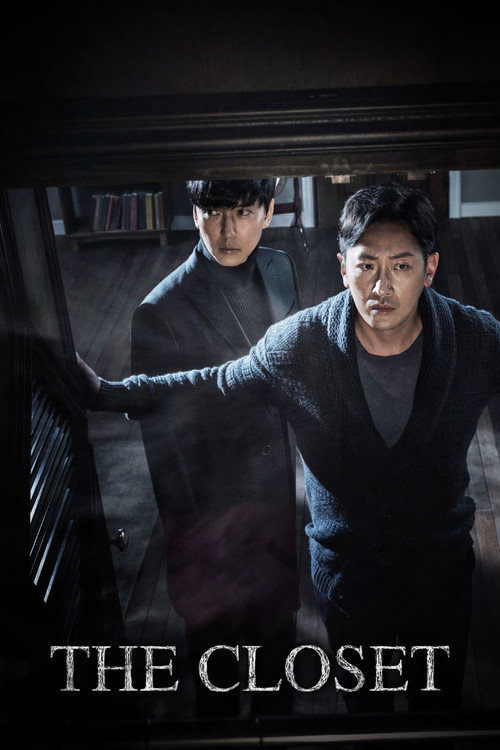
The Closet
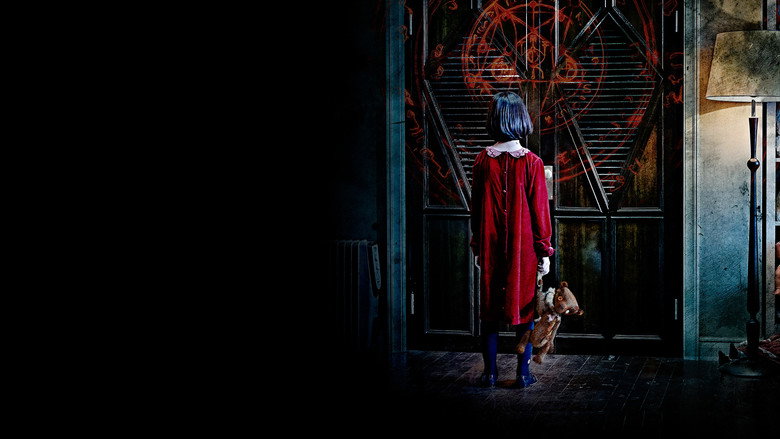
A grief-soaked Korean ghost story where a widower's new home breathes with cold dread. Tender and unsettling, it follows a father's desperate reach into a dark wooden doorway, as if into the hollow where love has gone missing.
The Closet

The Closet

클로젯

"It's calling you."

05 February 2020 South Korea 98 min 7.1 (214)

Director: Kim Kwang-bin

Cast: Ha Jung-woo, Kim Nam-gil, Heo Yool, Kim Si-a, Shin Hyun-been

Thriller Horror Grief and Loss Redemption through Sacrifice Parental neglect and fatherhood Child abuse and hidden suffering Disbelief versus faith in the unseen

Overview

The Closet (2020) is the feature debut of writer-director Kim Kwang-bin. After his wife dies in a car accident, Sang-won, a workaholic architect, moves with his young daughter Yi-na to a quiet house in the countryside. He hopes to repair a strained bond with her. Yi-na soon says she has made a new friend. Strange noises come from the closet in her room, and her behavior starts to change.

One day Yi-na vanishes from the house without a trace. Sang-won gets no help from the police and is regarded with suspicion. Then a stranger arrives, Kyung-hoon, an unconventional exorcist. He says the girl was taken through the closet, and that the pair must act fast or she will be lost for good.

The film starts as a haunted-house chiller, with a creepy 1998 exorcism recording, omens such as crows, and a closet door that won't stay shut. It then moves into a rescue mission in a spirit realm. Throughout, it mixes occult horror with family drama, mystery and some dry comedy.


Core Meaning

The film argues that the real horror is human: neglect, grief and abuse, with the supernatural as the visible shape of those wounds. A father who treated his daughter as a burden has to cross into a world of the dead to learn what she means to him. The closet, a hidden space where things get shut away, stands for what families refuse to look at. The ghost story also carries a socially charged point about children who suffer and are not heard, and the actor Kim Nam-gil has said the filmmakers debated whether to lean into horror or into a socially provocative story. The film's answer is that love shown through presence, and the willingness to go looking for someone, is what redeems.

Thematic DNA

Grief and loss 28%
Parental neglect and fatherhood 27%
Child abuse and hidden suffering 20%
Disbelief versus faith in the unseen 15%
Redemption through sacrifice 10%

Grief and loss

The wife's death in the crash haunts Sang-won, who has panic attacks triggered by a crow hitting the window. Yi-na cries over videos of her mother. The vengeful spirit is itself a child who lost her mother, so the film runs two parallel stories of children left behind.

Parental neglect and fatherhood

At the start Yi-na is more burden than treasured daughter to Sang-won, who takes work calls at dinner. His search for her is how he becomes a better father.

Child abuse and hidden suffering

The spirit in the closet belongs to a girl killed by her own father inside it. The film ties the occult threat to real-world fears of child abuse and the cruelty of adults.

Disbelief versus faith in the unseen

Authorities suspect Sang-won, and he himself dismisses his daughter's 'friend' as an old doll. He has to accept an exorcist's non-religious, folk-flavored ritual to get her back.

Redemption through sacrifice

Sang-won is willing to enter the dark realm at any cost, and the mission is where he earns the right to be a father again.

Character Analysis

Sang-won

Ha Jung-woo

Archetype: Flawed hero Key Trait: Painfully relatable, panicky, desperate love

Motivation

To find and save his daughter and repair their relationship.

Character Arc

He begins as a distracted, workaholic single father in a grief-numbed routine. The loss of Yi-na forces him to face his guilt, and he follows the exorcist into the world behind the closet, where he finally carries his daughter out.

Kyung-hoon

Kim Nam-gil

Archetype: Mentor / unconventional guide Key Trait: Offbeat, non-religious, wry humor

Motivation

To help bring the girl back and to put the spirit to rest.

Character Arc

A self-proclaimed exorcist who appears at Sang-won's door and becomes his partner in the rescue. He adds levity, and the film links his own backstory to a parallel story of a lost child.
All 4 characters and cast

Symbols & Motifs

The closet

Meaning: A hidden space of buried pain, secrets and a threshold between the living and the dead; also the emotional distance in the family.
Context: It opens the film in the 1998 exorcism footage. In Yi-na's room it makes noises, won't stay shut, and is the portal through which she is taken and later carried back.

Crows

Meaning: Omens of death and trauma.
Context: Crows swarm the road near a dead fawn early on. A crow hitting the window triggers Sang-won's flashback to the car crash.

The dead fawn and its mother

Meaning: Foreshadowing of a parent mourning a lost child.
Context: Sang-won stops his car for it in the first minutes of the film.

The old doll

Meaning: The innocent mask over the haunting; the 'friend' that stands in for something darker.
Context: Sang-won assumes Yi-na's new friend is the doll she found in the closet.

Open and closed eyes

Meaning: Being seen and being unseen, with attention and awareness as protection.
Context: In the spirit realm the ghosts can only see a person whose eyes are open.

The shaman's ritual and recording

Meaning: The inherited cycle of violence and the failure of earlier attempts to contain it.
Context: The opening recording of the exorcism ends with the shaman slitting her own throat, and a dream later echoes the image.

Philosophical Questions

Can we truly be present for those we love only after losing them?

Sang-won values his daughter only after she vanishes. The film suggests that attention, not provision, is what parenthood demands.

Does unresolved suffering ever disappear, or does it pass on?

Myung-jin's murder by her father echoes through other children, and the final shot of another child taken suggests pain is inherited unless someone breaks the cycle.

What counts as evidence of the unseen?

Authorities doubt Sang-won and he doubts his daughter, and only a stranger's non-religious, folk-style rites open a path to truth.

How It Ends

Alternative Interpretations

Some critics see a straight supernatural tale, while others see the occult as backdrop for a human story: one reviewer called the film a powerful social denunciation, with the worst horrors not supernatural. The closet can also be read as a metaphor for suppressed trauma, with Yi-na's pull toward it a symptom of unprocessed grief. The ending's final image of another child taken suggests the evil is cyclical and was never truly defeated, so the happy reunion may be only partial.

Full ending explanation

Cultural Impact

The film grew out of the 2010s wave of Korean genre cinema that blends horror with social drama. Critics placed it among Asian ghost stories in the Ringu tradition, with its vengeful female spirit, and compared it with Western titles such as Poltergeist, Insidious and The Turn of the Screw. Another reviewer likened Sang-won's search to Searching.

It grossed about US$9.2 million. On Rotten Tomatoes it held a high critics' score from a small number of reviews, while audience scores were more mixed, and Letterboxd averaged roughly 2.8 out of 5. It also acquired an online following among viewers who read its two leads' bond in a queer or parental light, as some Letterboxd users joked.

Audience Reception

Praised: the emotional core and grounded family story, the lead performances (especially Ha Jung-woo's relatable father and Kim Nam-gil's offbeat exorcist), the atmosphere, and the swift 97-minute pace. Several critics found it a rare horror film that is both frightening and moving, and a softer entry point to the genre.

Criticized: reliance on familiar Hollywood-style ghost scenes, plot holes, comic relief that deflates the tension once the exorcist arrives, and a second half some viewers found messy, with CGI, many reveals and melodrama. Some called it not very scary.

Verdict: a solid, heartfelt supernatural drama that is stronger as an emotional story than as a scare machine; critics' scores ran higher than audience scores.

Interesting Facts

  • The Closet is Kim Kwang-bin's feature directorial debut; he wrote and directed it.
  • The idea came to Kim Kwang-bin when he felt a chill at seeing a closet door left ajar, as if someone were behind it.
  • Ha Jung-woo and Kim Kwang-bin first worked together in 2005 on Yoon Jong-bin's The Unforgiven, where Ha acted and Kim was the audio engineer; Ha also helped produce The Closet.
  • Kim Nam-gil said he might not have taken the role if the exorcism had used overt religious practices, and spent weeks seeking non-religious words for the ritual scenes.
  • Kim Nam-gil has said he avoids horror films because he believes in ghosts, and Ha Jung-woo has said he is afraid of horror too.
  • The film was released in South Korea on February 5, 2020, and grossed about US$9.2 million.
  • It reached DVD and on-demand in the USA on December 15, 2020.
  • Production companies were Moonlight Film and Perfect Storm Film, and the film was edited by Kim Sang-bum.

Easter Eggs

A reviewer noted Kim Nam-gil's exorcist tells Ha Jung-woo's character he is uncultured for not having seen Along with the Gods.

A playful in-joke: Ha Jung-woo starred in Along with the Gods, a film about the afterlife, so the line winks at the two men's real careers.

The film ends with a young boy being spirited away into an abandoned closet in an alley.

It hints the closet curse spreads beyond the rescued family, and leaves room for a continuation.

Frequently Asked Questions

Explore More About This Movie

Dive deeper into specific aspects of the movie with our detailed analysis pages

Comments (0)

Leave a comment

No comments yet. Be the first to share your thoughts!

Similar Movies