Skip to content
The Devil Is a Part-Timer!
A fantasy comedy that drags a demon overlord out of a burning, war-torn world and into a cramped Tokyo apartment, where conquest shrinks to counter shifts, fry baskets and the stubborn warmth of ordinary life.
The Devil Is a Part-Timer!

The Devil Is a Part-Timer!

はたらく魔王さま!

"Gaining power, one combo meal at a time."

04 April 2013 — 28 September 2023 Japan 2 season 37 episode Ended 7.4 (298)

Cast: Ryota Osaka, Yoko Hikasa, Nao Toyama, Yuki Ono, Hiro Shimono

Animation Sci-Fi & Fantasy Action & Adventure Comedy Redemption and the Ability to Change Work, Class and Everyday Survival Enemies Becoming Family Identity and Dual Lives The Ordinary Colliding with the Extraordinary

Overview

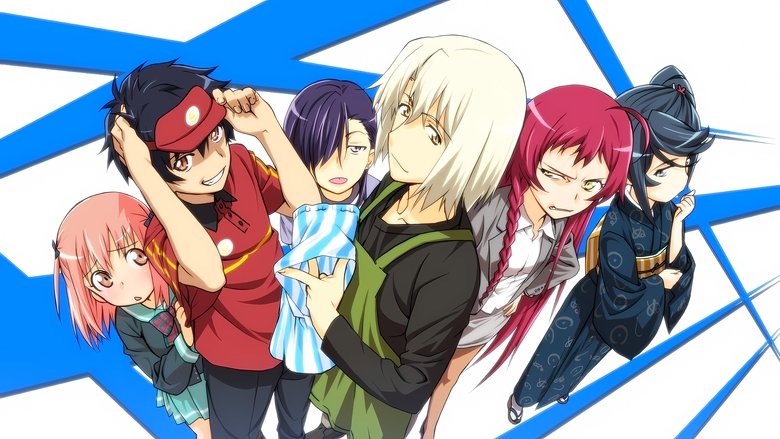
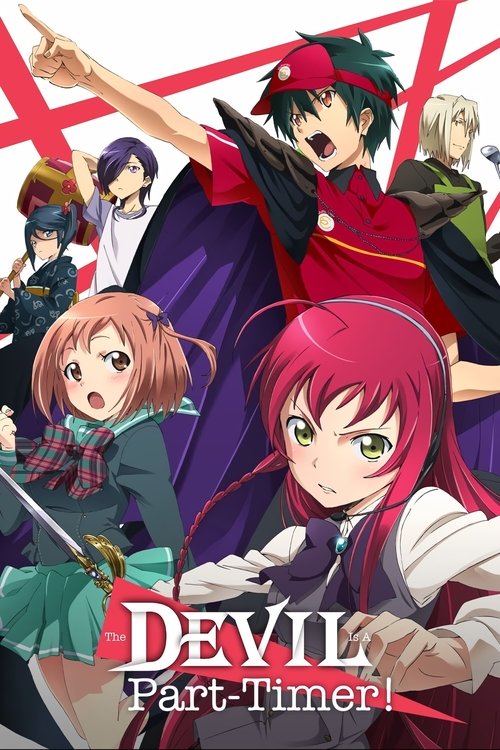
Satan, the Devil King, is about to conquer the fantasy world of Ente Isla when the Hero Emilia defeats him. He escapes through a portal with his loyal general Alciel and lands in modern-day Tokyo, where magic hardly works. Now living as Sadao Maou in a run-down apartment in Sasazuka, he takes a part-time job at a fast-food restaurant and throws himself into it. His new goal is to climb the ladder at work while he looks for a way to win back his power.

Emilia follows him to Earth and takes on the identity of Emi Yusa, a call-center worker. She wants to finish her enemy off, but she keeps finding the Devil King acting almost like a good person. Maou's cheerful coworker Chiho Sasaki, the fallen angel Lucifer and a string of attackers from Ente Isla, both angels and demons, all pull the two enemies into an uneasy coexistence.

The second season came back after nine years. It adds a mysterious child who treats Maou and Emi as her parents, and it moves the show toward a domestic sitcom about a mismatched found family. The Ente Isla backstory keeps growing in the background, but the heart of the series is the everyday comedy of rent, groceries, jobs and figuring out what you owe the people you live alongside.
Core Meaning

The series flips the classic fantasy setup of a hero against a demon lord to argue that who you are depends on how you live, not on the role you were given. Once Maou has no power, he turns out to be diligent, fair and kind. That forces Emi, and the audience, to ask whether evil is part of someone's nature or a product of circumstance, ideology and war.

The creators use honest, modest work as the thing that changes people. Earning a paycheck, serving customers and paying bills bring Maou into contact with the kind of human community he once meant to destroy. By the second season the message widens into forgiveness, acceptance and change. Old grudges don't just disappear. They soften into shared responsibility, most clearly in caring for a child together. Being human, as Emi says, means you can still choose what to do after things have happened to you.

Thematic DNA

Redemption and the Ability to Change 28%
Work, Class and Everyday Survival 22%
Enemies Becoming Family 20%
Identity and Dual Lives 18%
The Ordinary Colliding with the Extraordinary 12%

Redemption and the Ability to Change

Season 1 keeps building the irony that a Devil King with no power is a model employee and neighbor. In Season 2 the question moves from whether Maou has changed to what he owes for his past. Reviewers named forgiveness, acceptance and change as the show's most moving themes.

Work, Class and Everyday Survival

Money problems drive a lot of the plot: a cheap apartment, a strict budget, a jobless roommate and the hope of being promoted to full-time. Across both seasons, jobs give the characters purpose and social ties. The show treats the modest dignity of labor more seriously than magic.

Enemies Becoming Family

At first Emi keeps watch on Maou as his sworn enemy. Over time she, Chiho, Ashiya, Urushihara and later Suzuno form a quarrelsome community. Alas Ramus arrives in Season 2 and makes the rivals co-parents, turning the rivalry into a found-family story.

Identity and Dual Lives

Every visitor from Ente Isla lives two lives: the Devil King and the fry cook, the Hero and the call-center agent, the fallen angel and the shut-in. Critics highlighted the show's underlying themes of identity and the question of which self is the real one.

The Ordinary Colliding with the Extraordinary

The show's appeal comes from supernatural threats breaking into mundane Sasazuka. Season 1 leans toward action spectacle. Season 2 leans toward domestic slice-of-life, sometimes at the cost of the original's balance.

Character Analysis

Sadao Maou (Satan, the Devil King)

Ryota Osaka

Archetype: Reformed villain / antihero Key Trait: Relentless diligence and a leader's sense of responsibility

Motivation

At first he wants to regain his magic and return to conquer Ente Isla. Gradually his goals shift to keeping his job, supporting his household and protecting the people he has come to care about.

Character Arc

He starts out as a defeated conqueror who treats his job as a stepping stone back to power. Over Season 1 he takes real pride in serving people and protects his coworkers and neighbors whenever threats from Ente Isla appear. In Season 2 he becomes a reluctant father figure to Alas Ramus and the anchor of a growing household. By then he looks like a man who would rather keep his ordinary life than go back to being king.

Emi Yusa (Emilia Justina, the Hero)

Yoko Hikasa

Archetype: Hero / tsundere rival Key Trait: Righteous stubbornness

Motivation

Revenge for the destruction Satan's armies brought to her world and family. Over time this becomes a wish to understand him and protect her new life.

Character Arc

She comes to Earth to kill the Devil King and keeps finding out that he doesn't match her hatred. Her certainty turns into confusion, grudging cooperation and finally shared parenting in Season 2. Her central struggle is letting go of the grief that fueled her mission.

All 5 characters and cast

Symbols & Motifs

The fast-food restaurant job

Meaning:

Honest work as a path to redemption, and a smaller version of ambition: Maou's hunger for conquest turns into a hunger for promotion.

Context:

It is Maou's main setting through both seasons. His leadership skills, once used to command armies, now go into shift management and customer service.

The Sasazuka apartment

Meaning:

Humility, and the shared home that slowly gathers former enemies under one roof.

Context:

The cramped apartment is the base for Maou, Ashiya and later Urushihara. It becomes the center of neighborly life as more characters from Ente Isla move in nearby.

Magic power

Meaning:

The pull of Maou's old identity. Every return of his power tests whether he has really changed.

Context:

On Earth, demonic power comes back only through human negative emotion. At the climaxes Maou regains strength and then chooses to use it to protect people instead of to conquer.

Alas Ramus

Meaning:

Innocence and a shared future that ties the rivals to each other.

Context:

Introduced in Season 2, the child calls Maou and Emi her parents. Reviewers said she changes the show's whole tone.

Ente Isla

Meaning:

The past: war, guilt and responsibilities that can't be escaped for good.

Context:

It appears mostly in flashbacks and through arriving enemies, a reminder that life in Sasazuka is a reprieve and not a clean break.

Memorable Quotes

To win the battle we must know our enemy.
— Sadao Maou

Context

Season 1. Maou uses the line to justify eating at a rival restaurant.

Meaning

It sums up the show's humor: a warlord's strategic mindset applied to the fast-food business.

Oh? A dream about me returning to Ente Isla, was it?
— Sadao Maou

Context

Season 1, when a dream about his return to Ente Isla comes up.

Meaning

It highlights how far the dream of conquest has faded into something he treats almost as a joke.

All 4 quotes

Episode Highlights

The Devil Arrives in Sasazuka

S1E1

The pilot shows the Devil King's defeat in Ente Isla, his escape to Tokyo and his new life as a part-time fast-food worker. It aired in April 2013.

Significance:

It sets up the premise and the fish-out-of-water comedy that define the whole series.

Episode 5 (Lucifer's attack)

S1E5

Lucifer wrecks the neighborhood and brings unexpected allies. Emi, Maou and Ashiya are forced to work together.

Significance:

It is the first real alliance between Hero and Devil King. It also plants the idea of turning villains into family, since Lucifer later becomes a roommate.

Episode 13 (Season 1 finale)

S1E13

Ashiya has something to discuss with his master in private, and Emi dreams of Satan conquering Sasazuka.

Significance:

It closes the 2013 run on a quiet, character-focused note. It raises doubts about Maou's intentions and keeps his and Emi's uneasy coexistence unresolved.

Season 2 premiere (Alas Ramus arrives)

S2E1

The sequel returns after nine years with a new studio and a new director. It introduces Alas Ramus, who calls Maou and Emi her parents.

Significance:

According to reviewers, the whole vibe of the series changes here, from action comedy to domestic found-family comedy.

Season 2 finale

S2E24

The final episode of the second part, which aired September 28, 2023, ends the anime's run.

Significance:

It ends the series in the middle of the source material's larger story, with the found family still intact.

Philosophical Questions

Is evil innate, or a product of circumstance?

With his power and his war gone, the Devil King turns out to be a decent worker and neighbor. The show keeps asking whether his past cruelty came from his nature or from the world he lived in.

Can past atrocities be forgiven if the person responsible has truly changed?

Emi's journey from vengeance to co-parenting explores whether forgiveness betrays the victims or makes it possible to heal. Critics found these themes of forgiveness, acceptance and change especially moving.

What makes someone human?

Emi's line about being able to choose after things happen suggests that humanity is defined by agency, not species. Angels, demons and half-humans all end up earning it through their choices.

Does meaningful work require grandeur?

Maou finds as much purpose in a promotion as he did in conquest. The show suggests that dignity and fulfillment can come from modest, everyday labor.

How It Ends

Alternative Interpretations

Genuine redemption vs. situational goodness. One reading holds that Maou has truly reformed. Another notes that he never gives up his ambition, and that his kindness may come from having no power. Emi's dream of Satan conquering Sasazuka in the Season 1 finale keeps this doubt alive.

Full ending explanation

Cultural Impact

The show premiered in spring 2013, before the big wave of reverse-isekai and "demon lord in everyday life" comedies. It helped popularize the fantasy villain in the modern world setup, where powerful beings deal with rent, jobs and convenience stores. Its affectionate, satirical look at service work and budget living made it a lasting cult favorite.

Demand for a sequel stayed strong for nearly a decade. When Season 2 was announced, reviewers noted that the franchise had stayed a hot topic in the anime community after nine years. The sequel got mixed reviews. Some praised better animation and valued Alas Ramus as a necessary monkey wrench. Others felt the change of studio and tone made for a "poor return" that drifted toward generic romance, fan service and harem tropes.

Season 1's legacy as a well-loved comedy is secure, while Season 2 is usually seen as a divisive but faithful continuation of the novels.

Audience Reception

Season 1 (2013) is widely remembered with affection for its sharp comedic premise, likable cast and good balance of action and slice-of-life. Episodes on IMDb, such as the pilot, score around 7.5. Its main complaint over the years was the lack of a continuation.

Season 2 (2022–2023) split opinion. Criticism focused on the tonal shift after Alas Ramus arrives, a story that felt like typical slice-of-life romance relying on fan service and edging into harem territory, and the sense of a "poor return" after nine years. Some also felt the look had changed with the move from White Fox to Studio 3Hz. Defenders argued that Alas Ramus isn't an annoying child character and keeps the season from being a rehash, and some critics noted better animation and fluidity. Reviewers found the second part somewhat more rewarding than the first.

Overall verdict: the original is a beloved comedy classic, and the sequel is a divisive but welcome extension for loyal fans.

Interesting Facts

  • The series adapts the light novels written by Satoshi Wagahara.
  • Season 1 was produced by White Fox and directed by Naoto Hosoda, with series composition by Masahiro Yokotani.
  • Season 1's character designs were by Atsushi Ikariya, art direction by Yoshito Takamine and sound direction by Jin Aketagawa.
  • The first season ran 13 episodes, airing from April 2013 to June 29, 2013.
  • The sequel came nine years after the first season, one of the longer gaps between anime seasons.
  • For Season 2, Studio 3Hz replaced White Fox and Daisuke Tsukushi replaced Naoto Hosoda as director.
  • Season 2 aired in two cours: July–September 2022 and July–September 2023, ending on September 28, 2023.
  • The 2023 continuation was announced in September 2022, right as the first part of Season 2 finished.

Frequently Asked Questions

Explore More About This Movie

Dive deeper into specific aspects of the movie with our detailed analysis pages

Comments (0)

Leave a comment

No comments yet. Be the first to share your thoughts!

Similar Movies