Skip to content
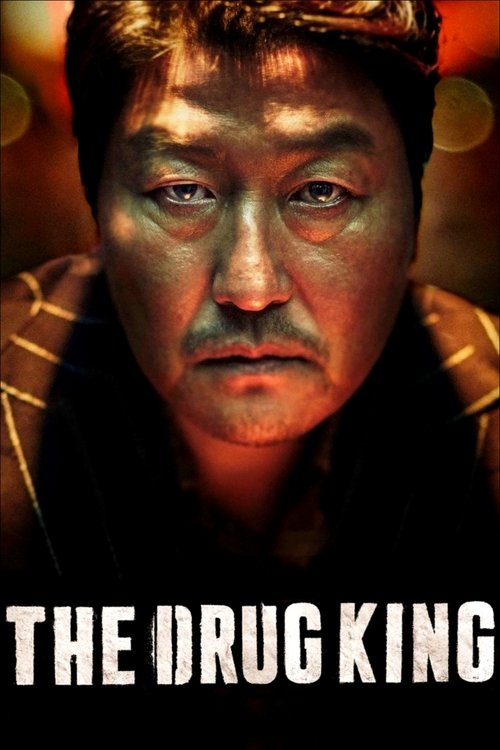
The Drug King
A lacquered, smoke-thick crime epic where a Busan smuggler crystallizes an entire decade's greed into white powder — ambition burning bright, then collapsing into a gilded room with no doors.
The Drug King

The Drug King

마약왕

"He who was a criminal and a patriot."

19 December 2018 South Korea 139 min 6.3 (170)

Director: Woo Min-ho

Cast: Song Kang-ho, Cho Jung-seok, Bae Doona, Kim So-jin, Kim Dae-myung

Drama Crime Action Corruption as the real infrastructure of the state Greed and the rise-and-fall arc Patriotism perverted into export nationalism Identity, respectability and the double life The lone incorruptible man

Overview

Busan, 1972. Lee Doo-sam is a jeweller and small-time smuggler working the seams of a port city where everything — gold, contraband, people — moves faster than the law can follow. Written and directed by Woo Min-ho, The Drug King traces how this restless hustler discovers that the most profitable cargo of all is methamphetamine, and that Japan is hungry for it.

With a chemist known as Professor Baek cooking product and a connected partner, Choi Jin-pil, opening doors, Doo-sam's operation swells from back-room deals into an industrial enterprise. He acquires a new name, a respectable public face as a businessman and civic figure, and a lobbyist (Bae Doona) who ushers him into rooms where politicians, prosecutors and money are indistinguishable from one another. The higher he climbs, the more the country's authoritarian machinery seems less like an obstacle than a business partner.

Against him stands Kim In-gu, a prosecutor sent down from Seoul who refuses the bribes and favours that have neutralized everyone else. What follows, across the back half of the 1970s and into 1980, is a rise-and-fall chronicle in the classic mould: a man who mistakes the appetite of an era for his own genius, and a system that discards him the moment he becomes inconvenient.
Core Meaning

Woo Min-ho's film is, on its surface, a crime-doesn't-pay parable — but critics have consistently read its real subject as the corruption and cronyism of South Korea's authoritarian 1970s, the Park Chung-hee Yushin years, when venal officials were happy to let organized crime flourish so long as it served power and brought in foreign currency.

The film's sharpest idea is that Lee Doo-sam is not an outlaw standing against the state but its logical product. An era obsessed with export figures and national growth taught him that anything sold abroad is patriotism, and he simply applied that lesson to poison. His empire is a grotesque miniature of the developmental state: hierarchical, bribe-lubricated, indifferent to the human cost, and structurally unable to admit what it actually manufactures.

So the message is less moral than diagnostic. Doo-sam is destroyed not because justice is inevitable but because he stopped being useful. The rot he embodied outlives him — which is why the ending feels less like triumph than like the closing of one ledger while others stay open.

Thematic DNA

Corruption as the real infrastructure of the state 30%
Greed and the rise-and-fall arc 25%
Patriotism perverted into export nationalism 20%
Identity, respectability and the double life 15%
The lone incorruptible man 10%

Corruption as the real infrastructure of the state

Critics have identified this as the film's most substantive layer: a subtle condemnation of authoritarianism and the cronyism that accompanies it. Doo-sam's ascent is impossible without prosecutors, politicians and officials who take their cut; the lobbyist played by Bae Doona exists purely to convert money into access. The ledger of bribes that surfaces at the end literalizes the idea — the drug trade and the government share a single accounting book.

Greed and the rise-and-fall arc

The film works the classic gangster shape: petty smuggler to kingpin to ruin. Doo-sam's pursuit of power and wealth eventually brings about his downfall — each expansion demands more paranoia, more product, more protection, until the machine eats its operator. Reviewers noted the arc is familiar to the point of being trite, but Song Kang-ho's performance gives the familiar shape unusual human texture.

Patriotism perverted into export nationalism

The film's most quoted sentiment is that in 1970s Korea, exporting drugs counted as patriotism. Doo-sam genuinely believes this: he is earning foreign currency, feeding the national growth statistics, doing what the country asked. The theme exposes how a developmentalist ideology that measures virtue in export tonnage cannot distinguish between a shipyard and a meth lab.

Identity, respectability and the double life

Doo-sam reinvents himself under a new name, becoming a food-industry businessman and civic figure by day while running the cartel behind drawn curtains at night. The theme interrogates how easily criminal capital buys social legitimacy — and how the mask eventually becomes the more fragile of his two selves.

The lone incorruptible man

Prosecutor Kim In-gu functions as the film's moral constant, a Seoul outsider who cannot be bought in a system where everyone else can. His near-obsessive pursuit across years is less a heroic counterweight than a measure of how abnormal integrity had become; several reviewers felt the film underwrote him, leaving him more function than person.

Character Analysis

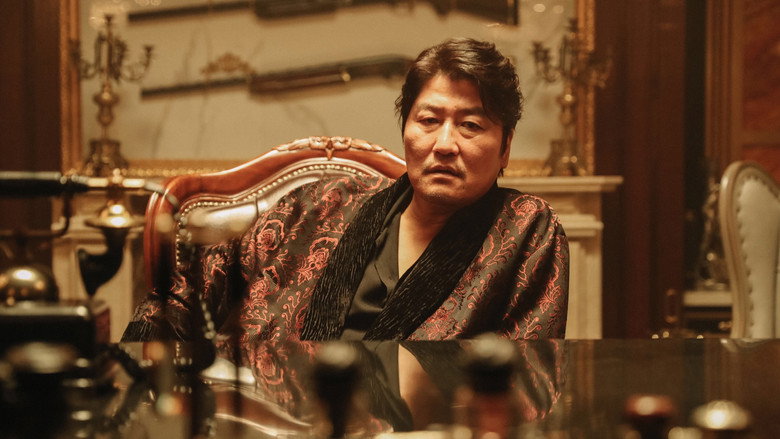
Lee Doo-sam (alias Lee Hwang-soon)

Song Kang-ho

Archetype: Antihero / self-made tyrant Key Trait: Shrewd, ingratiating self-belief that hardens into delusion

Motivation

Money, and beneath it the hunger for respect from a society that had no place for him. He rationalizes the trade as patriotic export work, which lets him climb without ever confronting what he sells.

Character Arc

Introduced as a Busan jeweller dabbling in smuggling in 1972, he serves prison time, emerges to partner with Choi Jin-pil and Professor Baek, and builds a methamphetamine empire exported to Japan. He reinvents himself as a respectable businessman and civic figure, ascends into political circles, and then curdles into paranoia and megalomania before his capture in 1980.

Kim In-gu

Cho Jung-seok (Jo Jung-suk)

Archetype: Incorruptible hunter / nemesis Key Trait: Relentless, unbuyable persistence

Motivation

A refusal to accept that the law is simply another market. His obsession is professional and personal at once — the case becomes the measure of whether his job means anything.

Character Arc

A prosecutor sent from Seoul who is intent on bringing Lee down, he pursues the case for years against institutional indifference and outright obstruction, finally cornering Doo-sam in a 1980 shootout and receiving the bribery ledger from his hospital bed.

All 4 characters and cast

Symbols & Motifs

The ledger of bribes

Meaning:

The hidden double-entry of the nation: proof that the criminal economy and the political economy were the same economy. It symbolizes knowledge as the only currency a ruined man has left.

Context:

Doo-sam keeps a record of the officials who took drugs and bribes from him. In the final movement, hospitalized after his capture, he hands this ledger to prosecutor Kim In-gu — his last transaction, and the film's parting gesture toward everything that will never be prosecuted.

The assumed name

Meaning:

Respectability as a purchasable commodity, and the erasure of the self that ambition demands.

Context:

Lee Doo-sam remakes himself as Lee Hwang-soon, a legitimate businessman and social figure — a name borrowed from the real-life drug lord believed to be the film's model, folding history and fiction into one identity.

Crystal methamphetamine itself

Meaning:

The purest possible image of the era's logic: something colourless and weightless that converts directly into money and status, while whatever it touches decays.

Context:

Cooked by Professor Baek and shipped to Japan, the product is repeatedly framed as merchandise rather than poison — inspected, weighed and praised like any export commodity.

Busan as a port

Meaning:

A threshold city: the permeable edge of the nation where the domestic and the foreign, the legal and the illicit, are only ever a customs stamp apart.

Context:

The story begins there in 1972 with Doo-sam's jewellery smuggling, and the sea route to Japan remains the artery of his empire throughout.

The fortified house

Meaning:

The gangster's palace as self-built prison — wealth converted into walls, and walls into paranoia.

Context:

As Doo-sam's power peaks he retreats behind closed curtains and guarded interiors, culminating in a final siege-like confrontation that reviewers compared to the climax of Scarface.

The gun that misfires

Meaning:

The denial of a tragic exit. Doo-sam is not even permitted the operatic self-destruction the genre promises.

Context:

Cornered in 1980 after a shootout, he attempts suicide; the gun discharges accidentally and merely wounds his shoulder, delivering him alive to a hospital bed and a fifteen-year sentence.

Memorable Quotes

Patriot is not a big deal! In the 1970s, South Korea became patriotic when drugs were exported.
— Lee Doo-sam

Context

Delivered as self-justification at the height of his operation, as his methamphetamine is being shipped to Japan and his political protection is at its strongest. It is the most widely cited line from the film in English-language coverage.

Meaning

The film's thesis compressed into a boast. Doo-sam is not being ironic — he has absorbed the developmental-state creed so completely that he sincerely equates foreign-currency earnings with national virtue. The line indicts an entire era's moral accounting, not just one criminal.

Philosophical Questions

Can a crime be patriotic if the state profits from it?

Doo-sam's claim that exporting drugs made him a patriot in 1970s Korea is not presented as a joke. The film puts the question to a regime that measured national virtue in export earnings and let officials profit from the trade, asking whether individual guilt even means anything inside a system that rewarded exactly this behaviour.

Is the criminal an aberration or a product of his society?

Every step of Doo-sam's ascent requires an accomplice in uniform or office. The film consistently shows his empire being built by the state as much as against it, which reframes the question of blame from the man to the structure that made him profitable.

What does justice accomplish when the system survives intact?

Prosecutor Kim In-gu wins: Doo-sam is captured and sentenced to fifteen years. But the ledger of bribed officials he receives points to a corruption that will not be similarly punished, leaving victory indistinguishable from containment.

Can a man outrun the self he invented?

Doo-sam's reinvention as the respectable Lee Hwang-soon buys him legitimacy but not coherence; the daytime businessman and the nighttime cartel boss corrode each other until neither identity can hold, and the mask falls away at the precise moment his protection does.

Alternative Interpretations

As straight morality tale. The simplest reading, and the one most critics take at face value: a crime-doesn't-pay story in which greed engineers its own collapse. Doo-sam's fall is earned, the prosecutor's persistence vindicated, and the genre machinery does what genre machinery does.

Full ending explanation

Cultural Impact

The Drug King arrived in December 2018 as a prestige year-end release: a ₩15 billion production reuniting Song Kang-ho with a director who had already worked in the political-thriller register, and pitched squarely at Korean cinema's long-running appetite for revisiting the authoritarian past through genre. Its subject — the 1970s methamphetamine trade under the Yushin system, sustained by officials who let organized crime operate as an instrument of power — placed it alongside a wave of Korean films that use crime narrative to relitigate the Park Chung-hee era.

Its reception, however, was mixed rather than landmark. Critics split between those who found small accumulating pleasures in Woo's period detail and those who dismissed it as a trite rise-and-fall exercise that borrows its climax from Scarface and leaves its political parallels underdeveloped. With roughly US$14.5 million grossed against a US$13.4 million budget, it did not become the cultural event its cast implied, and it is now most often discussed as a footnote in Song Kang-ho's filmography — the year before Parasite made him globally famous.

Its lasting value is as a document of a particular Korean argument: that the developmental miracle and its criminal underside were manufactured by the same hands. That claim, more than the film's craft, is what keeps it in circulation in discussions of Korean political cinema.

Audience Reception

Praised: almost unanimously, Song Kang-ho. Reviewers called his transformation from family man to drug kingpin the film's chief treat, and even negative notices conceded the performance's magnetism. The period recreation of 1970s Busan and a set of small accumulating directorial touches also drew appreciation, with at least one critic arguing these details make the film a minor classic of the rise-and-fall genre.

Criticized: the film's most frequently cited weakness is that almost every other character is ridiculously underdeveloped — an extraordinary supporting cast including Bae Doona and Cho Jung-seok given little to play. Critics also faulted the film for adding little to a well-worn genre, for a political parallel with Park Chung-hee's dictatorship that never quite lands on screen, and for a climax read as a cheap imitation of Scarface followed by a hollow ending. One representative verdict rated it 2 out of 4 as a trite rise and fall.

Overall verdict: divisive and, commercially, underwhelming for its scale — roughly US$14.5 million against a US$13.4 million budget. The consensus settles near: a magnificent lead performance inside a film that does not quite earn it.

Interesting Facts

  • The film was both written and directed by Woo Min-ho, and was released in South Korea on 19 December 2018.
  • It carried a production budget of roughly ₩15 billion (about US$13.4 million) and grossed around US$14.5 million worldwide — a modest result relative to its cost and star power.
  • The story is based on the real Busan drug trade of the 1970s; the historical model is generally presumed to be Lee Hwang-sun, described as Korea's largest drug dealer of that decade, whose name the film reuses as its protagonist's alias.
  • In a Cine21 interview conducted in early 2018, the release was expected around May or June, but it was pushed to winter because the filmmakers felt the film's atmosphere suited the winter season better than summer.
  • The production assembled an unusually deep bench of Korean character actors around Song Kang-ho, including Bae Doona, Cho Jung-seok, Kim Dae-myung, Kim So-jin, Lee Hee-joon, Jo Woo-jin and Yoon Je-moon.
  • Reviewers repeatedly singled out Song Kang-ho's transformation from family man to drug kingpin as the film's chief pleasure, even in otherwise negative notices.
  • The film is set across roughly eight years of Korean history, opening in Busan in 1972 and ending with Lee Doo-sam's capture in 1980 — bracketing the Yushin era of Park Chung-hee's rule.

Easter Eggs

The alias 'Lee Hwang-soon'

Doo-sam's respectable new identity echoes Lee Hwang-sun, the real 1970s Busan drug lord presumed to be the film's historical motif — a wink that folds the true story into the fiction at the exact moment the character invents himself.

The <i>Scarface</i>-style climax

Multiple critics noted that the finale plays as an imitation of the climactic siege in Brian De Palma's Scarface (1983), placing Doo-sam explicitly in the lineage of Tony Montana — though the film pointedly denies him the same operatic death.

Japan as the export market

The choice to build the empire on shipments to Japan carries loaded historical charge for Korean audiences, turning the drug trade into a dark inversion of the export-driven economic miracle and of postwar Korea–Japan trade relations.

Frequently Asked Questions

Explore More About This Movie

Dive deeper into specific aspects of the movie with our detailed analysis pages

Comments (0)

Leave a comment

No comments yet. Be the first to share your thoughts!

Similar Movies