Full spoilers follow.
Lee Doo-sam begins in Busan in 1972 as a jeweller running small-time smuggling, and is imprisoned. After his release he joins forces with Choi Jin-pil and Professor Baek: Baek cooks the methamphetamine, Choi supplies the connections, and Doo-sam supplies the nerve. Profits scale fast on the export route to Japan.
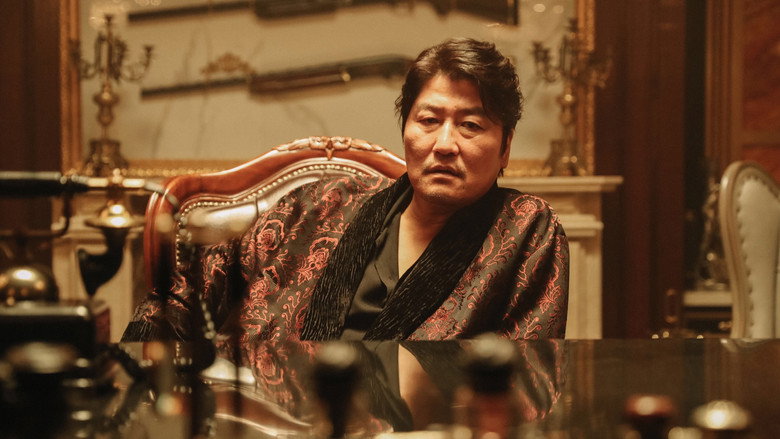
The film's central turn is not a betrayal but a metamorphosis. Doo-sam reinvents himself as Lee Hwang-soon — by day a social activist and respectable food-industry businessman, by night, behind drawn curtains, the head of a cartel operating under political protection. The alias quietly nods to the real Lee Hwang-sun, the 1970s drug lord presumed to be the film's model. The lobbyist played by Bae Doona is the hinge of this ascent, carrying him into the elite circles where his money buys prosecutors and politicians.
Prosecutor Kim In-gu, sent from Seoul, pursues him across years while the institutions around him are bought off. The pursuit closes in 1980, with the political ground shifting beneath Doo-sam's protectors. Cornered after a shootout — staged in a manner critics compared directly to the finale of Scarface — Doo-sam turns a gun on himself. It discharges accidentally, wounding him in the shoulder. He survives.
The final beat is the film's real point. From his hospital bed, Doo-sam hands Kim In-gu the ledger recording the officials who received his drugs and his bribes, and is sentenced to fifteen years in prison. Retroactively this recolours everything: the empire was never his alone, and the men in the ledger were partners, not obstacles. The botched suicide denies him the tragic-gangster exit the genre has been promising, insisting instead that he ends as a case file. And the ledger's existence implies the sentence resolves almost nothing — one man is removed while the network that made him possible remains, which is exactly why some critics read the conclusion as hollow and others as a deliberately deflating verdict on an era.