Skip to content
The Dude in Me
A boisterous body-swap comedy with a bruised heart, where a hardened gangster wakes inside a schoolboy's skin and finds the most dangerous territory is the one he abandoned. Laughter spills like confetti over old regret.
The Dude in Me

The Dude in Me

내안의 그놈

"A body swap that changed everything."

09 January 2019 South Korea 122 min 7.8 (157)

Director: Kang Hyo-jin

Cast: Jung Jinyoung, Park Sung-woong, Ra Mi-ran, Lee Soo-min, Lee Pung-un

Fantasy Action Comedy Empathy and perspective Fatherhood and family Identity and the body Bullying and power Regret and second chances
Box Office: $14,651,772

Overview

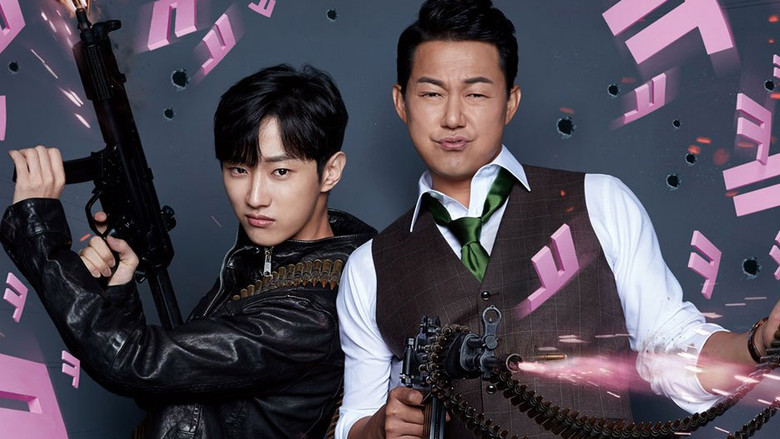
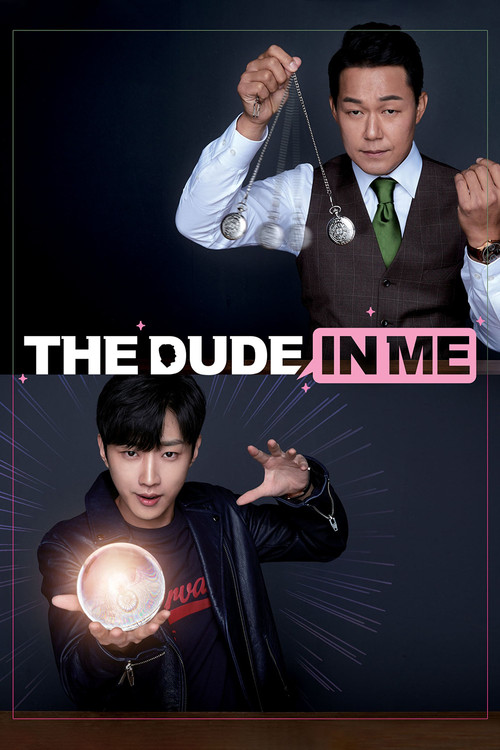
The Dude in Me (내안의 그놈, 2019) is a South Korean fantasy-action comedy directed by Kang Hyo-jin, with a screenplay credited to Shin Han-sol, Jo Joong-hoon and Kang. Jang Pan-soo (Park Sung-woong) is a well-known elite gangster married to his boss's daughter. After a freak accident, a high school student named Dong-hyun (Jung Jin-young) falls from a rooftop and collides with him. When both wake up in hospital, they have switched bodies.

Pan-soo now has to live as a teenager and go back to school. In that body he meets people from a life he never knew: his first love Mi-seon (Ra Mi-ran) and a daughter, Hyun-jeong (Lee Soo-min), who is being bullied. The film runs 122 minutes and mixes slapstick, school-bully comeuppance, gangster-world action and melodrama.

It was released in Korea on January 9, 2019. It is a crowd-pleaser built on a familiar premise, and its appeal rests largely on Jung Jin-young's performance as a middle-aged thug trapped in a boy's body.

Core Meaning

The film's message is that a successful life measured only by status and power can be empty, and that a person is defined by the responsibilities and relationships he neglects. Pan-soo has to see through a young person's eyes, and he can only do so in someone else's body. That forced perspective makes him face a daughter and a woman he left behind. The film treats empathy as something you have to literally step into another person's shoes to get, and it presents family and repaired relationships as the real measure of a life.

Thematic DNA

Empathy and perspective 30%
Fatherhood and family 25%
Identity and the body 20%
Bullying and power 15%
Regret and second chances 10%

Empathy and perspective

The body swap makes a callous gangster experience the vulnerability of a teenager, including bullying and powerlessness, which gradually changes how he treats others.

Fatherhood and family

Pan-soo discovers a daughter he never knew he had and a first love he abandoned. His redemption is bound up with the family he failed.

Identity and the body

Who is Pan-soo without his muscle, rank and reputation? Dong-hyun's body strips away his status and leaves the person underneath.

Bullying and power

School bullies and gangland hierarchy mirror each other, and the film's comic set pieces turn the gangster's skills against schoolyard cruelty.

Regret and second chances

The fantasy premise gives a man a chance to repair past mistakes. The film plays this through both comedy and sentiment.

Character Analysis

Jang Pan-soo / Dong-hyun's body

Park Sung-woong (Pan-soo); Jung Jin-young (Dong-hyun's body)

Archetype: Flawed antihero turned reluctant protector Key Trait: Gruff and ruthless on the outside, comic in a teen's body, soft underneath

Motivation

First to get his own body and life back. Later, to protect his daughter and make amends.

Character Arc

He begins as an ambitious, self-serving gangster. Stuck in a teenager's body, he sees the cost of what he left behind and starts acting like a father.

Dong-hyun

Jung Jin-young (Park Sung-woong in the other body)

Archetype: Innocent everyman Key Trait: Naive and adaptable

Motivation

To return to his own life.

Character Arc

An ordinary student swept into a gangster's world. The film's comedy depends on how each swapped character adapts to the other's life.

All 4 characters and cast

Symbols & Motifs

The rooftop fall

Meaning: A violent rupture between two lives, a literal fall from the old self.
Context: The collision between Dong-hyun and Pan-soo triggers the swap and begins the story.

The school uniform

Meaning: Lost youth and enforced humility. The powerful adult is made small and subordinate.
Context: Pan-soo must return to high school in Dong-hyun's body.

The mismatched body

Meaning: The gap between outward appearance and inner self.
Context: Comedy comes from a teen's body that moves and fights with a gangster's attitude.

Hyun-jeong, the unknown daughter

Meaning: The consequence of the past and the possibility of redemption.
Context: Pan-soo meets her through the swap, and her situation pushes him to act.

Philosophical Questions

Is identity located in the body or in the mind?

Pan-soo's mind in Dong-hyun's body is still treated by others as a boy, and his actions are read through that body. The film suggests identity is both internal and conferred by how others see us.

Can a person truly understand others without living their experience?

Pan-soo only understands bullying and abandonment once he is the weak one. The film proposes that empathy needs a change of position.

Can past wrongs be redeemed?

A magical second chance lets Pan-soo face his daughter and first love, asking whether presence now can offset absence then.

How It Ends

Alternative Interpretations

The film can be read as a straightforward redemption comedy. It can also be read as a critique of Korean hyper-masculine, status-driven culture, in which a man must be dismantled and made vulnerable before he can be a father. A more critical reading holds that the comedy leans on body-shaming and on the premise that a man needs a young body to learn compassion.

Full ending explanation

Cultural Impact

The film belongs to the long tradition of body-swap comedies and Korean genre-blending comedies that combine gags with melodrama. It was a solid commercial success at home, with roughly 1.9 million admissions. Viewers on Letterboxd called it entertaining and noted that the sentimental side, with the single mother and the gangster facing his mistakes, plays in a distinctly Korean context. Some of the same viewers criticised its fat-suit humour.

Audience Reception

Viewers praised the comedy and the lead performance, noting that Jung Jin-young carries the film, and enjoyed Ra Mi-ran's presence. Reviewers called it surprisingly entertaining and said it delivered what you would expect from a Korean body-swap comedy. Criticism included the fat-suit humour, which one reviewer called fatphobic, a feeling that Park Sung-woong had less to do than expected, and some awkwardness in the father-daughter reunion. Overall it is regarded as a fun and sentimental, if formulaic, crowd-pleaser.

Interesting Facts

  • The film was released in South Korea on January 9, 2019 and runs 122 minutes.
  • It is directed by Kang Hyo-jin, who also co-wrote it with Shin Han-sol and Jo Joong-hoon.
  • According to Wikipedia it earned about US$14.7 million at the box office.
  • Cine21 lists admissions of about 1.9 million (1,901,684).
  • It was distributed by The Contents On and Merry Christmas.
  • The film stars Jung Jin-young, a singer-turned-actor, and Park Sung-woong.

Frequently Asked Questions

Explore More About This Movie

Dive deeper into specific aspects of the movie with our detailed analysis pages

Comments (0)

Leave a comment

No comments yet. Be the first to share your thoughts!

Similar Movies