
Skip to content
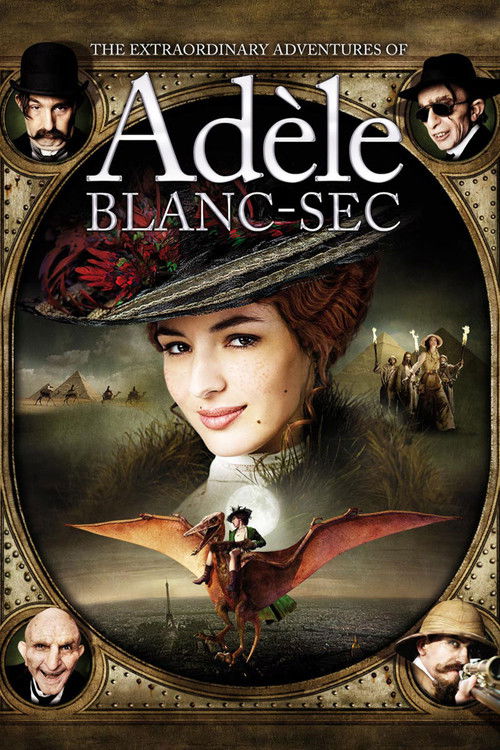
The Extraordinary Adventures of Adèle Blanc-Sec
A whimsical Belle Époque gaslamp adventure drenched in bittersweet love and playful eccentricity, where ancient resurrective magic cuts through the gilded Parisian mist like a soaring prehistoric wing over the Seine.
The Extraordinary Adventures of Adèle Blanc-Sec

Les Aventures extraordinaires d'Adèle Blanc-Sec

09 April 2010 France 107 min 6.3 (1,510)

Director: Luc Besson

Cast: Louise Bourgoin, Mathieu Amalric, Gilles Lellouche, Jean-Paul Rouve, Jacky Nercessian

Fantasy Action Mystery Adventure Sisterly Devotion and Guilt Defiance of Male Authority and Bureaucracy Rational Modernity vs. Ancient Mysticism Absurdity and Serendipity
Budget: $25,000,000
Box Office: $34,604,339

The Extraordinary Adventures of Adèle Blanc-Sec — Ending Explained

⚠️ Spoiler Analysis

Adèle successfully smuggles the mummy of Patmosis to Paris, unaware that Espérandieu has linked his psychic life force with the pterodactyl terrorizing the city. When hunter Saint-Hubert fatally shoots the pterodactyl, Espérandieu suffers a sympathetic mortal psychic wound. Before dying, Espérandieu expels a final psychic shockwave that successfully reanimates Patmosis.

However, upon awakening, Patmosis politely reveals that he was merely Pharaoh Ramses II’s court physicist/engineer—not a physician. Desperate, Adèle leads Patmosis to the Louvre Museum, where the residual resurrection wave has awakened the entire entombed royal court, including Pharaoh Ramses II and his actual imperial doctor.

The royal physician accompanies Adèle home, uses ancient holistic surgical magic to remove the lodged hatpin from Agathe’s brain, and restores her to full consciousness. The mummies cordially depart for an evening stroll through Paris before returning home to Egypt. To unwind from her ordeal, Adèle boards the RMS Titanic for an ocean cruise, setting up a comedic dramatic irony as the credits roll.

Alternative Interpretations

Some alternative readings of the film include:

  • The Allegory of Survivor's Guilt: Some critics interpret the entire supernatural saga—reanimating pterosaurs and pharaohs—as a heightened, manic manifestation of Adèle's psychological defense mechanism against the overwhelming guilt of injuring her sister.
  • Satire of French Colonial Pomp: The ease with which Adèle loots an Egyptian tomb and the polite condescension the resurrected mummies show toward 20th-century Paris serve as a subtle post-colonial subversion, portraying ancient non-Western civilization as more refined and enlightened than modern European arrogance.

Explore More About This Movie

Dive deeper into specific aspects of the movie with our detailed analysis pages

Similar Movies