Skip to content
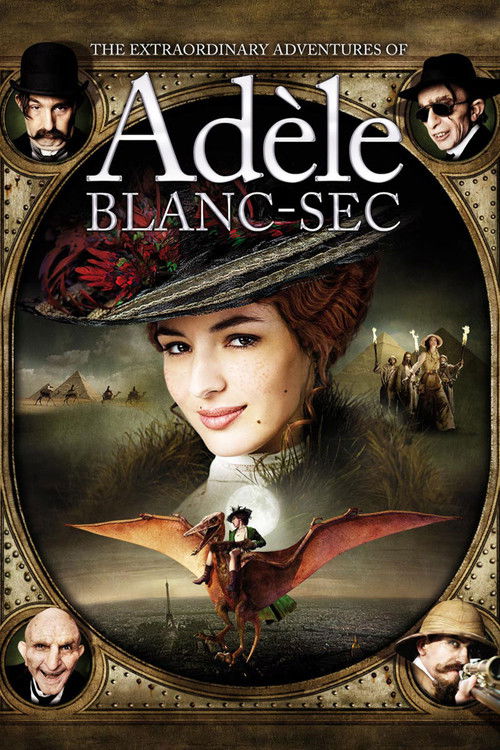
The Extraordinary Adventures of Adèle Blanc-Sec
A whimsical Belle Époque gaslamp adventure drenched in bittersweet love and playful eccentricity, where ancient resurrective magic cuts through the gilded Parisian mist like a soaring prehistoric wing over the Seine.
The Extraordinary Adventures of Adèle Blanc-Sec

The Extraordinary Adventures of Adèle Blanc-Sec

Les Aventures extraordinaires d'Adèle Blanc-Sec

09 April 2010 France 107 min 6.3 (1,510)

Director: Luc Besson

Cast: Louise Bourgoin, Mathieu Amalric, Gilles Lellouche, Jean-Paul Rouve, Jacky Nercessian

Fantasy Action Mystery Adventure Sisterly Devotion and Guilt Defiance of Male Authority and Bureaucracy Rational Modernity vs. Ancient Mysticism Absurdity and Serendipity
Budget: $25,000,000
Box Office: $34,604,339

Overview

Set in 1912 Paris and the sun-drenched sands of Egypt, The Extraordinary Adventures of Adèle Blanc-Sec follows the fearless, sharp-tongued novelist and investigative travel journalist Adèle Blanc-Sec. Driven by an intensely private personal emergency, Adèle embarks on a daring expedition to recover the mummified remains of Patmosis, the personal physician to Pharaoh Ramses II, defying tomb traps and her bitter rival, the archeologist Dieuleveult.

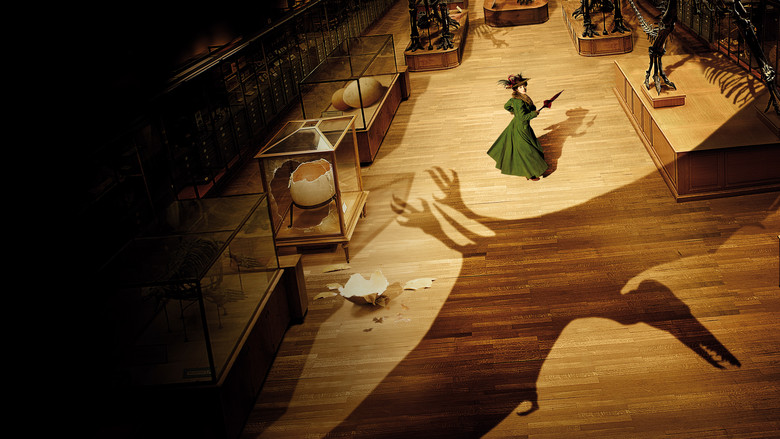
Meanwhile, back in Paris, an ancient pterosaur egg in the Jardin des Plantes mysteriously hatches under the psychic telepathic influence of the eccentric Professor Espérandieu. The flying beast terrorizes the Parisian night sky, sparking civic hysteria, political panic from the French President, and a bumbling police manhunt led by Inspector Léonce Caponi and big-game hunter Justin de Saint-Hubert.

As Adèle slips back into France with her illicit sarcophagus, she discovers that the only man with the psychic power to reanimate her ancient mummy—Espérandieu—has been sentenced to the guillotine. To achieve her ultimate goal, Adèle must execute a series of increasingly frantic and comical prison breaks while navigating Parisian bureaucracy, prehistoric beasts, and relentless enemies.
Core Meaning

Luc Besson uses the framework of pulpy, fantastical comic-strip serials to celebrate relentless determination, female autonomy, and unconditional sisterly devotion. Beneath the slapstick chases and steampunk whimsy lies a poignant message: true love and family loyalty transcend scientific impossibility and legal conventions. Besson portrays Adèle not as an untouchable action archetype, but as an unapologetic, flawed, and fiercely independent modern woman carving her way through an absurd, self-important patriarchal establishment.

Thematic DNA

Sisterly Devotion and Guilt 35%
Defiance of Male Authority and Bureaucracy 25%
Rational Modernity vs. Ancient Mysticism 20%
Absurdity and Serendipity 20%

Sisterly Devotion and Guilt

The entire narrative engine is Adèle’s profound guilt over the tragic tennis/hatpin accident that left her twin sister Agathe comatose. Every law broken, mummy looted, and danger braved stems from her absolute commitment to atoning and healing her sister.

Defiance of Male Authority and Bureaucracy

The film satirizes early 20th-century French institutions—inept police inspectors, pompous colonial hunters, vain politicians, and rigid prison wardens. Adèle outsmarts every condescending man who attempts to domesticate or sideline her.

Rational Modernity vs. Ancient Mysticism

The clash between the technological arrogance of the early 20th century and forgotten ancient wisdom; mummies and prehistoric creatures reveal the narrowness of contemporary scientific pride.

Absurdity and Serendipity

Destiny operates through chain reactions of comic coincidences—from psychic waves hatching eggs to the bizarre courtly manners of reanimated Egyptian nobility.

Character Analysis

Adèle Blanc-Sec

Louise Bourgoin

Archetype: The Fearless Rebel / Trickster Hero Key Trait: Cynical, chain-smoking, and brilliant adventure writer

Motivation

To atone for her past mistake and cure her comatose twin sister Agathe at all costs.

Character Arc

She transitions from a solitary, guilt-ridden crusader to a vindicated sister capable of moving forward after successfully healing her twin.

Professor Espérandieu

Jacky Nercessian

Archetype: The Eccentric Mentor / Mystic Key Trait: Gentle, elder scholar possessing esoteric psychic powers

Motivation

Expanding the boundaries of human knowledge and spiritual life through esoteric life energy.

Character Arc

Demonstrates the validity of his telepathic life-energy research, ultimately sacrificing his life when his psychic link to the pterodactyl proves fatal, but successfully unleashing the final resurrective wave.

All 5 characters and cast

Symbols & Motifs

The Hatpin (L'épingle à chapeau)

Meaning:

The physical cause of Agathe’s traumatic brain injury and Adèle’s lingering guilt; it symbolizes how delicate domestic beauty can instantly turn lethal.

Context:

Originating from the past tennis accident between the twin sisters and remaining lodged in Agathe's skull until the climax.

The Pterodactyl

Meaning:

A symbol of untamed prehistoric vitality unleashed upon a rigid, civilized society, mirroring Adèle’s own disruption of Parisian norms.

Context:

Hatched from an ancient egg in the Jardin des Plantes and soaring across the Parisian night skies.

The Pharaoh’s Court Mummies

Meaning:

Far from being monstrous undead, the resurrected Egyptians are refined, articulate, and courteous, symbolizing the beauty of lost wisdom and the irony of human preconceptions.

Context:

Reanimated in Adèle's apartment and the halls of the Louvre Museum.

Elaborate Disguises

Meaning:

Symbolize Adèle's fluidity, quick wits, and absolute refusal to conform to prescribed social roles.

Context:

Used during Adèle's repeated comical attempts to infiltrate the prison dressed as a lawyer, guard, or executioner.

Memorable Quotes

Vous n'avez pas honte d'attaquer une jeune femme seule et sans défense ? Quoique sans défense, c'est vite dit.
— Adèle Blanc-Sec

Context

Spoken when facing armed ambushers during her expedition in Egypt.

Meaning

Captures Adèle’s trademark wit and fearless self-reliance in the face of mortal danger.

Quand on a une soeur, on n'abandonne jamais.
— Adèle Blanc-Sec

Context

Spoken while speaking of her comatose twin sister, Agathe.

Meaning

Condenses the core emotional theme of the entire film: unwavering sisterly love.

All 4 quotes

Philosophical Questions

To what extent does love justify transcending moral and scientific boundaries?

Explored through Adèle's extreme actions, as she desecrates ancient tombs, breaks laws, and unleashes supernatural anomalies solely to heal her kin.

Is progress synonymous with superiority?

Explored through the contrast between the reanimated ancient Egyptians—who prove far wiser, calmer, and more civilized—and the erratic, trigger-happy modern Parisians.

Alternative Interpretations

Some alternative readings of the film include:

Full ending explanation

Cultural Impact

Jacques Tardi’s Adèle Blanc-Sec was a landmark 1970s feminist and anti-establishment Franco-Belgian comic. Bringing her to the silver screen represented an effort to create a domestic European adventure franchise distinct from Hollywood blockbusters. The film drew over 1.6 million admissions in France and grossed around $34 million internationally, performing particularly well across Europe and Asia (notably China).

Audience Reception

French and international critics gave the film generally positive reviews, praising it as a charming, delightfully bizarre, and stylish French fantasy-adventure that stands out in Luc Besson's filmography.

Key reception points include:

  • Praise: Louise Bourgoin's charismatic performance, witty dialogue, lavish production design, charming Belle Époque aesthetic, and the delightful deadpan humor of the resurrected mummies.
  • Criticism: Disjointed narrative stitching between the Egypt, prison-break, and pterodactyl storylines, alongside uneven CGI effects in select action sequences.

Interesting Facts

  • The script merges storylines from two of Jacques Tardi’s most celebrated graphic novels: Adèle et la Bête (1976) and Momies en folie (1978).
  • Director Luc Besson cast Louise Bourgoin after seeing her charismatic, comedic weather segments on the French TV channel Canal+; this served as her major leading feature breakthrough.
  • To transform into the grotesque villain Dieuleveult, Mathieu Amalric spent nearly five hours in prosthetic makeup every shooting day.
  • Produced by EuropaCorp with a budget of approximately €31 million ($30 million), it stood as one of the most ambitious French fantasy productions of 2010.
  • The film won the César Award for Best Production Design (Hugues Tissandier) in 2011 for its recreation of 1912 Paris and Egyptian tombs.
  • This marked the 9th collaboration between Luc Besson and his longtime cinematographer Thierry Arbogast.

Easter Eggs

The RMS Titanic Post-Credits Scene

In the film’s final scene, Adèle boards a luxurious transatlantic ocean liner for a vacation; the ship’s nameplate reveals it to be the Titanic, with Dieuleveult shown plotting nearby—a dark, comedic historical dramatic irony.

Jacques Tardi Cameo Aesthetic

The film recreates the exact framing, angles, and facial caricatures found in Jacques Tardi’s original graphic comic panels.

Indiana Jones & Tintin Nods

Adèle’s tomb-raiding equipment, subterranean puzzles, and rope-swinging playfully salute classic pulp heroes, while the bumbling French detectives evoke Hergé’s Thomson and Thompson.

Frequently Asked Questions

Explore More About This Movie

Dive deeper into specific aspects of the movie with our detailed analysis pages

Comments (0)

Leave a comment

No comments yet. Be the first to share your thoughts!

Similar Movies