Back to the Future Part II
"Getting back was only the beginning."
Overview
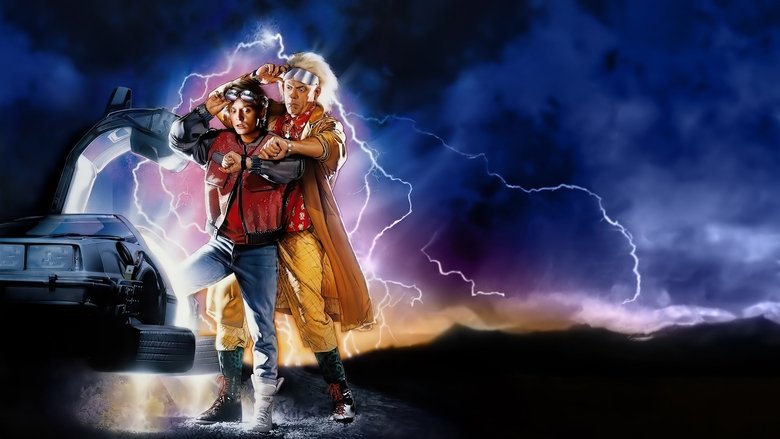
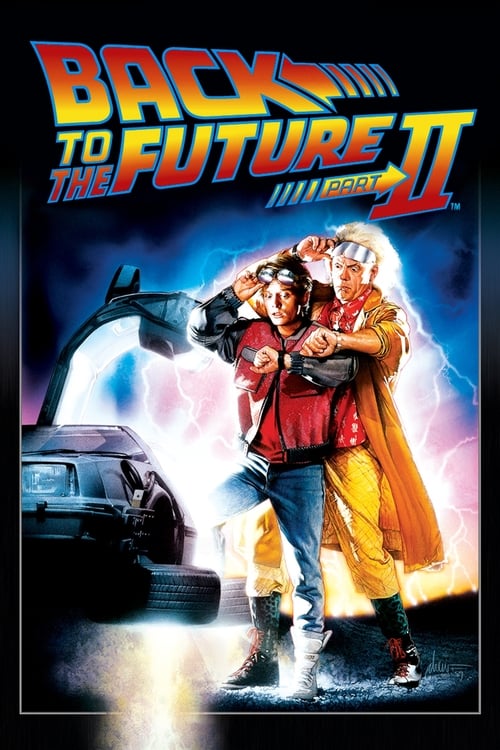
Picking up immediately where the original film left off, Back to the Future Part II follows Marty McFly and Dr. Emmett Brown as they plunge into the year 2015. Their mission is narrow: prevent Marty's future son from making a mistake that will destroy the McFly family legacy. However, the whims of the future are more complex than Marty anticipates, and his own impulsive desire to profit from time travel via a sports almanac sets a catastrophic chain of events in motion.
While the duo is distracted, their arch-nemesis, an elderly Biff Tannen, steals the DeLorean and the almanac to rewrite history. Marty and Doc return to a nightmarish, alternate 1985 where Hill Valley has been transformed into a crime-ridden dystopia ruled by a corrupt, billionaire Biff. To restore reality, they must travel back to the events of 1955, carefully weaving through their own past footsteps without being detected by their younger selves, in a desperate race to burn the book before the timeline sets forever.
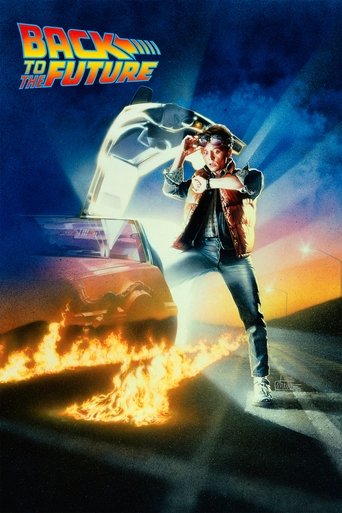
Core Meaning
The film explores the ethical burden of knowledge and the fragility of fate. Director Robert Zemeckis uses the narrative to caution that even well-intentioned interference with time can yield unforeseen horrors. While the first film was a celebration of changing one's luck, the sequel serves as a darker meditation on the consequences of greed and the responsibility that comes with power. It posits that the future is a delicate construction of choices, and that attempting to "cheat" life—whether through gambling or shortcuts—inevitably leads to a corruption of the self and society.
Thematic DNA
The Corruption of Greed
Revealed through the Grays Sports Almanac, which acts as a literal "get-rich-quick" scheme. Biff Tannen’s rise to power demonstrates how unearned wealth, obtained through the subversion of time, creates a hollow, tyrannical existence that destroys everything around it.
The Fragility of the Timeline
The film shifts from a linear adventure to a complex temporal puzzle. It highlights how minor changes (the "ripple effect") can escalate into global shifts, emphasizing that the present is an unstable equilibrium built on a specific sequence of past events.
Responsibility vs. Invention
Doc Brown’s arc centers on his growing realization that his greatest invention is too dangerous for humanity. His evolution from a curious scientist to a cautious guardian of time reflects the burden of scientific ethics.
Legacy and Predestination
The film examines whether the McFly family is destined for failure. Marty’s struggle with being called "chicken" represents a hereditary flaw he must overcome to ensure a future where his life doesn't end in a literal and figurative car wreck.
Character Analysis
Marty McFly
Michael J. Fox
Motivation
To save his future family and subsequently undo the damage caused by his own greed.
Character Arc
Marty struggles with his ego, particularly the word "chicken." In this installment, he learns the hard way that his impulsivity can ruin his life, setting up his eventual maturation in the final film.
Doc Brown
Christopher Lloyd
Motivation
To maintain the integrity of the space-time continuum at any cost.
Character Arc
Doc moves from being purely fascinated by the future to being horrified by its vulnerability. He becomes a temporal moralist, ultimately deciding the time machine must be destroyed.
Biff Tannen
Thomas F. Wilson
Motivation
To dominate others through wealth and intimidation.
Character Arc
Biff exists as three versions: the pathetic 1985 loser, the arrogant 2015 relic, and the monstrous "Hell Valley" tyrant. He represents the darkest impulses of capitalism and power.
Symbols & Motifs
Grays Sports Almanac
A symbol of greed and shortcuts. It represents the temptation to bypass the natural struggle of life using forbidden knowledge, serving as the catalyst for the film's conflict.
Marty buys it in a 2015 antique shop; it is later used by Old Biff to create the "Hell Valley" timeline.
The Hoverboard
A symbol of technological wonder and adaptability. Unlike the almanac, it represents the "positive" future—progress that is fun and useful but requires skill and effort to master.
Marty borrows it from a girl in 2015 to escape Griff, and it becomes a crucial tool during the 1955 tunnel chase.
The Clock Tower (Damaged)
Symbolizes wounded time. In the alternate 1985, the tower is surrounded by Biff’s gaudy casino, showing how commerce and corruption have literalized the "death" of the town’s history.
Visible in all three timelines, its changing state reflects the health of the Hill Valley community.
Memorable Quotes
Roads? Where we're going, we don't need roads.
— Doc Brown
Context:
Spoken at the beginning of the film as Doc, Marty, and Jennifer blast off into the future.
Meaning:
Iconic line signifying the limitless potential and danger of the flying DeLorean's capabilities.
I didn't invent the time machine to win at gambling. I invented the time machine to travel through time!
— Doc Brown
Context:
Doc scolds Marty after discovering he bought the sports almanac in 2015.
Meaning:
Defines the ethical divide between Doc’s scientific curiosity and Marty’s human temptation.
Make like a tree and leave.
— Old Biff Tannen
Context:
2015 Biff corrects his 1955 self's incorrect use of the idiom.
Meaning:
A linguistic recurring joke that underscores Biff's lack of intelligence, despite his eventual wealth.
Philosophical Questions
Is it ethical to fix a life through temporal intervention?
The film starts with Doc intervening to save Marty's kids from prison. This raises the question: if the future is "unwritten," is it right to force a positive outcome, or does the intervention itself create a dependency that weakens the character's growth?
The Bootstrap Paradox and Originality
When characters interact with their past selves or bring knowledge back, the film asks if anything is truly "original" or if history is a self-sustaining loop where information has no clear point of origin.
Alternative Interpretations
Critics and fans have often debated the "Marty Replacement" theory: that the Marty we follow at the end of the film is essentially an interloper in a timeline that belongs to a "better" version of himself. Another interpretation suggests the film is a critique of 1980s Reaganomics, with the dystopian 1985 acting as a warning of what happens when unbridled greed and deregulation (represented by Biff) take over an American town. Some viewers also argue that Doc Brown is a 'Time Fugitive', whose attempts to fix the timeline are actually self-serving efforts to avoid his own fated end.
Cultural Impact
Back to the Future Part II has left an indelible mark on pop culture, particularly through its predictions of 2015. While flying cars didn't materialize, its forecasts of flat-screen TVs, video conferencing (Skype/Zoom), wearable technology, and biometric security were eerily accurate. The film also popularized the "dark sequel" trope, where a franchise takes a cynical, dystopian turn before a final resolution. Its intricate interweaving of scenes with the first movie is often cited as a masterclass in scriptwriting and editing, influencing modern time-travel media like Avengers: Endgame. The Nike Mag self-lacing shoes became such a cult item that Nike eventually produced limited real-world versions to benefit Parkinson's research.
Audience Reception
Upon release, Part II received a mixed-to-positive reception. While audiences loved the visual effects and the hoverboard sequences, many critics felt the plot was overly convoluted and "too dark" compared to the lighthearted original. The cliffhanger ending was controversial at the time, with some viewers feeling like they had seen half a movie. However, in the decades since, the film has undergone a massive critical reappraisal. Modern audiences celebrate its complexity, its daring structure, and its ability to act as both a sequel and a "remix" of the first film, now often ranking it as one of the greatest sequels ever made.
Interesting Facts
- Crispin Glover did not return as George McFly; he was replaced by Jeffrey Weissman, who wore prosthetics to mimic Glover’s appearance, leading to a landmark lawsuit regarding personality rights.
- The 2015 'Jaws 19' was directed by Max Spielberg, the real-life son of executive producer Steven Spielberg.
- Elisabeth Shue replaced Claudia Wells as Jennifer Parker because Wells had to withdraw to care for her ill mother.
- The film was shot back-to-back with Part III, a revolutionary production move at the time.
- The 'hoverboards are real' prank by Robert Zemeckis in a behind-the-scenes special led to thousands of calls to Mattel from parents wanting to buy them.
Easter Eggs
Elijah Wood's Film Debut
A young Elijah Wood appears as one of the two kids in the Cafe 80s who mocks Marty for having to use his hands to play the Wild Gunman arcade game.
Biff Tannen as Donald Trump
The alternate 1985 Biff, with his towering casino and personality, was explicitly modeled after 1980s Donald Trump, according to writer Bob Gale.
Roger Rabbit Cameo
A stuffed Roger Rabbit doll can be seen in the window of the 'Blast from the Past' antique shop, referencing Zemeckis' previous film.
⚠️ Spoiler Analysis
Click to reveal detailed analysis with spoilers
Frequently Asked Questions
Explore More About This Movie
Dive deeper into specific aspects of the movie with our detailed analysis pages
Comments (0)
No comments yet. Be the first to share your thoughts!