Skip to content
The Flash
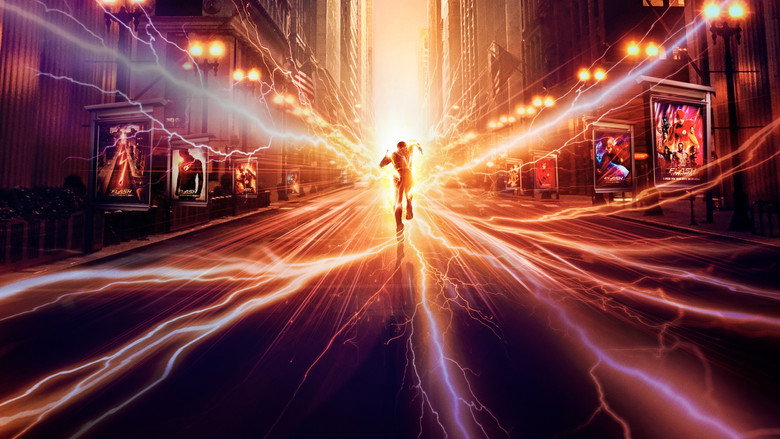
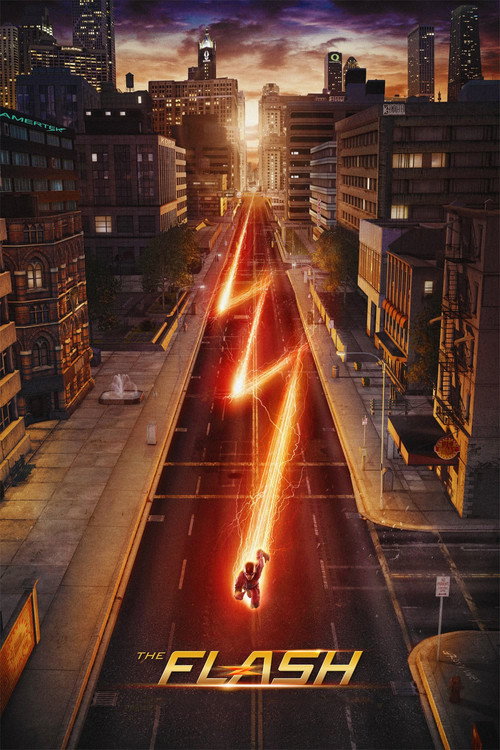
A vibrant sci-fi melodrama of kinetic optimism and profound grief, where incandescent scarlet lightning slices through temporal heartbreak to prove that the swiftest path forward is always guided by the human heart.
The Flash

The Flash

"The fastest man alive."

07 October 2014 — 24 May 2023 United States of America 9 season 184 episode Ended 7.8 (11,731)

Cast: Grant Gustin, Danielle Panabaker, Candice Patton, Jesse L. Martin, Tom Cavanagh

Drama Sci-Fi & Fantasy Grief, Trauma, and Acceptance Family, Love, and Chosen Community Destiny, Free Will, and the Perils of Time Travel The Dual Nature of Science and Power

Overview

Developed by Greg Berlanti, Andrew Kreisberg, and Geoff Johns as a spin-off of Arrow, The Flash follows Barry Allen (Grant Gustin), a mild-mannered Central City Police Department forensic investigator. Struck by lightning following the catastrophic explosion of S.T.A.R. Labs’ particle accelerator, Barry awakens from a nine-month coma endowed with superhuman speed. Guided by a team of brilliant scientists and his surrogate family, he dons the mantle of the Scarlet Speedster, dedicating his life to shielding Central City from emergent metahuman threats while unraveling the tragic mystery behind his mother’s murder.

Across nine seasons and 184 episodes, the narrative dramatically expands beyond localized crime-fighting into an expansive, multiverse-spanning epic. Barry repeatedly pushes the boundaries of physics, tapping into the mystical Speed Force to navigate parallel dimensions, rewrite temporal paradoxes, and confront cosmic anomalies. The series charts Barry's transition from an impulsive, trauma-driven rookie relying on mentors to a seasoned patriarch, superhero symbol, and leader of the Arrowverse.

At its core, the overarching narrative is driven by Barry’s foundational partnership with investigative journalist Iris West and his ever-evolving ensemble, Team Flash. Together, they combat megalomaniacal speedsters, intellectual conquerors, and universal crises. The series maintains a persistent emotional momentum, demonstrating that heroism is forged not by superhuman speed, but through resilience, self-sacrifice, and chosen family.

Core Meaning

The overarching message of The Flash is that our past tragedies do not define our humanity, but our capacity to process grief, accept loss, and choose hope does. While villains weaponize trauma to manipulate time and control destiny, true heroism lies in embracing the present and preserving the natural flow of life. The series argues that unchecked power and the desire to rewrite painful realities lead to destruction, whereas true balance is achieved when love and community serve as an anchor in a chaotic universe.

Thematic DNA

Grief, Trauma, and Acceptance 30%
Family, Love, and Chosen Community 25%
Destiny, Free Will, and the Perils of Time Travel 25%
The Dual Nature of Science and Power 20%

Grief, Trauma, and Acceptance

The narrative initiates with Barry’s unresolved grief over his mother Nora’s murder and father Henry’s wrongful imprisonment. In Seasons 1–3, Barry repeatedly succumbs to grief by altering timelines (e.g., Flashpoint). As the series matures through Seasons 4–9, Barry, Caitlin, and Iris learn that running away from pain causes catastrophic suffering, ultimately finding peace through genuine acceptance rather than temporal escapism.

Family, Love, and Chosen Community

The show emphasizes that Barry cannot operate in isolation. What begins as an ad-hoc alliance inside S.T.A.R. Labs evolves into a deep familial structure (Team Flash). The romantic bond between Barry and Iris matures from unrequited longing into the literal lightning rod stabilizing Barry's soul across infinite dimensions.

Destiny, Free Will, and the Perils of Time Travel

Time travel starts as a miraculous accidental discovery in Season 1, only to become a dangerous moral trap. The series continually dissects the butterfly effect, the rigidity of fixed temporal points, and the hubris of playing god, culminating in Barry realizing that destiny is shaped by everyday moral choices rather than predetermined timelines.

The Dual Nature of Science and Power

Embodied by S.T.A.R. Labs, scientific innovation is presented as a double-edged sword capable of curing ailments or birthing monstrous metahumans. The show balances techno-optimism with warnings against unbridled ambition (as seen with Harrison Wells, Eobard Thawne, and Clifford DeVoe).

Character Analysis

Barry Allen / The Flash

Grant Gustin

Archetype: The Reluctant Hero / The Chosen One Key Trait: Unyielding Empathy

Motivation

Driven initially to free his framed father, his motivation expands into protecting all living beings without compromising compassion.

Character Arc

Evolves from an insecure, grief-stricken CSI into the wise, foundational leader of the global hero community.

Iris West-Allen

Candice Patton

Archetype: The Anchor / The Truth-Seeker Key Trait: Moral Fortitude & Courage

Motivation

Driven by an instinct for truth and emotional justice.

Character Arc

Transitions from an aspiring blogger to an award-winning investigative journalist, leader of Team Flash, and mother to future heroes.

All 5 characters and cast

Symbols & Motifs

Lightning (Scarlet and Yellow)

Meaning:

Represents life, destiny, and cosmic energy. Barry’s scarlet lightning signifies natural heroism and hope, whereas the Reverse-Flash's jagged red/yellow trail embodies corruption, hatred, and the Negative Speed Force.

Context:

Used visually during speedster runs, energy projection, and power manifestations throughout the series.

The "Lightning Rod"

Meaning:

Symbolizes the emotional anchor that grounds speedsters, preventing them from losing their physical identity within the infinite vortex of the Speed Force.

Context:

A recurring metaphor primarily attached to Iris West across multiple seasons when Barry travels through or is trapped in the Speed Force.

The S.T.A.R. Labs Pipeline / Particle Accelerator

Meaning:

A symbol of technological overreach and redemption.

Context:

Once the cradle of metahuman catastrophe, the facility becomes Team Flash's headquarters and a sanctuary of science, rehabilitation, and defense.

The Flash Ring

Meaning:

Symbolizes the synthesis of forensic intellect, superhero tradition, and futuristic technology passed down through generations.

Context:

An iconic golden ring storing Barry’s compressed suit, used to deploy his costume instantly.

The Central City Citizen Newspaper Headline ("Flash Vanishes in Crisis")

Meaning:

Serves as a reminder of Barry's impending sacrifice and the inescapable shadow of mortality.

Context:

A futuristic motif located in the Time Vault that haunts the narrative from Season 1 to Season 6.

Memorable Quotes

My name is Barry Allen, and I am the fastest man alive.
— Barry Allen

Context

Opening Narration across multiple seasons.

Meaning

The show’s thematic thesis and mantra. Over the seasons, the meaning evolves from a boast into a heavy burden of responsibility.

Run, Barry, run!
— Dr. Harrison Wells (Eobard Thawne)

Context

Season 1, Episode 1 (Pilot) and echoed by others throughout the series.

Meaning

Initially a sincere-sounding rallying cry from a mentor, it is later recontextualized as a chilling manifestation of Thawne's grand manipulation.

All 5 quotes

Episode Highlights

Out of Time

S1E15

Barry accidentally travels back in time for the first time after trying to stop a tidal wave; Cisco discovers Wells' identity, leading to a tragic confrontation erased by the timeline reset.

Significance:

Solidified the show's temporal stakes and established time manipulation as a core narrative mechanic.

Fast Enough

S1E23

Barry travels back to save his mother but chooses to let history stand; Eddie Thawne sacrifices himself to erase Eobard Thawne.

Significance:

Set the show's benchmark for high-stakes emotional payoffs and opened the multiverse via a singularity.

Enter Zoom

S2E6

Zoom brutally thrashes Barry and parades his broken body before the police and media.

Significance:

Shattered Barry's invulnerability and raised physical and psychological stakes to terrifying heights.

The Runaway Dinosaur

S2E21

Directed by Kevin Smith; trapped inside the Speed Force, Barry confronts the physical manifestation of his grief and speaks with an entity taking the form of his mother.

Significance:

Provided profound philosophical closure on Barry's mother, deepening the mythos of the Speed Force as a sentient entity.

Flashpoint

S3E1

Barry resets reality to live with his living parents, creating an altered reality with destructive unintended consequences.

Significance:

Redefined the Arrowverse timeline and showcased the moral consequences of Barry's temporal selfishness.

Enter Flashtime

S4E15

Barry, Jesse Quick, and Jay Garrick move inside a fraction of a second to stop a detonating nuclear warhead in Central City.

Significance:

Widely hailed as a masterclass in sci-fi tension and visual storytelling within Barry's accelerated perception.

Crisis on Infinite Earths: Part Three

S6E9

Multiversal destruction looms; Earth-90's Flash (John Wesley Shipp) sacrifices himself on the cosmic treadmill, fulfilling the prophecy of the Flash's sacrifice.

Significance:

Resolved the series-long "Flash vanishes" headline and fundamentally rearranged the CW multiverse.

A New World, Part One

S9E10

Barry is sent back to the year 2000 on the fateful night his mother died, interacting with his parents and fulfilling the time-loop of waving off his Season 1 self.

Significance:

Brought the entire narrative full-circle back to the pilot's inciting tragedy.

A New World, Part Four

S9E13

Team Flash engages in a final battle against the resurrected speedster villains led by Cobalt Blue (Eddie Thawne), concluding with the birth of baby Nora and Barry sharing the Speed Force.

Significance:

Formally closed the nine-year run of the flagship Arrowverse saga.

Philosophical Questions

The Ethics of Temporal Alteration

Explores whether it is morally justifiable to alter past atrocities if doing so disrupts the lives of millions in the present, demonstrated through the creation and collapse of Flashpoint.

The Problem of Retributive Justice

Explores whether subduing evil through force perpetuates an endless cycle of violence, culminating in the finale where Barry defeats the Negative Speed Force not by killing Eddie Thawne, but by seeking mutual coexistence and peace.

Identity and the Self Across Multi-Realities

Explores what constitutes essential identity when parallel versions of ourselves exist with entirely different moral compasses, examined through the doppelgängers of Harrison Wells, Caitlin Snow, and Barry Allen (Savitar).

Alternative Interpretations

Several alternative readings have emerged regarding the series:

Full ending explanation

Cultural Impact

Premiering during the peak of 2010s comic book adaptations, The Flash pushed back against the grim, gritty aesthetic popularized by Christopher Nolan’s The Dark Knight trilogy and early Arrow seasons. It introduced unapologetic silver-age comic exuberance, bright colors, time travel, and multiverses to mainstream network television.

The Flash became the connective nexus of the Arrowverse, anchoring annual multi-show crossover events (e.g., Invasion!, Crisis on Earth-X, Elseworlds, Crisis on Infinite Earths). Critical reception was near-unanimous in early seasons, praising Gustin’s charming performance and heartfelt storytelling. In its later seasons, the series experienced critical and ratings attrition due to formulaic storytelling, yet it left a lasting legacy as one of the longest-running and most influential superhero TV shows of the 21st century.

Audience Reception

Critical and Fan Acclaim: Seasons 1–2 received peak critical acclaim and were celebrated as top-tier superhero television, praised for Grant Gustin’s charismatic, emotionally grounded performance, Tom Cavanagh’s versatile acting, electric pacing, and strong family dynamics.

Mixed Reception and Decline: Season 3 received mixed-to-positive reviews due to a darker tone, while Seasons 4–6 delivered solid standalone highs (such as "Enter Flashtime") alongside uneven villain arcs. Seasons 7–9 faced heavy criticism for repetitive "Villain of the Week" tropes, sidelining Barry in favor of secondary characters ("Team Citizen", Allegra, Chester, Cecile), convoluted "Forces" mythology, and undercooked lightsaber/CGI battles.

Overall Verdict: The series is widely regarded as a pioneering, foundational superhero property that defined 2010s genre television, despite running past its creative prime in its final seasons.

Interesting Facts

  • Barry Allen originally debuted in Arrow Season 2 (Episodes 8 and 9); strong audience and network enthusiasm led The CW to greenlight a standalone, big-budget pilot instead of a planned backdoor pilot in episode 20.
  • The series premiere on October 7, 2014, pulled in over 4.8 million viewers, becoming The CW’s second-most watched series premiere in network history behind The Vampire Diaries.
  • Tom Cavanagh was originally signed for a single season, but the producers created unique alternate-universe versions of Harrison Wells in subsequent seasons due to his range and chemistry with the cast.
  • Encore VFX, led by Armen V. Kevorkian, won multiple visual effects accolades for developing cinematic-grade digital doubles, volumetric lighting, and CG speed-runs on a broadcast television schedule.
  • Episode 3x17 ("Duet") reunited Grant Gustin with Glee co-stars Melissa Benoist and Darren Criss, featuring an original song ("Runnin' Home to You") written by Benj Pasek and Justin Paul.
  • Filmed in Vancouver, Canada, the Flash suit evolved from heavy, restrictive leather designs into flexible, breathable spandex-based fabrics featuring a comic-accurate bright red and gold cowl by Season 6.

Easter Eggs

Legacy Speedster Casting

John Wesley Shipp, who portrayed Barry Allen in the 1990 CBS series, was cast as Barry's father Henry Allen, and later played Earth-3’s Jay Garrick and the original 1990 Barry Allen.

Mark Hamill Reprisal

Mark Hamill reprised his role from the 1990 series as James Jesse / The Trickster, delivering his famous "I am your father" line directly to his successor in Season 1, Episode 17.

DCEU Movie Flash Crossover

Ezra Miller's cinematic Flash and Grant Gustin’s television Flash shared an unexpected scene in S.T.A.R. Labs during Crisis on Infinite Earths, creating a historic cinematic-television DC crossover.

Ferris Air References

The abandoned testing airfield frequently used by S.T.A.R. Labs is Ferris Air, referencing Green Lantern (Hal Jordan) by mentioning a test pilot who mysteriously disappeared.

Gorilla City & Grodd

The recurring psychic villain Gorilla Grodd, birthed from S.T.A.R. Labs experimentation, makes explicit nods to Gorilla City and classic DC Comics lore.

Frequently Asked Questions

Explore More About This Movie

Dive deeper into specific aspects of the movie with our detailed analysis pages

Comments (0)

Leave a comment

No comments yet. Be the first to share your thoughts!

Similar Movies