Skip to content
Outlander
A storm-swept historical fantasy drenched in heather and blood, tracing an unyielding ache of devotion across centuries as two souls collide like flint against steel, illuminating love’s survival against the relentless machinery of time.
Outlander

Outlander

"What if your future was the past?"

09 August 2014 — 15 May 2026 United Kingdom 8 season 101 episode Ended 8.2 (2,967)

Cast: Caitríona Balfe, Sam Heughan, Sophie Skelton, Richard Rankin, John Bell

Drama Sci-Fi & Fantasy Love as an Eternal, Choosing Bond Historical Inevitability vs. Free Will Displacement, Identity, and the Concept of "Home" Trauma, Healing, and Bodily Autonomy Knowledge, Science, and Superstition

Overview

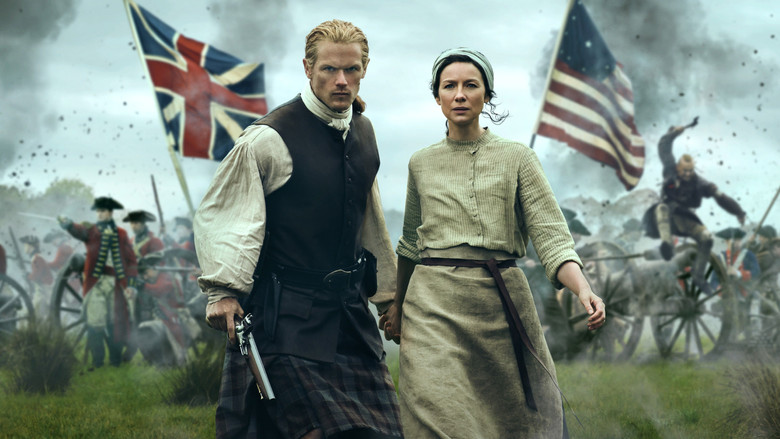
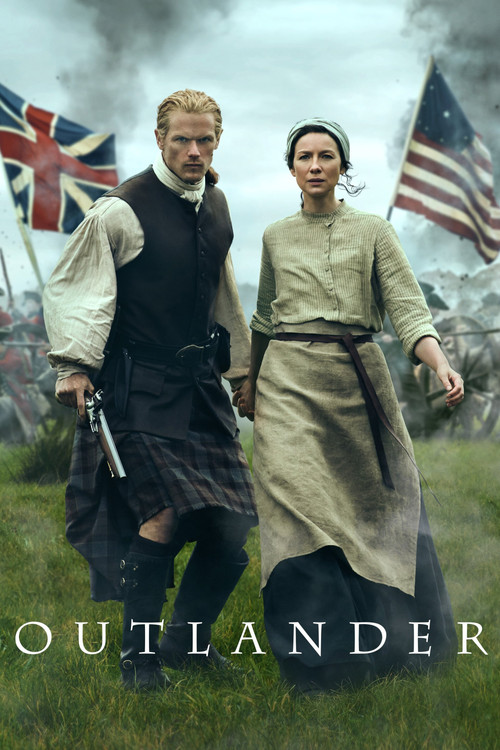
Developed for television by Ronald D. Moore and adapted from the bestselling multi-genre novels by Diana Gabaldon, Outlander is an epic historical drama and science-fiction romance. The narrative begins in 1945 as Claire Randall, a married English combat nurse recovering from the trauma of World War II, travels to the Scottish Highlands on a second honeymoon with her historian husband, Frank. After encountering the ancient megalithic stone circle of Craigh na Dun, Claire is mysteriously hurled two hundred years into the past into the war-torn Scotland of 1743. Thrust into a lethal web of clan politics, Highland skirmishes, and British military occupation, she is forced to marry Jamie Fraser—a chivalrous, fugitive Scottish Highlander. What begins as a desperate union of political convenience rapidly ignites into an all-consuming, generational romance that defies centuries.

Across eight sprawling seasons, the narrative expands far beyond the mist of the Scottish Highlands. The protagonists find themselves navigating the decadent, scheming courts of Louis XV’s Paris, the bloody catastrophe of the Jacobite Rising at the Battle of Culloden, transatlantic voyages across the Caribbean, and eventually the untamed frontier of colonial North Carolina. As Claire’s daughter Brianna and historian Roger MacKenzie bridge the modern era and the 18th century, the family carves out a fragile haven at Fraser’s Ridge on the precipice of the American Revolutionary War.

Ultimately, Outlander charts the burden of foreknowledge and the agony of displacement. The series weaves domestic intimacy with catastrophic geopolitical upheavals, examining how ordinary human beings attempt to build family, heal from psychological trauma, and hold onto bodily and emotional autonomy when swept up by forces far larger than themselves.

Core Meaning

Across its complete eight-season run, Outlander articulates that true love and moral purpose are acts of radical, active resistance against the deterministic tide of history. While time travel is its inciting engine, the creators do not treat history as a malleable sandbox of consequence-free heroics; instead, historical events (such as the collapse of Highland clan culture or the bloodshed of the American Revolution) exert an immense, crushing gravity.

The deeper philosophical thesis is that while macroscopic history is largely fixed and indifferent to individual desire, individual lives and domestic sanctuaries are profoundly worth fighting for. The bond between Claire and Jamie demonstrates that enduring commitment is neither effortless passion nor passive fate, but an exhaustive, lifelong labor of forgiveness, sacrifice, and mutual survival. The show asserts that human connection—grounded in memory, blood, and shared hardship—is the only enduring anchor in a chaotic and indifferent cosmos.

Thematic DNA

Love as an Eternal, Choosing Bond 30%
Historical Inevitability vs. Free Will 25%
Displacement, Identity, and the Concept of "Home" 20%
Trauma, Healing, and Bodily Autonomy 15%
Knowledge, Science, and Superstition 10%

Love as an Eternal, Choosing Bond

Unlike conventional romantic dramas, Outlander spends little time on courtship and instead focuses on long-term marriage across decades of war, forced separation, aging, and grief. The central romance is defined by mutual egalitarian respect and deliberate choice rather than mere chemical passion.

Historical Inevitability vs. Free Will

A constant tension throughout the narrative is whether time travelers can change recorded history. From Claire and Jamie's desperate, failed scheme to thwart the 1745 Jacobite uprising to the looming realities of the American War of Independence, the series illustrates that while major historical disasters cannot be completely avoided, individual survival, mercy, and personal destinies can be reshaped.

Displacement, Identity, and the Concept of "Home"

The titular motif of the "Outlander" (or Sassenach, an outsider) applies to nearly every central figure. Claire is an outsider in the 18th century; Jamie is an outcast in post-Culloden Scotland and an immigrant in colonial America; Brianna and Roger struggle to balance 20th-century sensibilities within an agrarian frontier. The series tracks how rootless survivors construct family and home when geographic and temporal borders fracture.

Trauma, Healing, and Bodily Autonomy

Outlander deals bluntly with physical brutality, sexual violence, and psychological scarring. Rather than treating trauma as an episodic obstacle, it charts the painstaking, long-term process of psychological recovery—highlighting both Jamie’s recovery from Black Jack Randall and Claire’s dissociative processing of violent assault.

Knowledge, Science, and Superstition

As a 20th-century physician transported to the 18th century, Claire constantly balances modern empirical medicine with the dangerous threat of being branded a witch. The show examines how society weaponizes ignorance and fear against independent women who possess advanced knowledge.

Character Analysis

Claire Beauchamp Randall Fraser

Caitríona Balfe

Archetype: The Reluctant Prophet / Healer-Hero Key Trait: Relentless intellectual and emotional resilience; unapologetic stubbornness.

Motivation

Initially motivated solely by survival and returning home to 1945; evolves into protecting Jamie, preserving her extended family, and providing life-saving healthcare regardless of century.

Character Arc

Begins as an emotionally guarded WWII nurse seeking domestic calm, evolves into a fierce frontier doctor, clan matriarch, and seasoned survivor who bears the agony of foreknowledge across two distinct lifetimes.

James "Jamie" Alexander Malcolm MacKenzie Fraser

Sam Heughan

Archetype: The Romantic Warrior-Leader / Honorable Hero Key Trait: Unshakable moral code and fierce capacity for self-sacrifice.

Motivation

Starts with securing justice and clan honor; broadens into an absolute devotion to Claire and safeguarding the future generations of his family across continents.

Character Arc

Transforms from a hot-tempered Highland fugitive and disinherited youth into a nuanced strategist, rebellious rebel commander, and wise laird holding together an entire frontier settlement.

All 5 characters and cast

Symbols & Motifs

Craigh na Dun / Megalithic Standing Stones

Meaning:

Symbolizes the boundary between life, death, and divergent timelines; a mystical threshold of irreversible choice where passage demands deep sacrifice and gemstone catalysts.

Context:

The physical gateway between centuries through which Claire and other travelers pass.

The Forget-Me-Nots

Meaning:

Represent memory, eternal devotion, and the closed temporal loop of Claire and Jamie’s love.

Context:

Blue flowers growing at the base of Craigh na Dun, featured from the opening sequence of the pilot to the closing frames of the series finale.

The Wedding Rings (Key vs. Silver/Gold)

Meaning:

The rings encapsulate Claire’s split identity across two disparate eras, contrasting Scottish heritage, duty, and protection with her modern 20th-century existence.

Context:

Jamie crafts Claire's ring from the iron key of Lallybroch, which sits in direct contrast to the smooth gold ring from her modern life with Frank.

Scars and Flogging Marks

Meaning:

A living tapestry of tyranny, honor, and endurance; it represents the inescapable physical cost of standing against imperial power and personal sadism.

Context:

Prominently marked across Jamie Fraser's back from brutal floggings.

The Dragonfly in Amber

Meaning:

Serves as an explicit metaphor for the characters themselves: preserved, suspended, and immortalized within the amber of time.

Context:

Received as a wedding gift in Paris and reappearing throughout the timeline.

The Blue Light of Healing

Meaning:

Symbolizes transcendent scientific and spiritual vitality pushing back against the finality of death.

Context:

A supernatural, luminous healing aura possessed by ancient travelers and medicine folk like Master Raymond and Claire.

Memorable Quotes

Ye are Blood of my Blood, and Bone of my Bone. I give ye my Body, that we Two might be One. I give ye my Spirit, 'til our Life shall be Done.
— Jamie Fraser

Context

Spoken during their traditional Gaelic wedding ceremony in Season 1, Episode 7 ("The Wedding"), cutting their wrists to merge bloodlines.

Meaning

Defines their bond not as a mundane legal arrangement, but as a binding spiritual union that transcends physical and temporal reality.

Jesus H. Roosevelt Christ!
— Claire Randall Fraser

Context

Claire's iconic, irreverent WWII-era expletive established in Season 1, Episode 1 ("Sassenach") and recurring throughout all seasons.

Meaning

Underscores her anachronistic identity, pragmatic combat-nurse demeanor, and refusal to conform to 18th-century gender expectations.

All 6 quotes

Episode Highlights

Sassenach

S1E1

Introduces Claire's post-war psychological reality, her passage through the ancient Craigh na Dun circle, and her fateful collision with Jamie Fraser in 1743.

Significance:

Establishes the high-production aesthetic, temporal mechanics, and the central conceit of historical displacement.

The Wedding

S1E7

Depicts the arranged marriage between Claire and Jamie through non-linear flashbacks exploring duty, vulnerability, and burgeoning intimacy.

Significance:

Revolutionized television romance by centering the female gaze and mutual consent, serving as the narrative foundation for the entire series.

The Devil's Mark

S1E11

Claire and Geillis are tried for witchcraft; Geillis sacrifices herself while revealing her smallpox vaccination scar; Claire confesses the full truth of her 1945 origins to Jamie.

Significance:

Jamie chooses to believe her and offers to send her back to Frank, prompting Claire’s voluntary choice to stay with him in the past.

Dragonfly in Amber

S2E13

A dual-timeline finale framing Culloden in 1746 alongside 1968 Inverness. Claire forces herself through the stones while Jamie marches toward his presumed death; decades later, an adult Brianna learns of her true heritage.

Significance:

Culminates the Scottish Jacobite arc with overwhelming tragedy while unlocking the multi-generational family mystery.

A. Malcolm

S3E6

Following a devastating 20-year separation across centuries, Claire returns through the stones to find Jamie operating a print shop in Edinburgh under a pseudonym.

Significance:

Successfully pivots the narrative from a story of young romance to the re-negotiation of love between two matured, scarred middle-aged partners.

The Fiery Cross

S5E1

Brianna and Roger wed; Jamie dons his highland regalia and burns the Fiery Cross, demanding loyalty from the settlers of Fraser's Ridge as the American Revolution brews.

Significance:

Seals the show's transformation into an epic frontier family saga and sets up Jamie's political struggle between Crown allegiance and colonial rebellion.

Never My Love

S5E12

Claire is brutally abducted and assaulted by Lionel Brown and his gang; she survives by retreating into an imaginative, surreal 1960s mid-century Thanksgiving dreamscape.

Significance:

A landmark hour for experimental visual storytelling, examining trauma dissociation with cinematic audacity.

And the World Was All Around Us

S8E10

The epic series finale centered on the Battle of Kings Mountain. Jamie is mortally wounded by British fire, prompting Claire to unlock her full healing abilities; the narrative closes the long-standing mystery of Jamie's ghost.

Significance:

Closes the eight-season journey by coming full circle to the 1945 pilot, establishing an eternal temporal loop of love and destiny.

Philosophical Questions

Can History Be Altered, or Are Human Beings Locked in Predestination?

The series rigorously examines causal loops: despite possessing modern history books, Claire and Jamie fail to stop Culloden. It asks whether knowing the future creates an inescapable trap or an imperative to resist regardless of the outcome.

What Constitutes the Essence of Marriage and Fidelity?

By putting Claire in an era where she has two living, legal husbands across two separate centuries, the story destabilizes conventional morality, suggesting that true marital fidelity belongs to spiritual parity and voluntary devotion rather than civil convention.

What Are the Moral Limits of Bodily and Spiritual Preservation?

Through characters like Geillis Duncan (who commits blood murder to travel through time) and Claire (who uses modern medicine at the risk of being burned as a witch), the series interrogates what price is acceptable to defend oneself and one’s loved ones against an unforgiving era.

Alternative Interpretations

The Predestination Loop vs. Linear Time: One primary interpretation—reinforced by the series finale—is that Claire’s journey is an inescapable bootstrap paradox. Jamie’s ghost visiting Claire in 1945 Inverness triggers the exact chain of events that leads her to Craigh na Dun, proving that time is an unbroken, cyclical ring rather than a linear river.

Full ending explanation

Cultural Impact

When Outlander premiered on Starz in 2014, prestige television was dominated by hyper-masculine antihero sagas (Breaking Bad, Mad Men) and grimdark fantasy (Game of Thrones). Outlander boldly carved out a new space: a lavishly budgeted, visually stunning epic told primarily through the female gaze, treating female sexual agency, pleasure, and emotional perspective with serious artistic weight.

The show had a colossal economic and cultural impact, spearheading the so-called "Outlander Effect" in Scotland. Historic sites like Doune Castle (Castle Leoch), Midhope Castle (Lallybroch), and Culloden battlefield experienced unprecedented tourism growth, revitalizing Scottish heritage economies.

Critically, the show enjoyed strong acclaim for its early seasons (particularly Seasons 1 and 2), earning Golden Globe nominations and praise for Caitríona Balfe, Tobias Menzies, and Sam Heughan. Later seasons saw some critical fatigue regarding repetitive kidnap-and-rescue plot structures and relentless violence, yet its fiercely loyal fanbase sustained it as one of premium cable's longest-running and most successful literary adaptations.

Audience Reception

Early Acclaim (Seasons 1–2): Universal praise from both book fans and general television critics. The chemistry between Balfe and Heughan, Tobias Menzies’ chilling dual performance as Frank and Black Jack Randall, and Bear McCreary’s Scottish folk score were hailed as masterclasses in adaptation.

Transition and Frontier Shift (Seasons 3–4): Viewers celebrated the long-awaited print shop reunion in Season 3, but opinions began fracturing as the narrative transitioned to Jamaica and the North Carolina wilderness. Some viewers missed the Scottish clan atmosphere and found the relocation to America less aesthetically alluring.

Controversies and Criticism (Seasons 5–7): Persistent debate arose over the narrative’s recurring reliance on sexual violence as an inciting incident for character drama. While Season 5's finale ("Never My Love") was lauded for artistic daring, viewers voiced fatigue over repeated brutal abductions. The pacing of Season 7 was praised for re-energizing the Revolutionary War stakes.

Final Verdict & Season 8 Finale Reception: The final season and May 2026 series finale polarized the fandom. While emotional callbacks to Season 1 and the resolution of Jamie and Claire's bond brought many viewers to tears, several critics and fans found ten episodes insufficient to resolve numerous secondary character subplots (such as Fergus’ fate and William’s arc), leaving the broadcast conclusion feeling both poignant and hurried.

Interesting Facts

  • Executive producer Ronald D. Moore had never read the novels until his wife, costume designer Terry Dresbach, and producing partner Maril Davis urged him over dinner to adapt them into a long-form television series.
  • During the ocean voyage in Season 3, the production filmed on the expansive sea-vessel sets in Cape Town, South Africa, repurposing the pirate ships constructed for fellow Starz flagship series Black Sails.
  • While Sam Heughan was cast almost instantly as Jamie Fraser, finding Claire took months of global searches, with Caitríona Balfe discovered and cast just days before production commenced following an undeniable chemistry read.
  • Prior to shooting Season 1, the cast participated in an 18th-century Highland boot camp in Scotland, which included intensive horse riding, broadsword combat training, and Gaelic dialect coaching.
  • Rather than relying exclusively on period estates, Sony Pictures Television built massive soundstages out of a converted abandoned factory in Cumbernauld, Scotland, which housed interior sets ranging from Castle Leoch to Fraser’s Ridge.
  • Richard Rankin (Roger) performed his own vocals and acoustic guitar playing live on set for the Scottish festival folk sequences in Season 4.
  • Because author Diana Gabaldon had not published the tenth and final novel before the series entered its final stretch, the writers crafted their own television ending for Season 8 in dialogue with Gabaldon’s overarching concepts.

Easter Eggs

Diana Gabaldon’s On-Screen Cameo

Novelist Diana Gabaldon appeared in Season 1, Episode 4 ("The Gathering") as Iona MacTavish, a sharp-tongued Highland lady speaking with Mrs. Fitzgibbons.

The Doctor Who Inspiration

The entire concept of Outlander was sparked when Gabaldon watched a rerun of the 1969 Doctor Who serial The War Games, which featured a kilted young Scottish companion named Jamie McCrimmon (Frazer Hines). Frazer Hines himself was later cast in Season 1 of Outlander as the prison governor Sir Fletcher Gordon.

The Season 4 Wedding Ring Change

Unlike the books where pirate Stephen Bonnet steals Frank's plain gold ring, the television show had Bonnet steal Jamie's silver key-ring. Showrunner Ron Moore made the deliberate swap because a distinct Scottish heirloom ring was far more visually identifiable for Brianna when hunting Bonnet in later episodes.

The Post-Credits Finale Homage

The series finale concludes with the original 2014 recording of the Skye Boat Song and includes visual Easter eggs honoring Gabaldon’s literary legacy, including book title callbacks and the symbolic forget-me-nots.

Frequently Asked Questions

Explore More About This Movie

Dive deeper into specific aspects of the movie with our detailed analysis pages

Comments (0)

Leave a comment

No comments yet. Be the first to share your thoughts!

Similar Movies