Skip to content
Tokyo Ghoul
Drenched in urban dark fantasy and visceral psychological horror, Tokyo Ghoul evokes a suffocating agony that fractures into triumphant resilience. It mirrors a pristine white rose drowning in crimson blood, blooming into monstrous rebirth.
Tokyo Ghoul

Tokyo Ghoul

東京喰種トーキョーグール

"He is what he eats and that's the problem."

04 July 2014 — 25 December 2018 Japan 4 season 48 episode Ended 8.3 (2,571)

Cast: Natsuki Hanae, Sora Amamiya, Shintaro Asanuma, Takahiro Sakurai, Sumire Morohoshi

Drama Animation Sci-Fi & Fantasy Duality and the Crisis of Identity The Cycle of Violence and Grief Trauma, Pain, and Identity Transformation Systemic Corruption and Deceptive Morality Belonging and Found Family

Overview

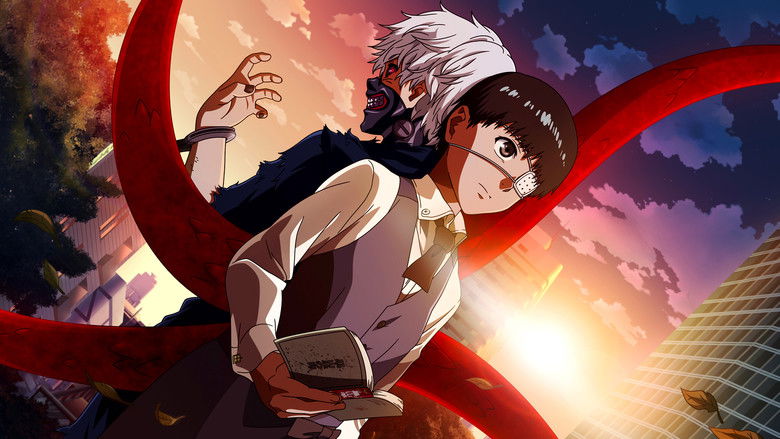
Tokyo Ghoul tells the harrowing saga of Ken Kaneki, an ordinary, introverted college student living in a modern Tokyo covertly inhabited by "Ghouls"—supernatural predators indistinguishable from humans who can only survive by consuming human flesh. Kaneki’s life shatters when a date with a young woman named Rize Kamishiro turns out to be a fatal trap. Following a near-fatal attack and an emergency organ transplant, Kaneki discovers Rize’s ghoul organs were transplanted into his body, transforming him into a unique half-human, half-ghoul hybrid. Forced to navigate a cruel underworld while clinging to his remaining humanity, he is taken in by Anteiku, a peaceful ghoul coffee shop that serves as a sanctuary.

As the narrative unfolds across four seasons (Tokyo Ghoul, Tokyo Ghoul √A, and Tokyo Ghoul:re Parts 1 & 2), the conflict escalates into an all-out war between the Commission of Counter Ghoul (CCG)—human investigators dedicated to exterminating all ghouls—and radical ghoul organizations like the Aogiri Tree. Kaneki suffers immense psychological trauma, forced identity shifts, memory loss, and brutal betrayals. His journey forces him to shed his passivity, adopt various personas—from a feared ghoul combatant to a high-ranking CCG investigator named Haise Sasaki—and ultimately emerge as a unifier.

Across its 48-episode run, the series expands from an intimate story of personal survival into a sweeping sociopolitical drama. It chronicles the crumbling divide between two warring species, exposing how systemic violence, propaganda, and fear perpetuate a vicious cycle. The overall story arc tracks Kaneki’s transformation from a helpless victim into the central figure capable of bridging two worlds, ultimately fighting to dismantle the deceptive structures maintaining Tokyo's nightmare.
Core Meaning

The overarching message of Tokyo Ghoul is that monstrosity is not an inherent trait of species or identity, but a product of mutual ignorance, trauma, and systemic cruelty. Through Kaneki’s hybrid existence, the creators argue that true empathy requires enduring the pain of "the Other." The complete narrative emphasizes that self-sacrifice born of fear or self-loathing only perpetuates suffering; true peace—both internal and societal—demands the courageous acceptance of one's flawed identity, the breaking of cyclical vengeance, and the willingness to fight for dialogue over mutual destruction.

Thematic DNA

Duality and the Crisis of Identity 30%
The Cycle of Violence and Grief 25%
Trauma, Pain, and Identity Transformation 20%
Systemic Corruption and Deceptive Morality 15%
Belonging and Found Family 10%

Duality and the Crisis of Identity

The central engine of the series explores Kaneki’s existential struggle between human empathy and ghoul hunger. This duality manifests in his internal split, shifting identities (Kaneki vs. Haise Sasaki vs. Black Reaper), and the fundamental clash between human society and ghoul survival.

The Cycle of Violence and Grief

Both CCG investigators and Ghouls commit atrocities driven by loss, creating an endless loop of revenge. Characters like Amon and Touka illustrate how grief turns victims into oppressors, showing that hatred is nurtured by fear rather than inherent malice.

Trauma, Pain, and Identity Transformation

Extreme physical and psychological suffering acts as a transformative catalyst throughout the show. Kaneki’s bodily torture forces violent psychological evolution, demonstrating how unaddressed trauma can warp moral boundaries and create coping mechanisms that alter persona.

Systemic Corruption and Deceptive Morality

The show critiques black-and-white moral frameworks. The CCG purports to protect humanity through heroic righteousness but conceals deep structural corruption, while ghouls—demonized as mindless beasts—often demonstrate profound warmth and family bonds.

Belonging and Found Family

In a world that rejects them, outcast individuals seek sanctuary in makeshift communities—such as the Anteiku café, the Quinx Squad, and later GOAT. The narrative asserts that genuine connections are essential for psychological sanity in a hostile world.

Character Analysis

Ken Kaneki / Haise Sasaki

Natsuki Hanae

Archetype: Tragic Hero / Fallen Savior / Reborn Leader Key Trait: Profound, painful empathy paired with psychological resilience

Motivation

Evolves from a desperate desire to protect his loved ones through solitary self-sacrifice to recognizing that true protection requires living and uniting people.

Character Arc

Begins as an innocent bookworm; after brutal torture, he turns into a cold, ruthless antihero. Following a defeat by Arima, he loses his memories and becomes CCG Mentor Haise Sasaki. Regaining his memories as the "Black Reaper," he eventually embraces his role as the One-Eyed King to lead ghouls and humans toward co-existence.

Touka Kirishima

Sora Amamiya

Archetype: Guarded Tsundere / Emotional Anchor Key Trait: Fierce protectiveness masked by a tough exterior

Motivation

Transitions from aggressive self-defense and survival to cultivating a safe, normal life for those she loves.

Character Arc

Starts as a fierce, vengeful ghoul teenager hiding her identity behind human high school life. Over the seasons, she grows into a calm, mature, and nurturing adult, managing the coffee shop :re, becoming Kaneki's emotional harbor, wife, and mother to his child.

All 5 characters and cast

Symbols & Motifs

The Red Spider Lily (Lycoris radiata)

Meaning:

Symbolizes death, tragic loss of memories, and violent reincarnation.

Context:

Visually frames Kaneki’s mental breakthrough in Season 1, Episode 12, as white flowers soak in blood, marking the death of his naive human self.

Coffee

Meaning:

Represents the rare common ground between humans and ghouls, serving as a universal medium for peace, community, and shared humanity.

Context:

Because coffee is the only human food/drink ghouls can taste and digest properly, Anteiku uses it as a sanctuary for both species.

The Centipede (Mukade)

Meaning:

Symbolizes psychological torture, trauma, and inner madness.

Context:

Originating from Jason’s torture of Kaneki, it becomes the physical form of Kaneki’s mutated half-kakuja kagune and a motif of his fractured sanity.

Masks

Meaning:

Metaphors for the psychological "personas" humans and ghouls wear to survive in society.

Context:

Designed by Uta, masks allow ghouls to hide their identities from the CCG while acting out their necessary roles.

The Checkered Floor / Chessboard

Meaning:

Symbolizes strategic manipulation, existential sacrifice, and the mental battlefield of conflicting personalities.

Context:

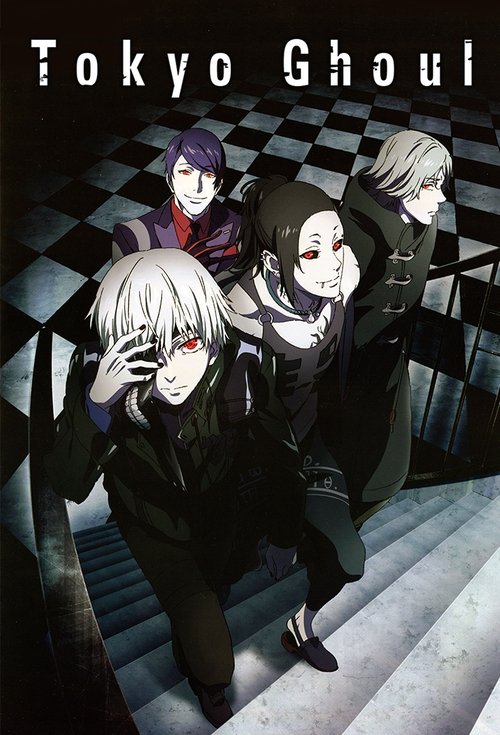
Appears in subconscious mental landscapes, such as Kaneki’s internal conversations with Rize or Arima.

Memorable Quotes

僕を主役にした物語を描くとしたら…それはきっと、悲劇だ。
— Ken Kaneki

Context

Season 1, Episode 1 ("Tragedy") opening monologue.

Meaning

Sets the melancholic, fate-bound tone for the entire series.

僕が間違っていたんじゃない…間違っていたのは、この世界だ!
— Ken Kaneki

Context

Season 1, Episode 12 ("Ghoul"), during his mental conversation with Rize while being tortured.

Meaning

Marks Kaneki's psychological turning point where he sheds passive human morality and accepts his ghoul nature.

All 5 quotes

Episode Highlights

Tragedy

S1E1

The inciting incident of the entire series; Kaneki is attacked by Rize and undergoes the life-altering half-ghoul organ transplant.

Significance:

Launches Kaneki's journey as a hybrid, breaking the boundary between the human and ghoul worlds.

Ghoul

S1E12

Widely considered the climax and best episode of the series. Features Kaneki's extreme torture by Jason, his hair turning white, acceptance of his ghoul powers, and iconic fight scene accompanied by the theme song Unravel.

Significance:

Marks Kaneki's ultimate psychological evolution from a passive human victim to a ruthless ghoul combatant.

Grave

S2E12

The emotional finale of √A. Features Kaneki carrying Hide’s body through the snow amid the ruins of Anteiku while an acoustic version of Unravel plays, leading to his tragic showdown with Arima.

Significance:

Concludes the Anteiku destruction arc and transitions Kaneki into his defeat and memory loss at the hands of Arima.

Daybreak: Beautiful Dream

S3E12

Haise Sasaki’s identity shatters during the Tsukiyama extermination operation; Kaneki awakens his memories as the cold "Black Reaper" and brutally defeats Eto Yoshimura.

Significance:

Reawakens Kaneki's true identity, ending his time as CCG investigator Haise Sasaki.

Proof: Bonds

S4E7

Kaneki and Touka consummate their relationship, providing a rare moment of emotional tenderness and intimacy amidst the war before Kaneki's transformation into the Dragon.

Significance:

Solidifies the personal bond between Kaneki and Touka, anchoring Kaneki emotionally before the story's climax.

Network

S4E12

The grand series finale. Resolves the conflict between humans and ghouls, defeats Furuta, and concludes Kaneki’s tragedy with hope, showing a peaceful future.

Significance:

Brings full closure to the series by fulfilling Kaneki's role as the bridge to human-ghoul coexistence.

Philosophical Questions

Is moral purity possible in a world where one's survival inherently requires harming others?

Explored through the tragic biology of Ghouls, who must eat humans to survive, shattering basic binary concepts of good vs. evil.

Does enduring extreme suffering justify becoming cruel to overcome your oppressor?

Explored when Kaneki adopts the brutal torturous methods of his captor, Jason, questioning whether surviving abuse corrupts the victim's humanity.

Can true peace be built on lies, or must a broken system be completely destroyed first?

Explored through the Washuu family and CCG, who secretly maintained control of Tokyo by controlling both sides of the war.

Alternative Interpretations

Psychological/Mental Health Allegory: Viewers and critics often interpret Kaneki’s ghoul transformations as a metaphor for severe trauma, dissociation, and struggle with mental illness. His shifting personas (Haise, Black Reaper, Dragon) reflect complex identity dissociation stemming from extreme abuse.

Full ending explanation

Cultural Impact

Tokyo Ghoul aired during the peak mid-2010s dark-fantasy boom alongside anime like Attack on Titan and Parasyte. It left a massive footprint on pop culture: Kaneki's white hair, black eyepatch mask, and finger-cracking habit (yubi poppo) became instantly recognizable internet memes and staples of cosplay conventions.

However, its adaptation legacy is divisive: Season 1 is celebrated as a dark classic, while √A and :re are infamous among anime fans for rushed pacing and skipping critical manga content, igniting long-standing debates regarding anime studio adaptations.

Audience Reception

Tokyo Ghoul received varied reception across its run:

  • Season 1: Highly acclaimed. Praised for its dark atmosphere, horror elements, brilliant soundtrack, and iconic Episode 12 finale.
  • Season 2 (√A): Polarizing. Praised for its music and emotional moments, but heavily criticized for straying from manga canon into a confusing story arc.
  • Seasons 3 & 4 (:re Parts 1 & 2): Controversial/Disappointing. Critics and fans felt the adaptation rushed through 179 manga chapters in just 24 episodes, resulting in degraded animation quality, static fight scenes, and skipped character development.

Overall Verdict: Regarded as a cultural titan with iconic characters and music, held back by an inconsistent and overly rushed anime adaptation.

Interesting Facts

  • Director Shuhei Morita was nominated for an Academy Award in 2013 for his animated short Possessions right before directing Tokyo Ghoul at Studio Pierrot.
  • Voice actor Natsuki Hanae strained his vocal cords to extreme limits during Season 1, Episode 12 to convey the authentic, agonizing screams of torture.
  • Season 2 (Tokyo Ghoul √A) diverged from Sui Ishida's manga, cutting many of Ishida's submitted alternative storyline storyboards.
  • Series composer Yutaka Yamada composed several iconic tracks live while watching early animation drafts to match emotional timing precisely.
  • The opening theme Unravel by TK from Ling Tosite Sigure reached over 200 million Spotify streams and became a global pop culture sensation.

Easter Eggs

Tarot Card Numbers

Creator Sui Ishida explicitly integrated hidden Tarot card numbers into character designs, backgrounds, and clothes. For example, 12 (The Hanged Man) appears during Kaneki's key transformations, 13 (Death) appears on Juuzou Suzuya's hair clips, and 19 (The Sun) is tied to Hide.

Franz Kafka's The Metamorphosis

In the first episode, Kaneki reads Kafka's story about Gregor Samsa waking up transformed into a giant insect, directly foreshadowing Kaneki waking up in the hospital turned into a flesh-eating "monstrosity".

Hermann Hesse's Demian

The show references Hesse's quote about the bird fighting its way out of the egg, mirroring Kaneki's destructive mental breakthroughs to shatter his former self.

Frequently Asked Questions

Explore More About This Movie

Dive deeper into specific aspects of the movie with our detailed analysis pages

Comments (0)

Leave a comment

No comments yet. Be the first to share your thoughts!

Similar Movies