Skip to content
The Fragrant Flower Blooms with Dignity
A luminous coming-of-age romance suffused with gentle empathy, unfolding like wildflowers breaking through concrete walls to bathe bruised, hesitant hearts in morning sunlight.
The Fragrant Flower Blooms with Dignity

The Fragrant Flower Blooms with Dignity

薫る花は凛と咲く

06 July 2025 — 28 September 2025 Japan 1 season 13 episode Ended 8.7 (254)

Cast: Yoshinori Nakayama, Honoka Inoue, Kikunosuke Toya, Koki Uchiyama, Hiiro Ishibashi

Drama Animation Deconstruction of Prejudice and First Impressions Self-Acceptance and Overcoming Internalized Shame Radical Vulnerability and Open Communication The Protective and Healing Nature of Found Friendship

Overview

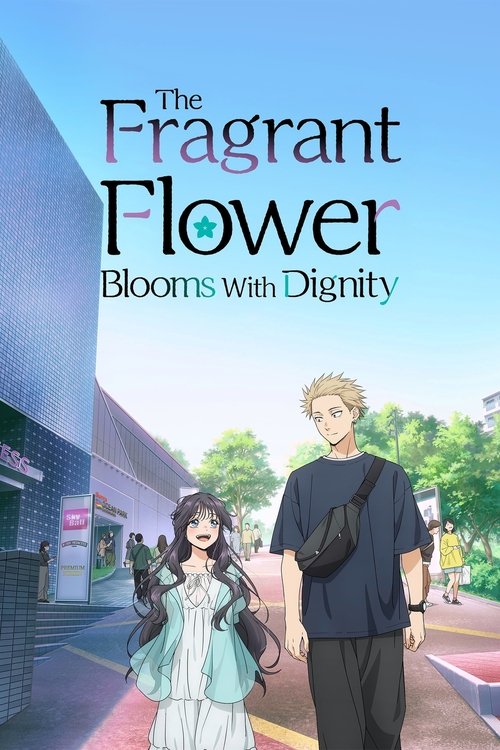
The Fragrant Flower Blooms with Dignity (Kaoru Hana wa Rin to Saku) centers on the tender, cross-boundary relationship between two high schoolers whose daily lives are divided by rigid societal and institutional prejudices. Chidori Public High School and the prestigious Kikyo Girls' Academy sit directly adjacent to one another in Tokyo, yet they are separated by a gulf of mutual resentment: Kikyo's privileged elite view Chidori's students as unrefined delinquents, while Chidori's boys harbor bitter defensiveness toward Kikyo's aloof disdain. Caught in the middle is Rintaro Tsumugi, an imposing, dyed-blonde Chidori student plagued by internalized inferiority and a belief that his intimidating appearance inherently repels others.

The status quo shifts when Rintaro encounters Kaoruko Waguri while helping out at his family’s neighborhood confectionery shop. Unbothered by Rintaro's fierce exterior, Kaoruko engages him with unfiltered warmth, honesty, and an insatiable appreciation for his family's pastries. When Rintaro discovers that Kaoruko is an honor student at Kikyo, the two navigate clandestine encounters and unspoken insecurities, gradually inviting their closest confidants into their shared orbit.

Over the course of the 13-episode series, the narrative expands from an intimate two-person romance into a rich ensemble drama. As Rintaro's fiercely loyal circle of friends and Kaoruko's guarded best friend confront their own biases, interpersonal trauma, and protective instincts, the series charts a journey of mutual understanding, emotional vulnerability, and transformative self-acceptance.

Core Meaning

The core thesis of The Fragrant Flower Blooms with Dignity is that genuine empathy and earnest communication can dismantle the walls erected by social stigma and self-doubt. The creators emphasize that human dignity is neither conferred by institutional pedigree nor tarnished by superficial labels. Through Rintaro and Kaoruko's emotional trajectory, the series demonstrates that opening oneself up to vulnerability—and refusing to evaluate others through the prism of second-hand judgment—allows individuals to transcend past emotional trauma and heal their own self-worth.

Thematic DNA

Deconstruction of Prejudice and First Impressions 30%
Self-Acceptance and Overcoming Internalized Shame 25%
Radical Vulnerability and Open Communication 25%
The Protective and Healing Nature of Found Friendship 20%

Deconstruction of Prejudice and First Impressions

The narrative continually challenges external appearances and institutional stereotypes. Chidori’s "delinquents" are revealed to be deeply thoughtful, supportive, and principled boys, while Kikyo's polished facade conceals rigid social pressure and latent insecurities. This theme develops from Rintaro and Kaoruko's initial bakery encounters into a wider cultural confrontation between their friend groups, culminating in conscious choices to unlearn ingrained institutional bias.

Self-Acceptance and Overcoming Internalized Shame

Rintaro's personal journey revolves around shedding the belief that he is inherently defective and undesirable. His physical stature and bleached hair were originally adopted as shields against rejection, only to become sources of alienation. Through Kaoruko’s unconditional acceptance, Rintaro gradually recognizes that he deserves love, respect, and community, illustrating how positive interpersonal bonds foster self-forgiveness.

Radical Vulnerability and Open Communication

Unlike many romance narratives driven by prolonged misunderstandings and contrived secrecy, this series prioritizes upfront emotional articulation. Characters consistently verbalize their fears, apologize for overstepping, and ask for clarity. This theme evolves into a blueprint for mature teenage relationships, showing that emotional courage lies in candid disclosure rather than stoic retreat.

The Protective and Healing Nature of Found Friendship

Friendship is treated with identical narrative weight to romantic love. The brotherhood between Rintaro, Shohei, Saku, and Ayato, alongside Subaru’s protective devotion to Kaoruko, demonstrates that healthy support networks are indispensable for personal growth. The merger of these opposing circles across the school divide showcases how collective compassion can heal individual trauma.

Character Analysis

Rintaro Tsumugi

Yoshinori Nakayama

Archetype: Gentle Giant / Reluctant Outcast Key Trait: Quiet gentleness masked by an intimidating exterior

Motivation

Driven by a desire to protect the peace of those he loves.

Character Arc

Burdened by years of being judged as a violent delinquent due to his height and expression, Rintaro instinctively withdraws to protect others from himself. His development path evolves from self-effacing retreat to actively pursuing a life and romance of genuine connection.

Kaoruko Waguri

Honoka Inoue

Archetype: Guileless Catalyst / Pure Heart Key Trait: Boundless emotional sincerity and an expressive appetite

Motivation

Her motivation to connect with Rintaro blossoms into a broader determination to dismantle the school divide and protect the friends she cherishes.

Character Arc

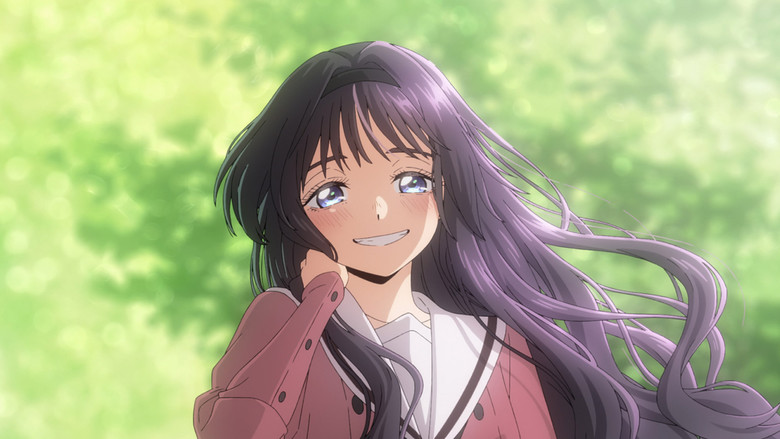
Despite attending elite Kikyo, Kaoruko is unpretentious, straightforward, and emotionally intuitive. She reaches out to Rintaro and helps bridge the divide between their disparate worlds.

All 5 characters and cast

Symbols & Motifs

The Drawn Curtains of Kikyo Academy

Meaning:

They symbolize institutional elitism, isolation, and deliberate social blindness.

Context:

The classroom windows of Kikyo facing Chidori are perpetually shuttered with heavy curtains. As Kaoruko and Rintaro connect, visual glimpses of parted curtains and streaming sunlight mirror their growing mutual visibility.

Cakes and Confectionery

Meaning:

Pastries serve as a conduit for pure affection, comfort, and domestic kindness, symbolizing uncomplicated, sincere appreciation uncolored by social standing.

Context:

Prepared at Rintaro’s family bakery (Patisserie Plain), Kaoruko eating sweets with joyful abandon breaks Rintaro’s defensive armor.

Bleached Blonde Hair

Meaning:

It acts as a visual manifestation of defensive rebellion and self-stigmatization that masks his gentle interior.

Context:

Functions as Rintaro’s physical armor adopted after years of social ostracization.

The Fence / Alleyway Boundary

Meaning:

Acts as a literal and metaphorical border representing division and subsequent reconciliation.

Context:

The physical alley and fence separating the two schools where early scenes depict characters hesitating at the threshold, while later sequences use shared physical crossings to mark steps toward reconciliation.

Floral Framing

Meaning:

Symbolizes delicate interior growth blossoming despite hostile soil, in keeping with the title's reference to dignified blooming.

Context:

Subtle floral motifs—particularly bellflowers (kikyo) and seasonal flora—frame pivotal emotional realizations throughout the series.

Memorable Quotes

「凛太郎くんを怖いって思ったこと、一回もなかったですよ?」
— Kaoruko Waguri

Context

Spoken to Rintaro in Episode 1 during their conversation at the bakery.

Meaning

It shatters Rintaro’s ingrained belief that his appearance is intrinsically repellent, laying the emotional foundation for the entire series.

「今までならこのままでいいと思ってた……でも、このままじゃ嫌なんだ」
— Rintaro Tsumugi

Context

Delivered during Rintaro's internal breakthrough (adapted in the mid-to-late season arc).

Meaning

Marks his realization that passive resignation is no longer enough and that he actively wants a shared future with Kaoruko.

All 4 quotes

Episode Highlights

Rintaro and Kaoruko

S1E1

Establishes the contrast between Kikyo Girls' Academy and Chidori High, Rintaro’s self-isolation, and the fateful meeting over cake at Patisserie Plain.

Significance:

Demonstrates immediate chemistry and initiates Rintaro's emotional awakening.

The School Next Door

S1E3

Rintaro discovers Kaoruko is a student at Kikyo, bringing the weight of the inter-school feud crashing into their fledgling connection.

Significance:

Shifts the show from a simple romance into a study of social stigma.

Premonition of a New Beginning

S1E5

Centers on Subaru confronting Rintaro, followed by Rintaro's friends discovering his secret meetings.

Significance:

Ayato, Shohei, and Saku demonstrate unwavering support for Rintaro, turning private vulnerability into shared solidarity.

The Truth and the Wall

S1E6

The confrontation where the boys stand up to hostile external delinquents and defend the boundaries of both schools.

Significance:

Subaru begins to observe that the Chidori boys possess integrity, beginning the breakdown of her defense mechanisms.

The Study Group

S1E8

The first unified gathering of both friend groups at a public venue, marked by tension melting into awkward, sincere teenage bonding.

Significance:

Bridges the cultural divide between Kikyo and Chidori in practical terms.

Feelings Kept Inside

S1E10

Deepens Rintaro’s backstory regarding why he bleached his hair and how his family helped him survive earlier bullying and judgment.

Significance:

Anchors his character arc ahead of the season climax.

Hesitation by the Seaside

S1E12

A summer beach outing where romantic and personal anxieties surface.

Significance:

The physical distance from their school neighborhood allows Rintaro and Kaoruko to confront the impending future and their mutual feelings directly.

Kaoruko and Rintaro

S1E13

The emotional season finale, featuring Kaoruko’s perspective and the culmination of their mutual romantic honesty.

Significance:

Completes the foundational arc of breaking institutional barriers and cements their shared relationship.

Philosophical Questions

To what extent does societal expectation construct identity versus personal nature?

Explored through Rintaro accepting the label of a "monster/delinquent" simply because others projected it onto his physical appearance.

Can prejudice be dismantled through individual kindness, or does it require systemic dismantling?

Reflected in the tension between individual Chidori and Kikyo students finding friendship, while the overarching institutions remain entrenched in formal antagonism.

Is radical honesty inherently virtuous, or does it require protective boundaries?

Investigated through the characters' deliberate choices to verbalize difficult truths despite the risk of social conflict or embarrassment.

Alternative Interpretations

Different ways to interpret the narrative include:

Full ending explanation

Cultural Impact

Serialized during the post-pandemic era on Kodansha’s Magazine Pocket, Saka Mikami’s manga stood out in the shōnen romance category for subverting aggressive rivalry and fan-service tropes in favor of wholesome, emotionally earnest communication. The 2025 anime adaptation solidified this trend within contemporary TV animation, arriving at a time when audiences actively sought "healing" (iyashikei) romance narratives focused on healthy relationship models. By prioritizing mutual respect, parental involvement, and non-toxic masculine camaraderie, the series earned critical comparisons to landmark modern romance anime, expanding international interest in character-driven school dramas.

Audience Reception

The 2025 anime adaptation received overwhelmingly positive critical reception upon release.

Praises: Critics and fans widely lauded CloverWorks’ fluid character acting, the luminous background art, and the mature emotional handling of the source material. The communication dynamics between Rintaro and Kaoruko were praised for bypassing artificial relationship drama.

Criticisms: Minor critiques centered on the premise's initial reliance on the well-worn "Romeo and Juliet" elite-versus-delinquent trope, which some reviewers found slightly melodramatic in the opening episode. Additionally, a subset of viewers noted that the characters' near-constant politeness and readiness to apologize felt idealized compared to typical teenage behavior.

Overall Verdict: A triumph of modern romance anime, hailed as a heartwarming, beautifully animated benchmark for character-driven slice-of-life storytelling.

Interesting Facts

  • The series was directed by Miyuki Kuroki at CloverWorks, renowned for her visually expressive direction on Akebi's Sailor Uniform.
  • The series composition was handled by Rino Yamasaki, with scripts co-written by Honoka Kato, focusing on maintaining the emotional density and pacing of Saka Mikami’s original manga chapters.
  • Kohei Tokuoka served as both character designer and chief animation director, closely supervising facial micro-expressions.
  • The score was crafted by Moeki Harada, who utilized delicate acoustic instrumentation—pianos, soft strings, and intimate woodwinds—to avoid melodrama and enhance slice-of-life naturalism.
  • Netflix secured international streaming rights, staggering the release across Asian territories in July 2025 before a worldwide release featuring localized dubbing in September 2025.

Easter Eggs

Kanji Wordplay in the Title

The Japanese title Kaoru Hana wa Rin to Saku (薫る花は凛と咲く) embeds both protagonists' names: Kaoru (薫, fragrant) from Kaoruko (薫子) and Rin (凛, dignified/resolute) from Rintaro (凛太郎), symbolizing that their growth is inherently intertwined.

School Uniform Architecture

Chidori’s casual, slightly unkempt blazers contrast sharply with Kikyo’s traditional, buttoned-up sailor uniforms and high collars, visually coding the socio-economic and cultural divide between the two institutions.

Cake Descriptions

The patisserie pastries ordered by Kaoruko are modeled after authentic French pastry techniques (such as choux à la crème and mille-feuille), mirroring the creator's research into culinary baking.

Urban Topography

The fictional schools are set within real Tokyo geographic aesthetics (Minato and surrounding areas), where elite private institutions sit directly adjacent to standard public districts, highlighting authentic urban contrasts.

Frequently Asked Questions

Explore More About This Movie

Dive deeper into specific aspects of the movie with our detailed analysis pages

Comments (0)

Leave a comment

No comments yet. Be the first to share your thoughts!

Similar Movies