The Help
"Change begins with a whisper."
Overview
Set in Jackson, Mississippi, during the 1960s Civil Rights Movement, "The Help" tells the story of Eugenia "Skeeter" Phelan (Emma Stone), a young, aspiring writer who has just graduated from college. Unlike her peers who are focused on marriage and social status, Skeeter is determined to build a career. She returns home to find that her beloved childhood maid, Constantine, has mysteriously left.
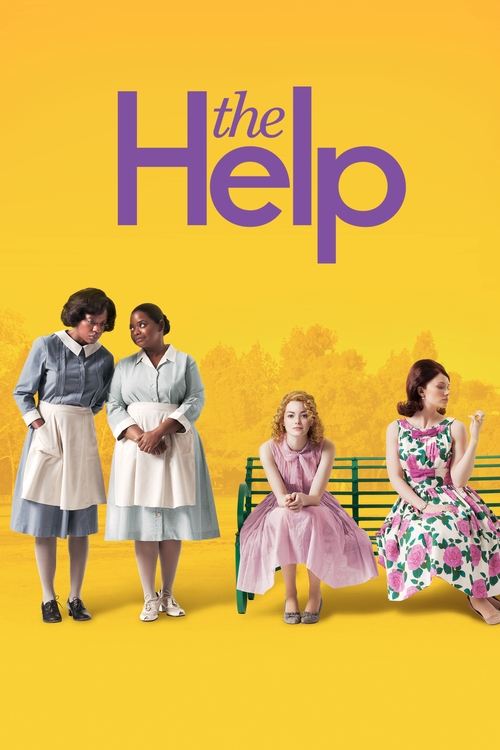
Disturbed by the blatant racism and condescending attitudes her friends, particularly the influential Hilly Holbrook (Bryce Dallas Howard), display towards their Black domestic workers, Skeeter conceives a dangerous project. She decides to write a book from the perspective of "the help," documenting their experiences and exposing the injustices they face daily while working for white families. She first approaches Aibileen Clark (Viola Davis), a stoic and kind-hearted maid grieving the loss of her son, who cautiously agrees to share her story. Aibileen's fiery best friend, Minny Jackson (Octavia Spencer), known for her sharp tongue and incredible cooking, is initially resistant but eventually joins the clandestine project after being unjustly fired by Hilly.
As Skeeter secretly interviews more maids, the women navigate a world of fear, prejudice, and the constant threat of retaliation. Their collaboration builds a powerful, albeit risky, bond of sisterhood, culminating in a book that threatens to upend the rigid social order of their town and change their lives forever.

Core Meaning
The core meaning of "The Help" revolves around the extraordinary courage required to challenge systemic injustice and the transformative power of storytelling. The film posits that giving a voice to the voiceless is a profound act of rebellion and a crucial step toward social change. It explores the idea that empathy and understanding can bridge deep racial and social divides, even in a society built on segregation and prejudice. Director Tate Taylor aimed to highlight not just the overt, violent racism of the era, but also the insidious, everyday injustices perpetrated within the domestic sphere, often by women against other women. The film carries a message of hope, suggesting that individual acts of bravery, when united, can create a powerful force for accountability and freedom.
Thematic DNA
Racism and Social Injustice
This is the central theme, depicted through the systemic segregation and daily indignities faced by the Black maids. Hilly Holbrook's "Home Help Sanitation Initiative," a proposal for mandatory separate bathrooms for Black help, serves as a key catalyst, symbolizing the dehumanizing absurdity of Jim Crow laws. The film shows how racism is ingrained in the social fabric, from unequal pay and verbal abuse to the constant threat of violence for defying the racial hierarchy, as highlighted by the fear surrounding the murder of Medgar Evers.
The Power of Storytelling and Voice
Skeeter's book project is the film's narrative engine, demonstrating how writing and sharing stories can be a form of resistance and empowerment. For the maids, telling their truths is a dangerous but liberating act that allows them to reclaim their dignity and challenge the power structure. The film shows that giving a platform to suppressed voices can expose hypocrisy and inspire change, making the written word a weapon against oppression.
Sisterhood and Unlikely Alliances
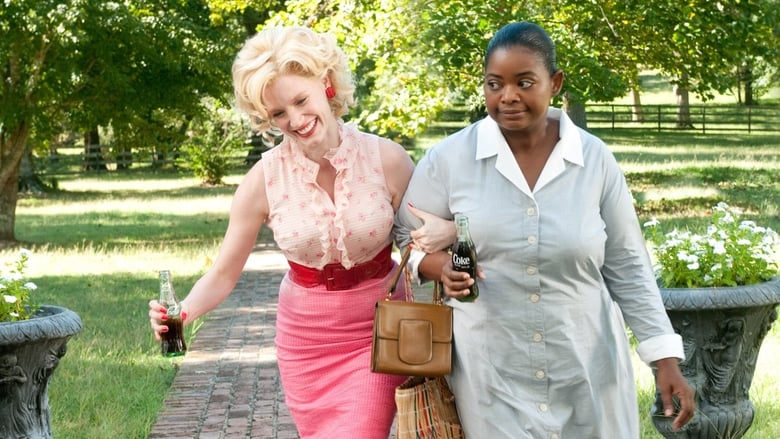
The film explores the complex bonds between women across racial and class lines. A central element is the powerful friendship and mutual support between Aibileen and Minny. An unlikely sisterhood also develops between the Black maids and Skeeter as they work on the book. Furthermore, the relationship between the outspoken Minny and her isolated, "white trash" employer, Celia Foote, blossoms into a genuine friendship built on mutual respect and kindness, defying the social conventions of Jackson.
Social Hierarchy and Class
Beyond race, the film examines the rigid social strata within the white community of Jackson. Hilly Holbrook sits atop this hierarchy, enforcing social norms and ostracizing those who don't conform, like Celia Foote, whom she shuns for her background. Skeeter also finds herself at odds with this world, as her ambition to be a writer rather than a housewife makes her an outsider. The film critiques the superficial values and cruel enforcement of this social order.
Character Analysis
Eugenia 'Skeeter' Phelan
Emma Stone
Motivation
Initially, her motivation is to become a serious writer and to find out what happened to her beloved childhood maid, Constantine. This evolves into a deeper moral conviction to expose the injustices faced by the Black maids in her community.
Character Arc
Skeeter begins as a well-meaning but naive recent college graduate who feels like an outsider in her own high-society world. Her journey is one of awakening; motivated by her love for her former maid, Constantine, and her disgust with her friends' racism, she transforms from a passive observer into an active agent of change. By challenging the status quo and risking her social standing and safety, she finds her purpose as a writer and sheds the prejudiced worldview of her upbringing, ultimately leaving Jackson to pursue her career.
Aibileen Clark
Viola Davis
Motivation
Her primary motivation is to create a better future and to tell the truth, not just for herself but for the next generation, embodied in Mae Mobley, whom she tries to instill with self-worth. The death of her son fuels her desire to see a change in the world.
Character Arc
Aibileen starts as a quiet, grief-stricken, and cautious maid who has raised 17 white children. The death of her own son has planted a "bitter seed" of resentment against the injustices she endures. Her decision to speak to Skeeter is a monumental act of courage that unlocks her suppressed voice. Throughout the process, she transitions from a fearful participant to a leader who inspires other maids to join. By the end, after being unjustly fired, she finds freedom from servitude and embraces a new future as a writer, having passed on her wisdom and strength to Mae Mobley.
Minny Jackson
Octavia Spencer
Motivation
Minny is motivated by a fierce desire to provide for her children and protect them from the world's injustices. Her initial participation in the book is driven by anger and a need for revenge, but it evolves into a genuine desire to effect change and secure her family's future.
Character Arc
Minny is introduced as a notoriously outspoken and defiant maid who can't hold a job due to her sharp tongue. While brave in confronting her white employers, she is a victim of domestic abuse at home. Her arc involves learning to trust, particularly through her unexpected friendship with her new employer, Celia Foote. Participating in the book gives her a new sense of power and purpose. Ultimately, emboldened by her secure job with Celia and her role in the book's success, she finds the strength to leave her abusive husband, achieving personal liberation alongside the collective one.
Hilly Holbrook
Bryce Dallas Howard
Motivation
Hilly is motivated by a desperate need to maintain the existing social and racial hierarchy, which is the source of her power and identity. She is driven by prejudice, a fear of change, and a desire for absolute control over her social circle and community.
Character Arc
Hilly is a static character who serves as the primary villain. She is the queen bee of Jackson's social scene and a staunch segregationist who wields her social power to enforce racist norms and punish anyone who defies her. She remains fundamentally unchanged throughout the film, doubling down on her hateful ideology even as her world begins to crumble. Her arc is one of downfall, as she is publicly and privately humiliated by the pie incident and the publication of the book, ultimately becoming trapped in a web of her own lies.
Symbols & Motifs
Toilets and Bathrooms
The separate bathrooms symbolize the absurdity and institutionalized nature of racial segregation. Hilly's campaign for separate toilets for "the help" under the guise of hygiene and disease prevention is the ultimate expression of dehumanizing prejudice, highlighting the belief that Black people are inherently "unclean" or inferior.
This symbol is central to the plot, as Hilly's initiative is what initially galvanizes Skeeter to act. The motif culminates in a moment of comedic justice when Skeeter arranges for dozens of toilets to be delivered to Hilly's front lawn as a prank.
Minny's Chocolate Pie
The infamous chocolate pie represents the subversion of power and a shocking act of rebellion. It is a symbol of how the maids, seemingly powerless, can use their intimate roles within white households to exact revenge and reclaim a measure of control. It's a potent, visceral metaphor for turning the masters' dependence back on them in a humiliating way.
After being fired and slandered by Hilly, Minny bakes a chocolate pie and delivers it to her. After Hilly has eaten two slices, Minny reveals she baked her own excrement into it. This "terrible awful" story becomes an "insurance policy" in the maids' book, as Hilly's fear of being exposed prevents her from revealing the identities of the maids who participated.
The Book, 'Help'
The book itself symbolizes courage, truth, and the collective voice of the oppressed. It is the physical manifestation of their resistance and the catalyst for change. For Skeeter, it represents her break from societal expectations, and for the maids, it is a legacy of their bravery and a step toward liberation.
The entire plot revolves around the secret creation of this book. Skeeter, Aibileen, and Minny risk their safety to write, compile, and publish the stories. Its successful publication at the end of the film brings both retribution and hope, fundamentally altering the lives of its creators.
Memorable Quotes
You is kind. You is smart. You is important.
— Aibileen Clark
Context:
Aibileen whispers these words to a tearful Mae Mobley after the child's mother, Elizabeth, has been emotionally abusive. She repeats this mantra throughout the film, making it a recurring symbol of her love and her mission to combat hate with love.
Meaning:
This quote is the emotional core of the film. It's a powerful affirmation of self-worth that Aibileen repeatedly tells Mae Mobley, the neglected white child she cares for. It directly counters the racist ideology that devalues Black lives and serves as Aibileen's quiet, personal form of resistance, instilling values of kindness and equality in the next generation.
Courage sometimes skips a generation. Thank you for bringing it back to our family.
— Charlotte Phelan
Context:
Charlotte says this to Skeeter near the end of the film, after Hilly threatens Skeeter and Charlotte stands up to Hilly, ordering her off her property. It's a moment of profound validation for Skeeter.
Meaning:
This line signifies a pivotal moment of reconciliation and approval from Skeeter's mother. After opposing Skeeter's ambitions and values for most of the film, Charlotte finally understands and appreciates her daughter's bravery in writing the book. It acknowledges that Skeeter has broken from the passive complicity of her mother's generation to fight for what is right.
Eat my shit.
— Minny Jackson
Context:
Minny says this in a voiceover as she recalls the story of how she got revenge on Hilly. The story is told to Aibileen and Skeeter as Minny agrees to contribute her most dangerous story to the book to protect the other maids.
Meaning:
This blunt and shocking line precedes the reveal of the "terrible awful" pie. It represents Minny's ultimate act of defiance against Hilly's cruelty and racism. It is a raw, visceral reclamation of power, turning a symbol of domestic servitude (a homemade pie) into an instrument of unforgettable revenge and humiliation.
Fried chicken just tend to make you feel better about life.
— Minny Jackson
Context:
Minny says this to Celia Foote early in their relationship, as she is teaching the culinarily challenged Celia how to cook. It's one of the first moments where their employer-employee relationship begins to soften into a genuine friendship.
Meaning:
On the surface, this is a humorous line about comfort food, but it also speaks to the role of food and domesticity in the film. For Minny, cooking is a source of pride, skill, and power. This quote reflects her practical, down-to-earth wisdom and the way she uses her talents to navigate a difficult world and bring comfort to others.
Philosophical Questions
What is the nature of courage in the face of systemic oppression?
The film explores different facets of courage. There is Skeeter's courage, which involves risking her social standing and comfort. However, the film contrasts this with the far greater courage of Aibileen, Minny, and the other maids. For them, speaking out carries the risk of losing their livelihoods, facing violent retribution, and endangering their families. The film asks the viewer to consider what true bravery is: Is it defying social norms, or is it speaking truth when doing so could cost you your life? The preacher's sermon in the film touches on this, defining courage as "daring to do what is right in spite of the weakness of our flesh."
Who has the right to tell someone else's story?
This question is central to the film's plot and its real-world controversy. In the narrative, Skeeter, a privileged white woman, becomes the vessel for the maids' stories. While her intentions are good, the film inadvertently raises ethical questions about appropriation and representation. Does her involvement legitimize the maids' experiences, or does it overshadow them? The film presents the collaboration as a necessary, symbiotic relationship, but it leaves open the philosophical debate about whether the oppressed need a member of the dominant class to validate their truth for it to be heard.
Can personal relationships transcend deeply ingrained societal prejudice?
"The Help" presents a hopeful, if perhaps idealized, answer to this question. The most compelling evidence is the genuine friendship that develops between Minny and Celia Foote. Their bond forms in defiance of the master-servant dynamic and the rigid racial and class barriers of their society. Similarly, the collaboration between Skeeter and the maids evolves into a relationship of mutual respect and care. The film suggests that through shared vulnerability and basic human kindness, it is possible to overcome the poison of prejudice on an individual level, even while the larger societal structures remain oppressive.
Alternative Interpretations
A primary alternative interpretation of "The Help" reframes it not as an empowering story of racial solidarity, but as a problematic film that sanitizes history and reinforces harmful stereotypes. From this perspective, the film prioritizes the comfort of its white audience over the authentic portrayal of Black pain and resilience. Critics argue that by focusing on Skeeter's moral awakening, the narrative suggests that the true struggle was for a white person to overcome their privilege, rather than for Black people to survive brutal oppression.
This interpretation suggests the film's happy ending is misleading. While Skeeter gets a dream job in New York and Minny finds a safe haven with a kind employer, these individual successes are presented as a solution to a systemic problem. The broader fight for civil rights, including voting rights and desegregation, is largely sidelined in favor of a more personal, domestic drama. This reading views the film as a feel-good story that allows audiences to feel absolution from the legacy of racism without confronting its deeper, more violent and ongoing realities. The characters of Aibileen and Minny can also be seen as reinforcing the "mammy" archetype—Black women whose primary role is to nurture and save white characters.
Cultural Impact
"The Help" was a significant commercial and critical success upon its release in 2011, grossing over $216 million worldwide and earning numerous accolades, including an Academy Award for Octavia Spencer. The film sparked widespread conversation about race, racism, and memory in America, particularly regarding the Civil Rights era in the South. It brought the stories of Black domestic workers, a historically marginalized group, to the forefront of mainstream culture.
However, the film also generated significant controversy and criticism. It was widely critiqued for employing a "white savior" narrative, centering the story on the white protagonist, Skeeter, who seemingly comes to the rescue of the Black characters. Critics argued that this narrative choice diminishes the agency and courage of the Black maids and simplifies the complex realities of the Civil Rights Movement. Viola Davis, who was nominated for an Academy Award for her role as Aibileen, later expressed regret about her participation in the film, stating she felt it was "created in the filter and the cesspool of systemic racism" and that the voices of the maids were not fully and authentically heard. This critique reflects a broader cultural reckoning in Hollywood about who gets to tell which stories. Despite its narrative flaws, "The Help" remains a cultural touchstone, often cited in discussions about representation, historical accuracy, and the ethical responsibilities of filmmaking.
Audience Reception
Audiences generally received "The Help" very positively, and it was a box office success. Viewers praised the powerful performances, particularly by Viola Davis, Octavia Spencer, Jessica Chastain, and Bryce Dallas Howard. Many found the film to be emotionally moving, inspiring, and thought-provoking. The friendship between the characters, the moments of humor, and the ultimate triumph of the maids' stories resonated strongly with the public. It holds a high audience score on platforms like Rotten Tomatoes and IMDb, indicating widespread appreciation.
However, the reception was not without criticism from viewers. Echoing the critical discourse, some audience members found the film's focus on a white protagonist to be a significant flaw, labeling it a "white savior" film. There was also criticism that the movie downplayed the true horror and violence of the Jim Crow South, opting for a more palatable, feel-good narrative that was easier for mainstream audiences to digest. Controversial moments, such as the comedic treatment of the "terrible awful" pie, were seen by some as trivializing the serious risks and deep-seated trauma of the era.
Interesting Facts
- Author Kathryn Stockett, who wrote the novel the film is based on, has a brief cameo in the movie as one of the women at Hilly's Junior League meeting.
- The film was shot on location in Greenwood, Mississippi, not far from the novel's setting of Jackson. Many local residents served as extras and helped the production find authentic period props.
- Director Tate Taylor and author Kathryn Stockett were childhood friends who grew up together in Jackson, Mississippi. Taylor's own "co-mother" or maid, Carol Lee, has a small role in the film.
- Octavia Spencer, who won an Academy Award for Best Supporting Actress for her role as Minny Jackson, was the original inspiration for the character in the novel, as she was a close friend of Stockett.
- Local chefs were brought in to ensure all the food depicted in the film, from the fried chicken to the congealed salads, was authentic to the region and the time period.
- A dialect coach was hired to ensure the actors' Southern accents were specifically accurate to the Mississippi Delta region.
- The book "The Help" was rejected 60 times by publishers before it was finally accepted and went on to become a bestseller.
⚠️ Spoiler Analysis
Click to reveal detailed analysis with spoilers
Frequently Asked Questions
Explore More About This Movie
Dive deeper into specific aspects of the movie with our detailed analysis pages
Comments (0)
No comments yet. Be the first to share your thoughts!