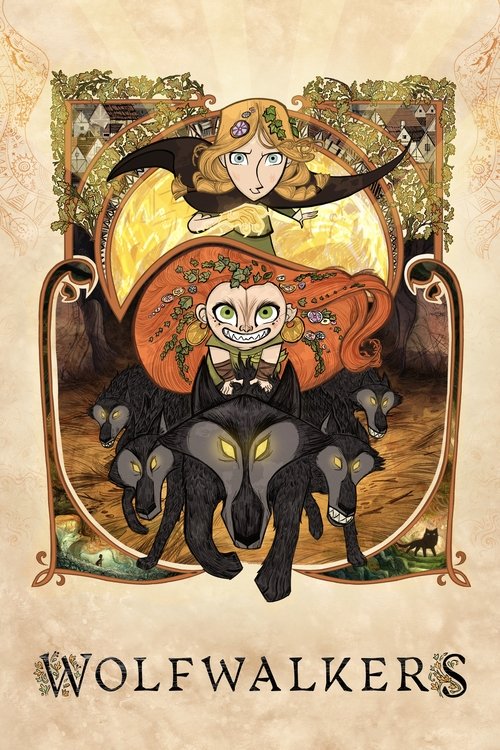
Wolfwalkers
"Be fierce. Be wild. Be free."
Overview
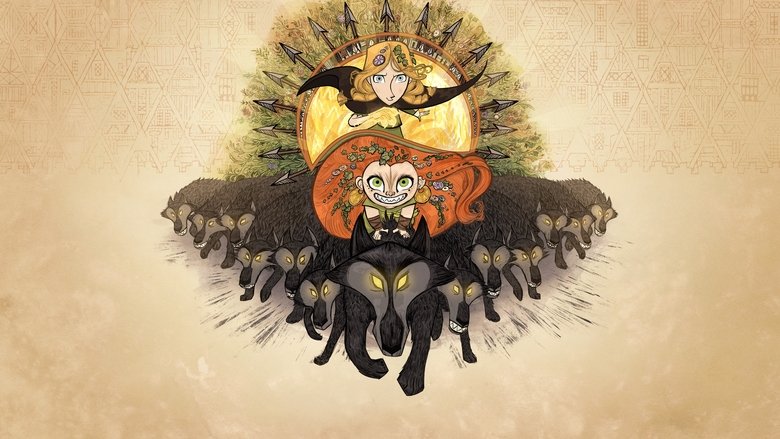
Set in 1650 Kilkenny, Ireland, during the English Cromwellian conquest, "Wolfwalkers" follows Robyn Goodfellowe, a young English apprentice hunter. She arrives with her father, Bill, who is tasked by the authoritarian Lord Protector to wipe out the last remaining wolf pack in the surrounding woods. Confined within the city walls and desperate to prove herself as a hunter, Robyn secretly ventures into the forest.
Her life takes a dramatic turn when she encounters Mebh Óg MacTíre, a spirited and wild native girl who is a "wolfwalker"—a magical being whose spirit becomes a wolf when her human body sleeps. After an accidental bite, Robyn finds herself drawn into Mebh's enchanted world. As she discovers the truth about the wolves and her own connection to them, she is caught between her father's duty and her newfound friendship, ultimately risking everything to protect the magic of the forest from the town's destructive forces.
Core Meaning
"Wolfwalkers" is a powerful allegory about the clash between oppressive colonialism and indigenous culture, and humanity's destructive disconnect from nature. The directors, Tomm Moore and Ross Stewart, crafted a story that critiques the historical subjugation of Irish culture and the environment by Cromwellian forces, who sought to "tame" the land and its people. The film's core message is a plea for empathy and understanding, suggesting that what is demonized as savage or pagan is often just misunderstood. It champions the idea that true freedom lies in embracing the wild, untamed aspects of both nature and oneself, rather than conforming to rigid, fear-based ideologies. Ultimately, it is a story about breaking down walls—both literal and metaphorical—to find connection, family, and a more harmonious way of living with the natural world.
Thematic DNA
Conflict Between Civilization and Nature
This theme is central to the film, visualized through the stark contrast between the rigid, geometric, woodblock style of Kilkenny and the flowing, organic, and expressive lines of the forest. The town, under the Lord Protector, represents an oppressive force seeking to control and eliminate the wild, viewing nature as a demonic evil to be tamed. The forest and the wolves symbolize freedom, untamed magic, and a pre-Christian, animistic worldview where humanity and nature are deeply connected. The conflict is driven by the Lord Protector's mandate to clear the forest for expansion, directly threatening the wolfwalkers' existence.
Colonialism and Cultural Oppression
Set during Oliver Cromwell's conquest of Ireland, the film serves as a powerful allegory for English colonialism. The Lord Protector embodies the imperialist force, seeking to impose his rigid, Puritanical beliefs and eradicate Irish folklore and culture, which he views as pagan and dangerous. The command to eliminate the wolves is symbolic of the historical effort to extinguish the "rebellious wildness" of the Irish people and their connection to the land. Robyn, an English girl, bridges this divide by embracing the very culture her people are trying to destroy.
Freedom vs. Confinement
Robyn begins the film feeling trapped within the walls of Kilkenny and the strict gender roles imposed on her, describing her life as being in a cage. Her desire to be a hunter is an initial attempt to find freedom within her father's world. However, her transformation into a wolfwalker introduces her to a truer, more profound freedom—one of instinct, wildness, and connection to nature. This theme is visually reinforced by the cage-like imagery of the town versus the boundless, curving landscapes of the forest.
Empathy and Overcoming Prejudice
The film argues that an enemy is no longer an enemy once you understand them. Robyn is raised to fear and hate wolves, viewing them as monstrous beasts to be hunted. Her friendship with Mebh completely shatters this prejudice, allowing her to see the wolves as a family and the wolfwalkers as protectors of the forest. Her journey is one of seeing from another's perspective, both literally and figuratively, when she becomes a wolf herself. The narrative champions empathy as the key to overcoming fear and bridging cultural divides.
Character Analysis
Robyn Goodfellowe
Honor Kneafsey
Motivation
Initially, her motivation is to win her father's respect and gain the freedom to hunt alongside him. This shifts dramatically to protecting her new friend, Mebh, and saving the wolf pack and the forest from the Lord Protector's tyranny.
Character Arc
Robyn begins as a dutiful but rebellious daughter, an outsider in a new land who seeks her father's approval by aspiring to be a hunter. Her worldview is shattered upon meeting Mebh. Her transformation into a wolfwalker forces her to abandon her ingrained prejudices and embrace a new identity. She evolves from a girl trying to fit into a restrictive society to a brave protector of the magic she once vowed to destroy, ultimately finding her true family and freedom.
Mebh Óg MacTíre
Eva Whittaker
Motivation
Her primary motivation is to protect her pack and find her missing mother, Moll, whose spirit has not returned to her sleeping body. She is driven by a deep love for her family and her home in the forest.
Character Arc
Mebh starts as a fiercely independent and untamed spirit, deeply connected to the forest and her pack. She is playful but also burdened by the responsibility of waiting for her mother's return. Her friendship with Robyn forces her to trust an outsider and learn that not all "townies" are enemies. She matures from a solitary protector into someone who understands the value of friendship and shared strength, learning to be a bit more responsible like Robyn.
Bill Goodfellowe
Sean Bean
Motivation
His core motivation is to protect his daughter, a promise he made to his late wife. This fear of losing her initially makes him oppressive, but it is this same love that ultimately allows him to defy the Lord Protector and join her world.
Character Arc
Bill is a loving father trapped by his duty to the Lord Protector and his overwhelming fear for Robyn's safety. He initially represents the oppressive force of the town, forcing Robyn into domestic roles and forbidding her from entering the forest. His arc is about learning to trust his daughter and overcoming his fear. His transformation is solidified when he, too, becomes a wolfwalker to protect Robyn, finally rejecting the Lord Protector's authority and embracing his daughter for who she has become.
The Lord Protector
Simon McBurney
Motivation
Driven by religious fervor and colonial ambition, his goal is to impose order and control over Ireland. He seeks to destroy the forest, exterminate the wolves, and suppress any belief system that challenges his Puritanical worldview, believing it is God's work.
Character Arc
The Lord Protector is a static character who remains an unwavering antagonist throughout the film. He is a zealot who believes his mission to tame the Irish wilderness and its people is a divine one. He shows no capacity for change or empathy, viewing the wolves and wolfwalkers as demonic forces to be eradicated. His arc ends with his demise, consumed by his own rigid ideology as he chooses death over becoming the 'beast' he despises.
Symbols & Motifs
The Town of Kilkenny
Symbolizes oppression, conformity, and the rigid structure of colonialism. It represents a world dominated by fear, order, and the suppression of nature and individuality.
Visually rendered in a stark, angular, woodblock style, the town is filled with cages, bars, and geometric shapes that create a sense of confinement. The color palette is muted and dominated by greys and browns, contrasting sharply with the vibrant forest. Robyn is constantly told to stay within its walls for her safety, reinforcing it as a prison.
The Forest
Represents freedom, magic, nature, and the untamed spirit of Irish culture. It is a place of life and connection, existing outside the rigid control of the Lord Protector.
The forest is drawn with loose, sketchy, and curving lines, giving it an organic and wild feel. Its color palette is rich and vibrant. It is the home of the wolfwalkers and the heart of their magic, a sacred space that the forces of the town seek to destroy.
The Cage
A recurring motif symbolizing physical and metaphorical imprisonment. It represents the loss of freedom, the taming of the wild, and the oppressive nature of the Lord Protector's rule.
Robyn feels she is in a cage long before she sees a literal one. The motif appears throughout the town's architecture. The most significant use is the cage in which the Lord Protector traps Mebh's mother, Moll, displaying her as a vanquished beast to quell the town's fears and assert his dominance.
The Bite
Symbolizes transformation, initiation, and the transference of culture and identity. It is the catalyst that forces Robyn to cross the threshold between her world and the world of the wolfwalkers.
Mebh accidentally bites Robyn while trying to free her from a trap. This bite is not an act of aggression but an accident that initiates Robyn's magical transformation into a wolfwalker, forever linking her destiny with Mebh's and the fate of the forest.
Memorable Quotes
I'm no girl. I'm a wolfwalker!
— Mebh Óg MacTíre
Context:
Mebh says this to Robyn in the forest after Robyn questions her desire to be a hunter, pointing out that she's "just a girl." Mebh's retort is a powerful assertion of her unique nature.
Meaning:
This line establishes the core magical concept of the film and Mebh's proud, defiant identity. It challenges Robyn's conventional understanding of the world and gender roles, asserting that Mebh's identity transcends simple categorization. Some critics also see it as a declaration of being functionally non-binary within the film's own language.
But I am already in a cage!
— Robyn Goodfellowe
Context:
Robyn says this to her father, Bill, after he expresses his fear that she will end up in a cage if she continues to venture into the forest. She retorts that her life, confined to the scullery and forbidden from being herself, is already a form of imprisonment.
Meaning:
This is Robyn's cry of frustration against her father's well-intentioned but suffocating protection. It encapsulates the theme of confinement, revealing that the safety of the town feels like a prison to her and that true danger lies in the suppression of one's spirit.
You're one of us now. Stay, please.
— Moll MacTíre
Context:
After the Lord Protector is defeated, Bill, now a wolfwalker, starts to leave, ashamed of his past actions. Moll, Mebh's mother, stops him with these words, inviting him to join their pack and cementing his place in their new life.
Meaning:
This quote signifies the final, complete acceptance of Bill Goodfellowe into the wolfwalker pack. It marks the culmination of his character arc, transforming him from a hunter of wolves into a member of their family, and solidifies the new, blended family unit of Robyn, Mebh, Bill, and Moll.
Philosophical Questions
What is humanity's proper relationship with the natural world?
The film presents two opposing views. The Lord Protector embodies the idea of humanity as a conqueror of nature, believing the wilderness must be tamed, controlled, and exploited for civilization to thrive. The wolfwalkers represent an animistic worldview where humanity is an integral, harmonious part of nature, not separate from or superior to it. Robyn's transformation forces her to experience the latter, suggesting that a relationship based on empathy, respect, and connection is more fulfilling and spiritually sound than one based on domination and fear.
Can empathy overcome deeply ingrained societal prejudice?
"Wolfwalkers" answers with a resounding 'yes.' Robyn is a product of a society that teaches her to fear and hate wolves. Her father, a hunter, perpetuates this prejudice out of duty and love for his daughter. However, Robyn's personal friendship with Mebh allows her to see beyond the propaganda. By literally walking in a wolf's skin, she gains a perspective that ideology and fear could never provide. The film posits that direct, personal connection is the most powerful tool for dismantling prejudice, capable of changing not only individuals like Robyn but also her father.
Where does true freedom lie?
The film explores the distinction between perceived safety and genuine freedom. Robyn initially believes freedom means having the agency to participate in her father's world as a hunter. However, she discovers this is a limited freedom within an oppressive system. True freedom, as she learns from the wolfwalkers, is instinctual, wild, and involves embracing one's true nature, even if it means being an outcast from society. The ending, where she and her new family leave 'civilization' behind to live in the wild, suggests that authentic freedom cannot be found within the confines of a cage, no matter how safe it appears.
Alternative Interpretations
While the film's primary themes are clear, critics and audiences have explored several alternative readings. One prominent interpretation is a queer reading of the relationship between Robyn and Mebh. Their story is seen as an allegory for discovering one's queer identity in a repressive, heteronormative society. Robyn's transformation—an irreversible change that sets her against the norms of her society and her fearful father—mirrors a coming-out narrative. Mebh's declaration, "I'm no girl, I'm a wolfwalker!" is interpreted as an assertion of a non-binary identity.
Another interpretation focuses on the film as a commentary on speciesism and animal rights. The directors have noted their passion for these issues, and the film clearly argues for seeing the personhood and value in non-human beings. The demonization of the wolves reflects humanity's tendency to destroy what it doesn't understand, and Robyn's journey is one of breaking down the barrier between human and animal.
Cultural Impact
"Wolfwalkers" was released to widespread critical acclaim, earning nominations for an Academy Award, a Golden Globe, and a BAFTA for Best Animated Feature. It solidified Cartoon Saloon's reputation as a major force in independent animation, often compared to Japan's Studio Ghibli for its commitment to hand-drawn artistry and profound storytelling. The film's significance lies in its powerful engagement with Irish history and mythology. Set during the Cromwellian conquest of Ireland in the 1650s, it uses folklore to explore the real-world trauma of colonialism, cultural erasure, and environmental destruction. By centering the story on the clash between the Puritanical English forces and the pagan, nature-connected wolfwalkers, the film acts as a reclamation of suppressed Irish heritage, reimagining old myths for a new generation. It has been praised by environmentalists for its poignant message about humanity's connection to the ecosystem and the devastating consequences of treating nature as an enemy to be conquered. For audiences, particularly in Ireland, it's a resonant story that connects the nation's history of oppression with contemporary concerns about cultural identity and environmentalism.
Audience Reception
"Wolfwalkers" received overwhelmingly positive reactions from audiences, who widely praised its stunning hand-drawn animation, emotionally resonant storytelling, and rich thematic depth. Viewers frequently lauded the film as a masterpiece of traditional animation, a refreshing contrast to the prevalence of CGI. The compelling relationship between Robyn and Mebh was a major highlight, celebrated for its genuine warmth and emotional core. Audiences also connected strongly with the film's themes of environmentalism, anti-colonialism, and acceptance. Some minor points of criticism from a small number of viewers pointed to a predictable plot structure. However, the overall verdict from the public was that "Wolfwalkers" is a powerful, beautiful, and timeless film for all ages that stands as one of the best animated features of its time.
Interesting Facts
- The film is the final installment of director Tomm Moore's "Irish Folklore Trilogy," following "The Secret of Kells" (2009) and "Song of the Sea" (2014).
- The character of Robyn was originally conceived as a young boy, but the creators changed her to a girl to heighten the conflict, as a girl wanting to be a hunter in the 17th century would have been far more rebellious.
- The distinct visual style for the town of Kilkenny was inspired by 17th-century woodcut prints, using sharp, angular lines to represent confinement.
- In contrast, the forest and the wolves were drawn with looser, more expressive and sketchy lines to convey freedom and wildness, a style partially inspired by the xerography process used in Disney's "101 Dalmatians".
- The character of the Lord Protector is heavily based on the real historical figure Oliver Cromwell, who led the English conquest of Ireland.
- Mebh's name is a reference to the powerful Queen Medb from Irish mythology. Her full name, Mebh Óg MacTíre, translates to "young wolf" or "young son of the country (wolf)".
- The "Wolf Consultants" listed in the film's end credits are the names of the dogs owned by the staff at the animation studio, Cartoon Saloon.
- The creators considered recording the film's dialogue entirely in 17th-century English, inspired by the film "The Witch" (2015), but ultimately decided against it.
Easter Eggs
While Mebh rummages through Robyn's pockets, she finds and tosses aside a green crystal lens.
This is the 'Eye of Crom,' a significant magical artifact from Cartoon Saloon's first film, "The Secret of Kells." Its inclusion is a direct nod to the studio's previous work within the Irish Folklore Trilogy.
The cat from "The Secret of Kells," Pangur Bán, can be spotted in the background of a town scene.
Another loving homage to "The Secret of Kells," connecting the visual worlds of the trilogy and rewarding eagle-eyed fans of the studio.
Many of the background townspeople are caricatures of the actual Cartoon Saloon crew members.
This is a fun, personal touch from the animation studio, allowing the artists and staff to literally be part of the world they created.
In the final scenes, as the camera pulls away, the illustrated borders contain tiny vignettes and hidden details.
These intricate, manuscript-style illustrations are filled with visual jokes, initials of the filmmakers, and miniature epilogues for minor characters, rewarding viewers who pause and look closely. This echoes the artistic style of illuminated manuscripts, a central element of "The Secret of Kells."
⚠️ Spoiler Analysis
Click to reveal detailed analysis with spoilers
Frequently Asked Questions
Explore More About This Movie
Dive deeper into specific aspects of the movie with our detailed analysis pages
Comments (0)
No comments yet. Be the first to share your thoughts!