Star Wars
A cosmic fairy tale of swashbuckling adventure and mythic destiny, igniting a sense of hopeful rebellion against the vast, sterile darkness of technological tyranny.
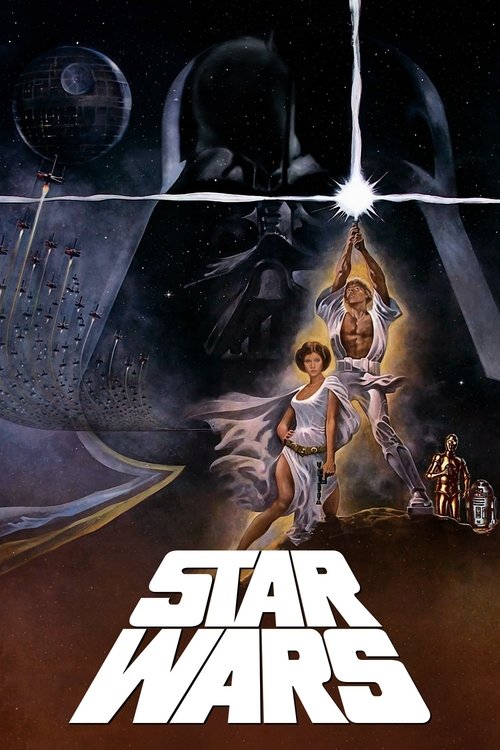
Star Wars

Star Wars

"A long time ago in a galaxy far, far away..."

25 May 1977 United States of America 121 min ⭐ 8.2 (21,533)
Director: George Lucas
Cast: Mark Hamill, Harrison Ford, Carrie Fisher, Peter Cushing, Alec Guinness
Action Adventure Science Fiction
The Hero's Journey Good vs. Evil Technology vs. Nature/Spirituality Hope and Rebellion
Budget: $11,000,000
Box Office: $775,398,007

Overview

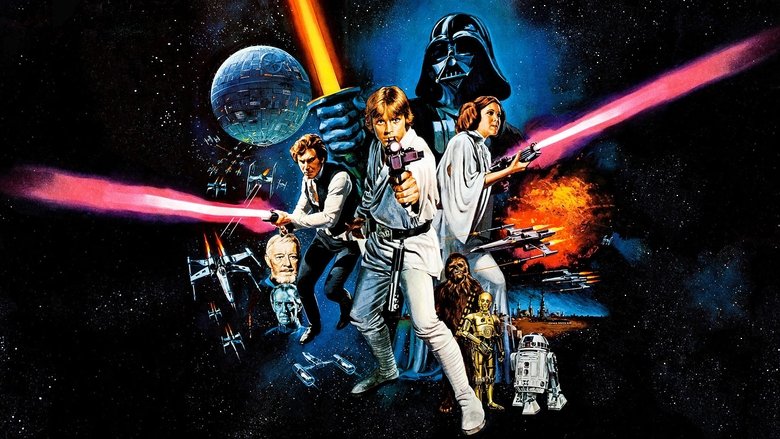
Set a long time ago in a galaxy far, far away, the galaxy is in the throes of a brutal civil war. The Rebel Alliance has just achieved its first major victory by stealing the secret plans to the Galactic Empire's ultimate weapon: the Death Star, a moon-sized battle station capable of destroying an entire planet. Imperial forces, led by the menacing Darth Vader, pursue the Rebel ship carrying the plans.

Before she is captured, Princess Leia Organa, a leader of the Rebellion, hides the plans and a desperate plea for help inside a droid, R2-D2. Escaping to the desolate desert planet of Tatooine with its companion C-3PO, the droid falls into the hands of a young farm boy, Luke Skywalker, who yearns for a life of adventure beyond his mundane existence.

The message leads Luke to the mysterious hermit Ben (Obi-Wan) Kenobi, an aging Jedi Master who reveals to Luke his father's legacy and the existence of a mystical energy field called the Force. Together, they hire the cynical smuggler Han Solo and his Wookiee co-pilot Chewbacca to deliver the plans to the Rebellion. Their journey pulls them into the heart of the conflict, leading to a daring rescue and a climactic, desperate assault on the Death Star itself.
Core Meaning

At its heart, "Star Wars" is a timeless myth about the struggle between good and evil, hope and despair. George Lucas sought to create a modern fairy tale, a story that could instill a sense of morality and heroism in a younger generation. The film champions the idea that even an ordinary individual can rise to extraordinary circumstances and make a difference. It posits that there is a spiritual, natural force that is superior to technology and that redemption and choosing the right path are always possible. The core message is one of hope: that in the face of overwhelming tyranny and technological terror, a small group of determined individuals, faith in oneself, and trust in a higher power (The Force) can bring about monumental change.

Thematic DNA

The Hero's Journey 35%
Good vs. Evil 30%
Technology vs. Nature/Spirituality 20%
Hope and Rebellion 15%

The Hero's Journey

The film is a classic example of Joseph Campbell's monomyth, or "The Hero's Journey." Luke Skywalker is the archetypal hero from a humble background who receives a "call to adventure," initially refuses it, meets a wise mentor (Obi-Wan Kenobi), crosses the threshold into a dangerous new world, faces trials, and ultimately confronts the great evil. His journey from farm boy to Rebel hero forms the central pillar of the narrative, tapping into universal mythic structures that have resonated with audiences for centuries.

Good vs. Evil

The conflict between the Rebel Alliance and the Galactic Empire is a clear allegory for good versus evil, freedom versus tyranny. This is visually and thematically represented in stark contrasts: the white attire of Leia and Luke versus the black armor of Darth Vader, the organic, lived-in feel of the Rebellion versus the sterile, metallic uniformity of the Empire. The Force itself has a light side and a dark side, making this struggle a fundamental aspect of the universe's metaphysics.

Technology vs. Nature/Spirituality

A central theme is the conflict between the overwhelming technological power of the Empire, epitomized by the Death Star, and the natural, spiritual power of the Force. The Jedi's strength comes from harmony with this life force, while the Empire's power is purely mechanical and destructive. This theme culminates in the final battle, where Luke turns off his targeting computer and uses the Force to destroy the Death Star, demonstrating that faith and intuition can triumph over machines.

Hope and Rebellion

From its retroactively added subtitle, "A New Hope," to its core plot, the film is fundamentally about the power of hope in the darkest of times. The Rebel Alliance is a small, outmatched group fighting a seemingly invincible empire. Their struggle is an allegory for resistance against totalitarianism. Princess Leia's desperate message, Luke's yearning for a greater purpose, and the final daring attack on the Death Star are all driven by the hope for a better future and the belief that tyranny can be overcome.

Character Analysis

Luke Skywalker

Mark Hamill

Archetype: The Hero
Key Trait: Hopeful

Motivation

Initially driven by a desire to escape his mundane life, his motivation shifts after the murder of his aunt and uncle. He becomes committed to the Rebellion, learning the ways of the Force to honor his father's legacy and fight for a greater good.

Character Arc

Luke begins as an impatient farm boy on a desolate planet, dreaming of adventure. His arc follows the classic hero's journey: the call to adventure, the meeting with a mentor, and the first steps into a larger world. He transforms from a naive youth into a courageous pilot and fledgling Jedi who accepts his destiny and becomes a hero of the Rebellion.

Han Solo

Harrison Ford

Archetype: The Scoundrel / Anti-Hero
Key Trait: Cynical

Motivation

His primary motivation is financial gain to pay off his debt to the gangster Jabba the Hutt. He explicitly states he is not in the fight for any revolution, only for the money.

Character Arc

Han Solo starts as a cynical, self-interested smuggler who cares only about money. Through his adventures with Luke and Leia, he reluctantly becomes involved in the Rebellion. His arc is about moving from selfishness to selflessness, culminating in his decision to return and help Luke in the final battle, proving he cares about more than just his reward.

Princess Leia Organa

Carrie Fisher

Archetype: The Rebel Leader / Damsel in (Apparent) Distress
Key Trait: Resolute

Motivation

Leia is driven by an unwavering commitment to the Rebel Alliance and the restoration of freedom to the galaxy. She is willing to sacrifice everything, including her own life and her home planet, for the cause.

Character Arc

While initially appearing as a damsel in distress who needs rescuing, Leia quickly subverts this trope. She is a determined, resourceful, and sharp-tongued leader of the Rebellion. Her arc in the film is less about personal change and more about steadfastly resisting the Empire, even under torture, and inspiring those around her to fight.

Obi-Wan 'Ben' Kenobi

Alec Guinness

Archetype: The Mentor
Key Trait: Wise

Motivation

His motivation is to protect Luke, train him in the ways of the Force, and ensure that the hope for the Jedi and the galaxy survives. He is driven by his past failures with Anakin Skywalker and his duty to the Force.

Character Arc

Obi-Wan is the wise old mentor who guides the hero on his journey. His arc involves coming out of exile to fulfill one last duty: setting Luke on his path to becoming a Jedi. He sacrifices himself in a duel with Darth Vader, completing his arc by transforming into a more powerful presence in the Force to guide Luke spiritually.

Darth Vader

David Prowse (in costume), James Earl Jones (voice)

Archetype: The Villain / The Enforcer
Key Trait: Menacing

Motivation

Vader is motivated by a desire to crush the Rebellion and retrieve the Death Star plans to maintain the Empire's order and control over the galaxy. He also seeks to eliminate the last remnants of the Jedi, as shown in his confrontation with Obi-Wan.

Character Arc

Darth Vader is presented as the menacing, powerful enforcer of the Empire's will. His arc in this film is static; he is the embodiment of the dark side and the primary antagonist. He relentlessly hunts the Rebels and the stolen plans, representing the inescapable and terrifying power of the Empire.

Symbols & Motifs

The Lightsaber

Meaning:

The Lightsaber symbolizes the legacy and nobility of the Jedi Order. It is described as an "elegant weapon for a more civilized age," representing a blend of spiritual mastery and martial skill. It connects Luke to his father and his destiny, serving as a physical manifestation of his connection to the Force.

Context:

Obi-Wan Kenobi gives Anakin Skywalker's lightsaber to Luke on Tatooine, formally inviting him into the world of the Jedi. It is used during Luke's first training session on the Millennium Falcon and in Obi-Wan's final duel against Darth Vader.

The Death Star

Meaning:

The Death Star is the ultimate symbol of technological terror and totalitarian oppression. It represents the Empire's philosophy of ruling through fear. Its ability to destroy planets signifies a cold, nihilistic power that stands in direct opposition to the life-affirming nature of the Force.

Context:

The station is the Empire's primary weapon and the central focus of the film's plot. Its power is demonstrated when it destroys Alderaan. The film's climax is the Rebel Alliance's desperate mission to exploit a small weakness and destroy it.

The Force

Meaning:

The Force symbolizes spirituality, destiny, and the interconnectedness of all life. It is a universal energy field that represents a higher power, existing in contrast to the Empire's cold reliance on technology. It embodies themes of faith, intuition, and the mystical aspects of the universe.

Context:

Obi-Wan Kenobi first explains the Force to Luke on Tatooine. Luke learns to use it during his training on the Millennium Falcon and, most importantly, trusts it to guide his final shot to destroy the Death Star.

Memorable Quotes

Help me, Obi-Wan Kenobi. You're my only hope.

— Princess Leia Organa

Context:

This line is part of a holographic message recorded by Princess Leia that R2-D2 plays for Luke and Obi-Wan Kenobi on Tatooine.

Meaning:

This is the catalyst for the entire film's plot. It's the 'call to adventure' that sets Luke Skywalker on his path and establishes the central theme of hope in the face of overwhelming odds.

The Force will be with you, always.

— Obi-Wan Kenobi

Context:

Obi-Wan says this to Luke in the Millennium Falcon's cockpit right before they arrive at the Rebel base on Yavin 4, shortly before the final battle.

Meaning:

This iconic line encapsulates the spiritual core of the Star Wars saga. It's a message of faith, reassurance, and the enduring connection that the heroes share through the mystical energy of the Force, even beyond death.

I find your lack of faith disturbing.

— Darth Vader

Context:

Vader says this to Admiral Motti aboard the Death Star after Motti scoffs at Vader's devotion to the Force. Vader then proceeds to Force-choke him to make his point.

Meaning:

This quote powerfully demonstrates Vader's own belief in the Force, contrasting it with the Imperial officers' faith in technology. It establishes the Force as a source of real, tangible power and highlights Vader's menacing presence and authority.

If you strike me down, I shall become more powerful than you can possibly imagine.

— Obi-Wan Kenobi

Context:

Obi-Wan says this to Darth Vader during their lightsaber duel on the Death Star, just before he sacrifices himself to allow Luke and the others to escape.

Meaning:

This line foreshadows Obi-Wan's transformation into a Force ghost. It speaks to the film's theme of spiritual power over physical might, suggesting that death is not the end for a Jedi and that his influence will continue to guide Luke.

Use the Force, Luke.

— Obi-Wan Kenobi

Context:

Obi-Wan's disembodied voice speaks this line to Luke during the climactic trench run on the Death Star, prompting Luke to turn off his targeting computer and rely on the Force for his final shot.

Meaning:

This is the culmination of Luke's initial training. It represents the film's central theme of trusting in faith and intuition over technology. It's the moment Luke fully embraces his Jedi potential.

Philosophical Questions

Does technology or faith hold more power?

The film constantly juxtaposes the Empire's reliance on overwhelming technological power with the Jedi's faith in the unseen energy of the Force. The Death Star is the ultimate technological terror, capable of destroying planets, yet it is defeated by a young pilot who turns off his computer and trusts his feelings. The dialogue between Darth Vader and the Imperial officers about the power of the Force versus their battle station raises the question of whether true power comes from external, mechanical sources or from internal, spiritual belief and intuition.

What is the nature of destiny versus free will?

Luke Skywalker seems destined to play a crucial role in the galaxy. Obi-Wan appears at the right moment, he is the son of a great Jedi, and the Force seems to guide his actions. This raises questions about whether his path is preordained. However, at every key juncture, he must make a choice: the choice to leave Tatooine, the choice to join the fight, and the choice to trust the Force. Similarly, Han Solo's journey from a self-serving smuggler to a hero is a testament to the power of free will to choose a nobler path, seemingly defying his initial 'destiny' as a cynical outsider.

Alternative Interpretations

While on the surface a straightforward space fantasy, "Star Wars" has been subject to numerous alternative interpretations. One of the most prominent is a political allegory. Some critics and viewers in the 1970s saw the conflict between the small, resourceful Rebel Alliance and the large, technologically superior Galactic Empire as a parallel to the Vietnam War, with the Rebels representing the Viet Cong and the Empire representing the United States. George Lucas himself has acknowledged this influence in his notes. Others have interpreted the Empire as a stand-in for various totalitarian regimes, including Nazi Germany (reflected in the stormtrooper uniforms and imperial officer aesthetics) or even the Nixon administration.

Another significant interpretation is mythological and religious. George Lucas was heavily influenced by the work of mythologist Joseph Campbell, particularly his book "The Hero with a Thousand Faces." The film closely follows Campbell's monomyth structure, which can be seen as an exploration of universal archetypes and psychological development. The Force has also been interpreted in various religious contexts, with some seeing it as an analog for Taoist principles, Buddhist concepts of mindfulness, or a generalized form of pantheism or deism.

Cultural Impact

"Star Wars" was a cultural earthquake that fundamentally reshaped the landscape of filmmaking and popular culture. Released in 1977, a period dominated by cynical and gritty films reflecting the post-Vietnam War and Watergate era, its earnest tale of heroism and hope was a breath of fresh air that resonated deeply with audiences. It, along with "Jaws," created the model for the modern blockbuster, proving the immense financial power of high-concept, effects-driven films released widely during the summer.

Its influence on filmmaking was profound. George Lucas founded Industrial Light & Magic (ILM) to create the film's revolutionary special effects, which set a new standard and pioneered technologies like motion-control photography (the Dykstraflex system). This sparked a boom in visual effects that defined the next several decades of cinema. The film also popularized the "used future" aesthetic, portraying a galaxy where technology was old, dirty, and lived-in, a stark contrast to the sleek, sterile futures common in sci-fi at the time.

Beyond cinema, "Star Wars" became a worldwide pop culture phenomenon. It redefined movie merchandising, transforming licensed toys and collectibles from a novelty into a massive industry. Characters like Darth Vader, Luke Skywalker, and Han Solo became globally recognized icons, and phrases like "May the Force be with you" entered the popular lexicon. The film's success revitalized the science-fiction genre, paving the way for countless other sci-fi and fantasy films and cementing its place as one of the most influential and beloved movies of all time.

Audience Reception

Upon its limited release on May 25, 1977, "Star Wars" became a surprise blockbuster hit. Audience reaction was overwhelmingly positive and enthusiastic. Viewers who were used to the darker, more pessimistic films of the era were captivated by its sense of fun, adventure, and clear-cut morality. The groundbreaking special effects, the thrilling opening sequence of the Star Destroyer, and the climactic battle scenes left audiences in awe. People lined up for hours to see the film, and it quickly became a cultural event that unified a wide spectrum of people. While a minority of critics found the story juvenile or simplistic, the vast majority of audiences embraced its mythic storytelling, memorable characters, and spectacular visuals, making it a word-of-mouth phenomenon that forever changed the moviegoing experience.

Interesting Facts

  • Most major studios, including Universal and United Artists, initially passed on the film. 20th Century Fox only agreed to fund it due to their faith in George Lucas after his success with "American Graffiti".
  • The iconic opening crawl was not computer-generated. It was created by filming physical text printed on a black background with a camera slowly moving over it, a process that took hours to get right.
  • Luke's surname was originally "Starkiller" and was changed to "Skywalker" during production.
  • Sir Alec Guinness, who played Obi-Wan Kenobi, reportedly thought the dialogue was "garbage" but astutely negotiated a deal for 2.25% of the film's gross profits, which made him very wealthy.
  • The sound of the TIE Fighter engines was a combination of an elephant's call and the sound of a car driving on wet pavement.
  • Harrison Ford was not originally intended to play Han Solo; he was just helping George Lucas by reading lines with other actors. Lucas was so impressed by his delivery that he cast him.
  • The design for Chewbacca was inspired by George Lucas's Alaskan Malamute dog, Indiana, who would often sit in the passenger seat of his car.
  • The word "Jedi" is believed to have been inspired by the Japanese term "Jidaigeki," which refers to period dramas, often featuring samurai.
  • Peter Cushing, who played Grand Moff Tarkin, found his imperial officer boots so uncomfortable that he wore slippers for many of his scenes, asking Lucas to film him from the waist up.

Easter Eggs

Stanley Kubrick's "2001: A Space Odyssey" Reference

There's a persistent story that the design for the podracer-like vehicle seen in Mos Eisley (specifically, the one that almost runs Luke over) was a deliberate nod to Stanley Kubrick. The story goes that one of the effects artists on Star Wars had previously worked on 2001: A Space Odyssey and included a miniature model of the Discovery One's cockpit inside this vehicle as a tribute, though this is difficult to spot in the final film.

The number 1138

The number 1138 appears in the film as part of the designation for the detention block where Leia is held, "Cell 2187, Detention Block AA-23." However, the more direct reference is when Luke, disguised as a stormtrooper, says the prisoner transfer is from "cell block 1138." This is a recurring easter egg in George Lucas's work, referencing his first feature film, "THX 1138."

⚠️ Spoiler Analysis

Click to reveal detailed analysis with spoilers

Frequently Asked Questions

Explore More About This Movie

Dive deeper into specific aspects of the movie with our detailed analysis pages

Comments (0)

Leave a comment

No comments yet. Be the first to share your thoughts!