Skip to content
The Host
Drenched in rain and murky river silt, this satirical creature-horror weaves absurd tragicomedy through a family’s desperate embrace, exposing state negligence as a shadow cast across Seoul’s cold, industrial waterways.
The Host

The Host

괴물

"Man has made his newest predator."

27 July 2006 South Korea 120 min 7.0 (3,193)

Director: Bong Joon Ho

Cast: Song Kang-ho, Byun Hee-bong, Park Hae-il, Bae Doona, Ko A-sung

Drama Science Fiction Horror Institutional Incompetence and Bureaucratic Apathy Familial Love and Solidarity Environmental Degradation and Ecological Retribution Foreign Geopolitical Hegemony and Neocolonial Critique Class Marginalization and Socioeconomic Inequality
Budget: $11,000,000
Box Office: $88,489,643

Overview

Directed by Bong Joon Ho, The Host (괴물, Gwoemul, literally "Monster") begins along the banks of Seoul’s Han River. Park Gang-du, a dim-witted and perpetually drowsy man, helps his father, Hee-bong, run a small food kiosk near the waterfront. Gang-du’s world revolves around his young, bright daughter, Hyun-seo. His siblings—Nam-il, an unemployed ex-political activist, and Nam-joo, an Olympic medal-winning archer hampered by indecisiveness—complete their working-class family.

Their quiet routine is shattered when an amphibious mutant creature emerges from the depths of the river and goes on a rampage. In the horrifying chaos, Gang-du briefly mistakes another girl for his daughter and loses his grip on Hyun-seo, who is dragged into the river by the beast. Believing Hyun-seo dead, the heartbroken family is forced into government quarantine when authorities declare that the creature carries a lethal, highly contagious virus.

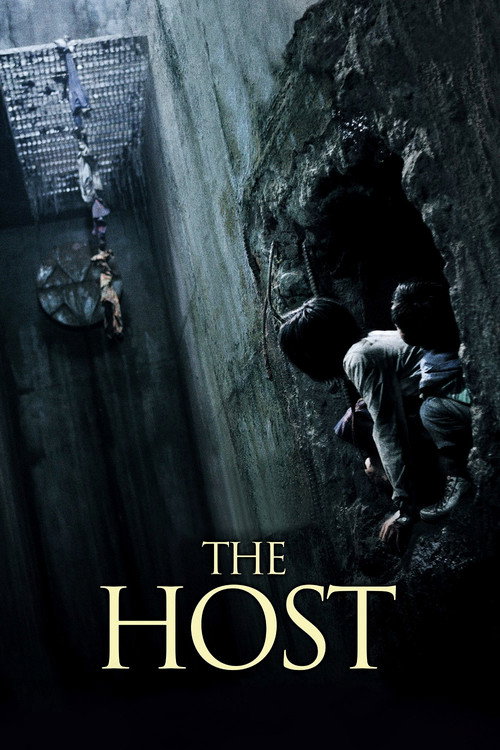
However, late at night, Gang-du receives a brief, crackling phone call from Hyun-seo, revealing that she is alive, trapped in a concrete sewer drain under the monster's lair. Ignored by cold bureaucrats and hunted as fugitive biological vectors, the marginalized family breaks out of quarantine, buys black-market weapons, and descends into Seoul’s subterranean labyrinth to save her on their own.
Core Meaning

Bong Joon Ho uses the traditional creature feature structure to deliver a scathing critique of state incompetence, foreign geopolitical dominance, and societal apathy. The director posits that when public institutions fail—misled by hysteria, subservience to foreign powers, or bureaucratic cowardice—the burden of survival and protection falls entirely on ordinary, flawed citizens.

The film reveals that while a physical monster terrorizes the city, the true "host" of destruction is the systemic rot within society itself: military irresponsibility, media sensation-seeking, and government neglect that abandon marginalized people. Despite their poverty and shortcomings, human solidarity and familial affection remain the last bastions of dignity in a cold, indifferent world.

Thematic DNA

Institutional Incompetence and Bureaucratic Apathy 30%
Familial Love and Solidarity 25%
Environmental Degradation and Ecological Retribution 20%
Foreign Geopolitical Hegemony and Neocolonial Critique 15%
Class Marginalization and Socioeconomic Inequality 10%

Institutional Incompetence and Bureaucratic Apathy

The South Korean government relies on mass fear, quarantine camps, and media manipulation rather than actual rescue efforts. When Gang-du attempts to tell hospital staff and military personnel that his daughter is alive, his pleas are dismissed as virus-induced delirium or mental disability.

Familial Love and Solidarity

The Park family is dysfunctional and fractured, yet bound by unyielding loyalty. Each family member utilizes their seemingly useless real-world skills—a grandfather’s grit, a brother’s Molotov cocktails, a sister’s archery, and a father’s protective instinct—to accomplish what the entire military apparatus refuses to attempt.

Environmental Degradation and Ecological Retribution

The creation of the monster stems directly from toxic chemicals dumped into the Han River. Nature mutates as a result of human carelessness, returning from the polluted depths to exact vengeance upon the city above.

Foreign Geopolitical Hegemony and Neocolonial Critique

The disaster is initiated by an arrogant American scientist commanding his Korean subordinate to pollute local waters. Later, American military forces override Korean sovereignty by deploying Agent Yellow—a hazardous defoliant/chemical agent—despite local protests.

Class Marginalization and Socioeconomic Inequality

The Parks live in a makeshift river kiosk, while homeless orphan boys forage for food along the banks. The government easily vilifies and isolates lower-class citizens, treating them as disposable risks during a national crisis.

Character Analysis

Park Gang-du

Song Kang-ho

Archetype: Unlikely / Anti-hero Key Trait: Narcoleptic, sluggish, fiercely affectionate

Motivation

Rescuing his daughter Hyun-seo at all costs.

Character Arc

Evolves from a lazy, dependent man-child into a determined, alert protector who confronts both medical torturers and the creature head-on.

Park Hee-bong

Byun Hee-bong

Archetype: Mentor / Family Patriarch Key Trait: Wise, loving, tired, deeply devoted

Motivation

Keeping his fractured family united and retrieving his granddaughter.

Character Arc

Sacrifices his own safety on the riverbank to give his children a chance to escape, making a final tragic stand with a gun containing no bullets.

All 5 characters and cast

Symbols & Motifs

Formaldehyde / Agent Yellow

Meaning:

Symbolizes foreign arrogance, environmental toxicity, and heavy-handed chemical destruction.

Context:

Appears in the opening lab scene where hundreds of toxic formaldehyde bottles are dumped down a sink, and later as the yellow chemical fog released over Seoul to kill the beast.

The Archery Bow and Arrow

Meaning:

Symbolizes precision, traditional national skill, and overcoming personal hesitation.

Context:

Belonging to Nam-joo, the bow represents her athletic struggle with timing. In the climax, her final fire-tipped arrow hits the monster's eye without delay.

The Han River and Sewer Pipes

Meaning:

Symbolizes the hidden underbelly of modern urban South Korea—a repository for toxic waste, forgotten citizens, and monster lairs.

Context:

Serves as the scenic backdrop of Seoul by day and a dark, damp labyrinth of subterranean drainage tunnels by night.

Ramen / Food / Instant Noodles

Meaning:

Symbolizes sustenance, warmth, economic status, and familial bonding.

Context:

In a famous dreamlike sequence, the hiding family gathers in the kiosk late at night to eat ramen together, visually including the absent Hyun-seo. Food also binds Gang-du to the young orphan boy at the film’s conclusion.

Yellow Biohazard Suits and Masks

Meaning:

Symbolizes misguided health hysteria, government theatricality, and fake containment measures.

Context:

Worn by anonymous state workers who round up citizens, clean empty streets, and enforce quarantines for a nonexistent biological virus.

Memorable Quotes

새끼 잃은 부모 속냄새를 맡아본 적 있어? 부모 속이 한 번 썩어 문드러지면 그 냄새가 십 리 밖까지 진동하는 거여.
— Park Hee-bong

Context

Spoken to his adult children as they hide out in an abandoned building.

Meaning

Captures the profound, agonizing grief (han) of Korean parenthood and sets the emotional core for their quest.

사망잔데요... 사망을 안 했어요...
— Park Gang-du

Context

Gang-du trying to explain to indifferent authorities over the phone that his daughter is alive in the sewer.

Meaning

Highlights the Kafkaesque absurdity of bureaucratic systems that prioritize paper records over real human lives.

All 5 quotes

Philosophical Questions

What constitutes a "monster" in modern society?

The film contrasts a biological mutation that acts on primal predatory hunger against human systems that inflict systemic cruelty through cold indifference, lies, and calculated political cover-ups.

When does state authority lose its moral legitimacy?

Explores the moment government institutions abandon their fundamental social contract—protecting citizen lives—and instead turn their power inward to silence, arrest, and medically experiment on those asking for help.

Can individual love overcome institutional powerlessness?

Tests whether ordinary, flawed people stripped of resources can defy an all-powerful state machine through sheer affection and stubborn endurance.

Alternative Interpretations

Historical Trauma (Han) Perspective: Many Korean scholars view the monster as the physical manifestation of han—a collective Korean cultural emotion representing deep-seated grief, injustice, and historical trauma caused by foreign intervention and state oppression.

Full ending explanation

Cultural Impact

Released in 2006, The Host arrived during a period of heightened anti-American sentiment in South Korea. Tensions had flared following the 2000 formaldehyde dumping incident and the 2002 Yangju highway incident, where two Korean schoolgirls were struck and killed by a U.S. military armored vehicle. Bong incorporated these socio-political anxieties directly into mainstream cinema.

The film marked a major milestone for the "Korean New Wave," demonstrating that South Korean filmmakers could produce blockbuster creature spectacles that rivaled Hollywood while embedding radical social commentary. Critics worldwide praised its genre-bending execution, laying the groundwork for Bong Joon Ho's international rise with Snowpiercer (2013), Okja (2017), and the Oscar-winning Parasite (2019).

Audience Reception

Praised Aspects: Critics universally praised the seamless tonal shifts between horror, slapstick comedy, family melodrama, and political satire. Song Kang-ho's emotional performance and Bong Joon Ho’s innovative staging of the daytime attack scene were widely lauded.

Main Points of Criticism: Minor criticisms noted that the CGI effects have aged somewhat over time. Some Western viewers initially found the exaggerated, sobbing slapstick comedy during the funeral scene jarring alongside horror elements.

Controversial Moments: The film's blunt anti-American military messaging sparked mild political debate among conservative commentators upon its U.S. theatrical release, though most critics recognized it as rooted in actual local history.

Overall Verdict: Retains an exceptionally high rating (93% on Rotten Tomatoes, Metacritic 85/100) and is considered one of the finest creature features of the 21st century.

Interesting Facts

  • The film’s opening scene is directly based on the infamous 2000 "McFarland Incident," where Albert McFarland, an American military mortician at Yongsan Garrison in Seoul, ordered his staff to pour hundreds of bottles of formaldehyde down the drain into the Han River.
  • Bong Joon Ho hired San Francisco-based visual effects studio The Orphanage (which worked on Hellboy and Sin City) and New Zealand’s Weta Digital to design and render the CGI creature on an independent Korean budget ($11 million).
  • The actors spent weeks actually filming in real, underground storm drainage facilities and sewers around Seoul during freezing winter conditions, suffering from intense smells and exposure.
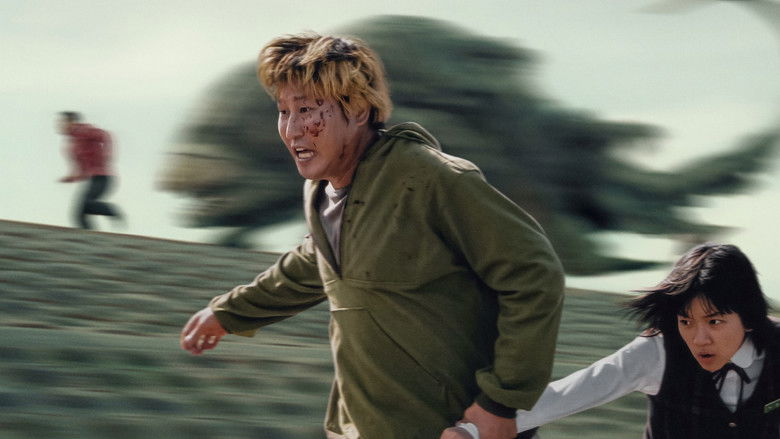
  • Song Kang-ho bleached his hair a cheap brassy-yellow color for the role to physically convey Gang-du's unpolished, lower-class, unemployed status.
  • Upon its release in South Korea in July 2006, the film sold over 13 million tickets, making it the highest-grossing South Korean film of all time at that point.

Easter Eggs

Godzilla and Ultraman Homage

Bong Joon Ho explicitly designed the creature to break traditional Kaiju tropes. Unlike Godzilla, who is massive and slow, this monster is medium-sized, clumsy, stumbles on its own tail, and attacks in bright daylight.

"Agent Yellow" / Agent Orange Parallel

The fictional chemical compound "Agent Yellow" released by US forces is a direct historical nod to Agent Orange, the toxic rainbow herbicide deployed by the US military during the Vietnam War.

Actor Scott Wilson Cameo

Veteran American actor Scott Wilson (famous for In Cold Blood and later The Walking Dead) plays the arrogant U.S. military pathologist who orders the dumping of formaldehyde.

Student Movement Tactics

Nam-il's method of creating Molotov cocktails using soju bottles and rag wicks mirrors the exact urban protest tactics used by South Korean college students during the 1980s pro-democracy riots.

Frequently Asked Questions

Explore More About This Movie

Dive deeper into specific aspects of the movie with our detailed analysis pages

Comments (0)

Leave a comment

No comments yet. Be the first to share your thoughts!

Similar Movies